
.jpg)


.jpg)

01
45 min
RMS Queen Elizabeth
- Must see
- Historic monument
- Hong Kong
Language · 1 published
Country guide
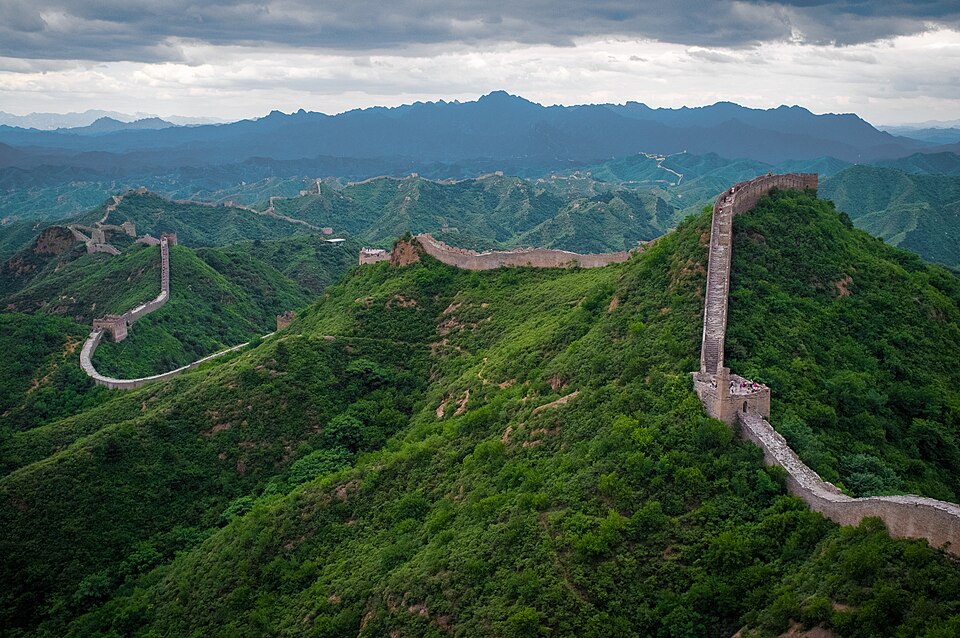
China covers 9.6 million km², third largest of any country, and holds more than 1.4 billion people — about 17 per cent of everyone alive. It is divided into 33 province-level divisions, two of them special administrative regions. Beijing is the capital; Shanghai is the most populous city by urban area. Between them the land runs from the Central Plain and the Yangtze and Yellow rivers out to desert, plateau, subtropical and temperate forest, and the Himalayas in the southwest. The first decision a visitor makes here is therefore not which sight to see but which climate to travel in.
Every city catalogued in this country so far, ranked by how much there is to see.
Photograph · N509FZ · CC BY-SA 4.0
Photograph · King of Hearts · CC BY-SA 4.0
Photograph · Mustang Joe · CC0
Photograph · Charlie fong · CC BY-SA 4.0
Photograph · ScareCriterion12 · CC BY-SA 4.0
Photograph · Charlie fong · CC BY-SA 4.0
Ranked by importance — sitelinks, pageviews and heritage status, not editor preference.
100 places match
Category
Typical visit duration
The Central to Mid-Levels Escalator and Walkway System is a piece of public transport infrastructure that happens to have become a sight.
A Symphony of Lights is not a building a visitor enters. It is a nightly light and sound show staged across Victoria Harbour, and the map point that carries this page marks a viewing position rather than a venue.
The Avenue of Stars is a 440-metre waterfront promenade on the Tsim Sha Tsui shore of Victoria Harbour, built as a tribute to the Hong Kong film industry and laid out as a walk rather than as a building.
Lan Kwai Fong is a compact nightlife and entertainment district in Central, Hong Kong. The area comprises a cluster of L-shaped streets and alleys that form one of the territory's most concentrated zones of bars, restaurants, and clubs.
The Noonday Gun is a historic naval artillery piece located in Causeway Bay, Hong Kong Island. It is famously fired daily at noon, a tradition maintained by Jardine Matheson, the British trading company established in the territory.
1881 Heritage occupies the Former Marine Police Headquarters, a declared monument in Tsim Sha Tsui, Kowloon. The compound comprises the main building constructed in 1884, the stable block, and a signal tower added in 1907.
Central Market is a historic market building located in the Central district of Hong Kong Island. The structure represents one of the city's significant surviving examples of market architecture from the early twentieth century.
PMQ, formerly the Police Married Quarters, is a creative hub in Hong Kong's Sheung Wan district. The heritage site has been revitalized into a center for design, creativity, and entrepreneurship.
Shing Mun Reservoir is a water storage facility in the New Territories of Hong Kong. Constructed in the 1930s, it represents an important piece of colonial-era infrastructure.
The Peak is Hong Kong's highest hill on Hong Kong Island, standing as the city's most famous vantage point. Known locally as 山頂, it offers panoramic views across Victoria Harbour, the skyline, and surrounding islands.
Shanghai Tower is a landmark skyscraper in the Lujiazui financial district of Pudong, Shanghai. It is among the tallest buildings in the world by architectural height.
The Bund is Shanghai's historic waterfront promenade along the western bank of the Huangpu River. It features a concentration of early 20th-century colonial-era buildings representing various European architectural styles, including Neoclassical, Art Deco, and Beaux-Arts.
The Holy House of Mercy, known locally as 仁慈堂大樓, is a historic welfare institution in Macau's Senado Square. Founded in 1569 by the first Bishop of Macau, it is one of the oldest charitable organisations in Asia.
Source: OpenStreetMap contributors, Wikidata ·
Twelve to eighteen days can link Beijing, Xi'an, and Shanghai by high-speed rail, with Shenzhen as a southern extension. Hong Kong and Macao need separate border planning and should not be treated as ordinary domestic stops on the same timetable.
Entry rules differ between mainland China, Hong Kong, and Macao, even within one journey. Check the official immigration authority for every border segment and match the permission to the passport, purpose, and exact itinerary.
High-speed rail and domestic flights cover mainland distances, while metros handle most urban journeys. Hong Kong uses Octopus and separate border controls, and Macao has its own formalities, so prepare payment and identity requirements for each jurisdiction.
April to May and September to October are only broad mainland planning windows. Beijing, Shanghai, the south, Hong Kong, and Macao have different heat, rain, and holiday pressures; the least flexible regional leg should set the dates.
Mainland China uses renminbi (CNY), while Hong Kong and Macao use HKD and MOP. Payment systems and card acceptance differ across those jurisdictions, so prepare the appropriate local method before crossing each border.
On the mainland, save 110 for police and 120 for medical help; Hong Kong and Macao use separate emergency systems. Mainland electricity is recorded as 220 V with Type A, C, and I sockets, while tap-water guidance is not recorded.