
.jpg)


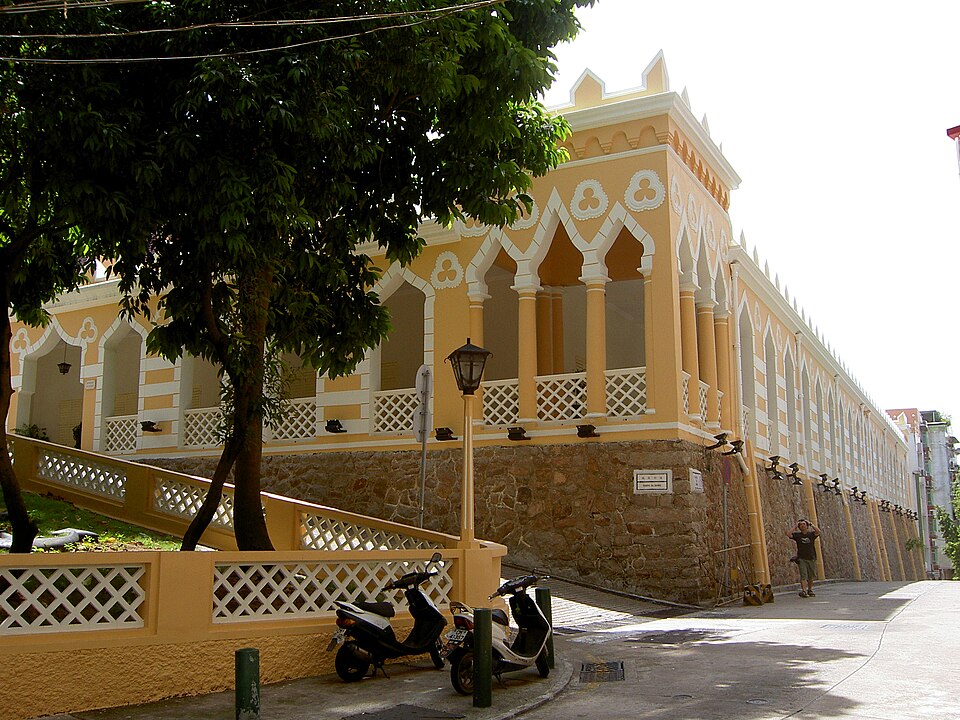
3 min walk
Moorish Barracks
- Must see · Heritage site
- Historic monument
Language · 1 published
Place of worship · Macau
媽閣廟 Templo de A-Ma

A-Ma Temple, locally known as 媽閣廟, is one of the oldest and most significant Taoist temples in Macau. Dedicated to Mazu, the goddess of seafarers, it predates Portuguese colonization and embodies the city's deep maritime heritage. The temple complex climbs a hillside overlooking the Inner Harbour, representing centuries of Chinese spiritual tradition. Its inclusion in the UNESCO World Heritage listing for the Historic Centre of Macau underscores its cultural importance as a symbol of the territory's indigenous roots before Western influence. A-Ma Temple also earns time in a macau itinerary because A ranked macau visitor place retained in the breadth-first top 100; production has no exact city POI pool match. Its value becomes clearer when the stop is compared with the surrounding streets and the other ranked places nearby.
Checked 2026-08-26
The temple complex comprises several pavilions and prayer halls arranged across multiple terraces ascending the hillside. Key structures include the Gate Pavilion, the Memorial Arch, the Prayer Hall, the Hall of Benevolence, the Hall of Guanyin, and the Zhengjiao Chanlin Buddhist pavilion. Decorative elements feature traditional Chinese architectural details including intricate stone carvings, porcelain figurines, and roof ridges with ceramic animals. Incense coils hang from ceilings, creating atmospheric smoke patterns. The natural integration of built structures with granite outcrops and vegetation demonstrates classical Chinese landscape principles.
Checked 2026-08-26
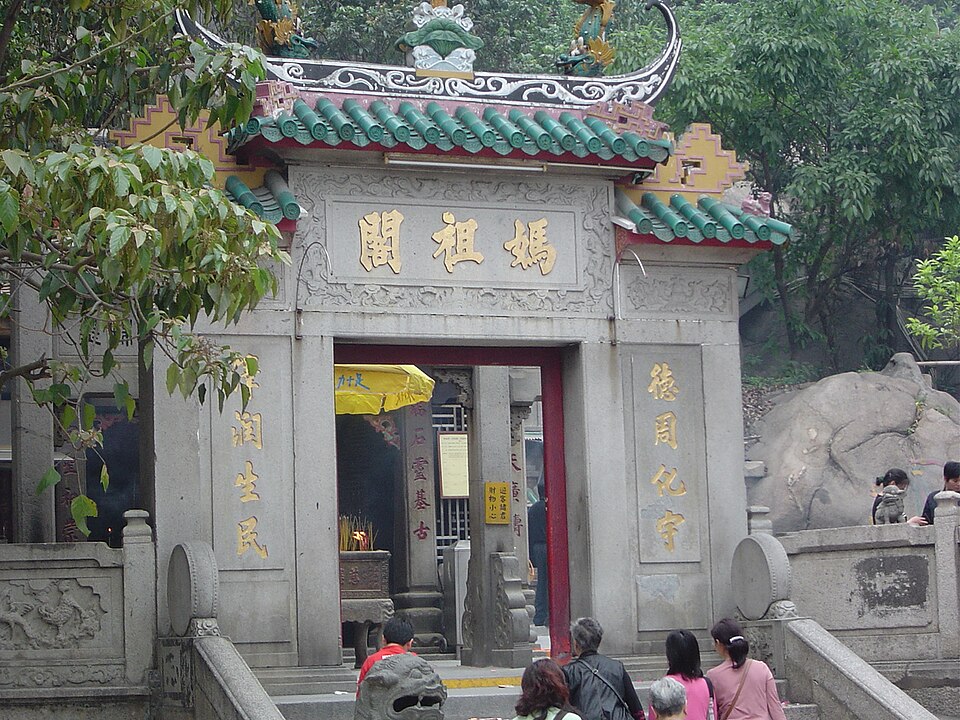
Visitors typically spend between forty-five minutes and ninety minutes exploring A-Ma Temple, depending on individual interests and physical capability. The terraced layout requires ascending stone steps between levels, which may extend visit duration for those pausing frequently. Photography enthusiasts and those engaging in prayer or contemplation should allocate additional time. The compact site does not demand extensive commitment, yet rewards unhurried examination of architectural details and harbor views. Combining this visit with nearby Barra district attractions creates a logical half-day itinerary for comprehensive Macau heritage exploration.
Checked 2026-08-26
Operator-confirmed hours are Not recorded pending review. Visitors should consult official sources before planning. The temple's hillside position offers natural ventilation that may provide relative comfort during warmer periods. Morning visits potentially coincide with active worship and burning incense, offering atmospheric cultural immersion. Festival periods, particularly Mazu-related celebrations, attract increased visitor and devotee numbers. Rainy conditions may render stone surfaces slippery given the outdoor staircases and exposed pathways. Seasonal considerations should account for Macau's subtropical climate with hot humid summers and milder drier winters.
Checked 2026-08-26

Operator-confirmed prices are Not recorded pending review. Many traditional Chinese temples in Macau historically operate without admission charges, though voluntary donations are customary and support maintenance. Visitors should carry small denomination cash for contribution boxes and incense purchases if participating in devotional practices. No advance booking systems are referenced in available sources. Commercial tour operators may package this site within broader Macau heritage itineraries with associated costs. Independent travelers should verify current arrangements through official tourism channels rather than assuming historical practices continue unchanged.
Checked 2026-08-26

A-Ma Temple occupies a waterfront position in the Barra district at Macau's southwestern peninsula tip. Public bus services connect the site to central Macau and ferry terminals. Taxi and ride-hail services provide direct access. The temple's proximity to the Maritime Ferry Terminal and Barra Square creates multimodal connectivity. Walking from the Historic Centre's core requires approximately twenty to thirty minutes along coastal routes with moderate elevation changes. Signage in Chinese and Portuguese assists navigation. Visitors combining multiple UNESCO sites may find efficient routing through the heritage trail network connecting this southwestern anchor point.
Checked 2026-08-26
Steep stone staircases between terraced levels demand appropriate footwear and caution, particularly when surfaces are wet from rain or humidity. Burning incense creates smoke and ash that may irritate respiratory conditions or sensitive eyes. Active worship spaces require respectful behavior including moderate volume and appropriate attire covering shoulders and knees. Photography restrictions may apply within certain halls; visitors should observe posted guidance and worshipper privacy. The hillside location offers limited shelter from sun exposure. Crowding during festivals and peak tourist periods may impede movement through narrow passages between structures.
Checked 2026-08-26
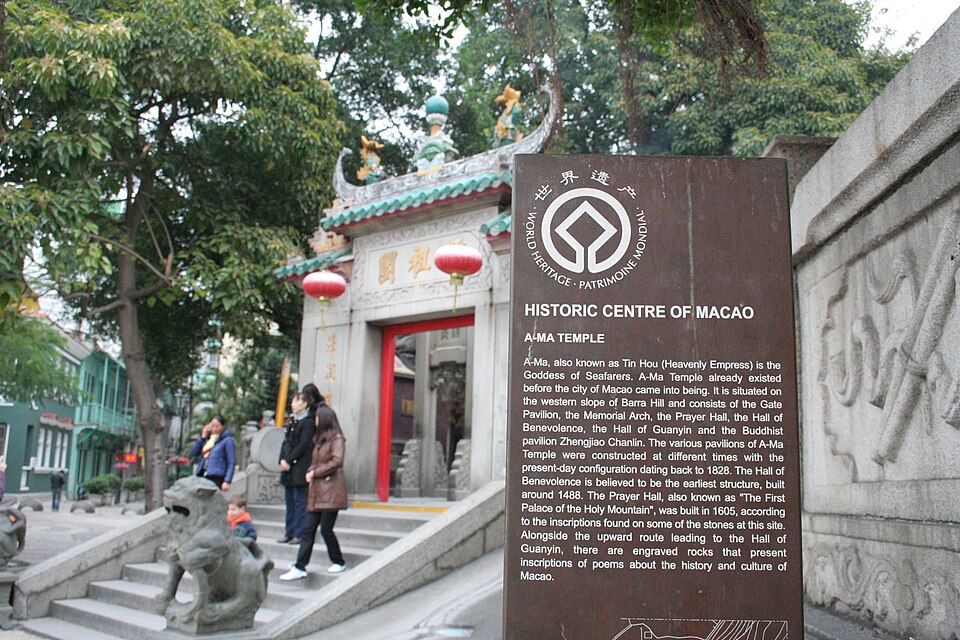
The temple presents distinctive photographic opportunities combining architectural heritage, natural harbor backdrops, and atmospheric incense smoke. Exterior pavilions and the Memorial Arch frame compositions against water and sky. Early morning light may enhance tonal qualities of weathered stone and ceramic decorations. Interior photography requires sensitivity to active worship; flash use is generally inappropriate in sacred spaces. The ascending terraces create layered perspectives capturing the complex's vertical organization. Rooftop details including ceramic figurines benefit from telephoto examination. Visitors should prioritize cultural respect over optimal shots, refraining from intrusive positioning during prayer activities.
Checked 2026-08-26
Yes, A-Ma Temple is included within the Historic Centre of Macau UNESCO World Heritage listing.
The temple is primarily Taoist, dedicated to Mazu, the goddess of seafarers, though it incorporates Buddhist elements including the Zhengjiao Chanlin pavilion.
Exact founding dates are Not recorded pending review; however, the temple predates Portuguese colonization and represents Macau's oldest Chinese spiritual site.
Operator-confirmed prices are Not recorded pending review; traditional Chinese temples in Macau often operate without mandatory charges though voluntary donations are customary.
Photography policies vary by specific hall; visitors should observe posted restrictions and exercise cultural sensitivity regarding active worship spaces.
The terraced hillside layout with stone staircases between levels presents significant accessibility challenges; operator-confirmed accessibility provisions are Not recorded pending review.
Loading the interactive map…
The interactive map could not be loaded.

Last updated:
Source: OpenStreetMap contributors, Wikidata ·