.jpg)

202 min walk
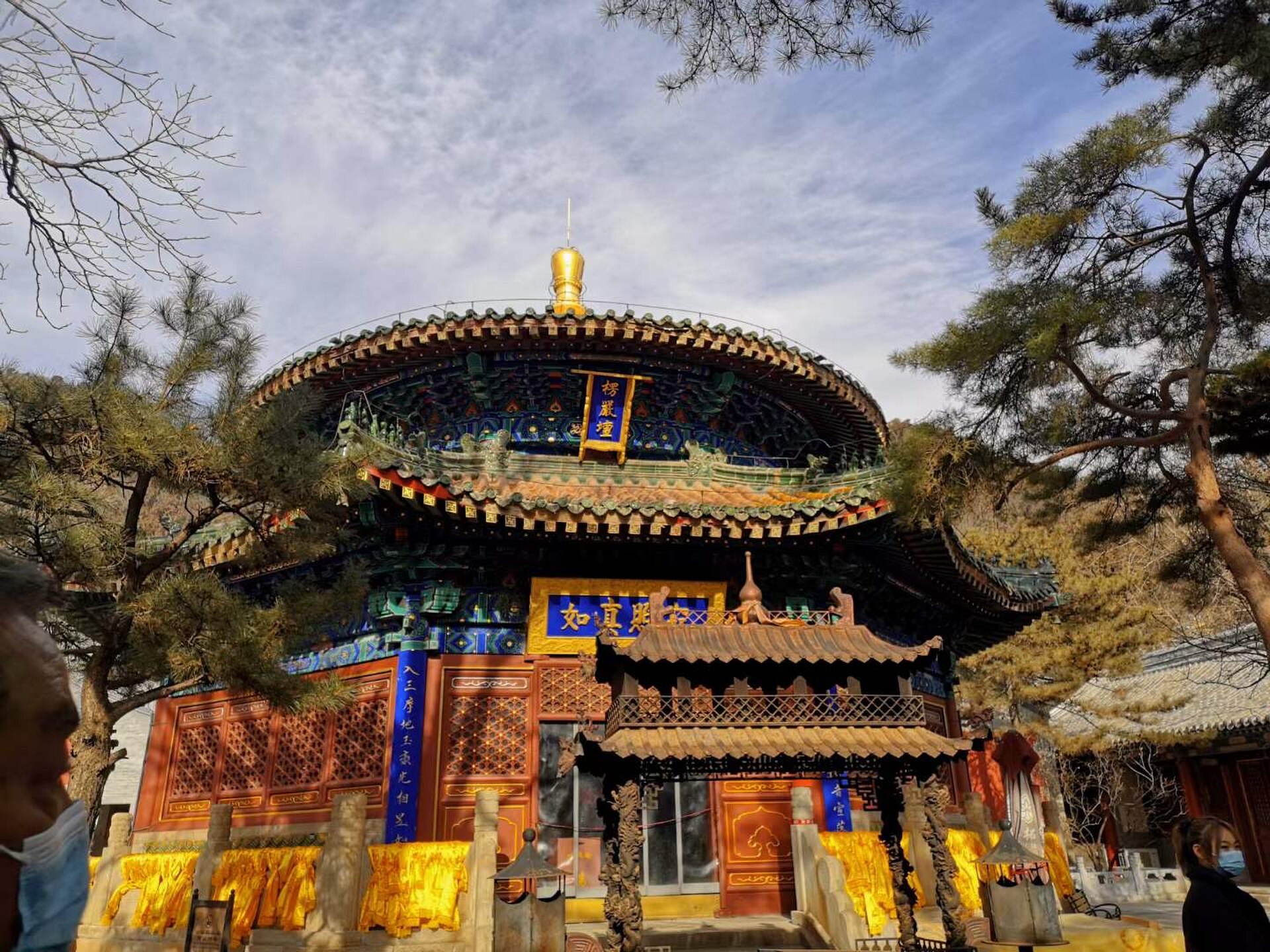
Yunju Temple
- Must see
- Place of worship
Language · 11 published
Historic monument · Beijing
周口店北京人遗址

| Monday | Closed |
|---|---|
| Tuesday | 09:00 – 16:30 |
| Wednesday | 09:00 – 16:30 |
| Thursday | 09:00 – 16:30 |
| Friday | 09:00 – 16:30 |
| Saturday | 09:00 – 16:30 |
| Sunday | 09:00 – 16:30 |
Checked 2026-08-31 · Source
Read from the OpenStreetMap access tags; anything not listed has no tag recorded.
Set the group type to family in the planner and the day window contracts to about three quarters of a solo day.
Zhoukoudian Peking Man Site is a paleoanthropological locality in southwest Beijing. It yielded fossils of Homo erectus pekinensis, commonly called Peking Man, in excavations during the early twentieth century. The discoveries established this as one of the most significant sites for understanding early human evolution in East Asia. UNESCO designated it a World Heritage Site in 1987. The location comprises multiple cave systems where systematic archaeological work occurred. The site holds scientific importance rather than conventional scenic appeal. Visitors encounter a museum complex and protected excavation areas in a limestone landscape. The local name is 周口店北京人遗址. From 1 April to 10 October it is open 09:00-16:30, with last entry at 16:00; Monday is normally closed. From 1 April to 10 October it is open 09:00-16:30, with last entry at 16:00; Monday is normally closed.
Checked 2026-08-31 · Source
The site contains a museum displaying casts and original finds from excavations, including skull fragments and tools. Outdoor sections include protected cave localities where fossils were recovered, notably Locality 1 and the Upper Cave. Exhibits cover geological context, excavation history, and interpretations of Peking Man behavior. Some original specimens disappeared during World War II, so displayed materials include careful replicas. The museum presents information in Chinese with limited English. The surrounding area has walking paths between excavation points. Interpretive signage exists but density varies. The overall presentation emphasizes scientific narrative over immersive reconstruction. Expect a quiet, educational atmosphere rather than entertainment-focused design. The museum and archaeological site park each cost CNY 30.
Checked 2026-08-31 · Source
Most visitors complete the museum and outdoor circuit in approximately two to three hours. The site is compact enough for a half-day excursion from central Beijing. Enthusiasts with strong interest in paleoanthropology or archaeology may extend this duration by reading all exhibits carefully. The walking between cave localities adds modest time. Combined travel from Beijing city center makes this realistically a four to five hour commitment minimum. Rushing through provides limited value given the text-heavy presentation. The museum interior and exterior paths together form a continuous route. No significant queueing is typical. Plan accordingly for the return journey to Beijing. No. The modern museum is accessible, but the outdoor archaeological route climbs Dragon Bone Hill over paths and steps.
Checked 2026-08-31 · Source
The museum and site park follow the same published schedule; statutory-holiday and summer notices can override Monday closure. Allow two hours for the museum alone and three to four hours for the outdoor archaeological hill. The two components issue separate CNY 30 tickets. Dated closure, event and seasonal notices from the responsible operator take priority over the ordinary visitor pattern. It is about 50 kilometres southwest of the city centre.
Checked 2026-08-31 · Source
CNY 30 for the museum and CNY 30 for the archaeological site park; they are separately ticketed components. The base price is 30 CNY. Exhibitions, performances, transport, premium access, animal houses and separately controlled site components remain excluded unless the ticket description explicitly includes them.
Checked 2026-08-31 · Source
Use 1 Zhoukoudian Street in Fangshan, about 50 km southwest of central Beijing. From Beijing West Railway Station take bus 616 to Liangxiang Ximen, then transfer to Fangshan bus 38 for Yuanren Yizhi; from Tianqiao use bus 917 to Zhoukoudian Lukou, then Fangshan 38. The visitor address is 1 Zhoukoudian Street, Fangshan District, Beijing. Use the named station exit, gate or stop because the broader district pin may lead to an event entrance, service road or inaccessible approach.
Checked 2026-08-31 · Source
The modern museum has a level visitor route, while the archaeological park climbs Dragon Bone Hill over outdoor paths and steps and is not fully step-free. From 1 April to 10 October it is open 09:00-16:30, with last entry at 16:00; Monday is normally closed. The museum and archaeological site park each cost CNY 30. No. The modern museum is accessible, but the outdoor archaeological route climbs Dragon Bone Hill over paths and steps. Step-free arrival does not override attraction-specific stairs, ride transfer rules, historic surfaces, security screening or a dated closure.
Checked 2026-08-31 · Source
Chinese museums and heritage sites typically permit non-flash photography in general exhibition areas while restricting it in special display rooms. Tripods and professional equipment may attract scrutiny or require permission. Avoid touching specimens or crossing barriers for better angles. The limestone landscape and protective structures offer limited conventional scenic composition; photography emphasizes documentary or educational purposes. Interior museum lighting may be subdued, affecting image quality without flash. Respect any posted restrictions or staff instructions. Drone use would require explicit authorization given protected status.
Checked 2026-08-31 · Source
From 1 April to 10 October it is open 09:00-16:30, with last entry at 16:00; Monday is normally closed.
The museum and archaeological site park each cost CNY 30.
No. The modern museum is accessible, but the outdoor archaeological route climbs Dragon Bone Hill over paths and steps.
It is about 50 kilometres southwest of the city centre.
Allow two to three hours for both the museum and archaeological park, plus substantial travel time from central Beijing.
It preserves fossil and archaeological evidence central to the study of Peking Man and human evolution and has been UNESCO-listed since 1987.
Loading the interactive map…
The interactive map could not be loaded.

Last updated:
Source: OpenStreetMap contributors, Wikidata ·