


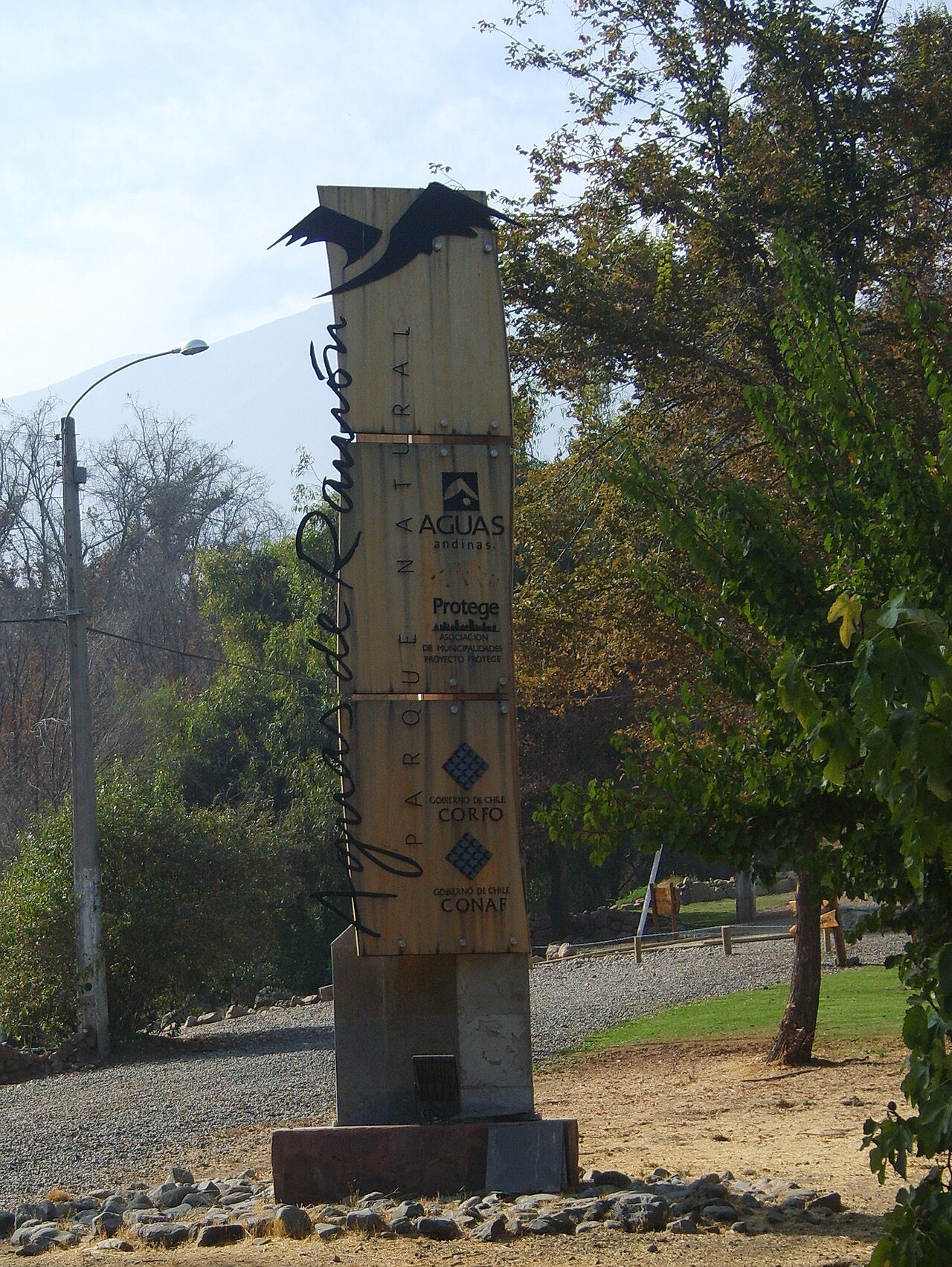
171 min walk
Parque natural Aguas de Ramón
- High
- Nature site
Language · 11 published
Nature site · Santiago

| Monday | 09:00 – 16:30 |
|---|---|
| Tuesday | 09:00 – 16:30 |
| Wednesday | 09:00 – 16:30 |
| Thursday | 09:00 – 16:30 |
| Friday | 09:00 – 16:30 |
| Saturday | 09:00 – 16:30 |
| Sunday | 09:00 – 16:30 |
Parsed from OpenStreetMap opening hours on 2026-08-26.
El Arrayan Nature Sanctuary, locally known as Santuario de la Naturaleza El Arrayán, is a protected foothill setting on the northeastern metropolitan edge of Santiago, Chile. It occupies the transition between the city and the Andean precordillera, giving travellers access to a natural environment without leaving the greater Santiago area. The sanctuary is named for the arrayán and is associated with river access and walking trails. Its character is quieter and more terrain-focused than the city’s plazas and urban parks. A visit is about moving through foothill nature, observing vegetation and water, and experiencing the change from metropolitan streets to a protected landscape. The location suits travellers who want an outdoor excursion with a strong sense of Santiago’s mountain edge.
Checked 2026-08-26 · Source
The sanctuary’s known features are river access and established trails. Together they create a natural walking experience shaped by foothill terrain, riparian surroundings, and the Andean transition zone. The trails are the main way to explore the site, while the river provides a second focus for observation and landscape photography. The setting is not defined by a sequence of constructed attractions. Instead, travellers should expect vegetation, water, uneven natural ground, and changing views as they move through the reserve. Arrayán trees are an important part of the place’s identity, reflected in its name. The combination of trails and river access makes the sanctuary suitable for a self-directed nature visit, with the landscape itself providing the structure.
Checked 2026-08-26 · Source
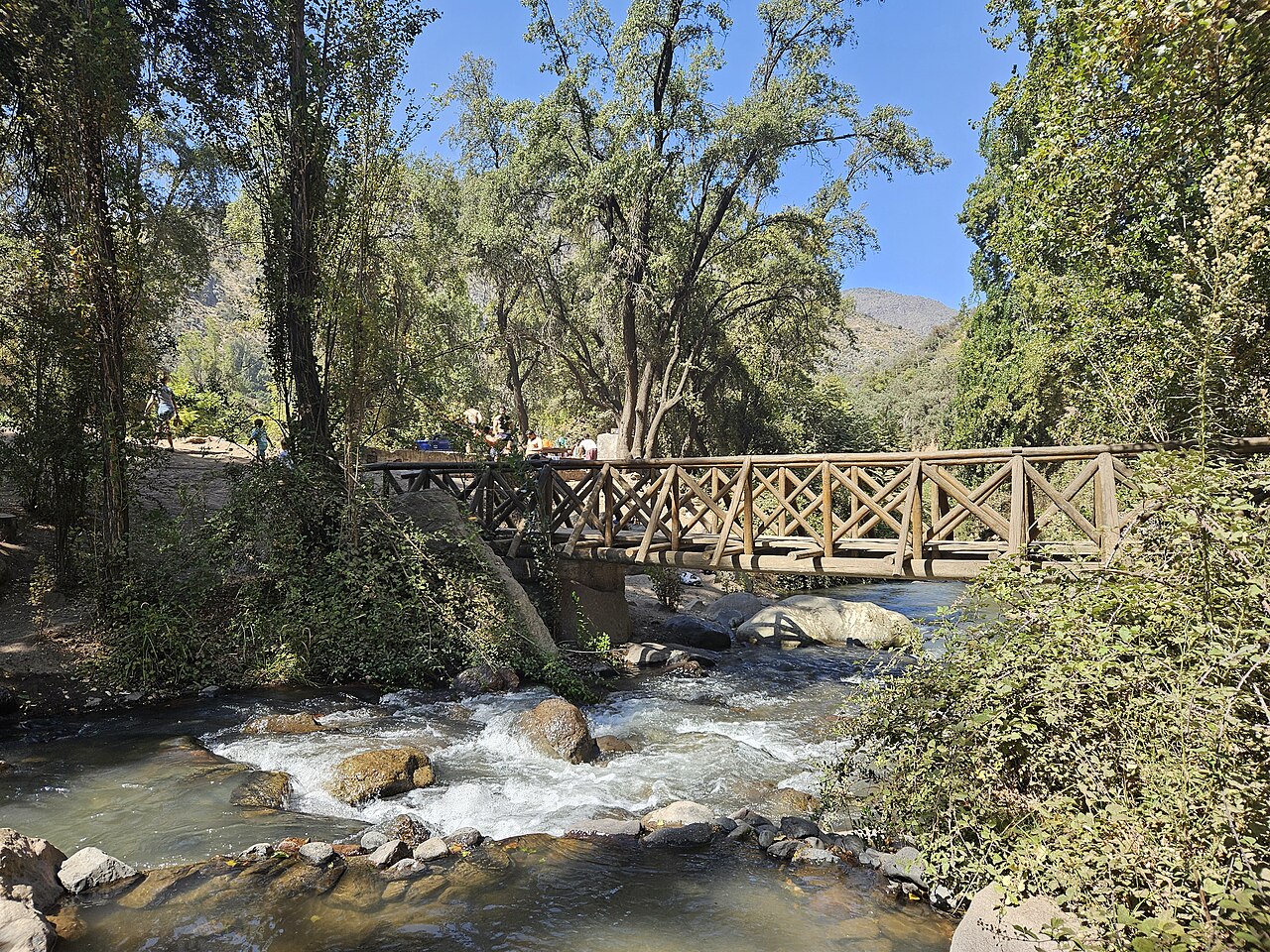
Allow one to three hours for a straightforward visit centred on walking the trails and spending time near the river. A slower excursion with nature observation, photography, or extended walking can take longer. The sanctuary’s metropolitan-edge position makes it suitable for a flexible half-day plan rather than an expedition requiring an overnight stay. Choose the length according to your fitness, pace, and comfort with foothill terrain. Leave enough time to return before daylight changes, especially during the shorter winter days. The visit is self-directed, so there is no required sequence that determines how long you remain. A shorter stop can focus on the river and nearby trails, while a longer one allows more deliberate exploration of the natural setting.
Checked 2026-08-26 · Source
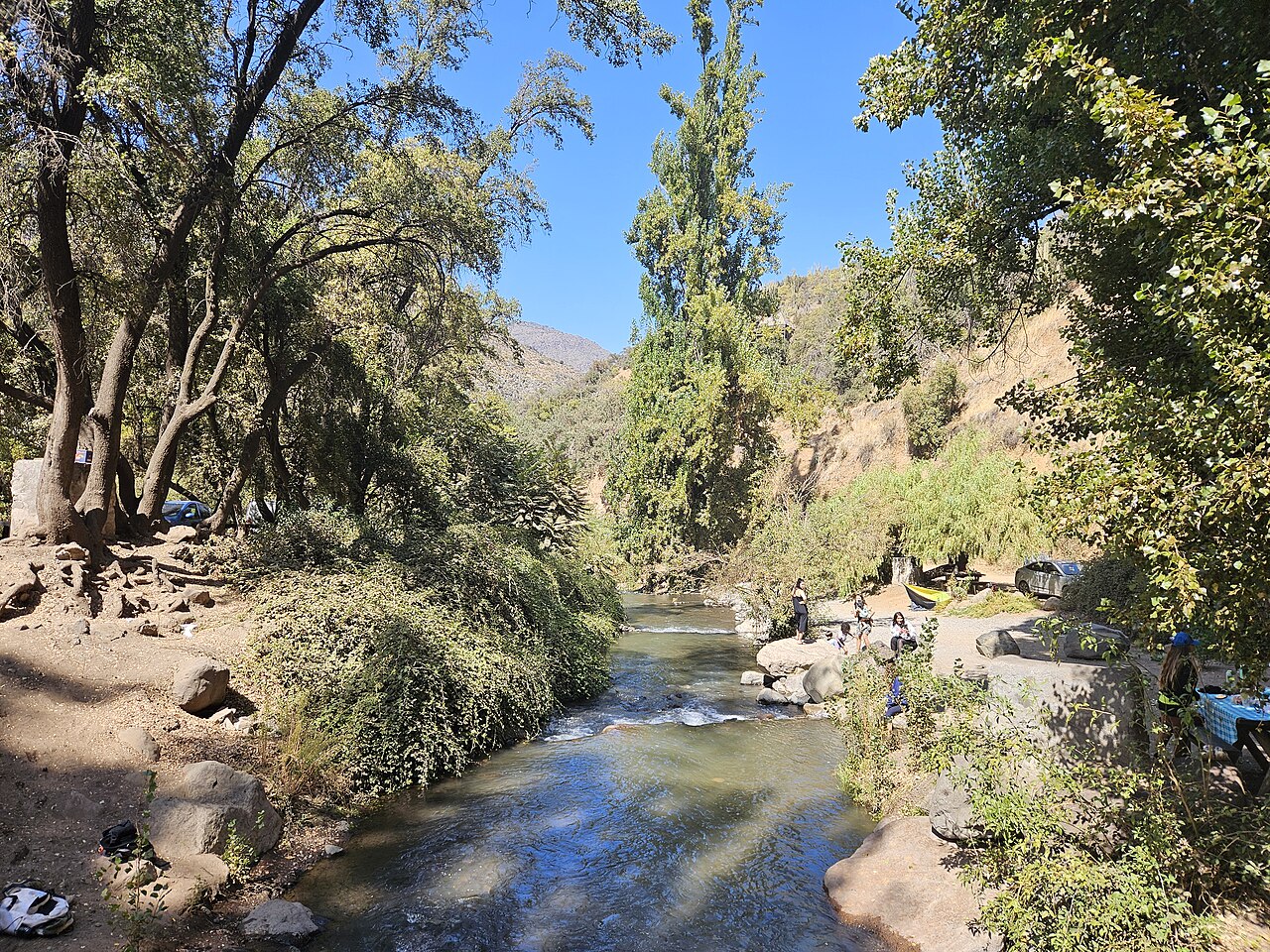
Spring and autumn generally provide moderate temperatures for walking in Santiago’s foothills. Summer can be hot and bright, making early-day exploration more comfortable and increasing the importance of water and sun protection. Winter brings cooler conditions and possible rain, which can affect natural trail surfaces and reduce available daylight. Morning is a strong choice when you want cooler air and clearer time for trail exploration. The sanctuary sits at the meeting point of city and mountain environment, so conditions can feel different from central Santiago. Plan clothing and footwear for outdoor terrain, and allow flexibility in the route if rain or changing ground conditions make walking slower. The best visit is one paced to the landscape rather than forced into a tight city schedule.
Checked 2026-08-26 · Source
The available guide information identifies El Arrayan Nature Sanctuary as a protected natural place but does not establish a ticket price or a free-entry arrangement. Plan the visit as an organised nature excursion and keep the sanctuary’s protected status in mind. The important experience is the trails, river access, and foothill environment, rather than a paid indoor programme. Group visits may require a different arrangement from individual walking, but the guide does not set out a price or entry process. Avoid building a budget around an invented fee. Instead, allow for the ordinary costs of reaching a northeastern Santiago destination and preparing for a trail-based outing, including water, suitable footwear, and sun protection.
Checked 2026-08-26 · Source
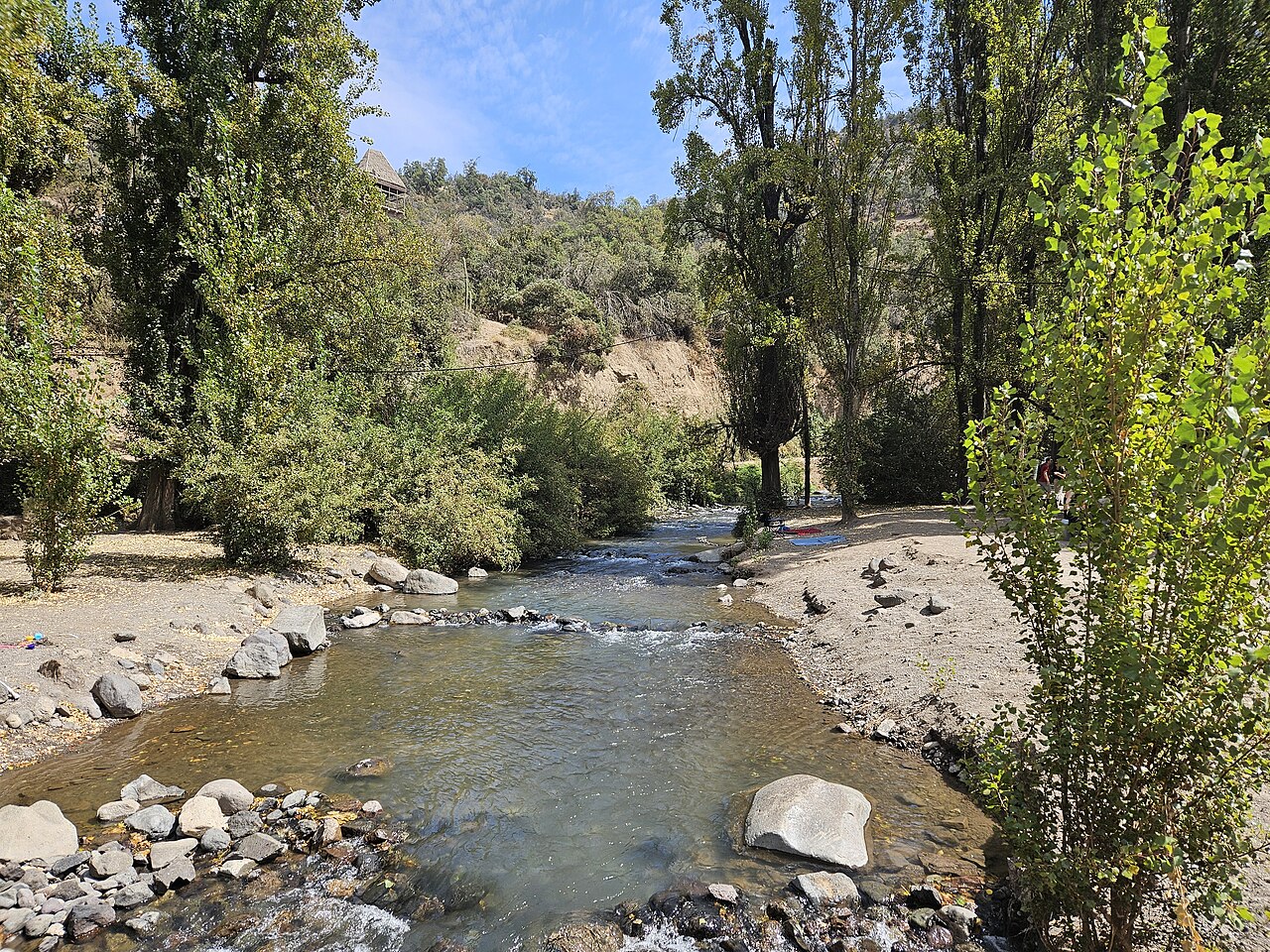
El Arrayan Nature Sanctuary lies on Santiago’s northeastern metropolitan edge, where the urban valley gives way to the Andean precordillera. Approach it as a foothill destination rather than a central-city stop. The wider journey can involve Santiago’s public transport network, a private vehicle, or a combination of transport and walking, depending on your starting point. The final approach reaches a more transitional urban-rural environment, so allow extra time for the change from city streets to foothill roads and trails. The sanctuary’s river and trail setting provides the clearest arrival reference once you are in the area. Plan the outing with enough time for the approach, the walk, and the return journey, since a peripheral nature visit does not have the same immediate transport density as central Santiago.
Checked 2026-08-26 · Source

Foothill trails can include uneven ground, changes in elevation, and surfaces that become more difficult after rain. Wear footwear suited to unpaved paths and keep your pace controlled. River access adds a separate safety concern: banks can be slippery, currents can be strong, and water conditions can change. Stay on established trails and keep a respectful distance from the water’s edge. Santiago’s sun can be intense, so carry water and use sun protection, particularly in summer. Weather may shift more quickly in the foothills than in the city centre. Tell someone where you are going, keep emergency contacts available, and avoid becoming separated from your group. The sanctuary is best enjoyed through careful, low-impact movement in the protected landscape.
Checked 2026-08-26 · Source

El Arrayan Nature Sanctuary offers photographs of foothill terrain, native vegetation, river scenery, and the meeting of protected nature with Santiago’s metropolitan edge. Arrayán trees provide a subject connected directly to the sanctuary’s name, while the river can support reflections and close views of the riparian setting. Morning and late-afternoon light can add depth to trails and vegetation, although the best composition should never take priority over safe footing. Wider images can show the change from the urban valley toward the precordillera; closer images can focus on bark, leaves, water, and trail detail. Move carefully with equipment, protect it near the river, and keep to the established paths so photography remains compatible with the sanctuary’s protected environment.
Checked 2026-08-26 · Source
The sanctuary is a protected foothill setting with established trails, river access, native vegetation, and an Andean precordillera landscape.
A trail-based visit usually fits into one to three hours, with longer possible for slower walking, photography, or nature observation.
It is on the northeastern metropolitan edge of Santiago, in the transition between the urban area and the Andean precordillera.
Bring water, sun protection, and footwear suitable for unpaved foothill trails and changing ground conditions.
The place is known as El Arrayán, a name associated with arrayán trees in the sanctuary’s natural setting.
River access adds a scenic and observational element to the trail visit; treat the banks and water as natural terrain requiring care.
Loading the interactive map…
The interactive map could not be loaded.


Last updated:
Source: OpenStreetMap contributors ·