
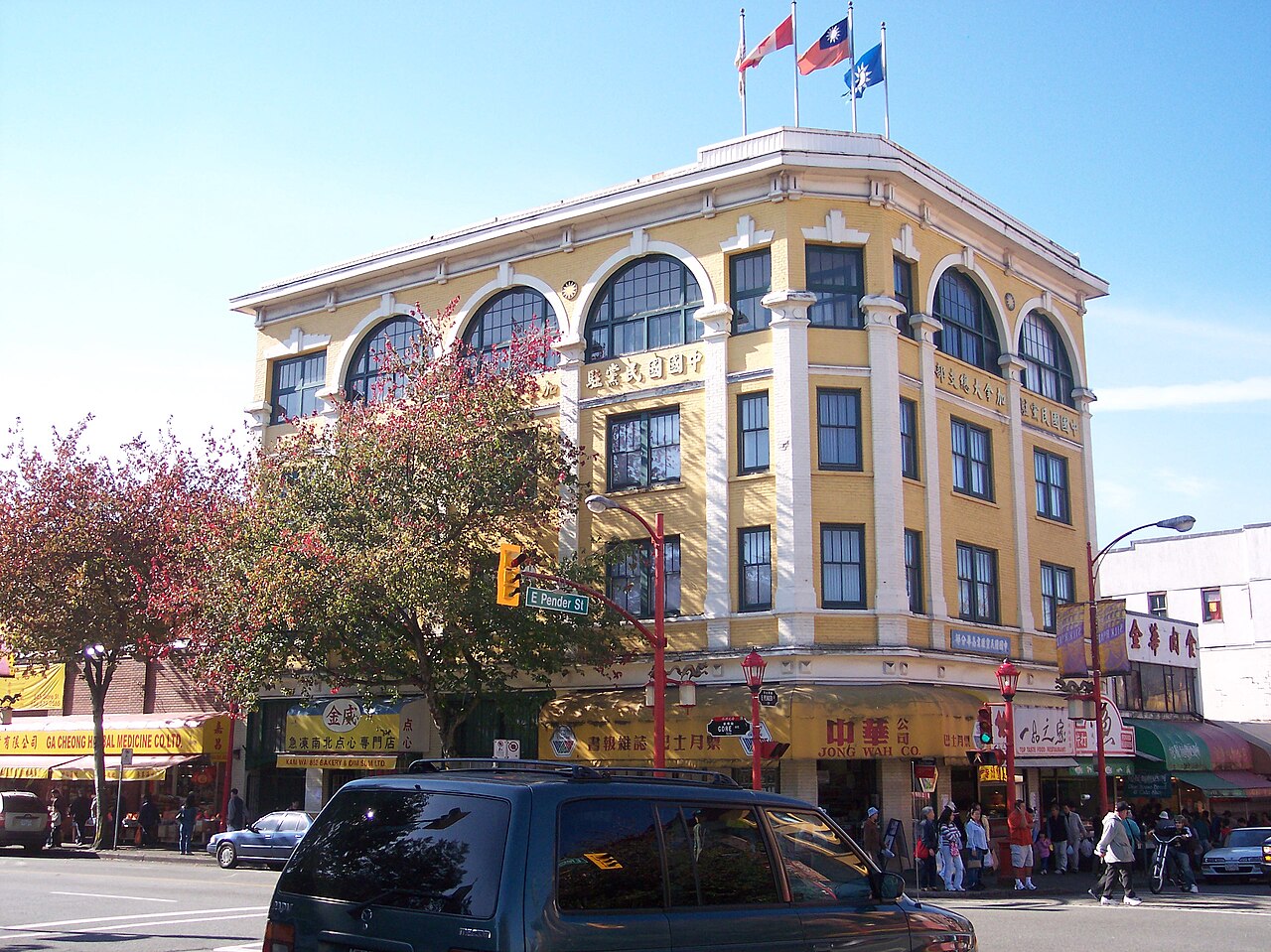
3 min walk
Kuomintang Building
- High · Heritage site
- Historic monument
Language · 11 published
Museum · Vancouver
| Monday | Closed |
|---|---|
| Tuesday | Closed |
| Wednesday | Closed |
| Thursday | 10:00 – 17:00 |
| Friday | 10:00 – 17:00 |
| Saturday | 10:00 – 17:00 |
| Sunday | 12:00 – 17:00 |
Parsed from OpenStreetMap opening hours on 2026-08-26.
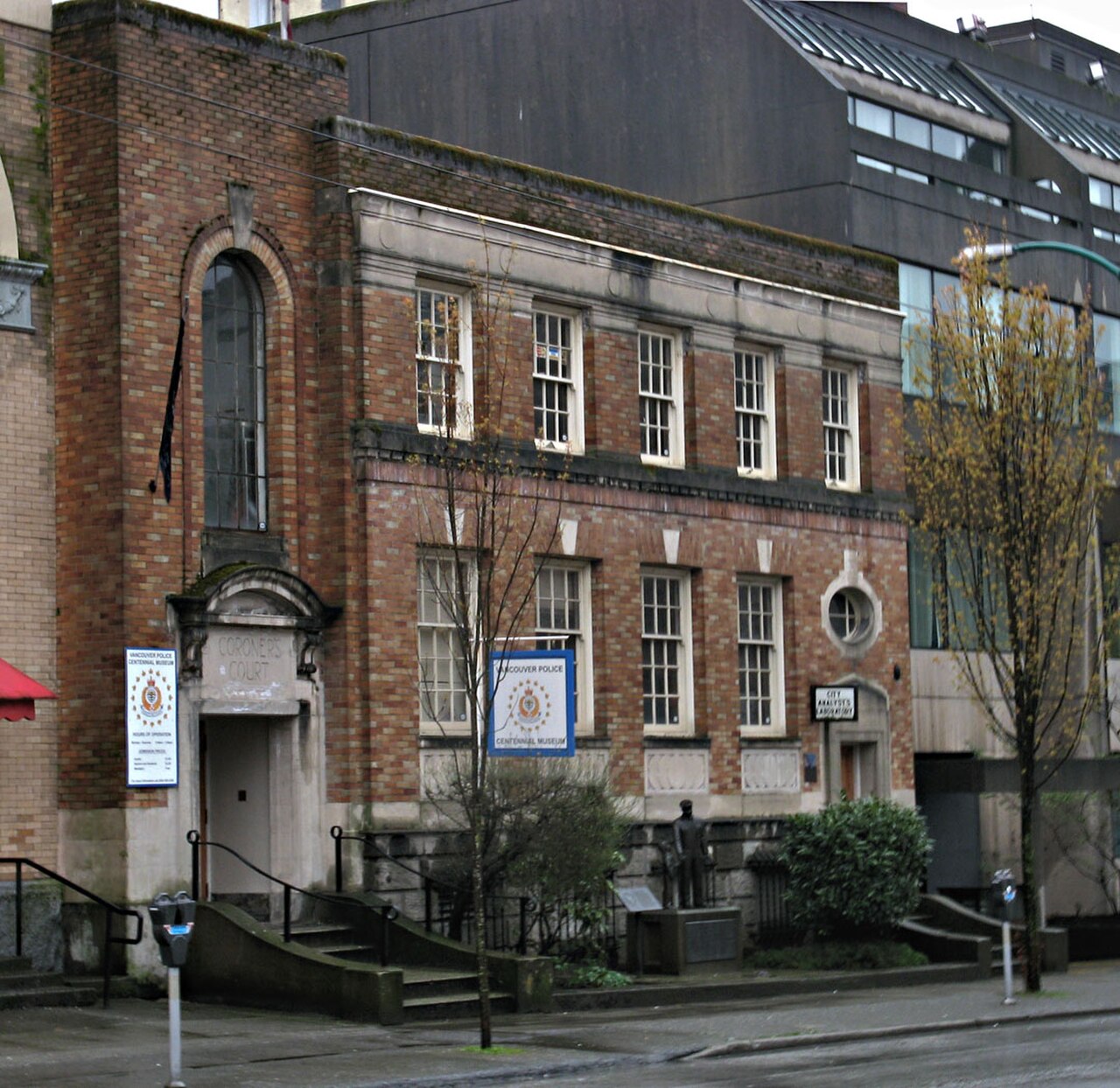
The Vancouver Police Museum occupies a heritage building that formerly served as the city's coroner's court and morgue. Operated independently of the Vancouver Police Department, it preserves and presents materials related to law enforcement history in Vancouver. The museum occupies a distinctive position among civic institutions by interpreting criminal justice, forensic science, and public safety through a local historical lens. Its specialised collections distinguish it from broader city museums, offering visitors a focused examination of how policing and death investigation shaped Vancouver's development as an urban centre.
Checked 2026-08-26
Exhibits centre on police and coronial history, including preserved evidence from notable local cases, historical uniforms, weapons, and forensic equipment. The museum retains features from its former function as a coroner's facility, including autopsy suites and the coroner's courtroom. Collections encompass photographs, documents, and artefacts illustrating investigative techniques across decades. Temporary displays rotate periodically. The institution interprets both the procedural aspects of law enforcement and the human stories behind criminal cases, presenting material that may include graphic content given the subject matter of death investigation and violent crime documentation.
Checked 2026-08-26
Most visitors allocate approximately one to two hours for a complete visit, though duration varies considerably based on individual engagement with detailed exhibit text and archival materials. The compact physical footprint of the heritage building constrains the scope of a single visit. Readers of extensive case documentation and those examining forensic artefacts closely may extend their stay. Self-guided pacing allows visitors to determine their own depth of engagement. School groups and organised tours may require adjusted timing. Visitors should assess their own interest in specialised historical material when planning schedule constraints.
Checked 2026-08-26
Visitors must consult the official website at https://vancouverpolicemuseum.ca/ or contact the museum directly before planning attendance. Seasonal variations, special events, and staffing limitations may affect accessibility. The heritage building's age and preservation requirements sometimes necessitate unscheduled closures. Advance verification remains essential given the museum's independent operational status and limited resources compared to major municipal institutions. Visitors travelling specifically to this site should confirm current status within forty-eight hours of intended arrival to avoid disappointment from unannounced changes. Check the operator's own site for the travel date before relying on a schedule or fare.
Checked 2026-08-26
The museum's independent non-profit status suggests admission fees likely apply to support collection maintenance and heritage building preservation, though specific categories, discounts, and payment methods remain unverified. Potential visitors should consult https://vancouverpolicemuseum.ca/ for current fee structures, membership options, and any available concession rates. Group rates and educational programming may require advance arrangement. Cashless payment policies or exact change requirements sometimes apply at smaller heritage institutions. Direct contact with museum staff provides the most reliable pricing information for budget planning purposes. Check the operator's own site for the travel date before relying on a schedule or fare.
Checked 2026-08-26
The museum occupies a central location in Vancouver's Downtown Eastside, accessible via multiple transit options. The SkyTrain's Stadium-Chinatown Station provides nearby rapid transit access. Numerous bus routes serve the surrounding street grid. Walking from the central business district or Gastown requires approximately ten to fifteen minutes. Street parking in the vicinity presents typical urban challenges including metered spaces, time restrictions, and demand fluctuations. Bicycle infrastructure exists though specific secure parking at the museum is Not recorded. Visitors should consult current transit schedules and parking regulations as these change periodically.
Checked 2026-08-26
The museum's content addresses death, crime, and forensic investigation with directness that may disturb sensitive visitors, including children. Graphic photographs, descriptions of violence, and preserved evidence from actual cases appear throughout. The heritage building features original architectural elements including steep stairs and narrow corridors that may present mobility challenges. The Downtown Eastside neighbourhood surrounding the museum experiences visible urban poverty and open drug use; visitors should exercise standard urban awareness without excessive alarm. Content warnings are advisable for visitors with trauma histories related to violence or death.
Checked 2026-08-26
Photography policies are Not recorded pending review. Many specialised museums restrict or prohibit photography to protect sensitive exhibit content, victim privacy, and donor agreements regarding case materials. Flash photography may damage aged documents and artefacts regardless of general permissions. Visitors should observe posted signage and staff instructions upon entry. Commercial or publication photography typically requires advance written permission. Social media sharing of graphic forensic content may raise ethical considerations even where technically permitted. When uncertain, visitors should request clarification from museum personnel rather than assuming unrestricted photographic access.
Checked 2026-08-26
No. The museum operates as an independent non-profit organisation, though it maintains thematic connections to policing history and preserves materials related to the Vancouver Police Department's past activities.
Specific collection contents regarding human remains are Not recorded. The building's former function as a morgue and coroner's court is interpreted, but visitors should consult the museum directly for current exhibit specifics.
Parental discretion is strongly advised. Content addressing crime, death, and forensic investigation may disturb younger visitors or those sensitive to graphic material. No specific age recommendations are recorded.
Tour availability is Not recorded pending review. Visitors should consult the official website or contact the museum directly regarding current programming, educational visits, and group arrangements.
The heritage building's original architecture includes stairs and narrow spaces that may present challenges. Specific accessibility features are Not recorded. Direct inquiry to the museum is recommended for individual needs assessment.
Research access policies are Not recorded pending review. Interested researchers should contact the museum directly through https://vancouverpolicemuseum.ca/ to inquire about archival consultation procedures and availability.
Loading the interactive map…
The interactive map could not be loaded.

Last updated:
Source: OpenStreetMap contributors, Wikidata ·