


.JPG)
3 min walk
Art & History Museum
- Must see · Heritage site
- Museum
Language · 1 published
Nature site · Brussels
Parc du Cinquantenaire - Jubelpark
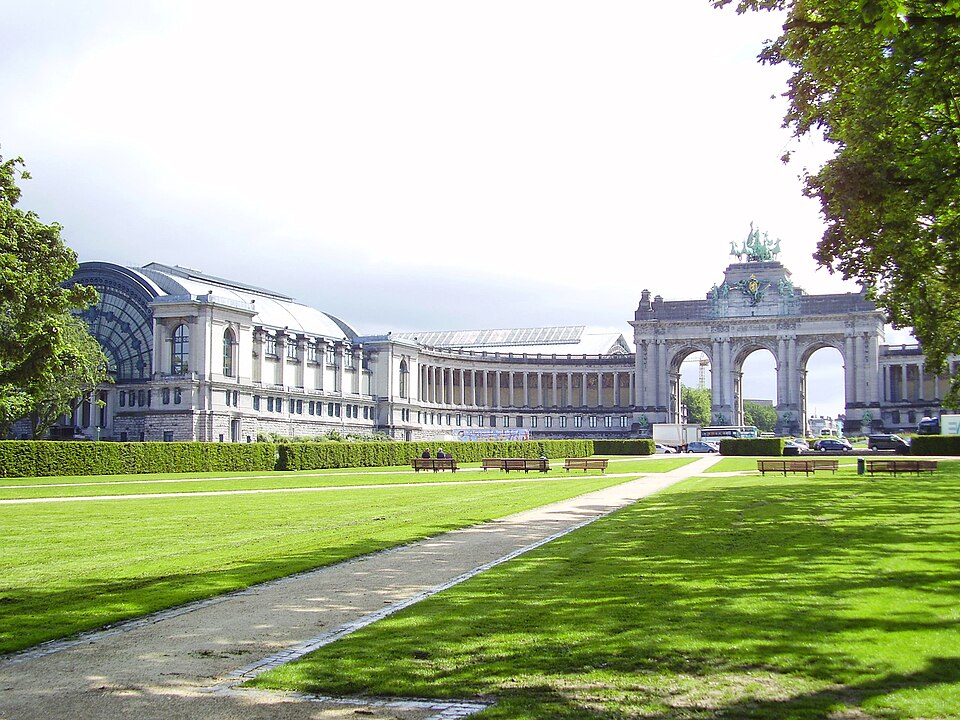
Cinquantenaire Park, also called Jubelpark, is the formal park and monumental complex in Brussels' European Quarter, made for Belgium's fiftieth anniversary in 1880. It began on the former Linthout drill ground and expanded after the 1880 national exhibition. The landscape pairs flower beds before the palace buildings with looser English-style planting at the sides. Its defining image is the triple triumphal arch and the sweeping colonnades, but the park is not a single museum or a single monument. It is a public landscape containing museums, the Horta-Lambeaux Pavilion, sculptures, paths and lawns. The arcades were built by the French architect Charles Girault between 1904 and 1905, while the Brussels heritage inventory identifies the park as a protected site. This guide concerns the park relation itself, not the separately mapped arcade, museums or mosque within the wider complex.
Checked 2026-08-26 · Source
Treat Cinquantenaire Park as a long outdoor walk with optional, separately run stops rather than as an attraction with one entrance. The central axis leads to the triple arch and its bronze quadriga, with broad paths, lawns and the palace buildings making the geometry easy to read. The Art & History Museum, the Royal Museum of the Armed Forces and Military History, and Autoworld occupy buildings on the site, but each is a distinct visit with its own route, ticketing and timetable. The small Horta-Lambeaux Pavilion is another independent destination. Visit Brussels also identifies monuments and sculptures across the grounds, and notes that the park hosts events through the year. A first visit works best when the park itself is the objective: walk the axis, look at the arcades and gardens, then choose one museum only if its separate practical information suits the day.
Checked 2026-08-26 · Source
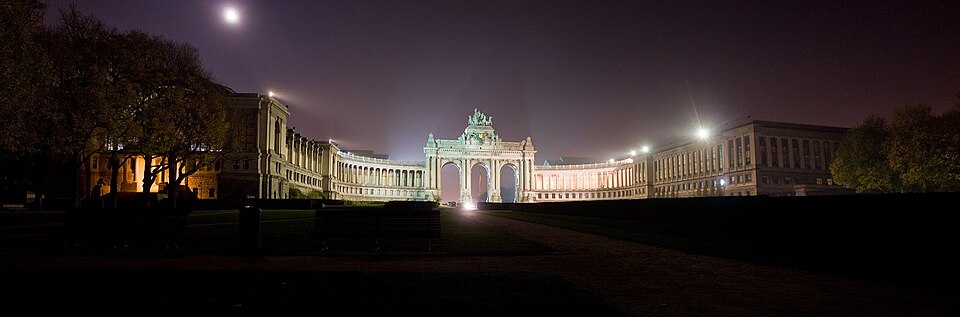
Allow 75 minutes for Cinquantenaire Park alone. That is enough to cross the main axis slowly, circle the arch, pause at the gardens and take photographs without treating the walk as a commute. Forty minutes works for a direct pass between Schuman and Merode; two hours suits anyone who wants to sit, inspect the sculptures or explore the outer paths. The estimate deliberately excludes the museums, the Horta-Lambeaux Pavilion and any temporary event, because they are separate visits with separate access conditions. A museum stop can turn the park into a half-day, but that should be planned from the institution's own guide rather than added casually to a 75-minute walk. The ground is broad and mostly level around the central lawns, so the duration is governed more by how many buildings you stop to consider than by physical effort.
Checked 2026-08-26
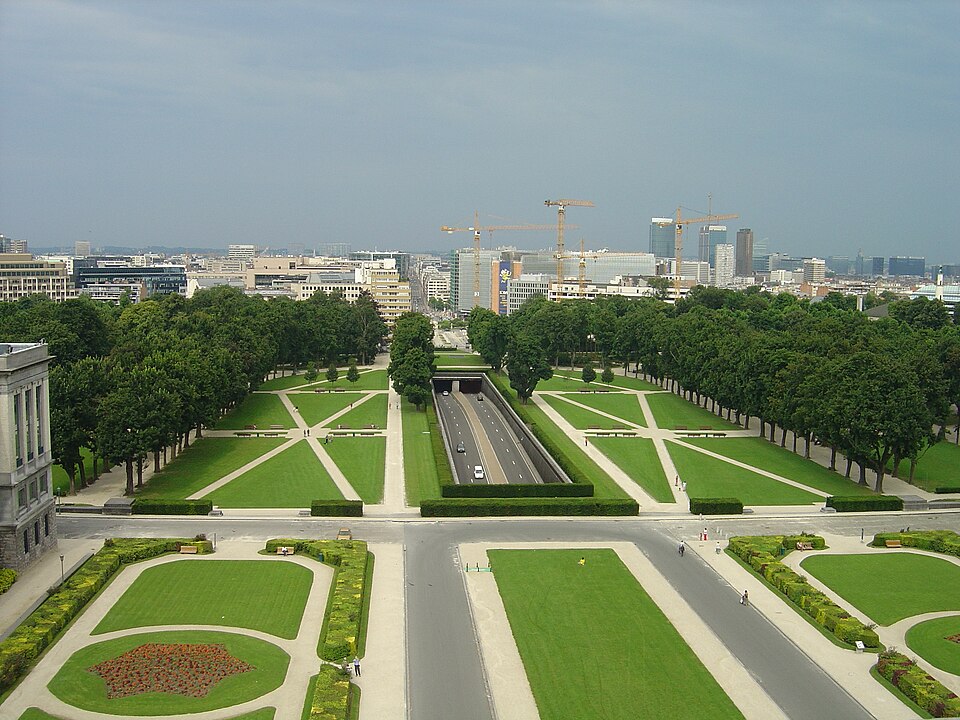
Go in daylight, preferably on a clear morning or in the late afternoon, when the long facade of the complex and the central arch are easier to read than under a flat midday sky. The park is a working public landscape rather than an indoor collection, so the experience changes with weather, lawn use and events. The Belgian Buildings Agency identifies Brussels Environment as the body that maintains the park and lists several projects across the complex. This guide does not record a park opening-hours timetable or closed day. In winter, allow for exposed paths and shorter daylight; in summer, use the grounds as a pause between nearby museums rather than planning around an unrecorded park schedule.
Checked 2026-08-26 · Source
No admission tariff is recorded for Cinquantenaire Park in this guide. The Belgian Buildings Agency identifies the Art & History Museum, the Royal Museum of the Armed Forces and Military History, Autoworld and the Horta-Lambeaux Pavilion as buildings on the site, but its project page does not state a tariff for a park walk. This guide therefore does not infer a park price from a building, an event or another access arrangement in the wider complex. Treat a walk through the grounds as distinct from entry to a named building. The park page is not evidence of a ticket, a booking rule or a charge for any individual institution.
Checked 2026-08-26 · Source
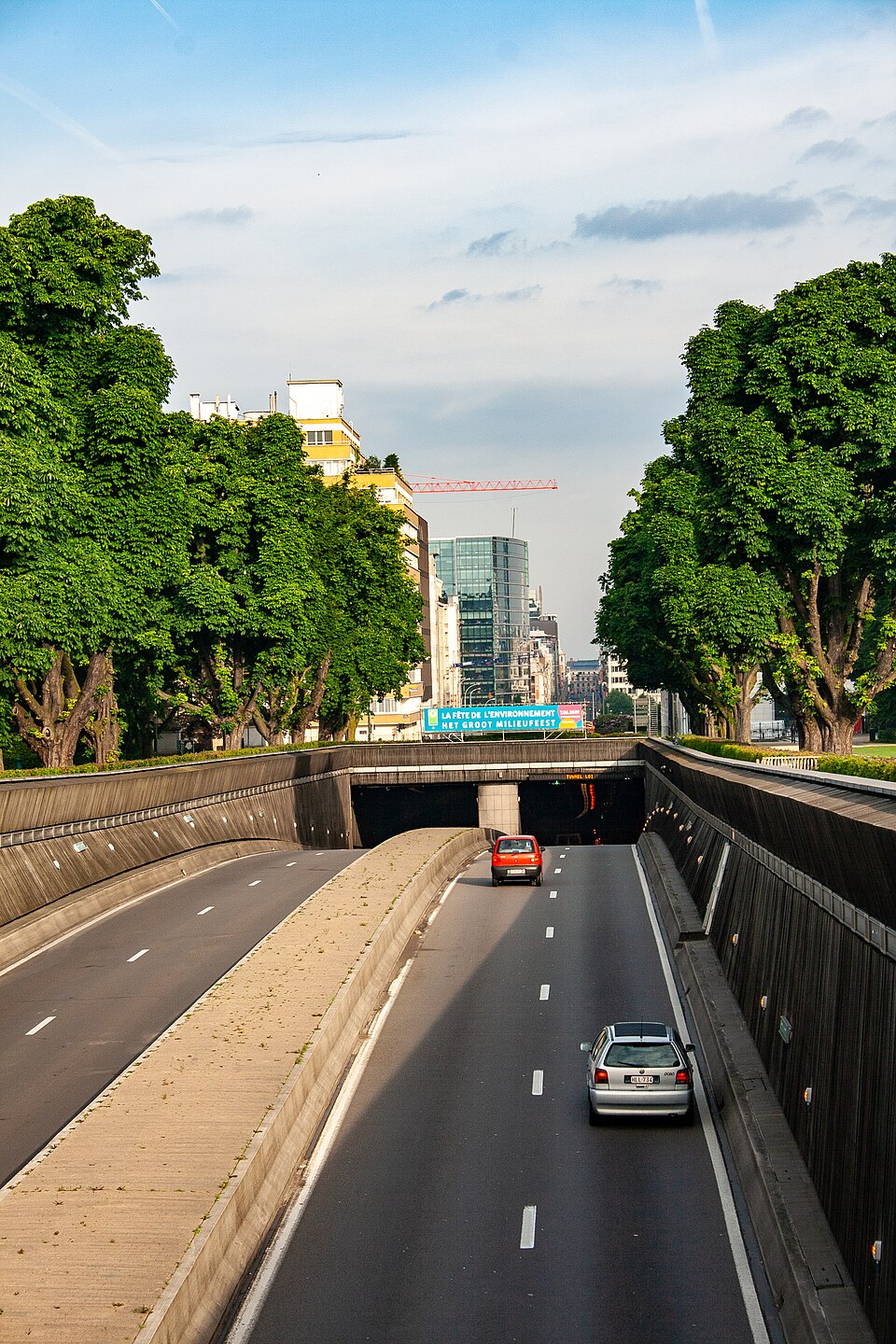
Approach Cinquantenaire Park as a through-walk across the European Quarter rather than a place to drive into. The Belgian Buildings Agency says parking has been prohibited on the esplanade and behind the arch since 2020, with the restriction extended to buses and events in 2023. It describes limited access for eligible disabled visitors and loading only. Its project page links separate official information for reaching the park by public transport, bicycle or car. This guide does not name a preferred line or stop. Leave enough time to cross the grounds between the entrances and buildings, because the site is a large complex rather than a single doorstep.
Checked 2026-08-26 · Source
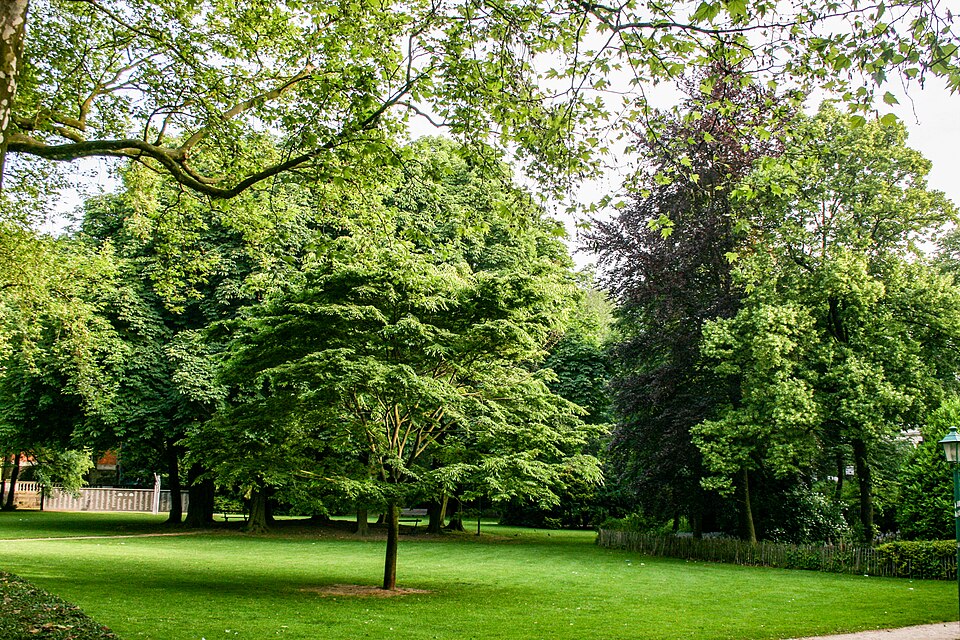
Works are the clearest practical issue at Cinquantenaire. The Belgian Buildings Agency lists several renovation and improvement projects across the complex, including work on the park, museums and facades. It also prohibits parking on the esplanade and behind the arch, except for the narrowly defined disabled-visitor and loading exemptions.
Checked 2026-08-26 · Source
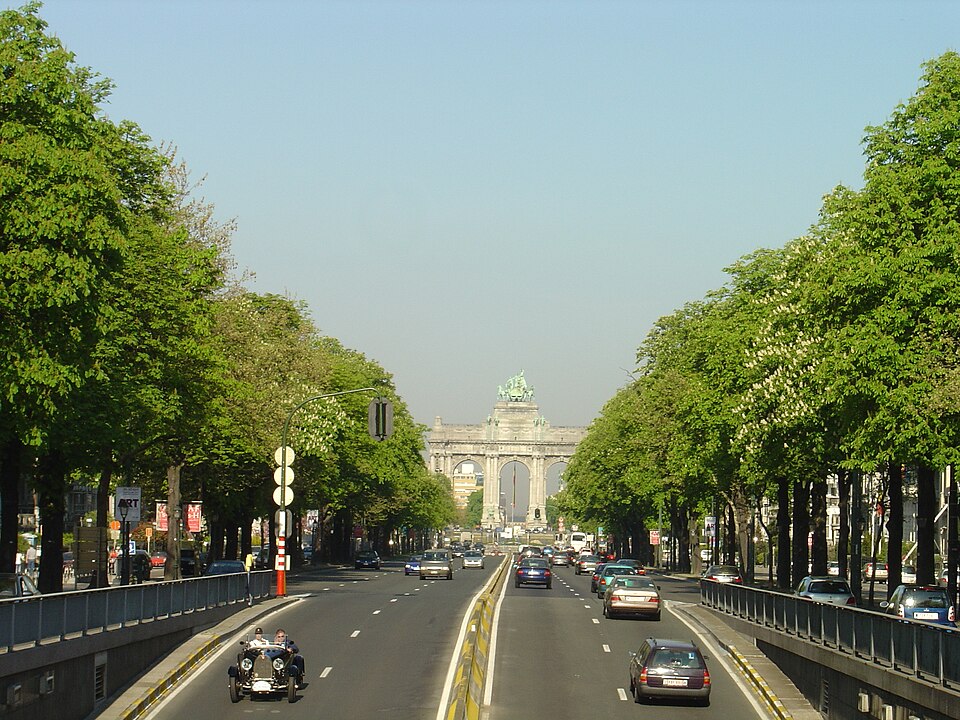
For a wide view, stand back on the central axis and include enough of the arcades to show the arch as part of a complete composition rather than as a cropped monument. A low or mid-height viewpoint works better than standing directly beneath the structure, where the columns converge aggressively and the quadriga becomes a silhouette. The side paths are useful for a quieter frame of the gardens against the palace buildings, particularly when the central lawn is busy. The most satisfying pictures usually combine one element of the formal garden with the long horizontal line of the colonnade; a phone's standard lens is often enough. In bright conditions, expose for the pale stone and let the sky run slightly lighter rather than losing the carved detail. Museums and the Pavilion have their own photography rules, so do not assume that an outdoor park photograph grants the same permission inside.
Checked 2026-08-26
Cinquantenaire Park is a monumental complex with a central triple triumphal arch and connected colonnades. The Belgian Buildings Agency identifies the park and its buildings as Belgian state property, names Brussels Environment as the park maintainer, and lists museums, the Horta-Lambeaux Pavilion, Autoworld and the Great Mosque among the site buildings.
Allow about 75 minutes for the park itself. That covers the central axis, the arch, the gardens and photographs at an unhurried pace. It does not include the Art & History Museum, the Royal Museum of the Armed Forces and Military History, Autoworld, the Horta-Lambeaux Pavilion or an event, because each is a separate visit with its own access arrangements.
No operator-published opening-hours timetable is recorded for the park in this guide. The Belgian Buildings Agency identifies Brussels Environment as the park maintainer, while its project page lists no park timetable or closed day. The guide therefore leaves those practical facts unrecorded rather than deriving them from a museum, an event or a parking restriction.
No admission tariff is recorded for Cinquantenaire Park. The Belgian Buildings Agency lists several institutions and buildings on the site but no tariff for a park walk. This guide therefore does not infer a park price from a museum, an event or another building in the wider complex.
Yes. The Belgian Buildings Agency identifies the Art & History Museum, the Royal Museum of the Armed Forces and Military History, Autoworld and the Horta-Lambeaux Pavilion as buildings on the site. The guide treats them as separate destinations within the wider complex, not as evidence of admission to a park walk.
Do not plan to park on the esplanade or behind the triumphal arch. The Belgian Buildings Agency says parking there has been prohibited since 2020, and the restriction was extended to buses and events in 2023. It describes limited exceptions for eligible disabled visitors and loading, not general visitor parking.
Loading the interactive map…
The interactive map could not be loaded.
Last updated:
Source: OpenStreetMap contributors, Wikidata ·