
12 min walk
Riverside Church
- Must see · Heritage site
- Place of worship
Language · 11 published
Place of worship · New York
Cathedral of Saint John the Divine
Reviewed by Elena Voss · SSMTour Travel Editor
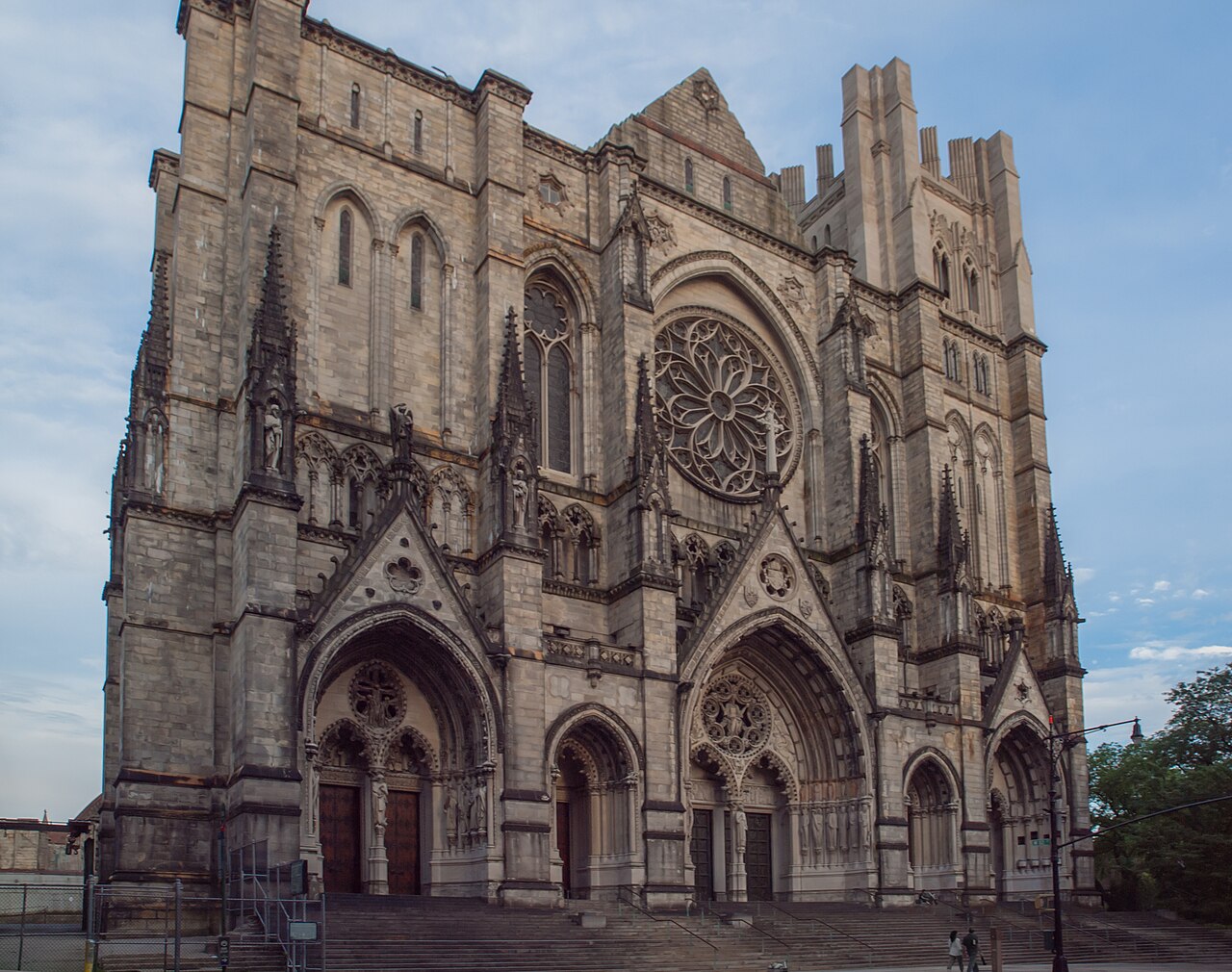
This place is a Attraction. It was established in 1899. It was built in the Romanesque Revival architecture style.
The Cathedral of Saint John the Divine is an active Episcopal cathedral in Morningside Heights, Manhattan, and the seat of the Diocese of New York. Its Gothic Revival design developed through construction phases that began in the nineteenth century. The building serves worshippers while also welcoming visitors interested in architecture, art, music, and New York’s religious heritage. The Cathedral of Saint John the Divine is a major Episcopal cathedral in New York City. It serves as the seat of the Diocese of New York. Construction began in the late nineteenth century and continued across multiple phases. The building represents one of the largest cathedral structures in the world by volume. Its architectural style incorporates elements of Gothic Revival design. The cathedral functions as an active place of worship alongside its role as a cultural and community destination. It occupies a prominent position in the Morningside Heights neighborhood of Manhattan. Construction occurred across extended periods with interruptions. The building remains functionally operational despite incomplete elements according to historical construction patterns.
Checked 2026-08-26 · Source
Inside, the cathedral’s nave rises through a vast Gothic interior of stone columns, arches, chapels, carvings, and stained glass. A substantial pipe organ contributes to the building’s musical identity. Temporary exhibitions and art installations may share the worship spaces. Look for the contrast between completed architectural details and areas that preserve the visible story of the cathedral’s long construction history. The interior contains expansive nave space with soaring vertical elements typical of Gothic cathedral design. Chapels dedicated to various saints and purposes line the perimeter. Stained glass windows filter colored light throughout the worship spaces. Stone carvings and sculptural details adorn columns and archways. The cathedral houses musical instruments including a substantial pipe organ. Temporary art installations and exhibitions appear periodically within the building. Visitors encounter both completed sections and areas showing evidence of ongoing construction history. The atmosphere combines sacred function with architectural monumentality.
Checked 2026-08-26 · Source
Set aside at least one hour for a straightforward look through the main visitor areas. Architecture enthusiasts can spend longer studying the chapels, stained glass, carvings, and vertical scale of the nave. A service, concert, exhibition, or quiet period of contemplation changes the rhythm of the visit. Pairing the cathedral with nearby Morningside Heights or northern Central Park can fill half a day. Individual visitor pacing varies considerably based on interest in architecture, art, and worship spaces. A general walkthrough of main accessible areas typically requires at least one hour. Those examining details closely or attending services should extend their planned duration. The building's scale demands substantial walking distance even for superficial coverage.
Checked 2026-08-26 · Source
Choose a time that suits your purpose: daylight reveals the stained glass and exterior masonry, while worship and cultural events give the cathedral a different atmosphere. Because it remains an active place of worship, visitors share the building with congregants and event audiences. Religious observances, concerts, exhibitions, restoration, and construction can change which spaces are available during a visit.
Checked 2026-08-26 · Source
Visitor admission can differ from attendance at worship, and special concerts, exhibitions, or other programs can use separate arrangements. Treat the cathedral as both a religious building and a cultural attraction: the experience may involve a contribution, an entry arrangement, or event access depending on what you are attending. The building’s value comes from its architecture, sacred setting, music, and community role.
Checked 2026-08-26 · Source
The cathedral stands on Amsterdam Avenue in Morningside Heights, west of the northern extension of Central Park. Reach the neighborhood by New York City subway or bus, then continue on foot through the surrounding avenues. The location works naturally with a walk through Morningside Heights, nearby university streets, or the park. Driving means dealing with Manhattan traffic and changing street-parking conditions.
Checked 2026-08-26 · Source
Remember that this is a working cathedral: keep voices low, dress respectfully, and leave worshippers space. Restoration and construction can restrict parts of the building. Stone floors may become slippery when wet, and the large interior can feel disorienting. Crowds increase during major observances and cultural events. Photography may be limited in particular areas or during services, so follow signs and staff directions.
Checked 2026-08-26 · Source
The exterior needs distance to convey the cathedral’s monumental scale. Inside, frame the nave’s columns and arches vertically, then look for stained glass, chapels, stone carvings, and organ details. Bright windows beside shadowed stone create strong contrast, so careful exposure helps. Keep equipment unobtrusive, avoid flash near worship, and respect any areas where photography is restricted.
Checked 2026-08-26 · Source
The cathedral uses Gothic Revival architecture, with a soaring nave, pointed arches, stone carvings, chapels, and stained glass.
Yes. It is an active Episcopal cathedral and serves as the seat of the Diocese of New York, so visitors share the building with worship and community activities.
The interior includes a large nave, chapels, stained glass windows, stone carvings, sculptural details, and a substantial pipe organ. Art installations may also be present.
The cathedral is on Amsterdam Avenue in Manhattan’s Morningside Heights neighborhood, west of the northern extension of Central Park.
Allow at least one hour for the main visitor areas. Architecture, music, worship, exhibitions, and quiet reflection can make the visit longer, especially when combined with nearby attractions.
It is one of the world’s largest cathedral structures by volume and combines an active religious role with Gothic Revival architecture, music, art, and community programming.
Loading the interactive map…
The interactive map could not be loaded.

Last updated:
Source: OpenStreetMap contributors, Wikidata ·