
01
1 hr 30 min
ʻIolani Palace
ʻIolani Palace is the former royal residence of Hawaiʻi’s monarchy and a central landmark of the Hawaiian Kingdom.
- Must see
- Museum
Language · 1 published
City guide · United States
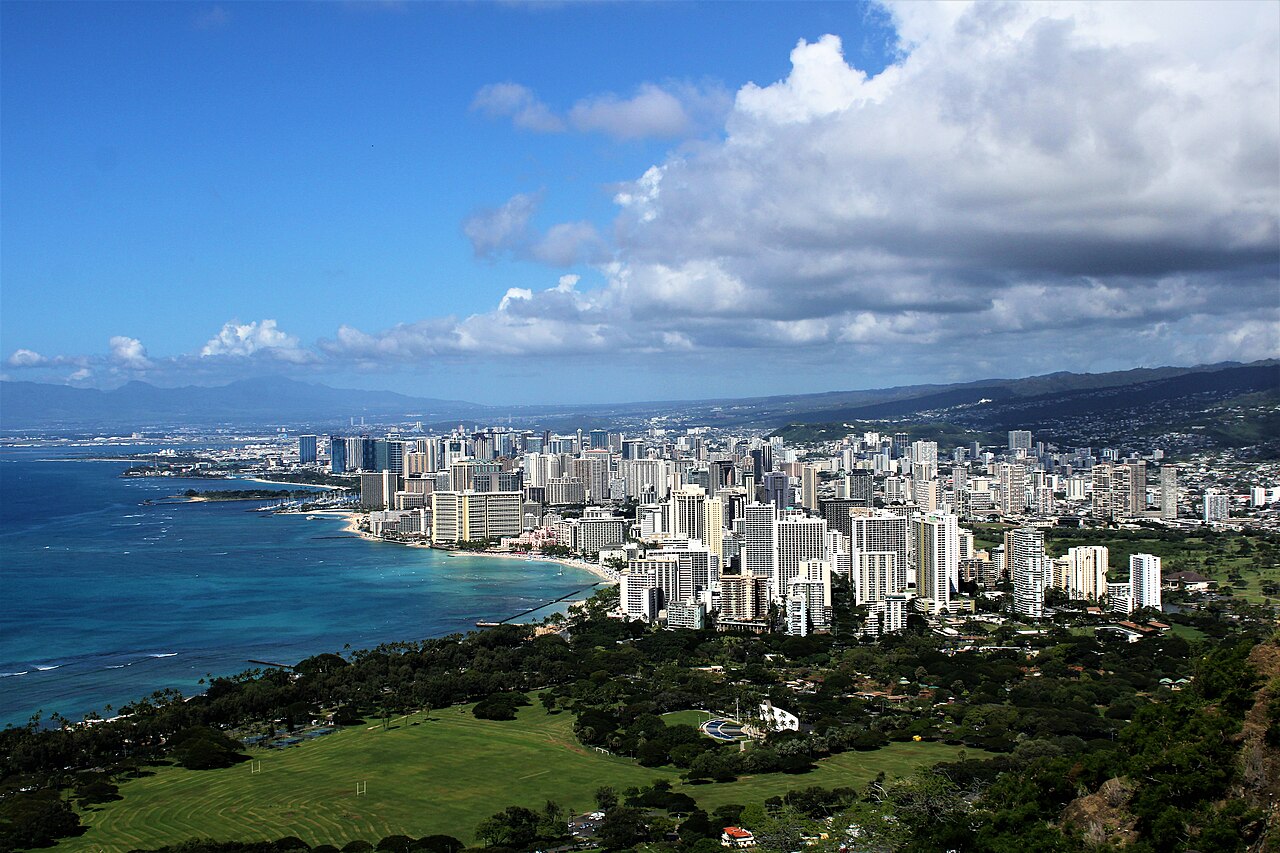
Honolulu is the urban centre of Oʻahu, with Waikīkī, Downtown and the south shore forming the principal visitor base. Pearl Harbor lies west, while the Windward Coast, Central Oʻahu, the Leeward Coast and the North Shore are separate island regions rather than city neighbourhoods. Keep city days focused on Honolulu and treat farther Oʻahu sites as planned excursions with their own transport time.
Ranked by importance — sitelinks, pageviews and heritage status, not editor preference.
50 places match
Category
Typical visit duration
Interests
ʻIolani Palace is the former royal residence of Hawaiʻi’s monarchy and a central landmark of the Hawaiian Kingdom.
Hanauma Bay Nature Preserve is a protected marine embayment on Oahu's southeastern coast. It was formed within a volcanic cone and is managed by the City and County of Honolulu.
Bishop Museum is the principal museum for Hawaiʻi and Pacific natural and cultural history. Founded in 1889, it holds the world's largest collection of Polynesian cultural artifacts and natural history specimens.
Kualoa Ranch is a private nature reserve and working cattle ranch occupying approximately 4,000 acres of coastal and valley land on Windward Oʻahu. The property extends from the flanks of the Koʻolau Range to Kāneʻohe Bay.
Waikīkī Aquarium is a historic public aquarium on the Waikīkī shoreline beside Kapiʻolani Park.
Nuʻuanu Pali is a section of the Koʻolau mountain range on Oʻahu, Hawaii. The Pali Lookout offers views of the Windward Coast.
Makapuʻu Point is the easternmost point of the island of Oʻahu in the Hawaiian Islands.
Pearl Harbor Aviation Museum occupies historic hangars on Ford Island in the middle of Pearl Harbor. The museum preserves and interprets aviation history related to the December 7, 1941 attack on Pearl Harbor and broader Pacific aviation heritage.
Honolulu Museum of Art is Honolulu’s principal public art museum, connecting Hawaiʻi, Asia, the Pacific, Europe, and the Americas.
Shangri La is Doris Duke’s former Honolulu estate, now a museum devoted to Islamic art, culture, and design.
Koko Head is a prominent tuff cone on the southeastern coast of Oahu, Hawaii, near Honolulu. The landform rises above the Pacific shoreline and forms part of the Koko Head District Park area.
Waimea Valley is a cultural and botanical site on Oahu's North Shore. The valley holds significance as a Native Hawaiian place of residence and worship, with archaeological evidence of past habitation.
Waimea Bay is a prominent beach on Oahu's North Shore in Hawaii. The bay is internationally recognized for its powerful winter surf, which has played a central role in the development of big-wave surfing.
Washington Place is a historic residence in Honolulu, Hawaii. Built in the 1840s, it served as the home of Queen Liliuokalani, the last reigning monarch of the Kingdom of Hawaii, and later became the official residence for territorial governors.
Queen Emma Summer Palace, known locally as Hānaiakamalama, stands in Nuʻuanu Valley as a historic residence with deep ties to Hawaiian royalty.
The U.S. Army Museum of Hawaiʻi is a military-history museum housed in the former Battery Randolph at Fort DeRussy in Waikiki, Honolulu.
The Pacific Fleet Submarine Museum is a Pearl Harbor-area museum dedicated to interpreting the history of the United States submarine service. It is associated with the USS Bowfin, a World War II-era submarine preserved as a memorial and exhibit.
Sea Life Park Hawaiʻi is a marine park and education attraction situated on the southeastern coast of Oʻahu at Makapuʻu Point, near Honolulu. The facility focuses on marine animal encounters, conservation messaging, and interactive educational experiences with Hawaiian marine life.
Source: OpenStreetMap contributors, Wikidata ·
Waikīkī occupies the south shore east of Downtown Honolulu. Downtown contains the civic and historic core, while Ala Moana sits between them and Diamond Head marks the eastern end of the main urban visitor strip. Pearl Harbor is west of the centre. Beyond Honolulu, the island divides into Windward, Central, Leeward and North Shore regions, each requiring deliberate travel rather than an extension of a city walk.
Checked 2026-08-26
Walk within Waikīkī and compact parts of Downtown, then use TheBus, shuttles, taxis, rideshares or a rental vehicle for longer trips. Biki bike share serves Honolulu and Waikīkī, while island attractions outside the urban core can require substantially more travel time. Public transport reaches many cultural and scenic sites, but check current routes and the return schedule before committing to a distant Oʻahu excursion.
Checked 2026-08-26
A fixed stay length is not recorded. Separate Honolulu and Waikīkī sightseeing from excursions to Pearl Harbor, the Windward Coast or the North Shore.
No. Waikīkī is the main resort district on the south shore, while Downtown contains the civic and historic core farther west.
Yes. Walking, TheBus, Biki, shuttles, taxis and rideshares cover the main urban areas. A car can be useful for dispersed island destinations outside Honolulu.
No. It is a separate Oʻahu region and requires a planned island journey. Do not treat it as a quick extension of a Waikīkī walking day.
Biki is Honolulu's bike-share system and serves Honolulu and Waikīkī. Check the current station map before relying on it for a specific route.
Set your days, your pace and the hours you actually want to be out. The planner works around closing days and travel time, and leaves room to eat.