

254 min walk · Seferihisar
Teos
- Must see
- Historic monument
Language · 11 published
Historic monument · Urla, İzmir
| Monday | 08:30 – 19:00 |
|---|---|
| Tuesday | 08:30 – 19:00 |
| Wednesday | 08:30 – 19:00 |
| Thursday | 08:30 – 19:00 |
| Friday | 08:30 – 19:00 |
| Saturday | 08:30 – 19:00 |
| Sunday | 08:30 – 19:00 |
Checked 2026-09-02 · Source
Read from the OpenStreetMap access tags; anything not listed has no tag recorded.
Set the group type to family in the planner and the day window contracts to about three quarters of a solo day.
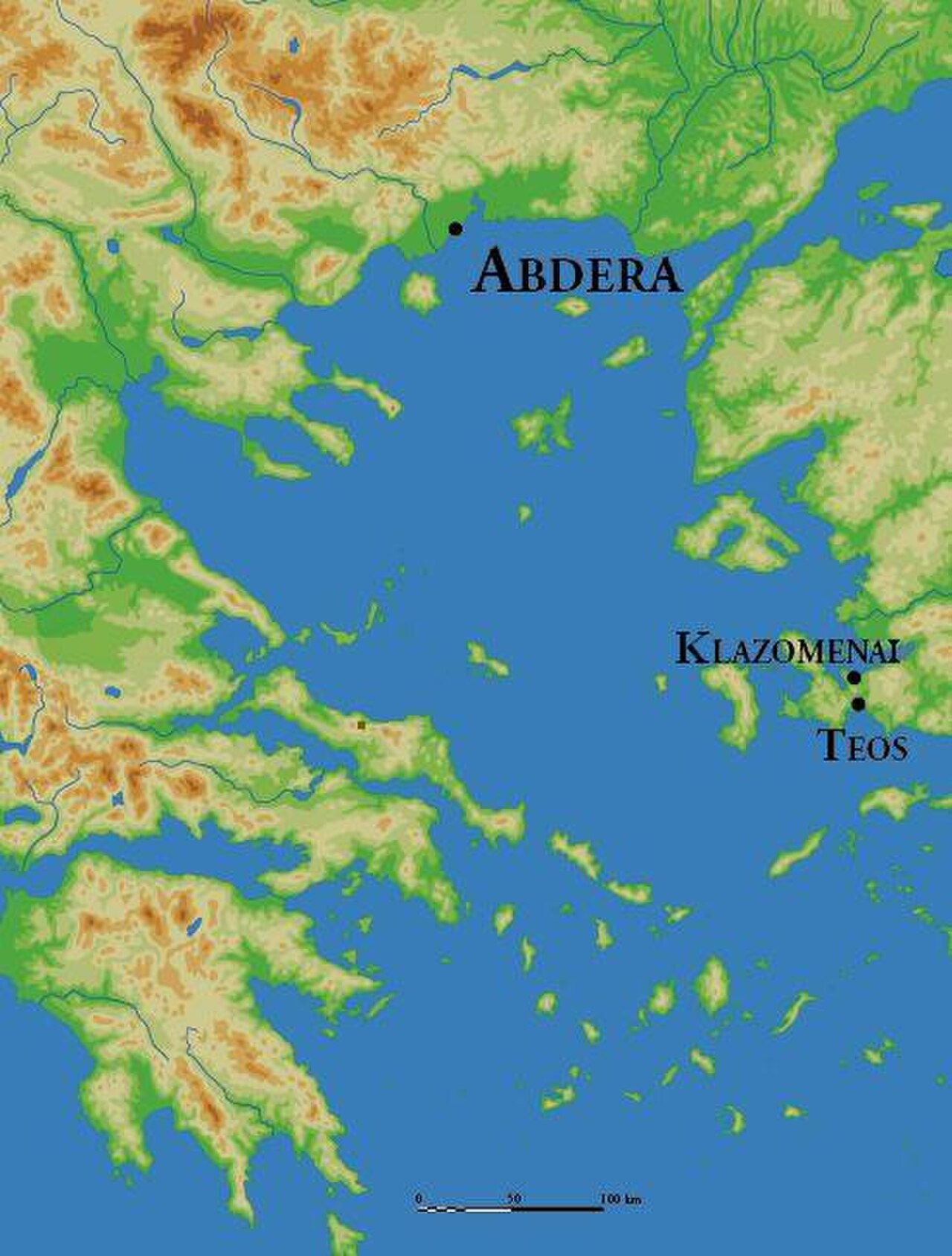
Klazomenai is an archaeological site on the Urla coast and was one of the twelve Ionian cities. Its remains spread through the Limantepe area of İskele Mahallesi and extend toward Karantina Island, placing the ancient settlement within a distinctly coastal landscape. Evidence of occupation reaches back to around 4000 BC, while later remains reflect the city’s development across the Geometric, Archaic and Classical periods. The visit is an open-air encounter with an ancient urban centre rather than a single monumental building, so its character comes from connecting surviving traces with the shoreline, road corridor and wider İzmir Gulf setting.
Checked 2026-09-02 · Source
Klazomenai preserves evidence for changing domestic, civic and productive life. During the Geometric period, dated to about 900–650 BC, residents used both apsidal and rectangular-plan houses, showing that the settlement included more than one architectural form. In the 7th century BC, the city was enclosed by a fortification wall, marking a substantial stage in its urban development. The olive-oil workshop is especially distinctive: it dates to the 6th century BC and is described by İzmir’s official tourism portal as one of Anatolia’s earliest known olive-oil workshops. That workshop gives the site a direct, tangible link to ancient technology, production and exchange.
Checked 2026-09-02 · Source
Allow about 45–75 minutes for a focused visit to the visible archaeological area, including time to understand the settlement sequence and examine the olive-oil workshop remains. A slower visit can take around 90 minutes if you pause to relate Limantepe to the road corridor, coastal outlook and direction of Karantina Island. Klazomenai works best as a compact archaeological stop within a wider Urla day, rather than as a full-day attraction by itself. Build additional travel time into your plan from central İzmir, since the site is about 38 km away and the remains are spread through a broader coastal setting.
Checked 2026-09-02 · Source
The official museum listing gives Klazomenai daily opening hours of 08:30–19:00 and states that there are no closed days. The ticket office closes at 18:30, creating a separate arrival deadline even though the archaeological site remains listed as open until 19:00. Morning or late afternoon is practical for an exposed coastal setting: earlier light can make low archaeological traces easier to read, while later light connects the remains with the İzmir Gulf landscape. If you plan a short evening stop, arrive before the ticket-office closure rather than relying on the later site closing time.
Checked 2026-09-02 · Source
General admission to Klazomenai is free according to the official museum listing, so the archaeological visit itself requires no admission budget. The important practical limit is the ticket-office schedule: the site is listed as open daily from 08:30 to 19:00, but the ticket office closes at 18:30. Treat 18:30 as the latest useful arrival time for entry. Because the remains are distributed across an archaeological landscape rather than concentrated in one indoor gallery, the free admission also makes Klazomenai easy to combine with a longer Urla itinerary around İskele, Limantepe and the coast.
Checked 2026-09-02 · Source
Klazomenai is in İskele Mahallesi, Urla, approximately 38 km from central İzmir. The archaeological remains extend around Limantepe beside the İzmir–Çeşmealtı road and continue toward Karantina Island. Urla and İskele are the useful approach points for a road trip, after which local directions and the official location information help identify the archaeological area. The coastal-road position makes the site straightforward to pair with a Urla outing, although the spread of the remains means that it should be planned as an archaeological landscape rather than a single compact building. Keep the 18:30 ticket-office deadline in your route timing.
Checked 2026-09-02 · Source
Expect an open-air archaeological visit organised around settlement traces, walls, workshop evidence and the relationship between the ancient city and the coast. Klazomenai is spread around Limantepe and toward Karantina Island, so the experience is not a single enclosed museum sequence. Comfortable footwear is useful, and the exposed setting calls for attention to sun and heat during the middle of the day. An official educational listing identifies step-free access as available, but outdoor archaeological surfaces may still vary in smoothness. Keep the 18:30 ticket-office closing time distinct from the 19:00 site closing time when planning arrival.
Checked 2026-09-02 · Source
Photograph Klazomenai as both an archaeological site and a coastal landscape. Start with closer views of the olive-oil workshop, wall lines and other surviving settlement traces, then widen the frame toward Limantepe and the direction of Karantina Island. Early or late light can give low remains more texture and reduce the flat glare that often affects exposed surfaces around midday. Because the site extends through İskele Mahallesi, a sequence of photographs can also show the changing relationship between ancient urban space, the İzmir Gulf and the modern İzmir–Çeşmealtı road corridor. Wide views are most useful when they remain anchored by a specific archaeological detail.
Checked 2026-09-02 · Source
Klazomenai was one of the twelve Ionian cities.
The site has evidence of settlement from around 4000 BC.
The remains are in the Limantepe area of İskele Mahallesi, Urla, with part of the ancient city extending toward Karantina Island.
Residents lived in apsidal and rectangular-plan houses during the Geometric period, dated to about 900–650 BC.
Klazomenai was enclosed by a city wall in the 7th century BC.
The olive-oil workshop is dated to the 6th century BC and is described by İzmir’s official tourism portal as one of Anatolia’s earliest known olive-oil workshops.
Loading the interactive map…
The interactive map could not be loaded.

Last updated:
Source: OpenStreetMap contributors, Wikidata ·