199 min walk · Torbalı
Metropolis
- Must see
- Historic monument
Language · 11 published
Historic monument · Menderes, İzmir
Kolophon
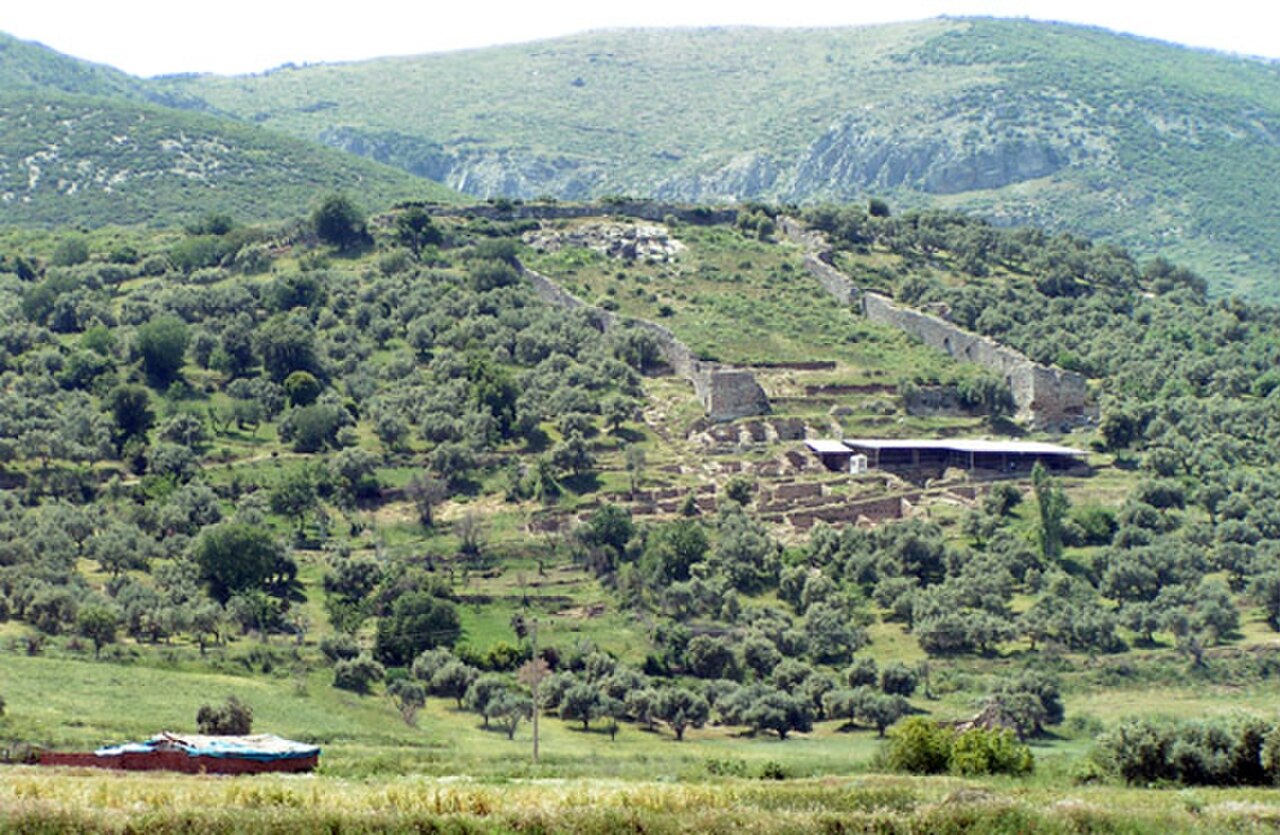
Colophon is an archaeological settlement landscape in Menderes, İzmir, between present-day Değirmendere and Çamönü. It was one of the oldest and most important cities of Ionia, but it is not a compact museum or a single monumental ruin. The place is understood through the relationship between its lower city, acropolis, defensive lines and building traces. The provincial tourism authority identifies Değirmendere, or Kolophon, as the settlement east of present-day Değirmendere, while the metropolitan municipality places the ancient city between the two neighborhoods. Colophon’s character comes from archaeology embedded in its surrounding landscape.
Checked 2026-09-02 · Source
The surviving archaeological picture combines several periods and types of evidence. The lower city lies alongside an acropolis, while 4th-century BC defensive walls mark the settlement’s later structural strength. Building traces help reconstruct urban occupation, and the three-walled vaulted eyvan is a distinctive 4th-century BC feature. Finds from the 1922 excavations indicate that the area was already used as a settlement during the Late Bronze Age, approximately 1500–1150 BC. Colophon also belonged to a wider regional network: Klaros, identified as Colophon’s sanctuary, lies 13 km southeast of Değirmendere, while Notion was the associated coastal settlement.
Checked 2026-09-02 · Source
Allow about 60 to 90 minutes for a focused look at Colophon’s surviving remains, with additional time if you want to move carefully between the lower city and acropolis area. This estimate concerns Colophon itself, not separate excursions to Klaros or Notion. Visitors studying ancient topography, defensive construction or architectural details may reasonably spend longer, especially when comparing building traces with the contours of the settlement. Because Colophon is a landscape rather than a tightly sequenced visitor circuit, the time required depends on terrain, visibility and how extensively you explore. A short visit establishes the site’s geography; a slower visit reveals more of its less legible remains.
Checked 2026-09-02 · Source
The responsible public authority publishes no dedicated visiting-hours or closure-day schedule for Colophon, and its official tourism entry gives no ticket-office timetable. A daylight visit is the practical choice for reading the lower city, acropolis, walls and building traces safely and clearly. Early morning or late afternoon may be more comfortable in warm weather, but these are suggestions rather than published operating hours. The official material does not describe a staffed entrance, controlled opening procedure or regular closure calendar for the ruins. Allow enough daylight to orient yourself before examining individual remains, because this is an archaeological landscape rather than a managed attraction with a published daily programme.
Checked 2026-09-02 · Source
No base adult admission tariff or explicit free-entry statement is published for Colophon by the responsible public authority. The official tourism entry supplies neither a visitor-price table nor a ticket-office timetable. The absence of a tariff must not be read as confirmation that entry is free. Do not transfer prices or museum-card rules from another İzmir attraction to Colophon.
Checked 2026-09-02 · Source
Colophon is in Menderes district of İzmir, between Değirmendere and Çamönü. The İzmir Provincial Directorate of Culture and Tourism identifies Değirmendere, or Kolophon, as the ancient settlement east of present-day Değirmendere, while the İzmir Metropolitan Municipality places the city between the two neighborhoods. The official pages name no public-transport line serving the ruins, so they provide no confirmed bus or train option to the site itself. Use both neighborhoods as the geographic frame for planning your approach, with final access dependent on local roads and the archaeological landscape rather than a dedicated visitor entrance. Klaros is a separate sanctuary visit, not an alternative entrance.
Checked 2026-09-02 · Source
Colophon is not described as a fully managed attraction with a dedicated route, staffed gate or published accessibility infrastructure. Expect uneven ground around the lower city, acropolis and walls, and take care near changes in level or indistinct building traces. Do not climb, lean on or move archaeological material. Since no closure calendar, ticket-office schedule or public-transport line is published, the visit requires self-sufficiency and attention to any instructions encountered locally. Footwear, water and daylight planning are sensible for this open archaeological setting.
Checked 2026-09-02 · Source
Photography is most useful at Colophon when it explains how the remains relate to the surrounding landscape. Photograph the lower city, acropolis and 4th-century BC defensive walls as parts of one settlement, then use closer views to record building traces and the distinctive three-walled vaulted eyvan. Daylight makes changes in ground level and less obvious structures easier to document. Wider views can show the setting between Değirmendere and Çamönü and Colophon’s position within ancient Ionia. The supplied official pages publish no dedicated photography policy, so avoid climbing or touching remains and follow any instructions present. Contextual images are especially valuable because Colophon’s archaeological story depends on structures, terrain and regional connections.
Checked 2026-09-02 · Source
Colophon is in Menderes district of İzmir, between Değirmendere and Çamönü.
Colophon was one of the oldest and most important cities of Ionia.
The İzmir Metropolitan Municipality dates its foundation by Ionians to the 9th–8th centuries BC.
Finds from the 1922 excavations indicate that the area was used as a settlement during the Late Bronze Age, approximately 1500–1150 BC.
The surviving remains include the lower city, an acropolis, 4th-century BC defensive walls, building traces and a notable 4th-century BC three-walled vaulted eyvan.
Klaros, Colophon’s sanctuary, lies 13 km southeast of Değirmendere, while Notion was the coastal settlement associated with Colophon.
Loading the interactive map…
The interactive map could not be loaded.

Last updated:
Source: OpenStreetMap contributors, Wikidata ·