
2 min walk
Hasan Fehmi Ataç Apartment
- Notable
- Historic monument
Language · 11 published
Historic monument · Ankara
Aziz Klemens Kilisesi
Reviewed by Elena Voss · SSMTour Travel Editor
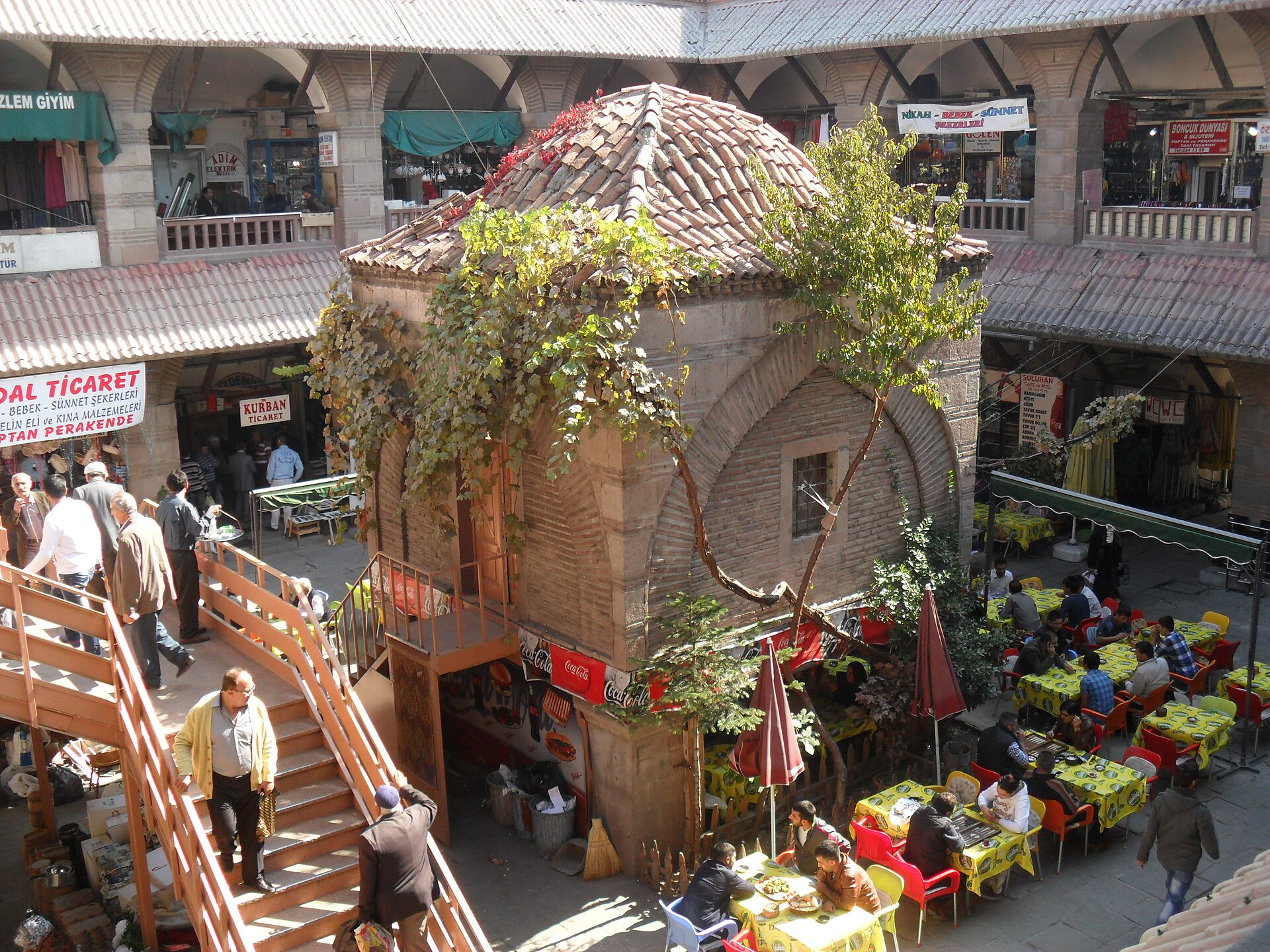
St. Clemens Church is an archaeological ruin in Ankara’s Altındağ district, in the Ulus area between Anafartalar Caddesi and Çıkrıkçılar Yokuşu. Only wall fragments and a pier remain, making this a compact historical trace rather than a complete church or functioning place of worship. The site is also associated with Yeğen Bey Camii, the later mosque connected with this location. Its interest lies in seeing a Byzantine-period structure survive, however incompletely, inside Ankara’s dense modern city. The ruin is best approached as one layer in Ulus’s archaeological story, not as a conventional attraction with a preserved interior or formal visitor route.
Checked 2026-09-02 · Source
There is no preserved nave, complete interior or active worship space to enter. The visible evidence is limited to surviving wall fragments and a pier, which should be read as structural remains rather than rooms arranged for visitors. Related architectural elements are displayed at the Roman Bath Open-Air Museum, associated with the Museum of Anatolian Civilizations. That nearby museum stop adds context to the isolated masonry and shows how pieces of the earlier church can be understood after later construction, fire and urban change removed most of the original building. Together, the ruin and museum make a more informative archaeological pairing for visitors exploring Ankara’s layered past.
Checked 2026-09-02 · Source
Allow about 15 to 25 minutes for St. Clemens Church itself. That time covers locating the remains, examining the wall fragments and pier, and placing them within the surrounding Ulus streets and building line. The ruin does not need a long standalone visit, but it works well as a short stop on a broader archaeological walk. Continue to the Roman Bath Open-Air Museum and the Museum of Anatolian Civilizations if you want fuller historical interpretation. Those institutions turn a brief exterior observation into a longer sequence about Ankara’s changing urban landscape and its surviving architectural fragments.
Checked 2026-09-02 · Source
Plan it as a daytime exterior stop, when the wall fragments and pier are easier to distinguish and the surrounding streets and passages are active. Daylight also helps with orientation in the dense block behind the main roads. A daytime Ulus itinerary can connect the church with nearby museums, markets and historic routes without treating it as a separately operated attraction. The lack of a timetable describes the ruin’s condition, not a promise of staffed access or guaranteed entry.
Checked 2026-09-02 · Source
Viewing the exterior remains from the surrounding public urban area has no admission fee. There is no listed ticket office, staffed entrance or visitor infrastructure for St. Clemens Church, so plan it differently from a regularly operated museum. Any admission charged by the Roman Bath Open-Air Museum or the Museum of Anatolian Civilizations is separate and belongs to those institutions. For the church ruin, the practical expectation is free exterior viewing, limited by what can be seen from surrounding public streets and building passages. Do not interpret free viewing as permission to enter private property or restricted building areas.
Checked 2026-09-02 · Source
Take Ankara Metro M1 to Ulus station, then walk toward Anafartalar Caddesi and Çıkrıkçılar Yokuşu. The remains are in Altındağ’s Ulus area, behind the former courthouse zone and near Anafartalar Caddesi No. 63. EGO operates Ankara Metro and city buses, making public transport practical for reaching this central district. The final approach uses surrounding streets and building passages rather than a dedicated monument entrance. Use Anafartalar Caddesi and Çıkrıkçılar Yokuşu as orientation points, and expect to search within the dense urban block rather than follow signs to a gate. Allow extra orientation time for the final approach.
Checked 2026-09-02 · Source
This ruin is easy to misunderstand if approached as a conventional church attraction. The remains are behind buildings in a dense urban block, and the approach uses surrounding streets and building passages rather than a dedicated step-free visitor route. Conditions may be constrained or uneven, while the ruin itself has no listed visitor facilities. Observe from public surroundings, keep passages clear, and respect residents and businesses. Treat the surviving masonry as a fragile archaeological remnant, not an open recreational space or a place to climb, touch or enter without permission. The setting requires patience, care and consideration for local daily activity.
Checked 2026-09-02 · Source
Photography is most useful here when it records the relationship between the surviving fragments and Ankara’s modern urban fabric. Frame the wall remains and pier with enough surrounding context to show their position within the dense Ulus block. Daylight should make the masonry easier to distinguish, especially where nearby buildings restrict the view. Photograph only from public areas, keep passages clear, and respect nearby buildings, residents and businesses. If close detail is obscured, a wider contextual image still communicates the site’s unusual character as a Byzantine trace embedded in a later city. Context is more valuable than forcing a close view.
Checked 2026-09-02 · Source
It is a ruin in Ankara’s Ulus area, with only surviving wall fragments and a pier visible.
It is in Ankara’s Altındağ district, in the Ulus area between Anafartalar Caddesi and Çıkrıkçılar Yokuşu, near Anafartalar Caddesi No. 63.
It is also associated with the name Yeğen Bey Camii, the later mosque connected with the site.
The surviving church is identified as a Byzantine-period structure generally dated between the 5th and 9th centuries.
The later Yeğen Bey mosque was badly damaged in Ankara’s major fire of 1916, after which only limited remains survived.
Architectural elements associated with the church are displayed at the Roman Bath Open-Air Museum, connected with the Museum of Anatolian Civilizations.
Loading the interactive map…
The interactive map could not be loaded.

Last updated:
Source: OpenStreetMap contributors, Wikidata ·