
12 min walk
METU Science and Technology Museum
- Must see
- Museum
Language · 11 published
Place of worship · Ankara
Ahmet Hamdi Akseki Camii
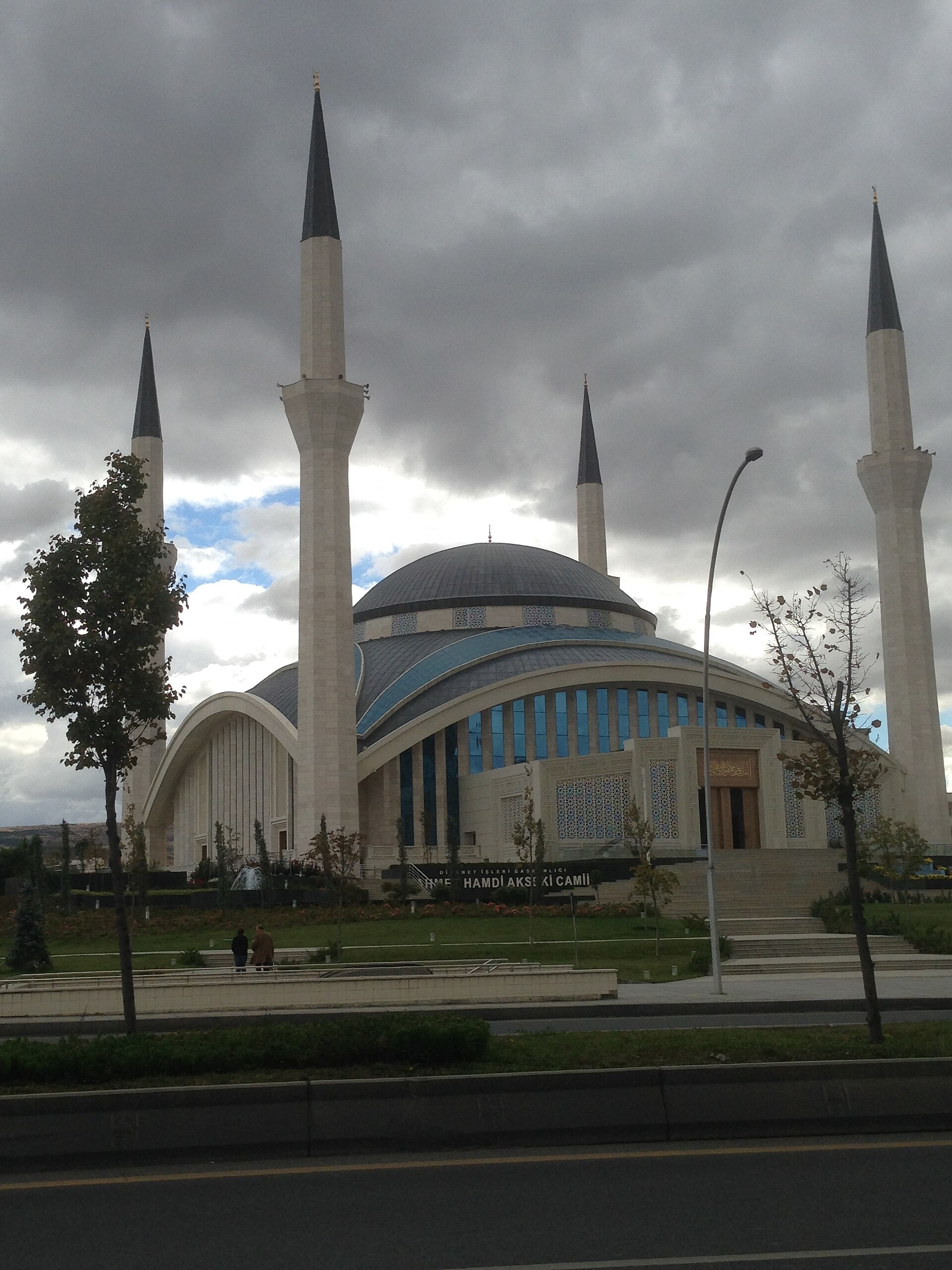
Ahmet Hamdi Akseki Mosque is a contemporary Ankara landmark beside the Presidency of Religious Affairs at the Bilkent junction. Set on Dumlupınar Bulvarı in Üniversiteler Mahallesi, it opened for worship on Friday, 19 April 2013. Its defining scale is unusually clear: the main dome spans 33 metres, and the prayer space can accommodate about 5,000 worshippers comfortably. That combination makes the building important to western Ankara’s visual landscape while keeping its primary identity firmly religious. Visitors are entering a living mosque and communal setting, not a museum arranged around exhibits or a sightseeing route.
Checked 2026-09-02 · Source
The broad prayer space beneath the 33-metre dome is the interior’s central architectural experience. The complex also has a courtyard, creating a useful contrast between the expansive covered hall and an open gathering area. Official descriptions emphasise the practical connections between these spaces: from the ground floor, the courtyard can be reached by escalators and three elevators. The three-storey underground car park connects to the mosque through four stairways and six elevators. These routes are part of the building’s character, showing how a large congregation is accommodated. Expect a purpose-built worship environment where scale, circulation and communal use matter more than a sequence of decorative exhibits.
Checked 2026-09-02 · Source
For a visitor concentrating on orientation, the architecture and the courtyard when access permits, allow roughly 20 to 40 minutes. This is a practical planning estimate, not an official visiting duration. Someone attending prayer or a service may naturally remain longer, while a busy arrival or departure period can add time to movement through the complex. Allow extra flexibility if you need the elevators or escalators, and avoid rushing through the prayer space. The building is large, but a meaningful visit does not require covering every connection or standing for a fixed circuit. A short, quiet stop can be enough to understand the dome, hall and courtyard relationship.
Checked 2026-09-02 · Source
Because Ahmet Hamdi Akseki Mosque is an active place of worship, a suitable visit depends on prayer activity and the directions given on arrival. Keep the timing flexible and be ready to pause quietly if worship is under way. The main hall, courtyard and connecting routes may become busier as a congregation gathers or disperses, so calm observation is easier when you are not trying to force a tight sightseeing schedule. This is especially relevant at a mosque designed for about 5,000 worshippers: movement can be concentrated even when the building itself feels spacious. Plan for patience, and let on-site religious use determine where you stand and when you move.
Checked 2026-09-02 · Source
Ahmet Hamdi Akseki Mosque is a working mosque rather than a documented museum route. The practical focus is respectful access to a religious and communal space, with prayer activity and on-site direction taking priority. Treat the visit as an opportunity to observe the architecture and atmosphere appropriately, while accepting that worshippers’ needs determine movement through the complex.
Checked 2026-09-02 · Source
The mosque stands beside the Presidency of Religious Affairs at Ankara’s Bilkent junction on Eskişehir Road, on Dumlupınar Bulvarı in Üniversiteler Mahallesi. Drivers can use the complex’s three-storey underground car park, which connects to the mosque through four stairways and six elevators. After reaching the ground floor, the courtyard is accessible by escalators and three elevators. This gives visitors a clear arrival sequence from parking level to the mosque and then to the open courtyard. The route is particularly useful for anyone who wants to understand the complex’s scale before entering the main prayer space.
Checked 2026-09-02 · Source
Approach Ahmet Hamdi Akseki Mosque as a functioning religious building, not an unrestricted public gallery. Keep conversations quiet, dress modestly, follow directions from staff or worshippers, and leave entrances, stairways and lift approaches clear. Remove shoes where required, and wait quietly if prayer activity limits movement. The documented connections—four stairways and six elevators from the underground car park, plus escalators and three elevators to the courtyard—explain how people circulate, but they do not grant unrestricted use of every route. Give worshippers priority, avoid interrupting congregation flows, and allow the building’s religious purpose to shape your visit.
Checked 2026-09-02 · Source
The 33-metre dome, broad prayer space and courtyard connections offer the clearest place-specific subjects for photography. Keep camera work discreet and subordinate to worship. Photograph only from areas where access is allowed, ask before including people, and stop if images distract or cause discomfort. Avoid flash when it could disturb worshippers, and do not block the four stairways, six elevator connections or courtyard approaches while composing. The building’s scale can be conveyed without wandering through active prayer areas for repeated angles. One respectful view from a permitted position is more appropriate than a photograph that disrupts worship, delays movement or treats the mosque as a staged interior.
Checked 2026-09-02 · Source
It is beside the Presidency of Religious Affairs at the Bilkent junction on Eskişehir Road in Ankara, on Dumlupınar Bulvarı in Üniversiteler Mahallesi.
It opened for worship on Friday, 19 April 2013.
The main dome is 33 metres in diameter.
The mosque can accommodate about 5,000 worshippers comfortably.
The three-storey underground car park connects to the mosque by four stairways and six elevators.
The courtyard is accessible from the ground floor by escalators and three elevators.
Loading the interactive map…
The interactive map could not be loaded.

Last updated:
Source: OpenStreetMap contributors, Wikidata ·