City guide
Things to Do in Vienna: 12 Essential Sights
.jpg)
Choose Vienna sights that fit your interests, from Schönbrunn and Klimt to the State Opera, cathedral, Baroque library, market and Prater views.
This guide is part of our Vienna destination coverage. Vienna
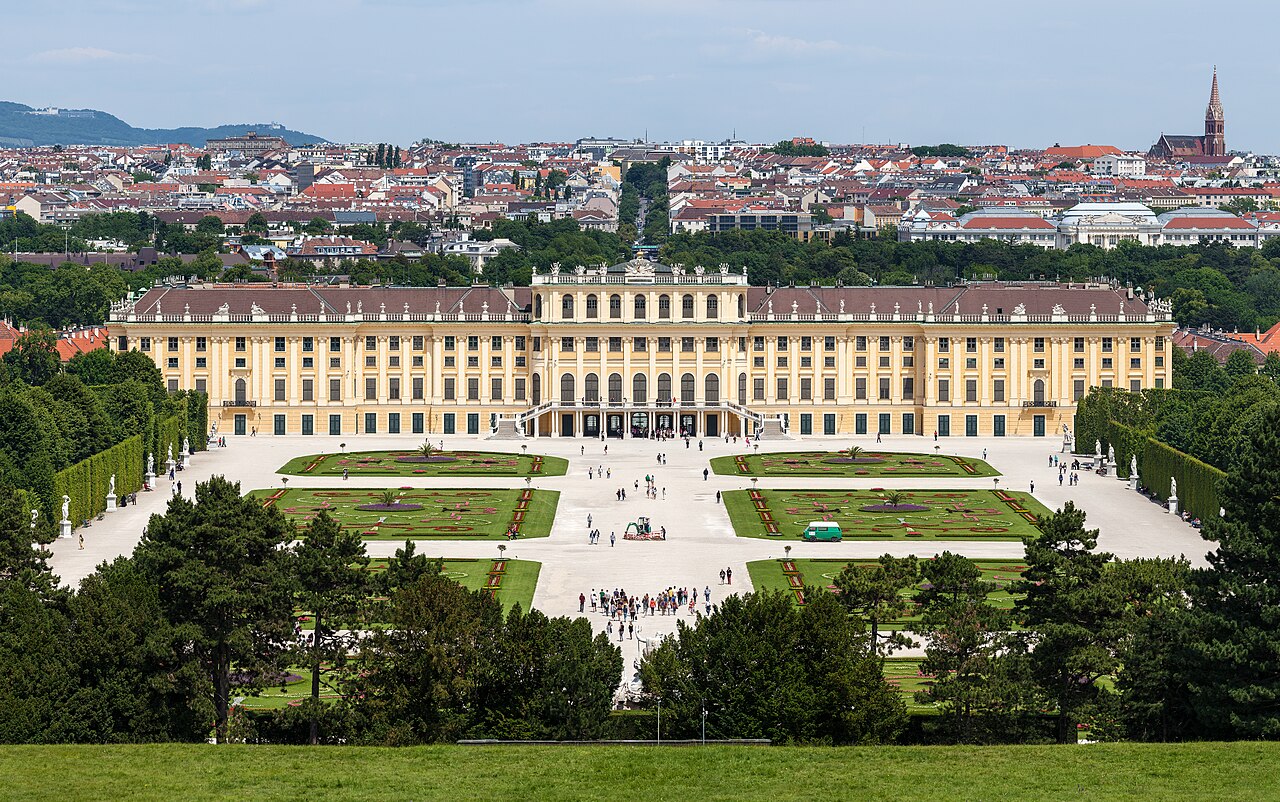
1. Schönbrunn Palace
The Vienna overview shows how the Innere Stadt, Ringstrasse, western palaces and Danube-side districts fit together. Use it before choosing from the twelve stops below. The list covers imperial history, medieval architecture, Viennese Modernism, live performance, a working food market and two different city views. Most visitors will get more from a balanced selection than from filling every day with palace rooms and museums.
Start with Schönbrunn Palace when the Habsburg summer court and a large designed landscape are priorities. Maria Theresa transformed an earlier hunting lodge into a residence, while the formal garden axis runs past the Neptune Fountain to the Gloriette. Inside, ceremonial rooms and private apartments show how the court used the palace. Outside, the parterre, fountains, wooded paths and hill need separate time. Do not treat the gardens as a quick add-on after the rooms.
Checked 2026-09-06 · Official site · www.schoenbrunn.at
Checked 2026-09-06 · Official site · www.schoenbrunn.at
2. St. Stephen’s Cathedral
.JPG)
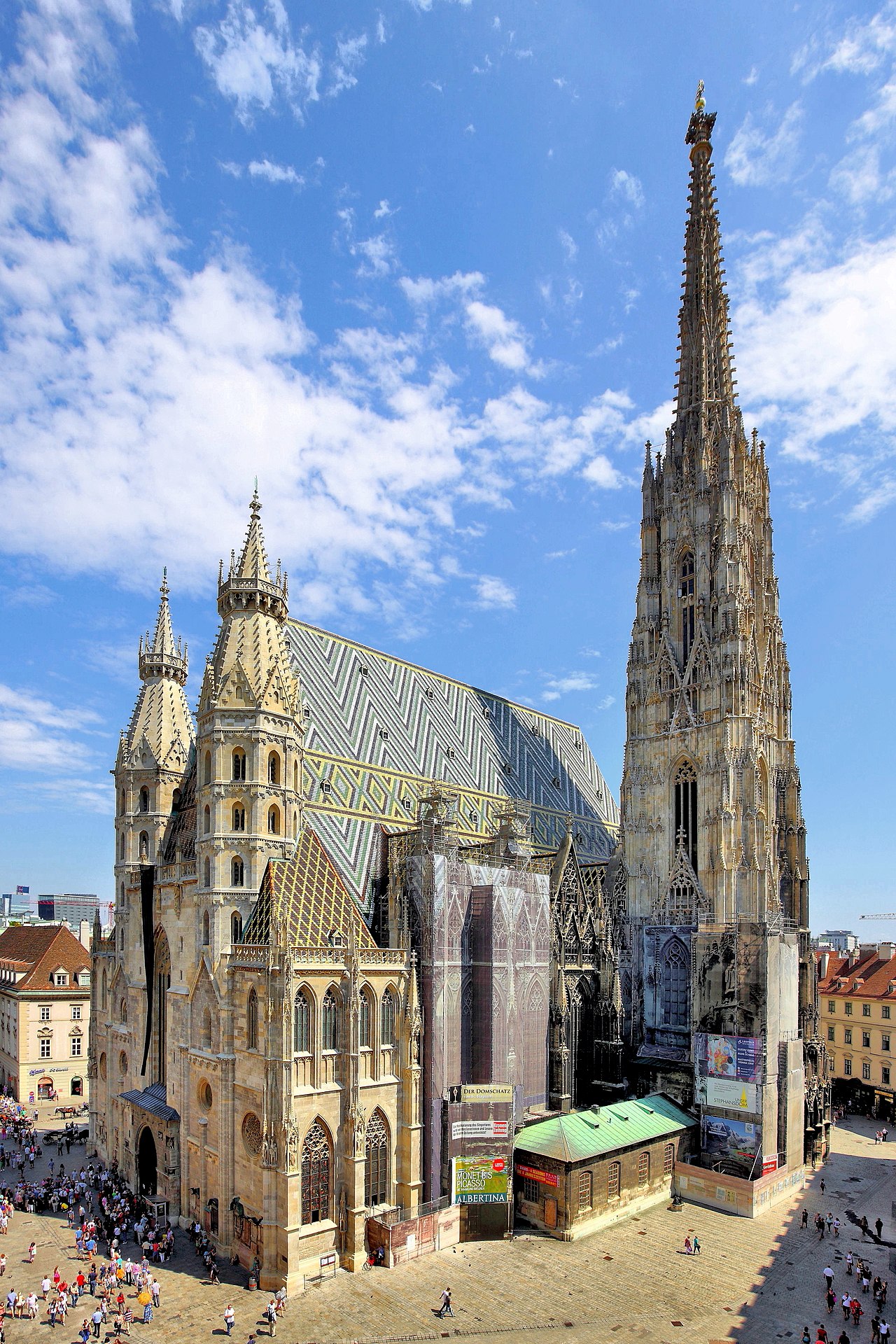
St. Stephen’s Cathedral shows several building periods at Stephansplatz. The Romanesque Giant’s Door and Heathen Towers are older than Rudolf IV’s Gothic choir and south tower. Work on the north tower stopped before it matched the south; glazed roof tiles carry Vienna’s arms and a double-headed eagle. Walk around the choir to see buttresses, chapels and the steep roof from less crowded angles.
Inside, the Wiener Neustädter Altar, carved pulpit and ducal tomb provide clear points of focus. Pummerin hangs in the shorter north tower, while the burial chambers cover a separate part of the cathedral’s history. You do not need to combine every area. The cathedral remains a place of worship, so services and religious use take priority over sightseeing.
Checked 2026-09-06 · Official site · www.stephanskirche.at
Checked 2026-09-06 · Wikipedia · en.wikipedia.org
3. Upper Belvedere
.JPG)
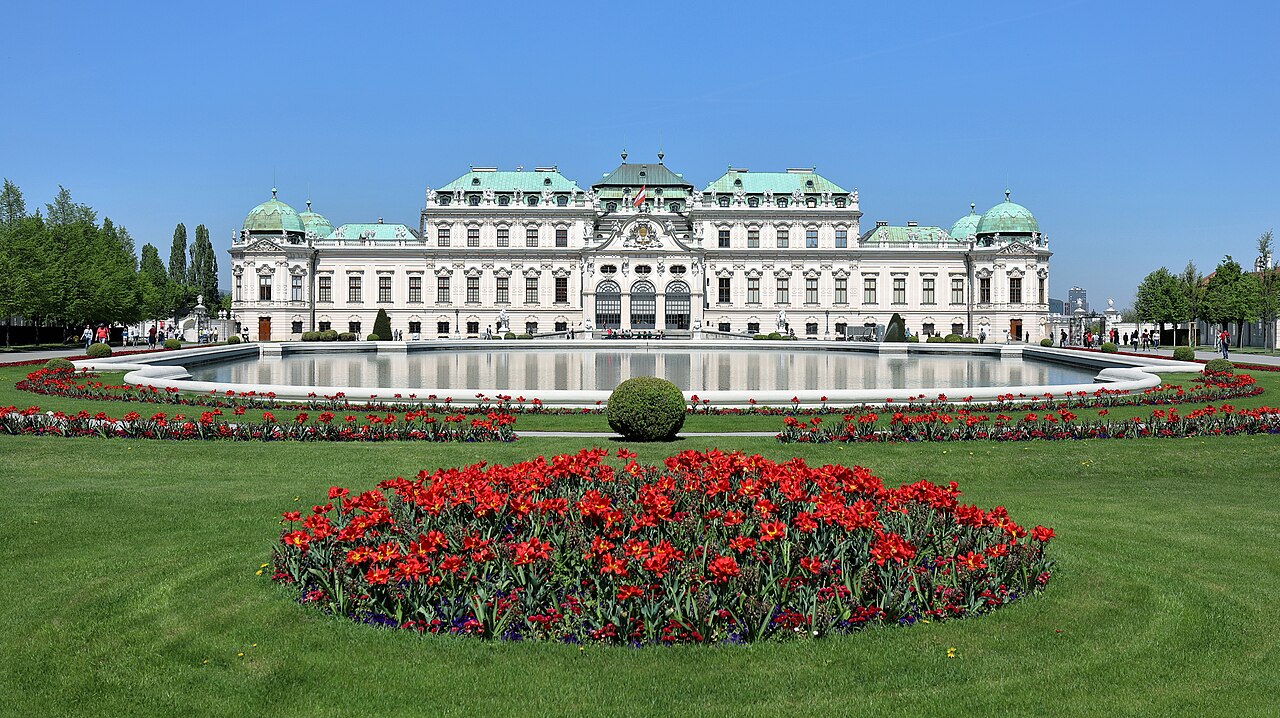
Belvedere places Gustav Klimt’s work inside a Baroque palace complex. Prince Eugene of Savoy’s two palaces face across a terraced garden, so the slope, pools and long views are part of the visit. The Upper Belvedere contains the permanent collection; the Lower Belvedere is a separate exhibition venue, not another wing of the same museum route. The Marble Hall and palace rooms remain visible between galleries, and the garden provides an outdoor break.
The Kiss is the best-known work here, but the permanent display covers far more than one painting. Klimt and Egon Schiele appear with other Viennese Modernists, including Helene Funke. Ferdinand Georg Waldmüller and Franz Xaver Messerschmidt extend the Austrian account into earlier periods. Monet, Van Gogh and Rodin provide international comparisons, while László Moholy-Nagy, Marie-Louise von Motesiczky and František Kupka continue the story into twentieth-century Central Europe. Belvedere is the clearest choice when Austrian art and a palace setting both matter.
Checked 2026-09-06 · Official site · www.belvedere.at
Checked 2026-09-06 · Official site · www.belvedere.at
4. Kunsthistorisches Museum


Kunsthistorisches Museum brings major Habsburg collections together in a Ringstrasse museum built for them. It faces the Natural History Museum across Maria-Theresien-Platz. The dome, main staircase and large galleries are part of the experience, but the range is too broad for an unplanned sweep through every room. Pick one or two collections before entering.
The Picture Gallery includes twelve paintings by Pieter Bruegel the Elder, among them The Tower of Babel and Hunters in the Snow. Titian, Rubens, Velázquez and Vermeer broaden that route. The Kunstkammer contains automata, watches, carved precious materials and Cellini’s Saliera across twenty themed rooms. Downstairs, the Egyptian and Near Eastern collection includes royal sculpture, funerary objects and a cult chamber from a tomb at Giza. Greek and Roman antiquities add the Amazon Sarcophagus, Theseus Mosaic and Gemma Augustea. These departments can support separate visits; one focused route is better than rushing through all of them.
Checked 2026-09-06 · Official site · www.khm.at
Checked 2026-09-06 · Official site · www.khm.at
Checked 2026-09-06 · Official site · www.khm.at
Checked 2026-09-06 · Official site · www.khm.at
5. Donauturm
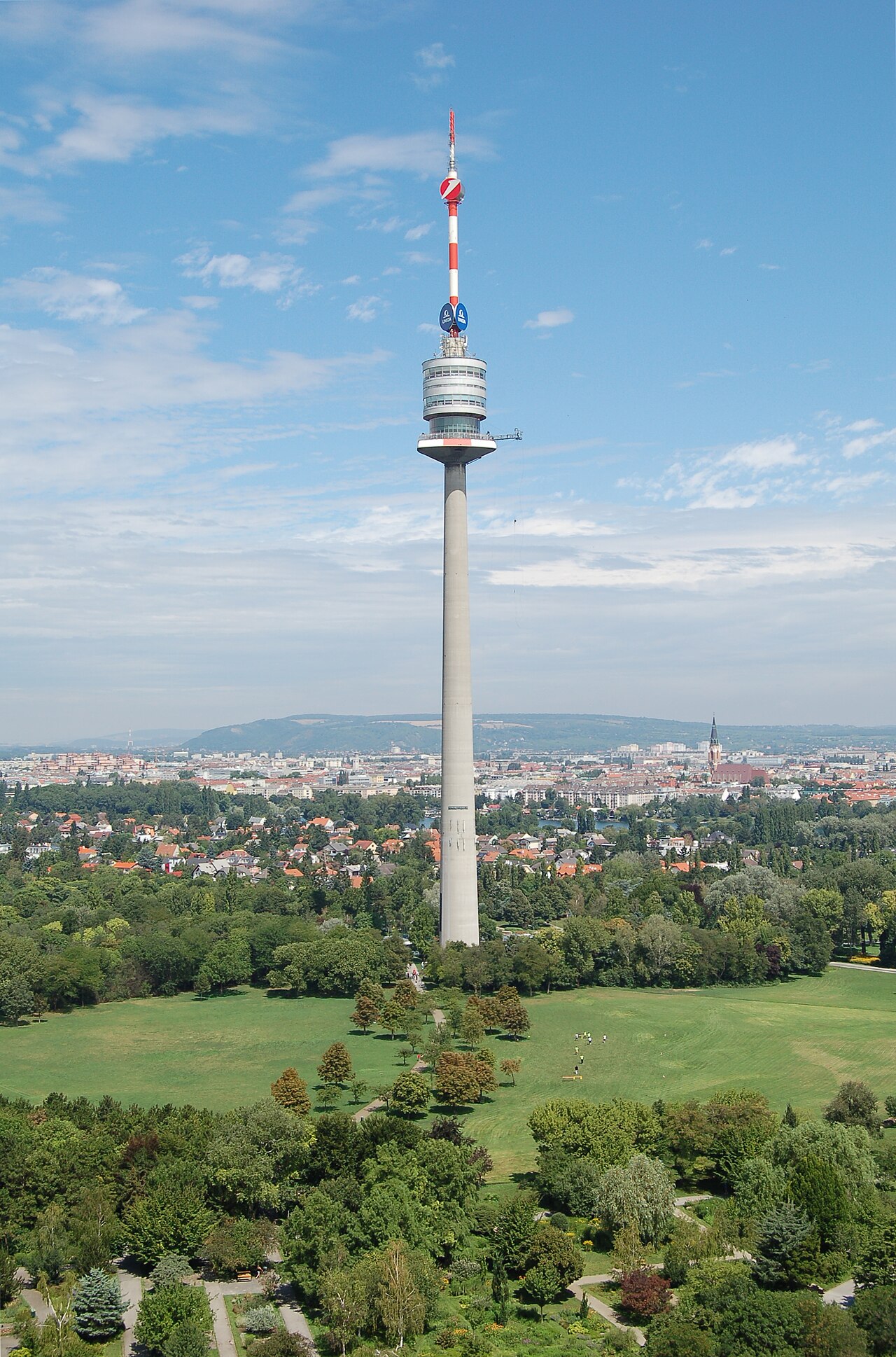

Donauturm belongs to Vienna’s optimistic 1960s rather than its imperial skyline. Hannes Lintl designed the 252-metre concrete tower for the Vienna International Garden Show of 1964, when neglected ground beside the river became Donaupark. The tower opened on 16 April after eighteen months of construction. A 31-metre-diameter foundation, 3,750 cubic metres of concrete and 514 tonnes of reinforcing steel support a structure weighing 17,600 tonnes. The shaft narrows from twelve metres at ground level to roughly six near the revolving floors; an eight-metre-deep base spreads the load. Although the profile resembles a television tower, it was built primarily for recreation and views.
Observation terraces at 150 and 155 metres look across the Danube channels, Vienna International Centre, city districts and wooded hills. Café and restaurant levels occupy 160 and 170 metres and revolve at selectable speeds. Twin lifts travel at 6.2 metres per second; 779 stairs are reserved for emergencies or special events. Donauturm became a protected monument in 2001 and received a major renovation in 2018. A slide added in 2023 runs from the central level to the lower terrace. Donaupark at the base preserves the tower’s garden-show setting. Visit Donauturm for a wide geographic view and postwar engineering; use the Riesenrad for Prater history and fairground atmosphere.
Checked 2026-09-06 · Official site · www.donauturm.at
Checked 2026-09-06 · Official site · www.donauturm.at
6. Vienna State Opera


Vienna State Opera is a working repertory house on the Ringstrasse. Sicardsburg and van der Nüll’s building opened in 1869 with Mozart’s Don Giovanni. Wartime damage left the original main façade, grand staircase and Schwind Foyer beside a reconstructed auditorium, so a building visit covers both the nineteenth-century opera house and its postwar rebuilding.
A performance and an architecture visit serve different interests. An evening ticket is for the opera or ballet; a daytime visit gives more attention to the staircase, foyers, sculpture and reconstruction. From Opernring, compare the narrow historic front with the larger stage volume behind it, then find the winged horses and allegorical figures. If the programme does not appeal, seeing the exterior may be enough.
Checked 2026-09-06 · Official site · www.wiener-staatsoper.at
Checked 2026-09-06 · Official site · www.wiener-staatsoper.at
7. Spanish Riding School


The Spanish Riding School preserves classical horsemanship inside the Hofburg. A riding ground beside Josefsplatz appears in records from 1565; the Lipica stud followed in 1580, and Piber now continues the breeding programme. Fischer von Erlach’s white Winter Riding School frames the stallions beneath chandeliers, colonnades and Charles VI’s portrait. UNESCO recognition covers knowledge passed between generations of riders and horses, not only the historic hall. Maximilian Weyrother influenced nineteenth-century training, while Franz Holbein and Johann Meixner recorded instructions that had previously been passed on orally. The school survived the end of the monarchy and returned to the Hofburg in 1955.
Decide whether the training process itself interests you before reserving a large part of the day. Morning exercise shows repetition, correction and gradual schooling; a formal performance presents completed routines with music and ceremony. Watch the rider’s position, the horse’s balance and the timing of transitions rather than waiting only for dramatic movements. The hall is impressive, but its architecture is not enough reason for every visitor to attend a full programme. This stop works best for travellers interested in skilled practice maintained over centuries.
Checked 2026-09-06 · Official site · www.srs.at
Checked 2026-09-06 · Official site · www.srs.at
8. Austrian National Library State Hall
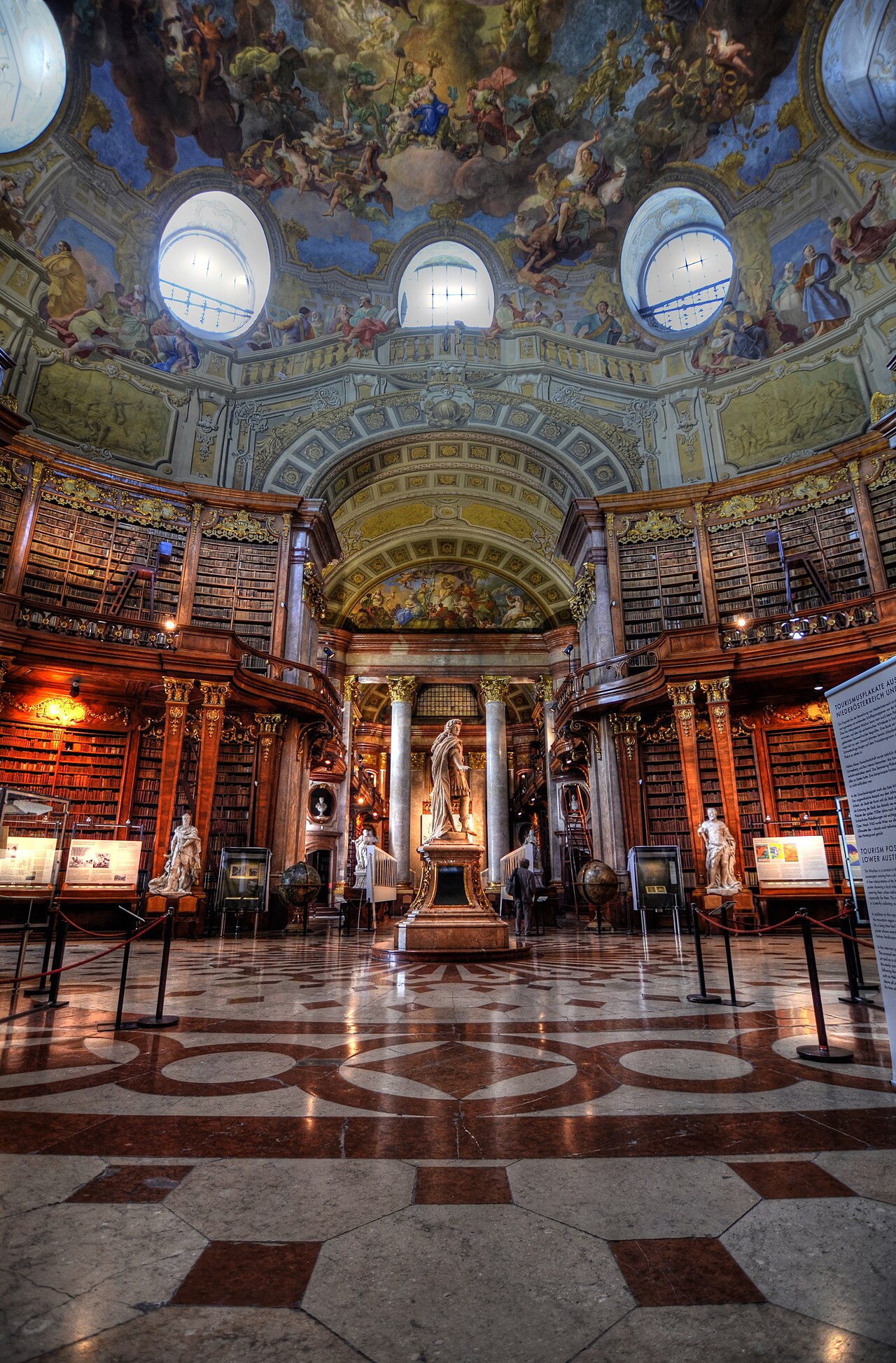

Austrian National Library State Hall is an almost eighty-metre Baroque library room near the Hofburg. Johann Bernhard Fischer von Erlach designed the court library, and his son Joseph Emanuel completed it between 1723 and 1726. The hall rises about twenty metres beneath Daniel Gran’s dome fresco. Walnut bookcases, marble figures by Paul and Peter Strudel and four Venetian globes more than a metre across fill the long room. Roughly 200,000 historic volumes remain on the shelves, including books associated with Prince Eugene of Savoy’s collection.
Walk to the central oval for the clearest view of both wings, the painted cupola and the statue of Charles VI. The historic books are not shelves for casual browsing; display cases bring selected manuscripts and printed works closer to visitors. Look at how book spines, sculpture and fresco divide the enormous room before focusing on an individual case. The State Hall suits travellers who want one concentrated Baroque interior without spending hours in another palace or museum. Its location makes it easy to pair with one Hofburg stop, but nearby doors are not a reason to enter every imperial room around Josefsplatz.
Checked 2026-09-06 · Official site · www.onb.ac.at
9. Karlskirche
.JPG)
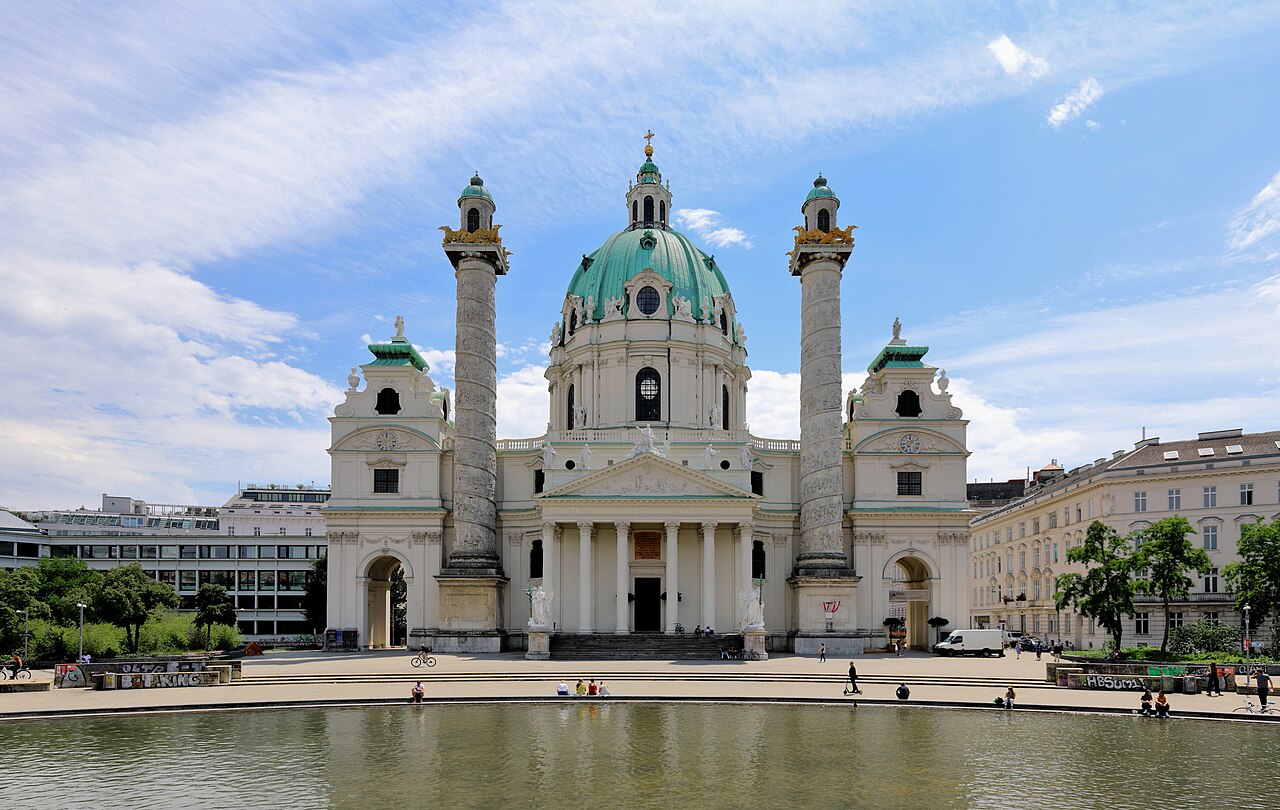
Karlskirche is an eighteenth-century Baroque church built after Charles VI’s vow during the 1713 plague. The emperor dedicated it to Charles Borromeo. Its front combines a temple-style portico, two forty-seven-metre columns carved with episodes from the saint’s life and a dome whose cross reaches seventy-four metres. Those elements are easy to study from Resselpark before entering.
Inside, Johann Michael Rottmayr’s large dome fresco shows Charles Borromeo asking for the plague to end. The visitor route also includes the organ loft and a terrace above the entrance. A 1:28 scale model explains the church’s dome, towers and rooms that are normally closed; the model itself is 2.48 metres high. The organ preserves a curved Baroque case from 1739 with later additions. Karlskirche is worth entering for the fresco, elevated access and architectural model. Travellers interested only in a central historic church may prefer St. Stephen’s Cathedral instead, because the two buildings offer very different periods and interiors.
Checked 2026-09-06 · Official site · www.karlskirche.at
Checked 2026-09-06 · Official site · www.karlskirche.at
10. Hundertwasserhaus
.JPG)
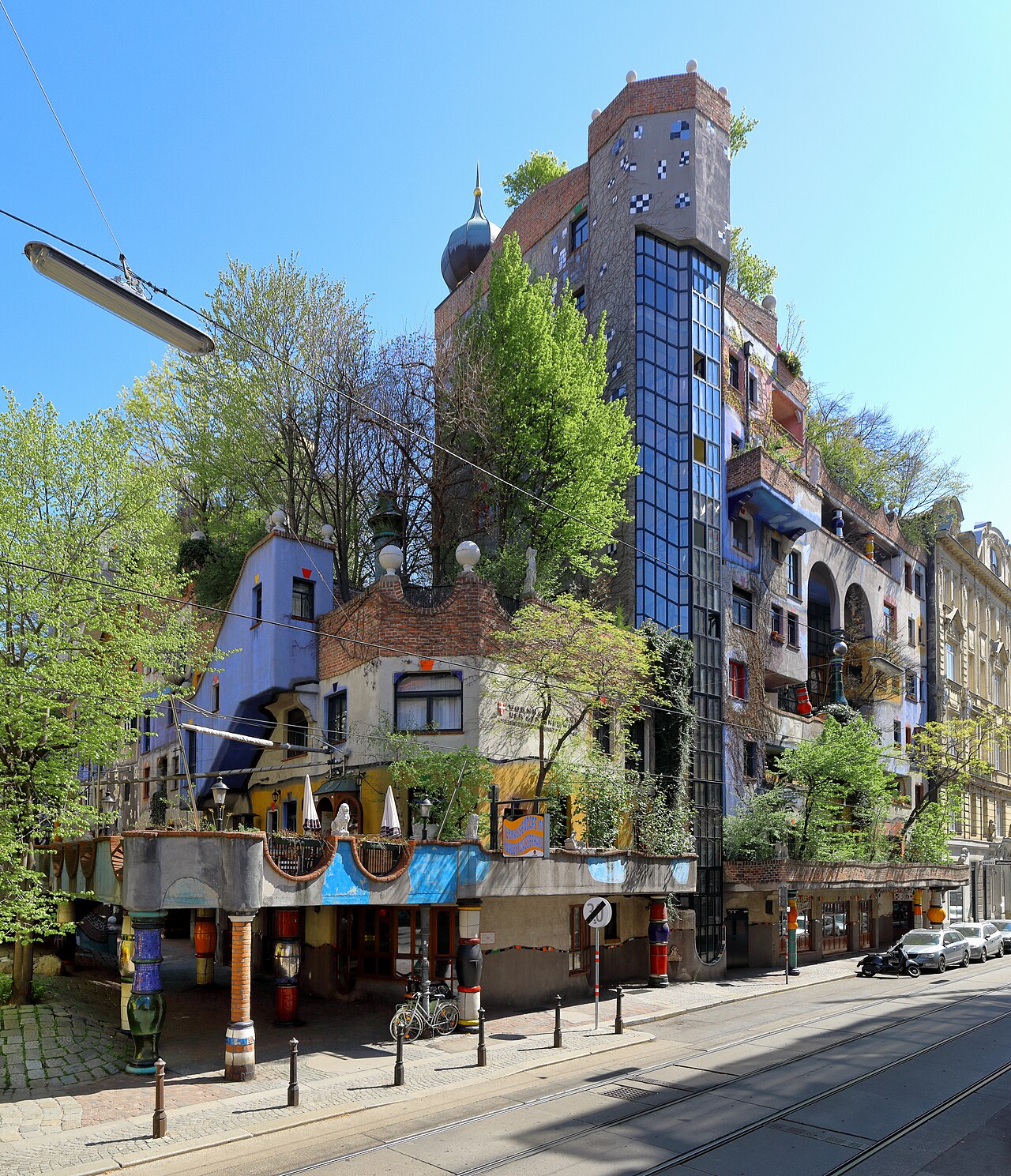
Hundertwasserhaus is a late twentieth-century municipal housing project, not a historic palace. Friedensreich Hundertwasser developed the artistic concept with architect Joseph Krawina, and construction ran from 1983 to 1985. Repeated window grids, level floors and plain rooflines give way to irregular openings, planted terraces and uneven surfaces. The complex contains fifty-three apartments, four offices, sixteen private terraces and three communal terraces. About 250 trees and shrubs grow within its roof and terrace areas, while some “tree tenants” extend outward from rooms.
View the exterior from Kegelgasse and Löwengasse. Entrances serve residents and the private terraces are not visitor areas. Walk around the corner to see how ceramic bands, coloured sections, plants and irregular windows change across the façades. Kunst Haus Wien nearby provides a museum setting for Hundertwasser’s wider work. Visit this address for the outside architecture and its contrast with Vienna’s formal Baroque and Ringstrasse buildings; go to the museum if you want an interior and more explanation.
Checked 2026-09-06 · Official site · www.wien.info
Checked 2026-09-06 · Official site · www.wien.info
Checked 2026-09-06 · Wikipedia · en.wikipedia.org
11. Naschmarkt
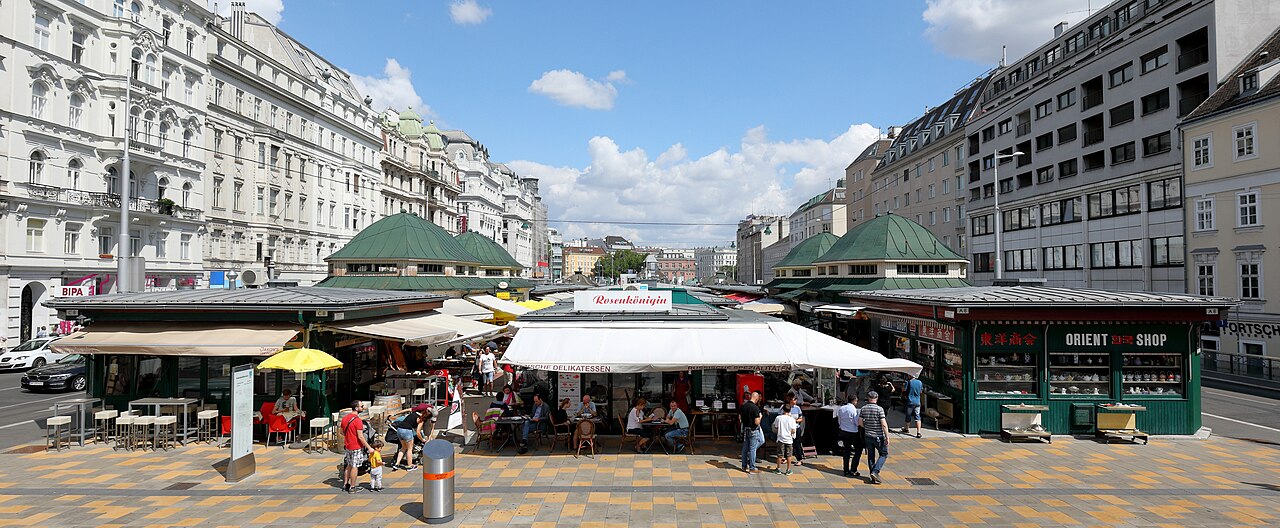

Naschmarkt is a working strip of produce sellers, specialist food counters and small places to eat between Karlsplatz and Kettenbrückengasse. Its range is international, so do not arrive expecting one definitive Viennese snack. Some stalls serve everyday grocery shopping while others focus on prepared food and restaurant seating. Walk the length first, then return to a place that suits the meal or ingredients you actually want.
The surrounding architecture gives the market a second purpose. Otto Wagner’s Wienzeile buildings stand beside the stalls, including the floral tiled Majolikahaus, while the Secession is near the Karlsplatz end. Naschmarkt therefore fits naturally after Karlskirche or before a walk along Wienzeile. Visit for food, market activity or the nearby Modernist buildings. Skip it when none of those interests justify leaving a more compact central route.
Checked 2026-09-06 · Official site · www.wien.info
Checked 2026-09-06 · Official site · www.wien.info
12. Wiener Riesenrad
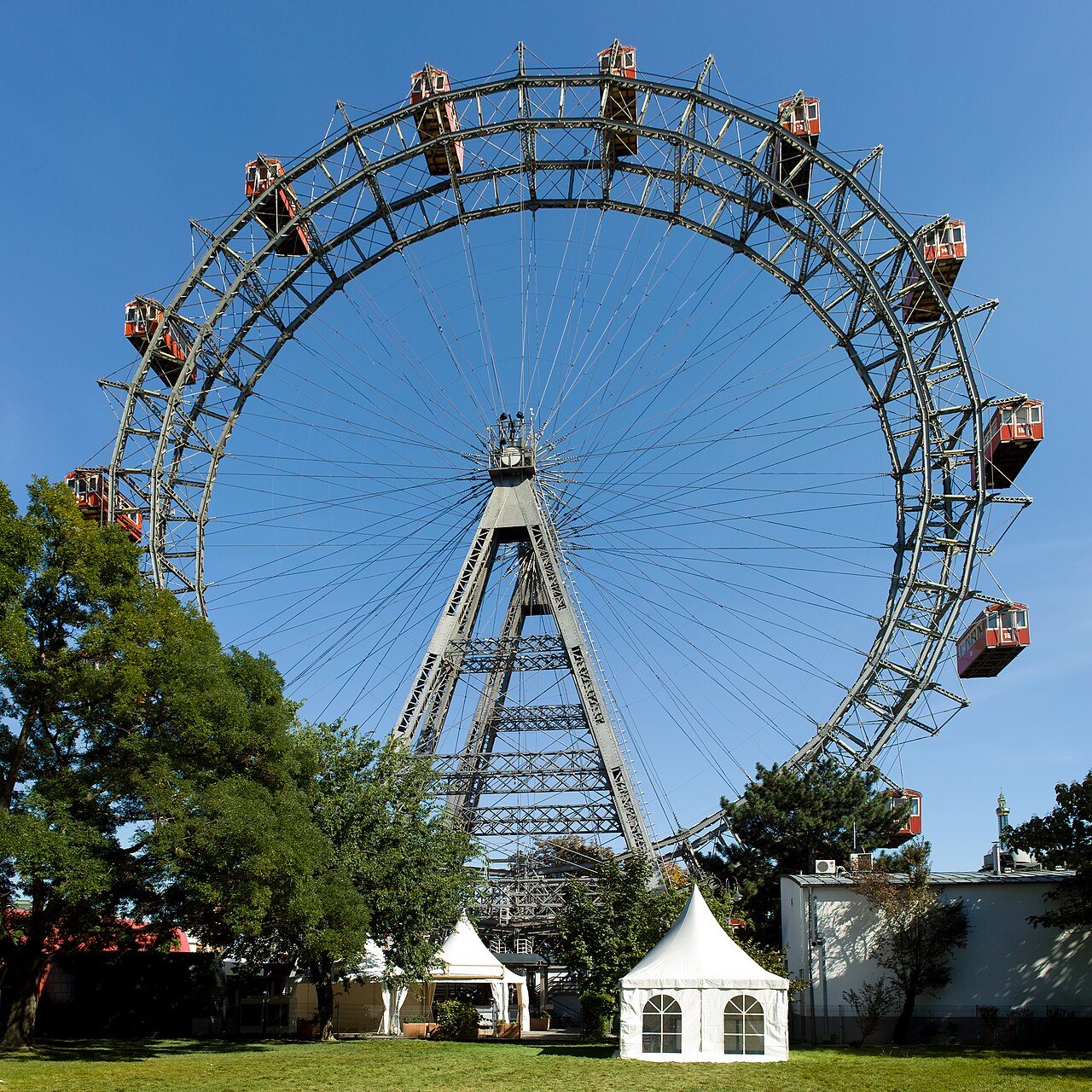

Wiener Riesenrad provides Vienna’s most characterful moving viewpoint. Built in 1897 for Emperor Franz Joseph I’s jubilee, it survived a demolition plan and wartime fire before returning with fifteen cabins instead of thirty. Widely spaced red carriages create the silhouette seen in The Third Man and distinguish the wheel from denser contemporary rides.
Slow rotation matters more than raw height. Enclosed cabins reveal the Prater below, Leopoldstadt around it and the historic centre beyond, while the steel frame stays visible throughout the ascent. At ground level, the amusement park supplies noise, motion and popular entertainment absent from palace Vienna. Darkness strengthens the cinematic mood; daylight explains the geography. The park is half the encounter, not an afterthought attached to the wheel.
Checked 2026-09-06 · Official site · wienerriesenrad.com
Checked 2026-09-06 · Official site · www.wien.info
Plan December as one indoor anchor plus one market
December changes Vienna’s route logic: plan one weather-exposed block, one substantial indoor visit and one evening market, rather than three long outdoor stops. Vienna’s winters are cool to cold, around 0°C, and snow is possible; December typically draws the year’s highest visitor numbers. Keep Schönbrunn’s garden, Hundertwasserhaus and open-air viewpoints conditional on the day’s forecast. Use the palace rooms, Kunsthistorisches Museum, Belvedere or the State Hall as the fixed anchor, and reserve any ticketed highlight before building the rest of the day.
For 2026, the Viennese Christmas Market at Rathausplatz runs from 13 November to 26 December. The market at Stephansplatz runs from 6 November to 26 December, while Art Advent at Karlsplatz ends on 23 December. Pair Stephansplatz with St. Stephen’s Cathedral and a single Hofburg interior; pair Karlsplatz with Karlskirche or Naschmarkt. Choose one market by location unless comparing their programmes is a priority.
After 26 December, shift the seasonal finish to Schönbrunn’s market or the Winter Market at Riesenradplatz, both scheduled through 6 January 2027. Schönbrunn is already a western half-day; Riesenradplatz belongs with the Prater. Do not cross Vienna solely for a market when the day already includes Hietzing, Donaustadt or a major museum. Recheck the organiser before travelling because programmes can change, then test the route in the Vienna-prefilled trip planner.
- Schönbrunn Palace
- St. Stephen's Cathedral
- Belvedere
- Kunsthistorisches Museum
- Donauturm
- Vienna State Opera house
- Spanish Riding School
- Austrian National Library
- Karlskirche
- Hundertwasserhaus
- Naschmarkt
- Wiener Riesenrad
Checked 2026-09-06 · Official site · www.wien.info
Checked 2026-09-06 · Official site · www.wien.info
Checked 2026-09-06 · Official site · b2b.wien.info
Give west, east and north-east Vienna separate blocks
Use district names to recognise the longer transfers. Schönbrunn is in Hietzing, the 13th district west of central Vienna. Palace rooms, parterre and Gloriette make one self-contained destination. A traveller skipping imperial interiors can retain the park; a museum-focused weekend can omit Hietzing completely. Either decision is better than crossing back to the Ring for a late gallery.
The Riesenrad is in Leopoldstadt, the 2nd district, and belongs to the Prater visit. Hundertwasserhaus is in Landstraße, the 3rd district south of the Prater. Its exterior can be added only when the group still wants an architecture stop; otherwise protect time inside the park. Donauturm stands across the Danube in Donaustadt, the 22nd district. Donaupark and the tower deserve their own north-eastern outing rather than being treated as an extension of the Prater.
Pick the Riesenrad for a historic wheel inside an amusement park. Pick Donauturm for a higher Danube-wide survey and 1960s construction. Most short stays need only one. The Vienna itinerary compares the areas; the Vienna-prefilled trip planner exposes any day that jumps from Hietzing to Leopoldstadt or Donaustadt.
- Schönbrunn Palace
- St. Stephen's Cathedral
- Belvedere
- Kunsthistorisches Museum
- Donauturm
- Vienna State Opera house
- Spanish Riding School
- Austrian National Library
- Karlskirche
- Hundertwasserhaus
- Naschmarkt
- Wiener Riesenrad
Checked 2026-09-06 · Official site · www.schoenbrunn.at
Checked 2026-09-06 · Official site · www.schoenbrunn.at
Checked 2026-09-06 · Official site · wienerriesenrad.com
Checked 2026-09-06 · Official site · www.wien.info
Checked 2026-09-06 · Official site · www.donauturm.at
Checked 2026-09-06 · Official site · www.donauturm.at
Turn this list into a plan
Set your days, your pace and the hours you actually want to be out. The planner works around closing days and travel time, and leaves room to eat.