.jpg)
_%E0%B8%A7%E0%B8%B1%E0%B8%94%E0%B8%A3%E0%B8%B0%E0%B8%86%E0%B8%B1%E0%B8%87%E0%B9%82%E0%B8%86%E0%B8%AA%E0%B8%B4%E0%B8%95%E0%B8%B2%E0%B8%A3%E0%B8%B2%E0%B8%A1%E0%B8%A7%E0%B8%A3%E0%B8%A1%E0%B8%AB%E0%B8%B2%E0%B8%A7%E0%B8%B4%E0%B8%AB%E0%B8%B2%E0%B8%A3_%E0%B9%80%E0%B8%82%E0%B8%95%E0%B8%9A%E0%B8%B2%E0%B8%87%E0%B8%81%E0%B8%AD%E0%B8%81%E0%B8%99%E0%B9%89%E0%B8%AD%E0%B8%A2_%E0%B8%81%E0%B8%A3%E0%B8%B8%E0%B8%87%E0%B9%80%E0%B8%97%E0%B8%9E%E0%B8%A1%E0%B8%AB%E0%B8%B2%E0%B8%99%E0%B8%84%E0%B8%A3_(1).jpg)
_%E0%B8%A7%E0%B8%B1%E0%B8%94%E0%B8%A3%E0%B8%B0%E0%B8%86%E0%B8%B1%E0%B8%87%E0%B9%82%E0%B8%86%E0%B8%AA%E0%B8%B4%E0%B8%95%E0%B8%B2%E0%B8%A3%E0%B8%B2%E0%B8%A1%E0%B8%A7%E0%B8%A3%E0%B8%A1%E0%B8%AB%E0%B8%B2%E0%B8%A7%E0%B8%B4%E0%B8%AB%E0%B8%B2%E0%B8%A3_%E0%B9%80%E0%B8%82%E0%B8%95%E0%B8%9A%E0%B8%B2%E0%B8%87%E0%B8%81%E0%B8%AD%E0%B8%81%E0%B8%99%E0%B9%89%E0%B8%AD%E0%B8%A2_%E0%B8%81%E0%B8%A3%E0%B8%B8%E0%B8%87%E0%B9%80%E0%B8%97%E0%B8%9E%E0%B8%A1%E0%B8%AB%E0%B8%B2%E0%B8%99%E0%B8%84%E0%B8%A3_(1).jpg)
_%E0%B8%A7%E0%B8%B1%E0%B8%94%E0%B8%A3%E0%B8%B0%E0%B8%86%E0%B8%B1%E0%B8%87%E0%B9%82%E0%B8%86%E0%B8%AA%E0%B8%B4%E0%B8%95%E0%B8%B2%E0%B8%A3%E0%B8%B2%E0%B8%A1%E0%B8%A7%E0%B8%A3%E0%B8%A1%E0%B8%AB%E0%B8%B2%E0%B8%A7%E0%B8%B4%E0%B8%AB%E0%B8%B2%E0%B8%A3_%E0%B9%80%E0%B8%82%E0%B8%95%E0%B8%9A%E0%B8%B2%E0%B8%87%E0%B8%81%E0%B8%AD%E0%B8%81%E0%B8%99%E0%B9%89%E0%B8%AD%E0%B8%A2_%E0%B8%81%E0%B8%A3%E0%B8%B8%E0%B8%87%E0%B9%80%E0%B8%97%E0%B8%9E%E0%B8%A1%E0%B8%AB%E0%B8%B2%E0%B8%99%E0%B8%84%E0%B8%A3_(10).jpg)
_%E0%B8%A7%E0%B8%B1%E0%B8%94%E0%B8%A3%E0%B8%B0%E0%B8%86%E0%B8%B1%E0%B8%87%E0%B9%82%E0%B8%86%E0%B8%AA%E0%B8%B4%E0%B8%95%E0%B8%B2%E0%B8%A3%E0%B8%B2%E0%B8%A1%E0%B8%A7%E0%B8%A3%E0%B8%A1%E0%B8%AB%E0%B8%B2%E0%B8%A7%E0%B8%B4%E0%B8%AB%E0%B8%B2%E0%B8%A3_%E0%B9%80%E0%B8%82%E0%B8%95%E0%B8%9A%E0%B8%B2%E0%B8%87%E0%B8%81%E0%B8%AD%E0%B8%81%E0%B8%99%E0%B9%89%E0%B8%AD%E0%B8%A2_%E0%B8%81%E0%B8%A3%E0%B8%B8%E0%B8%87%E0%B9%80%E0%B8%97%E0%B8%9E%E0%B8%A1%E0%B8%AB%E0%B8%B2%E0%B8%99%E0%B8%84%E0%B8%A3_(2).jpg)
_%E0%B8%A7%E0%B8%B1%E0%B8%94%E0%B8%A3%E0%B8%B0%E0%B8%86%E0%B8%B1%E0%B8%87%E0%B9%82%E0%B8%86%E0%B8%AA%E0%B8%B4%E0%B8%95%E0%B8%B2%E0%B8%A3%E0%B8%B2%E0%B8%A1%E0%B8%A7%E0%B8%A3%E0%B8%A1%E0%B8%AB%E0%B8%B2%E0%B8%A7%E0%B8%B4%E0%B8%AB%E0%B8%B2%E0%B8%A3_%E0%B9%80%E0%B8%82%E0%B8%95%E0%B8%9A%E0%B8%B2%E0%B8%87%E0%B8%81%E0%B8%AD%E0%B8%81%E0%B8%99%E0%B9%89%E0%B8%AD%E0%B8%A2_%E0%B8%81%E0%B8%A3%E0%B8%B8%E0%B8%87%E0%B9%80%E0%B8%97%E0%B8%9E%E0%B8%A1%E0%B8%AB%E0%B8%B2%E0%B8%99%E0%B8%84%E0%B8%A3_(3).jpg)
3 min walk · เขตบางกอกน้อย
Wang Lang Market
- Must see
- Historic monument
Language · 1 published
Historic monument · เขตบางกอกน้อย, Bangkok
วัดระฆังโฆสิตารามวรมหาวิหาร

Wat Rakhangkhositaram is a second-class royal monastery on the Thonburi bank of the Chao Phraya in Bangkok Noi, directly opposite the Grand Palace and a few minutes' walk south of Siriraj Hospital and Wang Lang market. It was founded in the Ayutthaya period under the name Wat Bang Wa Yai, restored and raised to royal status by King Taksin, who supported the revision of the Buddhist scriptures there, and restored again by King Rama I with the help of his sister Princess Thepsudawadi. Its present name dates from that second restoration: a bell of unusually fine tone was discovered in the compound, Rama I removed it to Wat Phra Kaew and sent five bells back in exchange, and the temple has been called the Temple of the Bell ever since. King Mongkut later tried to rename it Wat Rajkanthiyaram and the neighbourhood simply ignored him. Wat Rakhang is best known today as the monastery of Somdet Phra Phutthachan (To Phrommarangsi), whose amulets are the most sought-after in Thailand, and it draws a steady Thai devotional crowd rather than a foreign sightseeing one.
Checked 2026-08-25 · Source
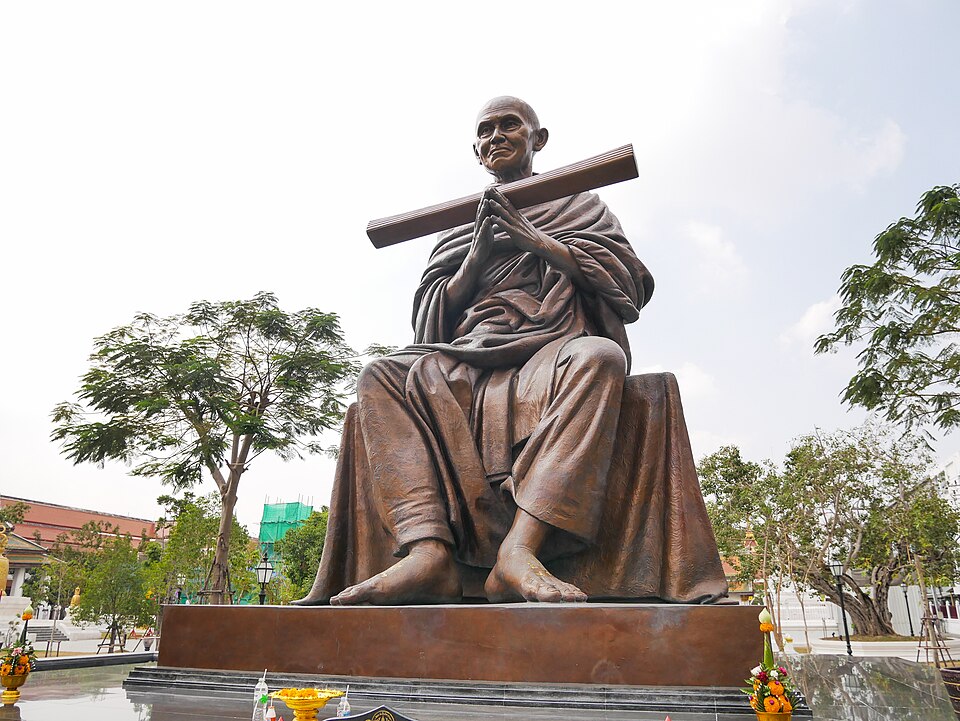
The building that art historians come for is the Ho Phra Trai Pidok, the scripture library: three adjoining wooden buildings that had been the private residence of Rama I before he took the throne and which he gave to the temple afterwards. Inside are the Tripitaka in lacquer-and-gilt cabinets and early Rattanakosin wall paintings of an exceptional standard; the complex functions today as a small museum. The ubosot, rebuilt by Rama I in Rattanakosin style, holds murals attributed to Phra Wannawatwichit that include the Buddha's miracles and his descent from the Tavatimsa heaven. A prang from the same reign stands beside it, four-sided with Buddha images set in its niches, and was admired well enough to be copied at other temples. The bell tower built to mark the story of the bell stands in the compound, and near it the shrine of Somdet Phra Phutthachan (To Phrommarangsi) with his gilded statue; the temple's own biography records his birth on 17 April 1788 at Ban Kai Chan in Tha Ruea, Ayutthaya, and he was abbot here from 1852 until 1872. Rama I moved the Tripitaka from Nakhon Si Thammarat to this temple, which is why it became a centre of scriptural study in the first place.
Checked 2026-08-25 · Source

Allow forty-five minutes. The compound is bigger than it looks from the river and splits into three separate stops that do not overlap: the ubosot with its murals, the prang and bell tower in the open, and the Ho Phra Trai Pidok, which needs a slower fifteen minutes on its own because the painted interiors and the scripture cabinets are the reason to be here. Add ten minutes if the shrine of Somdet To is busy, which it usually is, and another ten if the crossing from the Bangkok side is counted as part of the visit. Under half an hour the library gets skipped, and skipping it wastes the trip.
Checked 2026-08-25

Early morning, and preferably on a weekday. Wat Rakhang is a devotional temple before it is a sight, and the Thai visitors who come to make merit at the shrine of Somdet To arrive in numbers at weekends and on Buddhist holy days, when the amulet stalls along the approach are at their densest and the compound is loud. The crossing is also better early: the cross-river ferries run all day but the light on the Thonburi bank is behind the temple in the afternoon and in front of it in the morning, which matters for anyone photographing the compound from the water. During the rainy season the riverside pier and the compound's paving hold water and the approach lanes flood briefly after heavy rain. Late afternoon has one compensation — the temple sits opposite the Grand Palace, so the return crossing at dusk faces the better view.
Checked 2026-08-25
No admission is recorded for Wat Rakhang and its fee is not stated. The temple does run its own website at watrakang.com, which is unusual for a Bangkok monastery, and it was read for this page: it carries the biography of Somdet Phra Phutthachan, the temple's Dhamma articles, exam notices and amulet publications, but it publishes neither opening hours nor an entrance charge, and OpenStreetMap holds no opening_hours tag either. Money does change hands in the compound, but not at a gate: the amulet counter at the Luang Pho Khao vihara sells the temple's own publications and images, and the merit stalls at the pier sell fish and birds for release. Both are optional and neither is an admission.
Checked 2026-08-25

The temple's address is Soi Arun Amarin 18, Arun Amarin Road, Siriraj subdistrict, Bangkok Noi District, Bangkok 10700, on the river bank itself. The natural approach is by water: a cross-river ferry runs from Tha Chang pier on the Bangkok side, below the Grand Palace, and lands at the temple's own pier, and the Chao Phraya boats also call at Tha Wang Lang beside Siriraj, five minutes' walk north. From the Thonburi side, Arun Amarin Road carries buses and the lanes off it lead down to the compound. There is no useful rail station on this bank near the temple, and arriving by taxi means fighting the traffic around Siriraj Hospital, so the boat is faster in every condition except heavy rain.
Checked 2026-08-25 · Source

Wat Rakhang is the centre of the Thai amulet trade and the approach to it is lined with sellers. Phra Somdet amulets associated with this temple are among the most faked objects in Thailand, and a stranger offering a rare piece to a foreign visitor at the gate is running a script, not doing a favour; buy nothing that is presented as an investment. The second trap is the merit stalls at the pier, where caged birds and buckets of fish are sold for release: the price is negotiated after the purchase in many cases, and the practice is contested on welfare grounds. Dress as for any temple — shoulders and knees covered, shoes off before entering the ubosot and the scripture library. The Ho Phra Trai Pidok is not always unlocked and its interior is sometimes viewable only from the doorway; this is normal and not a shakedown. Finally, do not confuse the temple's pier with the far busier Wat Arun crossing further south; boatmen at Tha Tien will happily take a confused visitor to the wrong bank.
Checked 2026-08-25
The best photograph of Wat Rakhang is taken from the water, not inside it: the prang and the roofs of the ubosot rise straight off the bank, and a morning cross-river ferry from Tha Chang gives about ninety seconds of clean angle with the light coming from behind the boat. Inside the compound the priority is the Ho Phra Trai Pidok, whose painted panels and gilt cabinets sit in near darkness; ask before entering with a camera, use available light and a braced camera rather than a flash, and accept that the interior may only be shootable from the threshold. The ubosot murals have the same constraint. The shrine of Somdet To is a devotional space in constant use and photographing worshippers at close range there is intrusive; the gilded statue itself is fine from a respectful distance. Monks live and work in the compound and should be asked before being photographed.
Checked 2026-08-25
No admission is recorded for Wat Rakhang. The temple's own site at watrakang.com publishes neither an entrance charge nor opening hours, and OpenStreetMap holds no opening_hours tag, so this page records nothing. The amulet counter and the merit stalls are optional purchases, not admission.
A bell of unusually fine tone was found in the compound during King Rama I's restoration. The king moved it to Wat Phra Kaew and sent five bells back in exchange, and the temple has been called Wat Rakhang — the temple of the bell — since then.
The Ho Phra Trai Pidok is three adjoining wooden buildings that were King Rama I's private residence before he took the throne and which he later gave to the temple. They hold the Tripitaka in lacquer-and-gilt cabinets and early Rattanakosin wall paintings, and now serve as a small museum.
Somdet Phra Phutthachan (To Phrommarangsi) was abbot of Wat Rakhang from 1852 to 1872; the temple's own biography gives his birth as 17 April 1788 in Tha Ruea, Ayutthaya. The amulets associated with him are the most sought-after in Thailand, which is why his shrine draws a constant Thai crowd.
Walk to Tha Chang pier below the Grand Palace and take the cross-river ferry, which lands at the temple's own pier on the Thonburi bank. The Chao Phraya boats also stop at Tha Wang Lang, five minutes' walk north beside Siriraj Hospital.
Not from a stranger who approaches you. Phra Somdet amulets linked to this temple are among the most faked objects in Thailand and anything offered to a visitor as a rare investment should be refused. The temple's own counter at the Luang Pho Khao vihara sells its publications and images openly.
Loading the interactive map…
The interactive map could not be loaded.
Last updated:
Source: OpenStreetMap contributors, Wikidata ·