.jpg)


5 min walk · เขตบางกอกน้อย
Thonburi Railway Station
- Must see · Heritage site
- Museum
Language · 1 published
Museum · เขตบางกอกน้อย, Bangkok
พิพิธภัณฑสถานแห่งชาติ เรือพระราชพิธี
The National Museum of Royal Barges is a single covered boat shed on the bank of Khlong Bang Kok Noi, on the Thonburi side of the Chao Phraya, where the Fine Arts Department keeps the royal ceremonial barges out of the water between processions. It is not a museum in the gallery sense. The exhibits are eight full-size vessels of carved and gilded teak, moored in a row under one roof at about shoulder height, with a small exhibition room of regalia, carvings, oarsmen's dress and paddles along one side. The best known of the hulls are Narai Song Suban, Anantanakkharat and Anekkachatphutchong. The Fine Arts Department lists the museum among the national museums it runs in Bangkok, and that institutional listing is close to the whole published record: the travel press does not route through it and the encyclopaedias barely mention it, so it takes a fraction of the visitors queuing on the opposite bank. What the crossing buys is proximity. These are hulls built to be read from a distance across open water, and here a visitor stands two metres from the gilding, under a tin roof, with the canal still visible at the open end of the shed.
Checked 2026-08-25 · Source
One hall, one row, one direction of travel. A raised walkway runs the length of the shed along the flank of the moored barges, so the vessels are seen in three-quarter view from slightly above the waterline rather than head-on. Narai Song Suban, Anantanakkharat and Anekkachatphutchong are the hulls most visitors come for, and the prows carry the figures the barges are named for, each a single carved and lacquered piece rather than an applied ornament. Length is the thing the photographs never convey: a procession barge is long enough that the near end and the far end cannot be held in one glance from the walkway. Along the wall of the shed a small exhibition room holds the supporting material — paddles, the uniforms and headgear the oarsmen wear, model hulls, ceremonial regalia and photographs of the barges under way on the river in formation. That room is where the museum explains what the shed cannot: the barges are working craft of a state ceremony, drawn out for a royal procession and returned here afterwards, not permanent sculpture.
Checked 2026-08-25
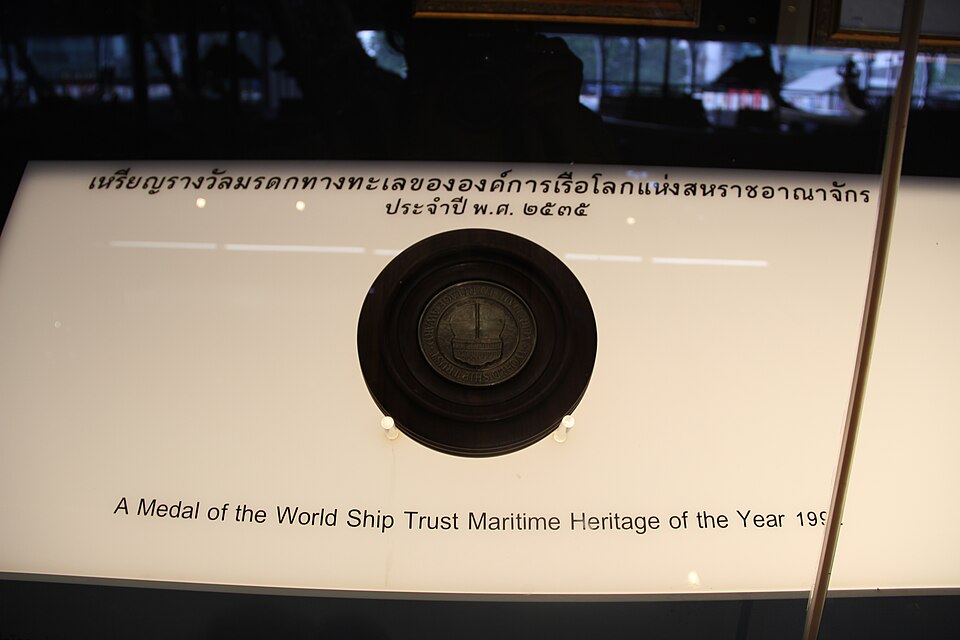
Allow 45 minutes inside the shed, plus roughly ten minutes each way for the walkway approach, which no vehicle shortens. Forty-five minutes is the honest figure for one hall on a single circulation route: about twenty-five minutes walking the row of hulls slowly enough to look at the carving, ten to fifteen in the exhibition room, and the remainder spent standing still at the open end of the shed where the barges and the canal appear in the same frame. The Fine Arts Department publishes no suggested visit length for this museum, so this is editorial judgement rather than an operator figure. A visitor who photographs seriously will overrun it; a visitor with a boat waiting will not.
Checked 2026-08-25
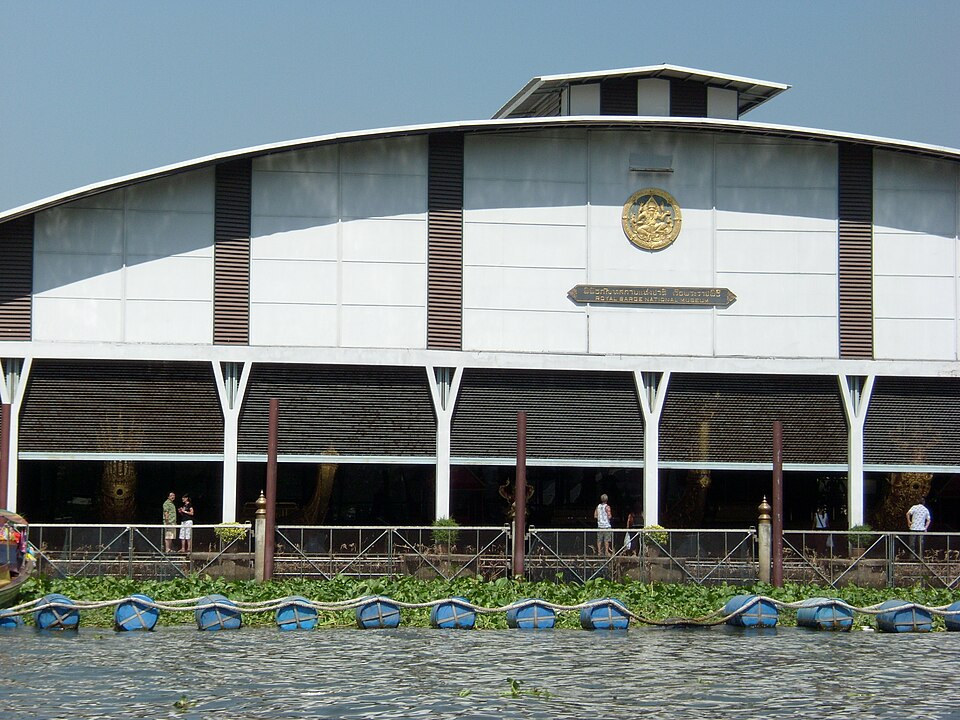
November to February is the season to choose, and the reason here is structural rather than scenic: the shed is open-sided, unconditioned and roofed in metal, so the temperature inside tracks the temperature outside, and the approach along the canal is a walkway with no shade. In April and May that walk is punishing. Between roughly May and October the same walkway is the problem in a different form, since Bangkok's rain arrives hard and the decking and the alley both take water. Aim for around 09:00. That is judgement anchored on nothing published, because the Fine Arts Department publishes no opening time for this museum at all — the earliest realistic slot is chosen for the light off the canal and for the heat, not from a timetable, and the caution in the next section applies before any of it.
Checked 2026-08-25
No regular admission rate is published for this museum by the Fine Arts Department, its operator, and none is recorded on this page. The department's own microsite for the museum carries an address, a telephone number and an email address but no price. The only figure the department publishes in connection with the museum is an event rate for the December 2025 night viewing — 20 baht for Thai visitors and 200 baht for foreign visitors, with students and over-sixties admitted free — announced at https://www.finearts.go.th/promotion/view/61516-. An event rate is not the everyday rate and has not been recorded as one. Third-party summaries variously assert 30/240 baht and 20/200 baht for ordinary admission; they disagree with each other, which is precisely the reason no number is written down here. Carry small notes in cash and expect to pay something at the door.
Checked 2026-08-25 · Source
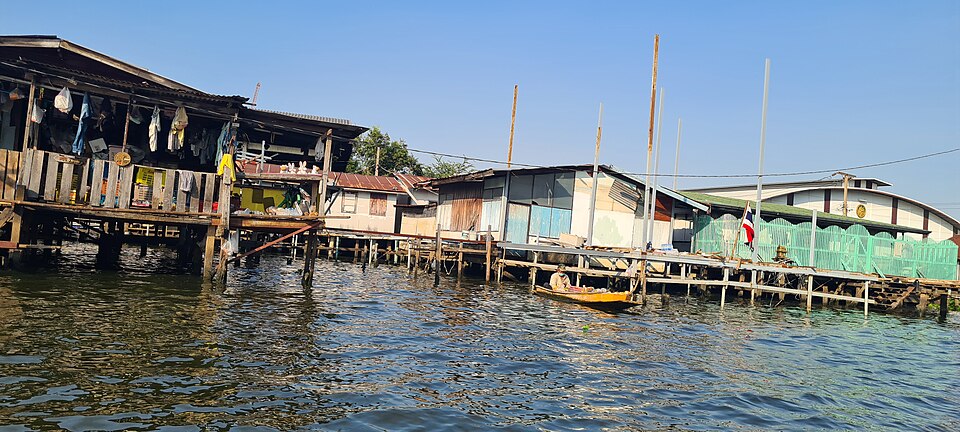
No car reaches the entrance, and that is not a parking difficulty but the geometry of the site: the museum sits at the end of a narrow walkway beside Khlong Bang Kok Noi, entered on foot from Arun Amarin Road, and the last stretch runs between houses at a width that admits people and motorcycles. A taxi or a bus along Arun Amarin drops a visitor at the head of that walk. The other approach is the one the barges themselves use — by boat, from the canal, which is how the long-tail tours of Khlong Bang Kok Noi include it. No rail station is near the door. The practical consequence is that the museum is best treated as a deliberate crossing of the river rather than something folded into a Rattanakosin walking day, and the return should be planned before setting out, because the walkway is not a place to be improvising transport after dark.
Checked 2026-08-25
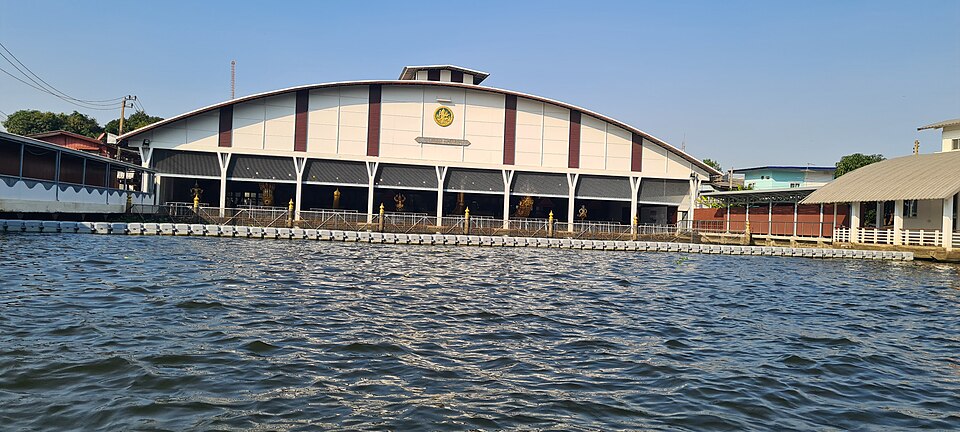
The first hazard is the door itself. The Fine Arts Department publishes no opening hours for this museum on any page of its microsite — not the home page, not the contact page, not the museum description — so a visitor crossing the river is crossing on an assumption. Telephone the number on the microsite before going, and do not transfer opening or closing days from another national museum: one department page carrying Wednesday-to-Sunday hours belongs to the Bangkok National Museum, not to this shed. Second, the entrance is genuinely easy to walk past; the walkway looks residential until the roofline of the shed appears. Third, the decking is slick after rain and the shed has no climate control, so sandals with grip beat smart shoes. Fourth, a barge may simply not be present — these are working ceremonial vessels that leave for restoration or for a procession, and no notice of that is published in advance. Unlike the temples elsewhere in this list, no dress code applies here; this is a museum, not a place of worship.
Checked 2026-08-25
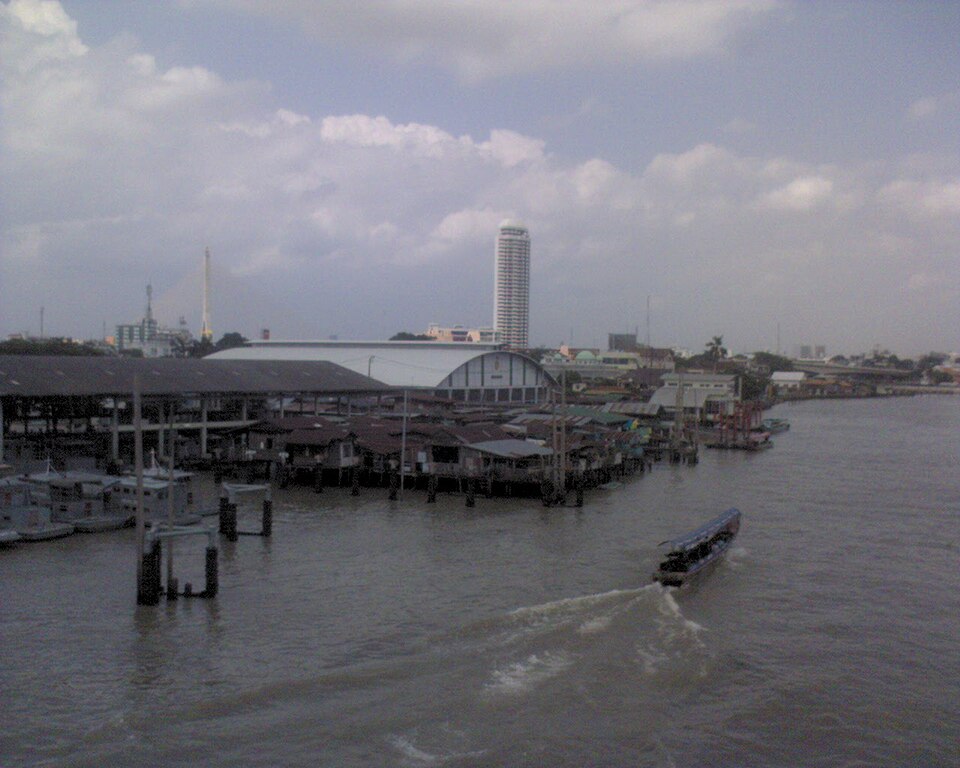
The shed is a contrast problem before it is a composition problem: a dark interior, a metal roof, and a bright open end where the canal is. Metering for the gilding will blow out the opening, and metering for the opening will lose the hulls entirely, so expose for the carving and let the far end go white, or work in the morning when the light bouncing off the canal reaches further inside. A wide lens earns its place here more than anywhere else in this list, because the walkway sets a fixed and short distance from a very long subject; the strongest single frame is taken from the near end looking down the row, where the prows stack into each other. Detail shots of the lacquer and mother-of-pearl need a steady hand at low shutter speeds. No photography policy is published by the operator, so treat the staff's instruction on the day as the rule, and ask before setting up a tripod on a walkway other people need to pass along.
Checked 2026-08-25
No opening hours are published for this museum by its operator, the Fine Arts Department. Its microsite at https://www.finearts.go.th/museumroyalbarges gives an address, a telephone number and an email address, and no page reached on it publishes visiting times. Telephone before crossing the river. Hours seen elsewhere on Fine Arts Department pages belong to the Bangkok National Museum and do not apply here.
No regular admission rate is published by the Fine Arts Department, so none is recorded here. The only fee the department publishes for this museum is the December 2025 night-viewing event rate of 20 baht for Thai visitors and 200 baht for foreign visitors, with students and over-sixties free. Third-party sources claim 30/240 baht and 20/200 baht for normal admission and contradict each other. Carry cash and expect to pay at the door.
Only as far as Arun Amarin Road. No car reaches the entrance, because the museum stands at the end of a narrow walkway beside Khlong Bang Kok Noi that is wide enough for pedestrians and motorcycles. The final approach is on foot, about ten minutes. The alternative is to arrive by boat along the canal, which is how long-tail canal tours include it.
Forty-five minutes inside is the working figure, plus about ten minutes each way on the walkway. That covers the row of eight barges at a pace slow enough to look at the carving, the small exhibition room of paddles, uniforms, models and procession photographs, and a pause at the open end of the shed. The operator publishes no suggested duration; 45 minutes is editorial judgement.
Not guaranteed. These are working ceremonial vessels that leave the shed for restoration or for a royal procession on the Chao Phraya, and no advance notice of an absence is published. A visitor should treat the full row as likely rather than certain, which is another reason to telephone before making the crossing.
For a first-time visitor with one day in Bangkok, probably not — it is a specialised single-hall museum reached only on foot, and the Rattanakosin core absorbs that day. For a second visit, or for anyone interested in woodcarving, lacquer or state ceremony, it repays the crossing precisely because it is quiet: the barges are seen from two metres away rather than from a riverbank at a distance.
Loading the interactive map…
The interactive map could not be loaded.
Last updated:
Source: OpenStreetMap contributors, Wikidata ·