


.jpg)
.jpg)
.jpg)
9 min walk · เขตราชเทวี
Santiphap Park
- High
- Nature site
Language · 1 published
Historic monument · เขตราชเทวี, Bangkok
วังสวนผักกาด
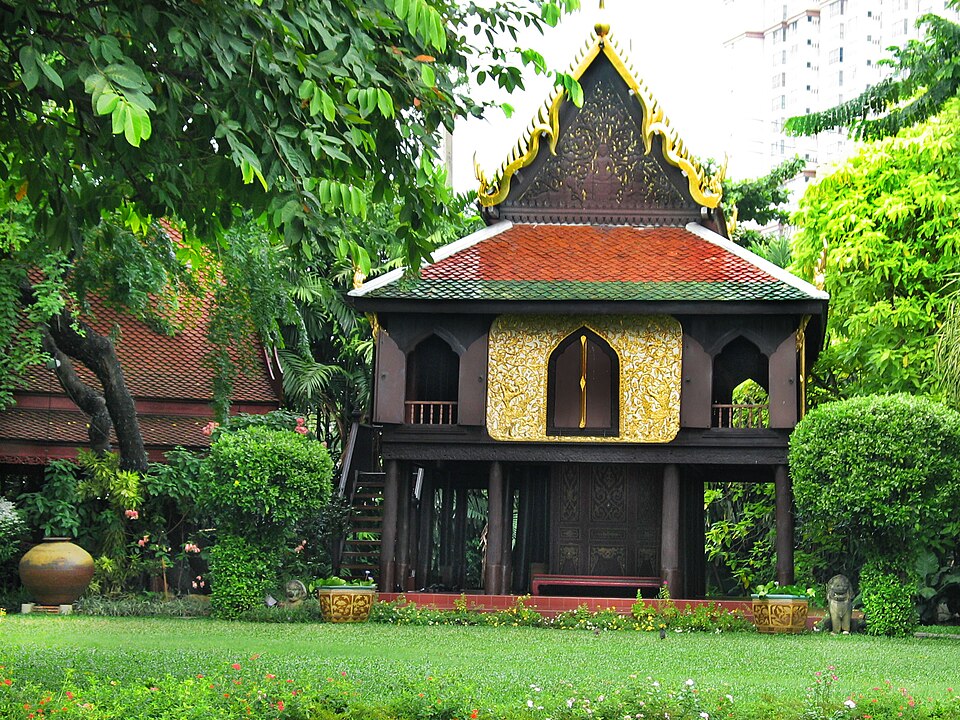
Suan Pakkad Palace is a private aristocratic compound on Si Ayutthaya Road in Ratchathewi, south of the Victory Monument, where Prince Chumbhotbongs Paribatra, who lived from 1904 to 1959, and his wife Princess Chumbhot assembled a residence out of old Thai houses moved in from elsewhere and then opened it to the public in 1952. The name translates as cabbage patch: the land was market garden before it was a palace. Rather than commission new pavilions in the traditional manner, the couple acquired ageing teak houses raised on posts, had them re-erected on the site and joined them with covered walkways across a garden, so that the museum's exhibits and the museum's building are the same object. The collections inside run from prehistoric Ban Chiang pottery, some of it over four thousand years old, through sculpture of the seventh to nineteenth centuries, to furniture and curios from the seventeenth century onward, almost all of it Thai. One thing a visitor must know before setting out: as of 25 August 2026 the museum's own website at suanpakkad.com carries a single line of Thai reading closed for repairs, and nothing else.
Checked 2026-08-25 · Source
Suan Pakkad Palace is arranged as a sequence of traditional Thai houses raised on posts, numbered rather than named, set out so that a visitor moves through them in order. The museum's own account describes seven such houses, all of them old buildings removed from other sites, several belonging to the family of the Prince's ancestor Somdet Ong Noi of the Bunnag line; the Wikipedia account counts four houses joined by covered hallways with five pavilions in total. The two figures are printed here as they were found rather than reconciled. The single most important building is the Lacquer Pavilion, which stands in the main garden south of House IV. It came from a temple near Ayutthaya, where it had fallen into disrepair, and its interior carries gold-on-black lacquer painting of the life of the Buddha and scenes from the Ramakien. Beyond the houses, the Chumbhot-Pantip Centre of Arts holds the Ban Chiang collection, and the Marsi Gallery occupies its second floor. The prehistoric material, the sculpture, the ceramics and the furniture are all Thai in origin with only a few foreign pieces among them.
Checked 2026-08-25 · Source
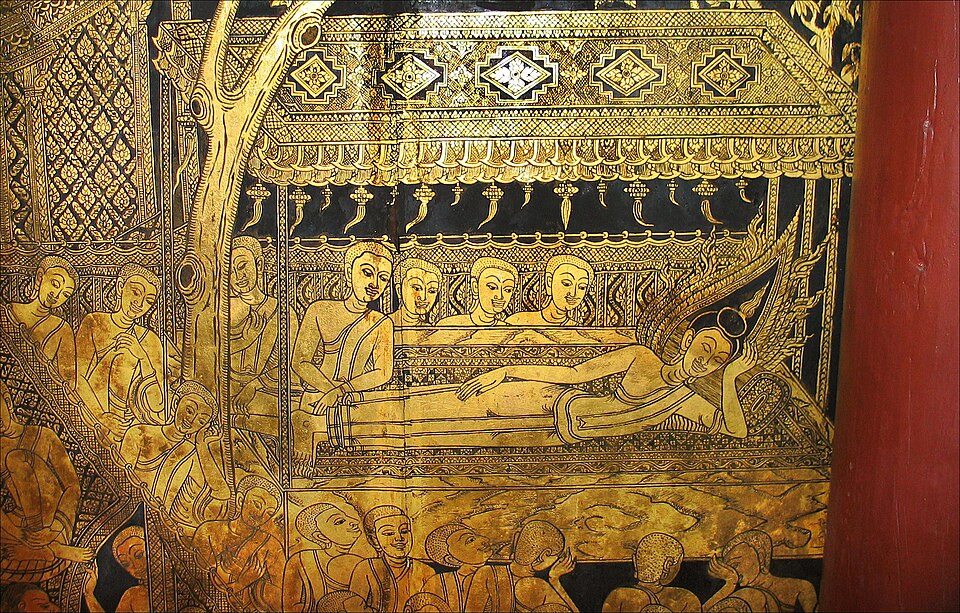
Allow ninety minutes for Suan Pakkad Palace when it is open. That is enough to walk the sequence of houses without hurrying, to sit for a while in the Lacquer Pavilion, which rewards standing still more than any other building on the site, and to go through the Ban Chiang collection and the Marsi Gallery in the Chumbhot-Pantip Centre of Arts. Visitors who care about Thai domestic architecture rather than about the objects can do it in an hour; visitors who read labels will find two hours passes easily, since the collection spans prehistory to the modern day in one garden. Ninety minutes is the honest middle. Note that the ninety minutes assumes the museum is open, which as of 25 August 2026 it is not.
Checked 2026-08-25
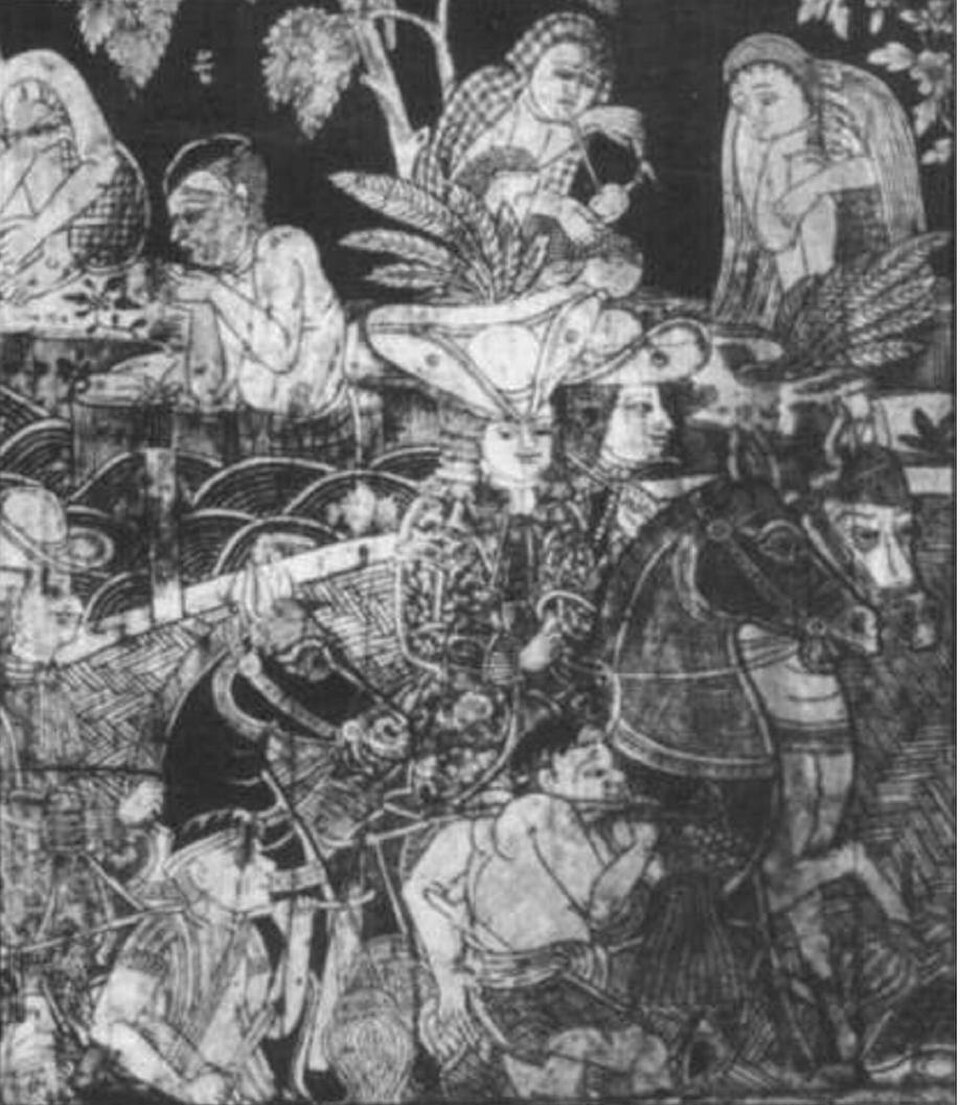
The governing question at Suan Pakkad Palace is not which hour but whether the museum has reopened. Its own site currently shows only a repair notice, so a visitor should load suanpakkad.com before travelling and treat any hours found elsewhere as unverified. When the museum is open, the compound is a garden of wooden houses with covered walkways between them, which means most of a visit is spent under a roof or a tree and the heat of the Bangkok afternoon matters less here than it does at an open-air monument. The wooden interiors are dim by design, so daylight rather than time of day is what governs how much of the lacquer painting can be made out; a bright dry-season morning shows far more of it than an overcast one in the rains. The site sits in a dense commercial district near the Victory Monument, so nothing about the surrounding streets is seasonal.
Checked 2026-08-25
No admission price and no opening hours are recorded for Suan Pakkad Palace on this page, and the reason is unusually clear. The operator's own website, suanpakkad.com, was read on 25 August 2026 in both its English and Thai versions. Both pages show one line and nothing more: ปิดซ่อมแซม ขออภัยในความไม่สะดวก, meaning closed for repairs, apologies for the inconvenience. There is no hours table, no price list, no reopening date and no contact block behind that notice. Because a practical fact is only recorded here when the operator publishes it, nothing has been recorded. Prices and hours for Suan Pakkad Palace circulate widely on aggregator sites and in older guidebooks; none of them is confirmed by the museum today, and a visitor who plans on them risks arriving at a shut gate. Check suanpakkad.com immediately before travelling, and treat the reopening as unannounced until that page says otherwise.
Checked 2026-08-25 · Source
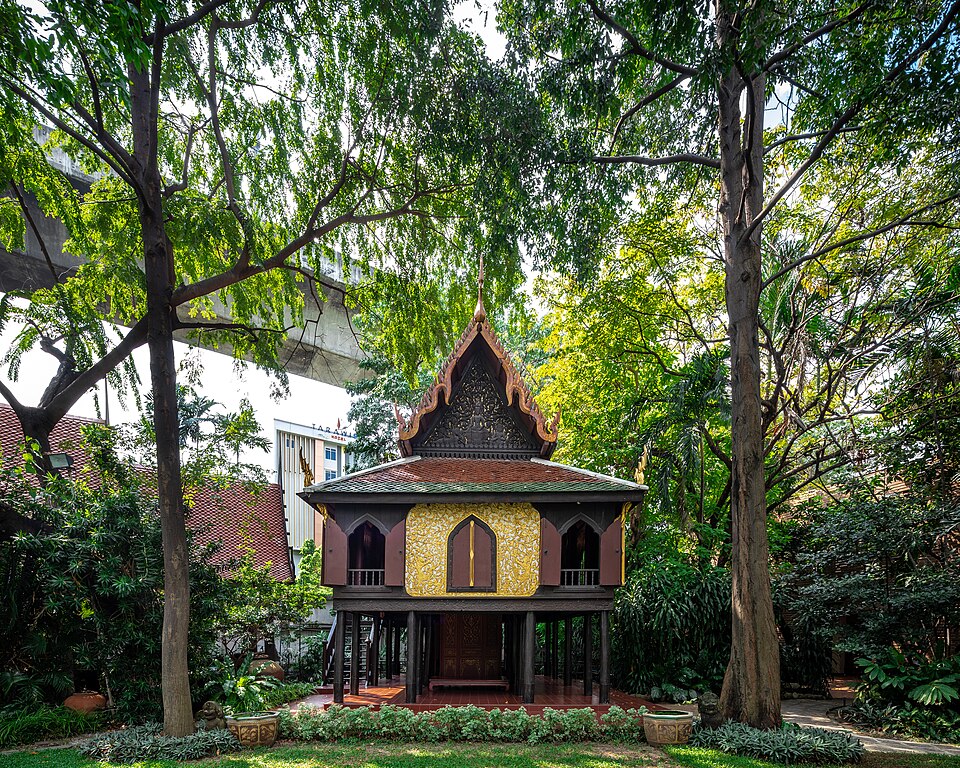
Suan Pakkad Palace is easier to reach than most Bangkok museums because it sits on a main road served by rail. Phaya Thai station in Ratchathewi District, which is served by the BTS Sukhumvit Line, the Airport Rail Link and the State Railway of Thailand's Eastern Line, stands at Phaya Thai and Si Ayutthaya Roads, and its own description names Suan Pakkad Palace as a landmark located nearby to the east of the station. That makes the palace a short flat walk from a BTS platform and, more usefully, a direct ride from Suvarnabhumi Airport on the Airport Rail Link without changing trains. The BTS station opened on 5 December 1999 and the Airport Rail Link platform on 23 August 2010. The palace is also south of the Victory Monument, which is the busiest bus interchange in the area, so city buses along Si Ayutthaya Road are a workable alternative for anyone already on that side of town.
Checked 2026-08-25 · Source
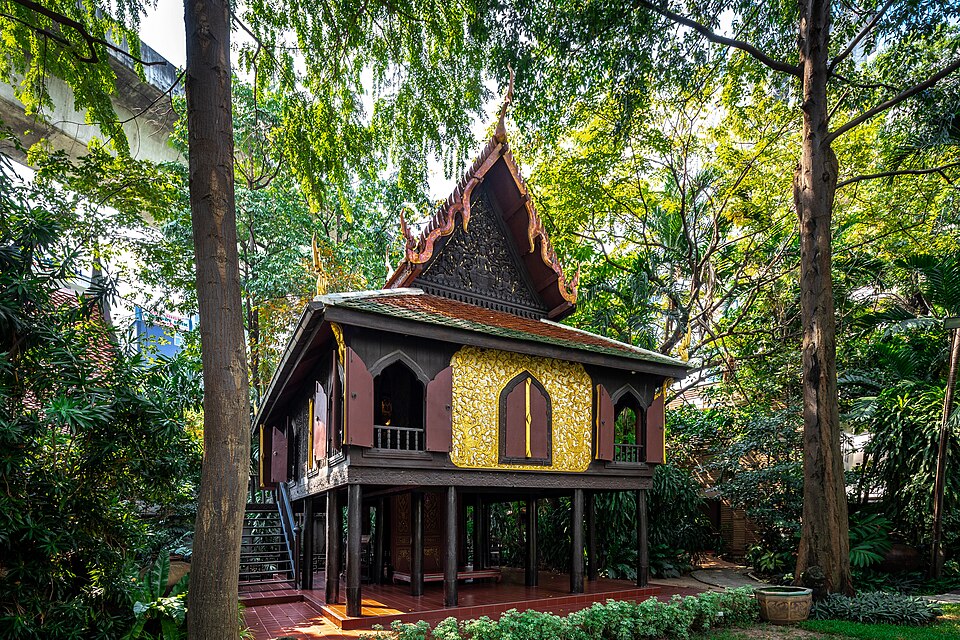
The trap at Suan Pakkad Palace in 2026 is the journey itself: the museum's own site shows a repair notice, so the practical hazard is arriving at a closed compound on the strength of hours copied from a third party. Check suanpakkad.com the morning of the visit. When the museum does operate, the site is a set of old teak houses raised on posts, which means steep wooden stairs, high thresholds to step over and polished floors, and shoes are removed at the house entrances in the Thai manner. Anyone with limited mobility should expect the upper floors of the houses to be hard work and should not count on lifts in buildings that predate them by a century. The Lacquer Pavilion is the fragile heart of the collection and is treated as such; assume that what may be touched, carried or photographed inside a given building is decided by the staff of that building and ask rather than assume. This is a family foundation's house, not a national museum, so its rules are its own.
Checked 2026-08-25
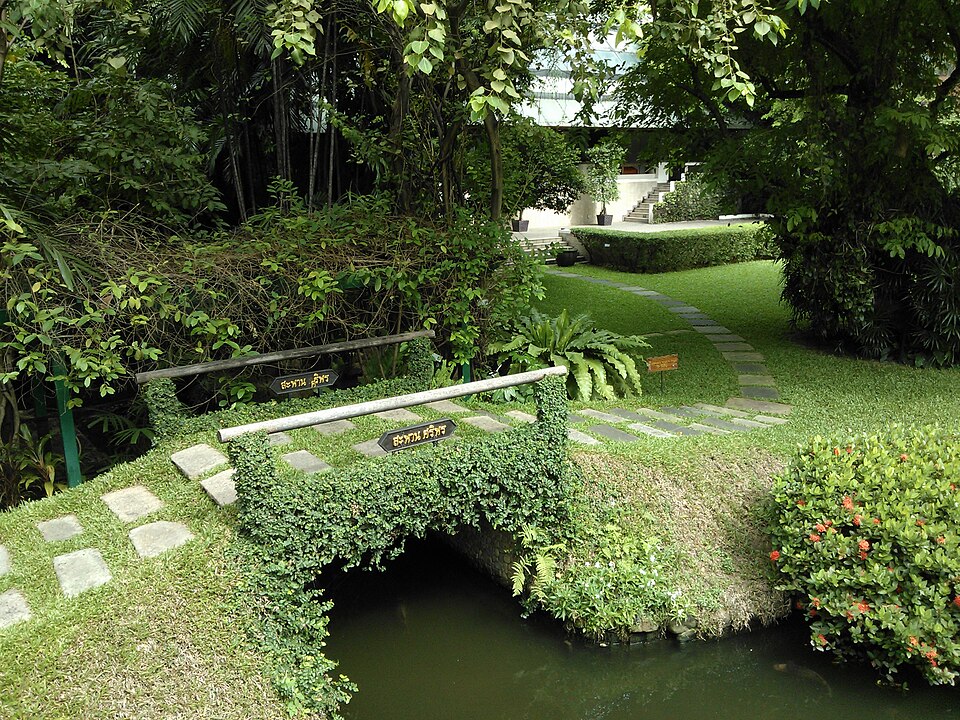
Photography at Suan Pakkad Palace is governed by the interiors rather than by the garden. The compound's strength as a subject is the arrangement of dark teak houses on posts against green planting and covered walkways, and that works in almost any light from the ground. The interiors are a different problem: traditional Thai houses are deliberately shaded, the walls are dark wood and the most celebrated surface in the compound is gold painting on black lacquer, which is close to unphotographable without a tripod and rewards simply looking instead. Rules on cameras inside individual buildings, and on the Lacquer Pavilion in particular, are set by the museum and should be confirmed on arrival, since a private foundation restricting photography of a fragile lacquer interior is entirely normal and no operator-published rule could be read while the site's pages carry only a closure notice. The safe assumption is that the garden is open to a camera and each interior is not until someone says it is.
Checked 2026-08-25
Not according to its own website. On 25 August 2026 both the English and Thai pages at suanpakkad.com showed a single line, ปิดซ่อมแซม ขออภัยในความไม่สะดวก, meaning closed for repairs. No reopening date is published. Check that page before travelling.
No admission price is recorded here. The museum's own site publishes no price list, only a closure notice, and a practical fact is recorded on this page only when the operator publishes it. Prices quoted on aggregator sites are not confirmed by the museum.
It is the most important building at Suan Pakkad Palace, standing in the main garden south of House IV. It was brought from a temple near Ayutthaya where it had fallen into disrepair, and its interior carries gold-on-black lacquer painting of the life of the Buddha and scenes from the Ramakien.
Prince Chumbhotbongs Paribatra, who lived from 1904 to 1959, and his wife Princess Chumbhot. Rather than build new pavilions, they moved old Thai houses on posts to the site and re-erected them, and opened the result to the public in 1952. The name means cabbage patch, after the market garden that stood there.
Ninety minutes when the museum is open: enough for the sequence of houses, a pause in the Lacquer Pavilion and the Ban Chiang collection and Marsi Gallery in the Chumbhot-Pantip Centre of Arts. An hour is possible for the architecture alone, two hours for anyone who reads labels.
It stands on Si Ayutthaya Road south of the Victory Monument, a short walk east of Phaya Thai station, which is served by the BTS Sukhumvit Line, the Airport Rail Link and the State Railway's Eastern Line. The Airport Rail Link makes it reachable from Suvarnabhumi without a change.
Loading the interactive map…
The interactive map could not be loaded.
Last updated:
Source: OpenStreetMap contributors, Wikidata ·