


.jpg)
.jpg)
.jpg)
9 min walk · เขตราชเทวี
Santiphap Park
- High
- Nature site
Language · 1 published
Museum · เขตราชเทวี, Bangkok
สวนผักกาด
| Monday | 09:00 – 16:00 |
|---|---|
| Tuesday | 09:00 – 16:00 |
| Wednesday | 09:00 – 16:00 |
| Thursday | 09:00 – 16:00 |
| Friday | 09:00 – 16:00 |
| Saturday | 09:00 – 16:00 |
| Sunday | 09:00 – 16:00 |
Parsed from OpenStreetMap opening hours on 2026-08-25.
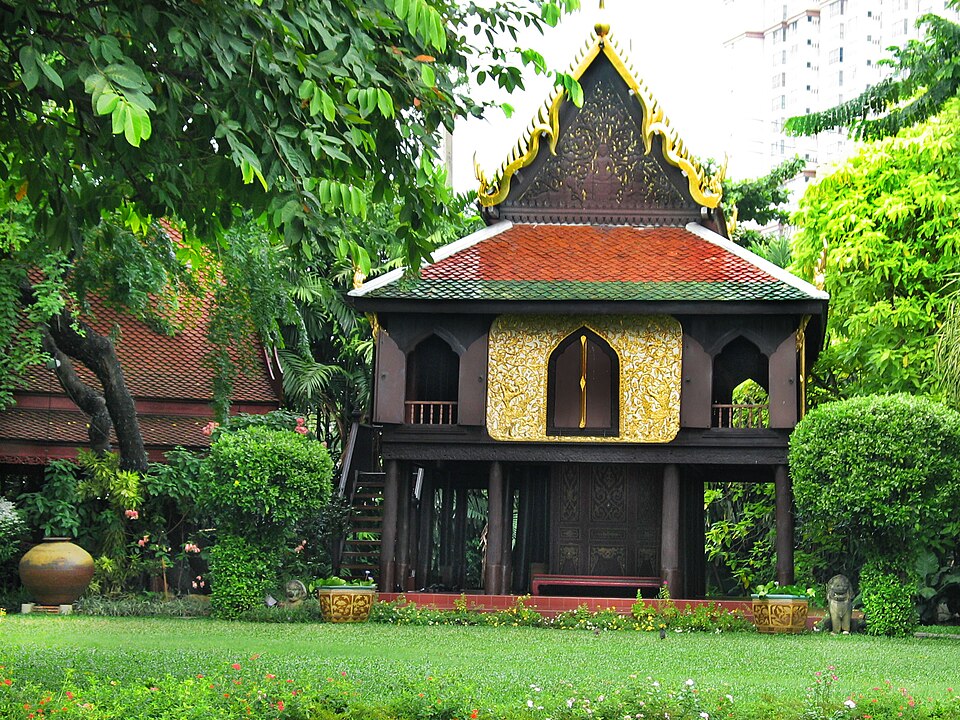
Suan Pakkad Palace is closed. As of 2026-08-25 the museum's own website has been replaced in its entirety by a single notice — ปิดซ่อมแซม ขออภัยในความไม่สะดวก, and in English on the notice image, closed for repair, apologies for inconvenience — with no reopening date published anywhere on it. What the museum is, when it opens again: a compound of traditional Thai houses on Si Ayutthaya Road in Ratchathewi, opened to the public in 1952 by Prince Chumbhotbongs Paribatra (1904-1959) and his wife, whose home it was. The name translates as Cabbage Patch, after the ground it was built on. It holds a Lacquer Pavilion over 450 years old and a collection of Ban Chiang pottery over 4,000 years old, which makes it the one place in central Bangkok where prehistoric archaeology from the Thai northeast is on display rather than described. It is a house museum, quiet and domestic in scale, and nothing like the state monuments in Rattanakosin.
Checked 2026-08-25 · Source
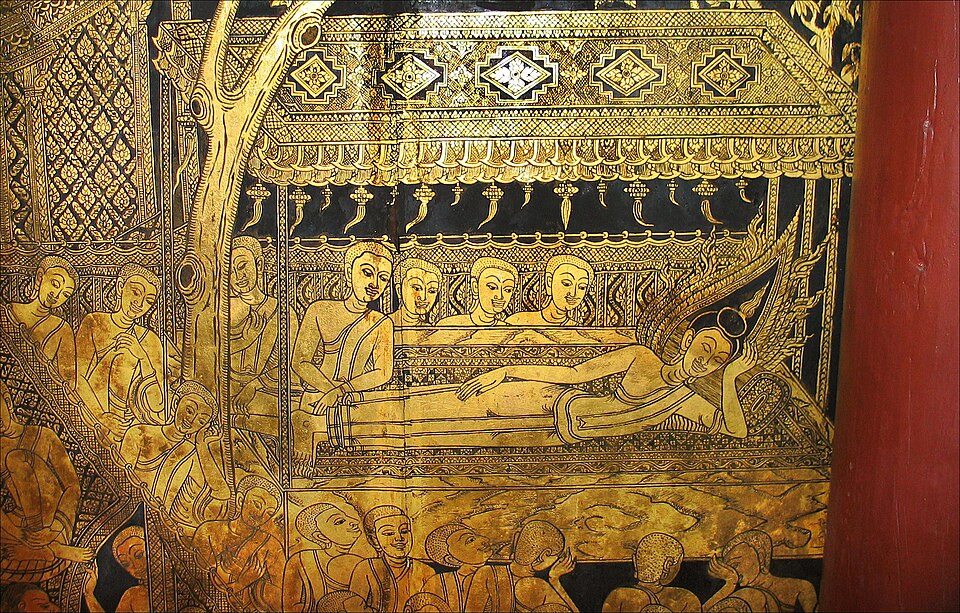
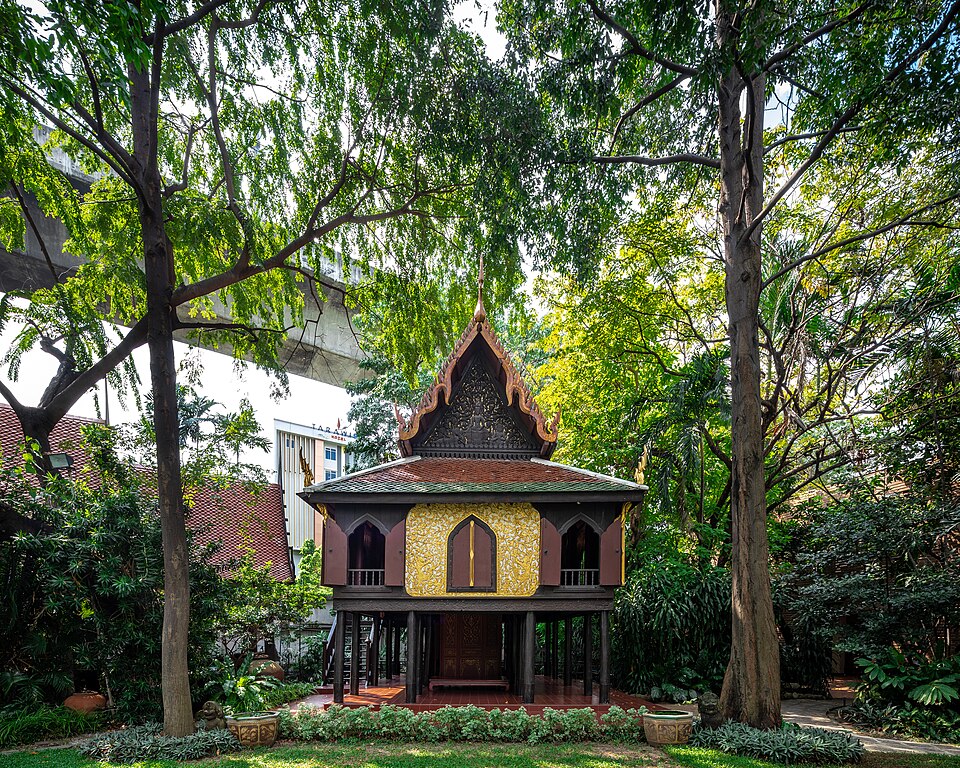
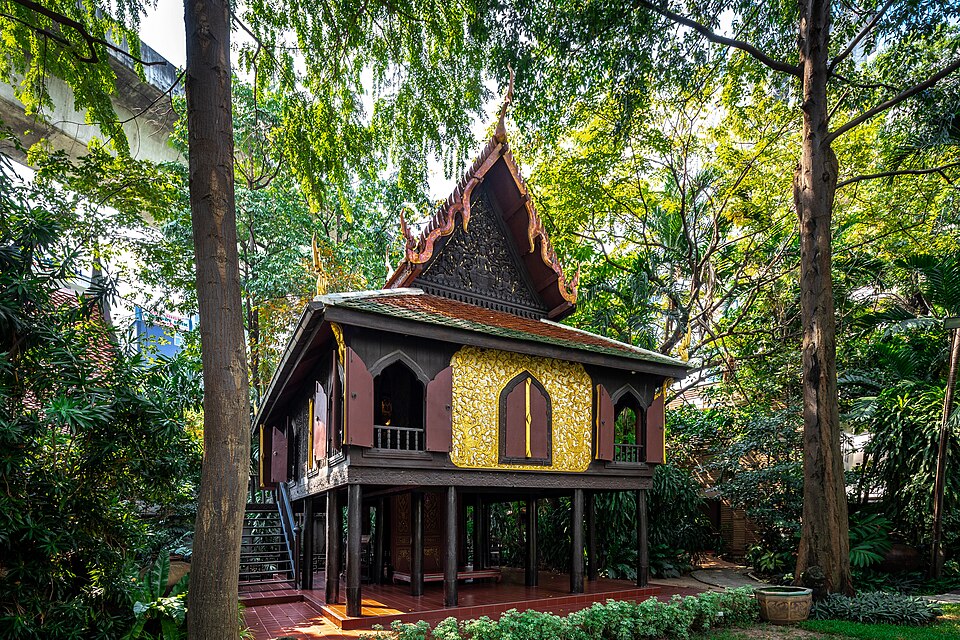
The core is a group of traditional Thai houses raised on posts and joined by covered hallways, moved here from elsewhere and reassembled, furnished as a princely household rather than laid out as galleries. Sources disagree on how many: the encyclopaedic account says four traditional Thai houses in one passage and five pavilions in another, and the compound has also been described as running to eight. All three counts are printed here rather than averaged, because none of them was confirmed against the operator. The single most important object is the Lacquer Pavilion, described as over 450 years old and painted in gold on black lacquer with religious subjects including the reclining Buddha — a survival of Ayutthaya-period work of a kind that mostly burned. The Ban Chiang collection holds prehistoric pottery over 4,000 years old. The Marsi Gallery carries changing art exhibitions when the museum is running.
Checked 2026-08-25 · Source
Allow 90 minutes when the museum reopens: the linked Thai houses take the bulk of it, the Lacquer Pavilion deserves fifteen minutes on its own, and the Ban Chiang cases another twenty. The figure is judgement — no operator statement of a tour length appears on the live site or in the archived captures of it. The number is academic while the compound is shut, and anyone planning a day around it should treat the visit as unscheduled until the operator says otherwise.
Checked 2026-08-25
Not yet. Read on 2026-08-25: both suanpakkad.com and its English page serve nothing but the closed-for-repairs notice, and no reopening date is published. The hours recorded against this page — 09:00 to 16:00 daily — are the operator's pre-closure hours, read from an Internet Archive capture of the operator's own English page dated 2023-12-02, and they are historical rather than current. The OpenStreetMap value carries the same 09:00 to 16:00, which makes the map data stale rather than wrong. The practical advice is to load suanpakkad.com in the week before any planned visit and see whether the notice is still there; there is no announcement channel to subscribe to and none was found. When it does reopen, Bangkok's cool dry months of November to February suit a compound that is walked partly outdoors between the houses.
Checked 2026-08-25 · Source
The recorded admission is 100 THB per person, and it comes from an Internet Archive capture dated 2023-12-02 of the operator's own English page, because the live operator site now publishes only the closure notice. That same archived page listed a lower price of 50 THB for Thai nationals; both figures are recorded rather than blended, since the museum charged two rates. Every part of that is out of date by more than six months and unconfirmed against the current operator, and it must be re-read when the museum reopens — a reopening after a repair programme is exactly the moment a price changes. No current admission exists, because there is currently no admission.
Checked 2026-08-25 · Source
Suan Pakkad Palace sits on Si Ayutthaya Road roughly 400 metres west of BTS Phaya Thai, which is also the terminus of the Airport Rail Link from Suvarnabhumi. That is an unusual position for a Bangkok museum and worth knowing: it is walkable from the airport train with luggage in hand, which makes it a plausible first or last stop rather than a special trip. No car is needed. Anyone arriving by taxi should give the Thai name, Wang Suan Pakkad, since the English one means little to a driver and the entrance is easy to pass.
Checked 2026-08-25
The closure is the trap. Aggregator listings, mapping apps and hotel concierges still show 09:00 to 16:00 and a 100 THB ticket, all of which was true before the repairs and none of which the operator currently stands behind; a visitor following them arrives at a shut gate on Si Ayutthaya Road. Check the operator's own site on the day. Beyond that, and for whenever it reopens: this is a house museum of raised teak buildings joined by steps and covered walkways, so shoes come off, floors are polished and slippery in socks, and there is no step-free route between the houses — a visitor who cannot manage short flights of stairs will see the grounds and not much else. Bags usually go in a locker rather than up the house steps, and the interiors are kept dim on purpose, because gold-on-lacquer work and 4,000-year-old pottery are both damaged by light.
Checked 2026-08-25
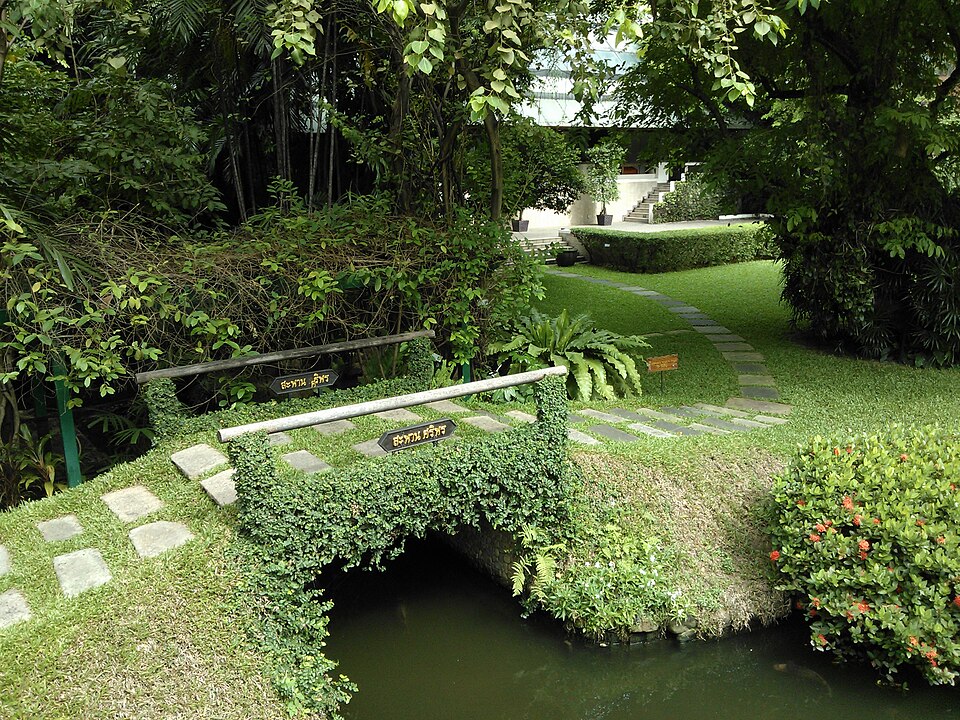
Nothing can be photographed while the museum is shut, and the street frontage is not a picture. When it reopens, the compound's strength is that it is walked outdoors between buildings: teak walls, steep tiled roofs and gilded gable ends, best in the last two hours of daylight when warm light reaches the west faces and the roof lines separate from the sky. Interiors are another matter — deliberately dark, and a flash near the Lacquer Pavilion's gold-on-lacquer surfaces is both unwelcome and pointless at that distance. Shoot wide and slow, braced on a doorframe. The Ban Chiang pottery sits behind glass, so work at an angle to the case to kill the reflection of the room.
Checked 2026-08-25
No. As of 2026-08-25 the operator's entire website has been replaced by a closed-for-repairs notice — ปิดซ่อมแซม ขออภัยในความไม่สะดวก, with the English 'Closed for repair' on the notice image — on both the Thai and the English pages. Aggregators and mapping apps still show the old hours and price, which is why visitors are still turning up at a shut gate.
No reopening date is published. The operator's site carries the closure notice and nothing else, no announcement channel for it was found, and no dated statement of intent exists anywhere the operator controls. The only reliable check is to load suanpakkad.com shortly before a planned visit and see whether the notice has gone.
The recorded figure is 100 THB per person, with 50 THB for Thai nationals, and it comes from an Internet Archive capture of the operator's own English page dated 2023-12-02 — the live site publishes no price while the museum is shut. That is over six months old and unconfirmed, and it must be re-read when the museum reopens, since a price commonly changes after a repair programme.
It is the compound's most important building, described as over 450 years old and decorated in gold on black lacquer with religious subjects including the reclining Buddha. Ayutthaya-period lacquer work of that kind largely did not survive, which is why the pavilion, rather than the houses around it, is the reason art historians come.
It stands on Si Ayutthaya Road about 400 metres west of BTS Phaya Thai, which is also the terminus of the Airport Rail Link from Suvarnabhumi — close enough to reach on foot from the airport train. No car is needed. A taxi driver will recognise the Thai name Wang Suan Pakkad rather than the English one.
About 90 minutes when the museum is running: most of it in the linked Thai houses, fifteen minutes on the Lacquer Pavilion and twenty on the Ban Chiang pottery. That is a judgement rather than an operator figure, and it is provisional in any case, since what reopens after the repairs may not be laid out as it was.
Loading the interactive map…
The interactive map could not be loaded.
Last updated:
Source: OpenStreetMap contributors, Wikidata ·