


1 min walk · Savski Venac
Park Gavrilo Princip
- High
- Nature site
Language · 1 published
Museum · Градска општина Савски венац, Belgrade
Амам кнеза Милоша
Closed today, Wednesday. The next opening is not recorded — the planner will not place a stop here on a Wednesday.
Plan around it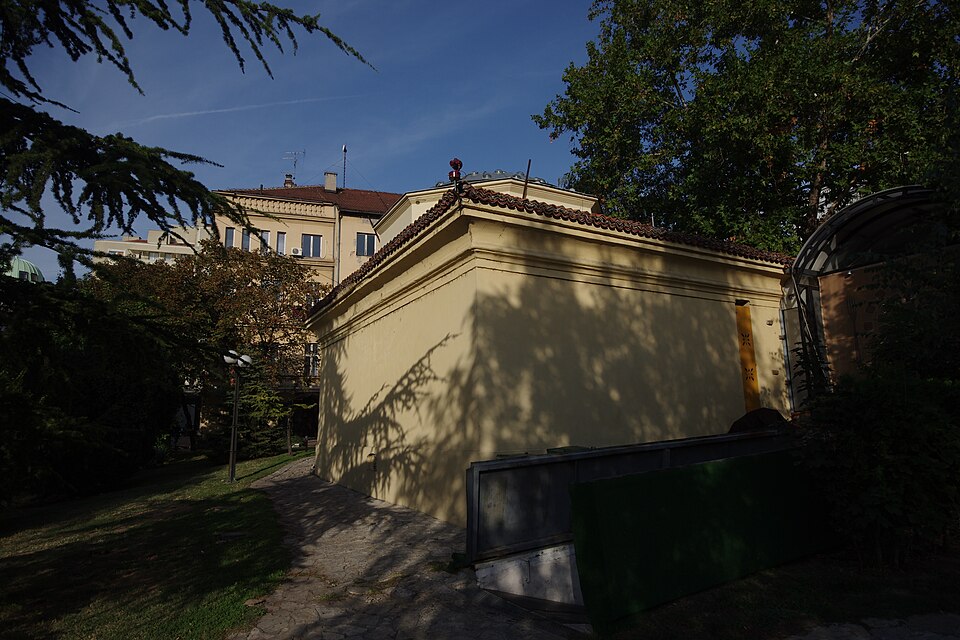
| Monday | Closed |
|---|---|
| Tuesday | Closed |
| Wednesday | Closed |
| Thursday | Closed |
| Friday | Closed |
| Saturday | Closed |
| Sunday | Closed |
Parsed from OpenStreetMap opening hours on 2026-08-25.
The Hammam of Prince Miloš is a Turkish-style bathhouse built in 1836-37, and it is currently a bath nobody can bathe in: OpenStreetMap's own record of the site, last checked 27 April 2026, lists its opening hours as switched off.
It was built as the bath of the Princely Lower Court, part of a court complex along the old Topčider road that Prince Miloš Obrenović had built for his sons Milan and Mihailo. The court's garden survives as today's Park Gavrilo Princip, known until 2017 as the Financial Park; the court buildings themselves later passed to the Finance Ministry, and the hammam is the only part of that whole complex still standing.
It was declared a cultural monument on 20 April 1948. In January 2021 city authorities announced the bath would return to municipal control, with a plan to reconstruct it and reopen it as a cultural centre — including demolishing the building at 14 Admirala Geprata street that currently blocks it from the road, and replacing it with a transparent ground floor so the hammam becomes visible from the street it now hides behind.
Checked 2026-08-24 · Source
The bath is attributed to Hadzi Nikola Živković, court architect during Prince Miloš's first reign (1817-39), who also built Princess Ljubica's Residence in Kosančićev Venac and the Residence of Prince Miloš in Topčider — so the hammam sits in the same small set of surviving buildings by the same royal builder.
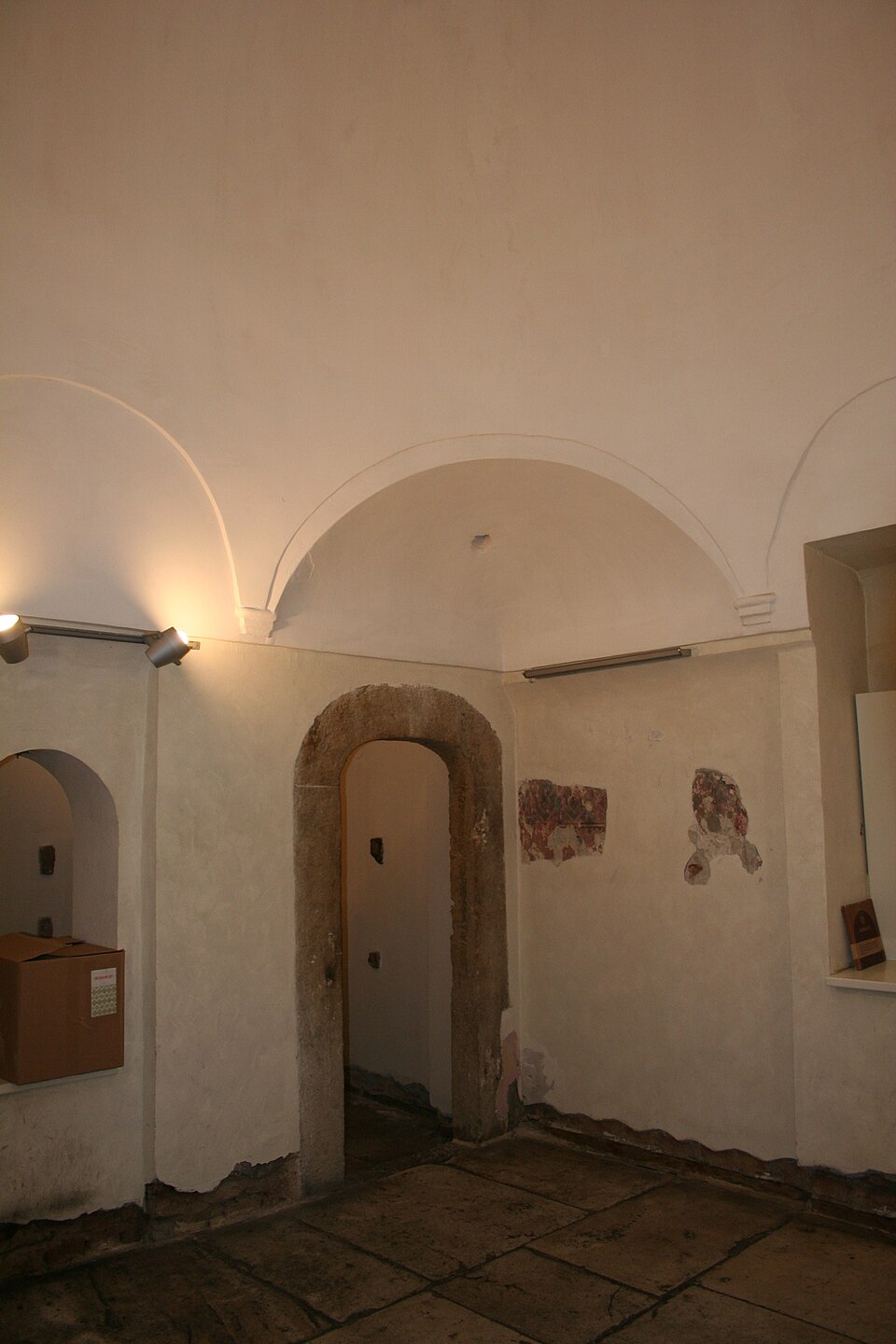
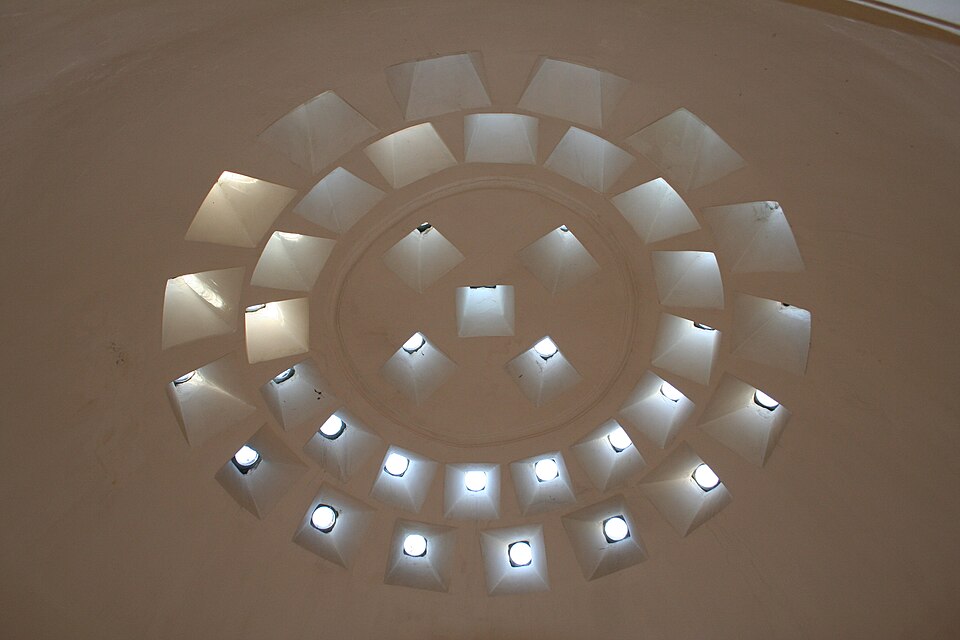
It follows a standard Ottoman bathhouse plan on a rectangular footprint, low to the ground with a hearth room and a protruding chimney. Despite its modest size it carries every functional part a hammam needs: a šadrvan (fountain), a kapaluk (cloakroom), a halvat (the large private bathing room), a hazna (attendant's room) and a ćulhan (boiler room). The main bathing and rest room is covered by a shallow dome built from bricks laid in concentric rings, its light coming through small glass bubbles set into the dome and vaults rather than through windows in the walls.
Checked 2026-08-24 · Source
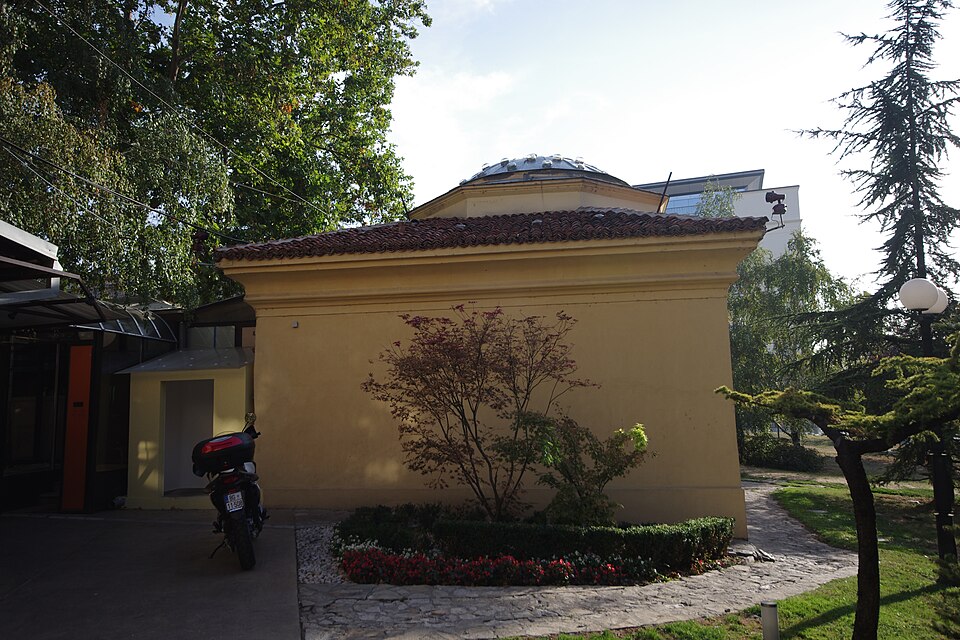
There is nothing to allow time for at present: the bath is closed to visitors and not visible from any surrounding street, so a stop here today is a look at its garden setting from outside Park Gavrilo Princip rather than a visit to the building itself.
Checked 2026-08-24 · Source
Not recorded. OSM's own tag for the site records its hours as off as of the 27 April 2026 check, and no reopening date has been confirmed here, so there is no season or time of day to recommend for a building nobody can currently enter.
Checked 2026-04-27 · Source
Not recorded — the hammam is not operating as a paid or free attraction at present. A 2021 city announcement floated turning it into a cultural centre once reconstruction was complete, but no ticketing arrangement, opening date or admission price has followed that announcement as recorded here, and none is invented in its place.
Checked 2026-04-27 · Source
The building sits inside Park Gavrilo Princip in the Savski Venac municipality, just north of the Government of Serbia building and west of the Finance Ministry — an easy walk from central Belgrade, though the bath itself is set back inside the interior of the park block and not visible from the surrounding streets, including Admirala Geprata street directly in front of it.
Checked 2026-08-24 · Source

The single biggest thing to know before making the trip: the hammam cannot currently be seen up close. It sits inside the interior of a park block, hidden behind the building at 14 Admirala Geprata street, and a 2021 plan to demolish that building and open a view onto the bath has not been confirmed as complete here. A visitor arriving expecting a walk-through bathhouse, the way Belgrade Fortress or a museum hammam elsewhere in the region works, will find a closed, obscured structure instead — the reward here is historical rather than visual, in knowing what stands behind the wall rather than in seeing it.
Checked 2026-08-24 · Source
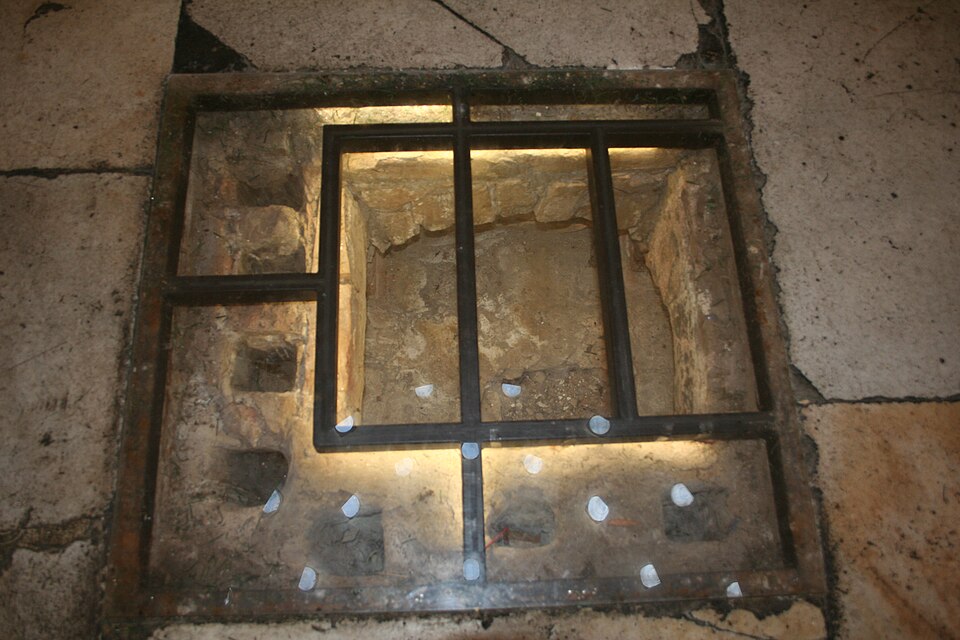
Not recorded. With the building both closed and not visible from any public street, there is no vantage point on record for photographing the hammam itself; the surrounding Park Gavrilo Princip photographs like any other city park, and the Government of Serbia and Finance Ministry buildings nearby are the more visible landmarks from the same spot.
Checked 2026-08-24 · Source
Not at present. OpenStreetMap's own record, checked 27 April 2026, lists its opening hours as off, and it is not visible from the surrounding streets.
In 1836-37, as the bath of the Princely Lower Court built for Prince Miloš Obrenović's sons Milan and Mihailo.
It is attributed to Hadzi Nikola Živković, the royal architect of Prince Miloš's first reign, who also built Princess Ljubica's Residence and the Residence of Prince Miloš in Topčider.
It sits inside the interior of a park block, behind the building at 14 Admirala Geprata street. A 2021 city plan proposed demolishing that building for a view onto the bath.
Yes. The court's other buildings passed to the Finance Ministry and were altered or replaced; the hammam is the one structure of the original complex still standing.
On 20 April 1948.
Loading the interactive map…
The interactive map could not be loaded.
Last updated:
Source: OpenStreetMap contributors, Wikidata ·