


3 min walk · Savski Venac
Bust of Franz Liszt
- High
- Historic monument
Language · 1 published
Museum · Градска општина Савски венац, Belgrade
Музеј града Београда
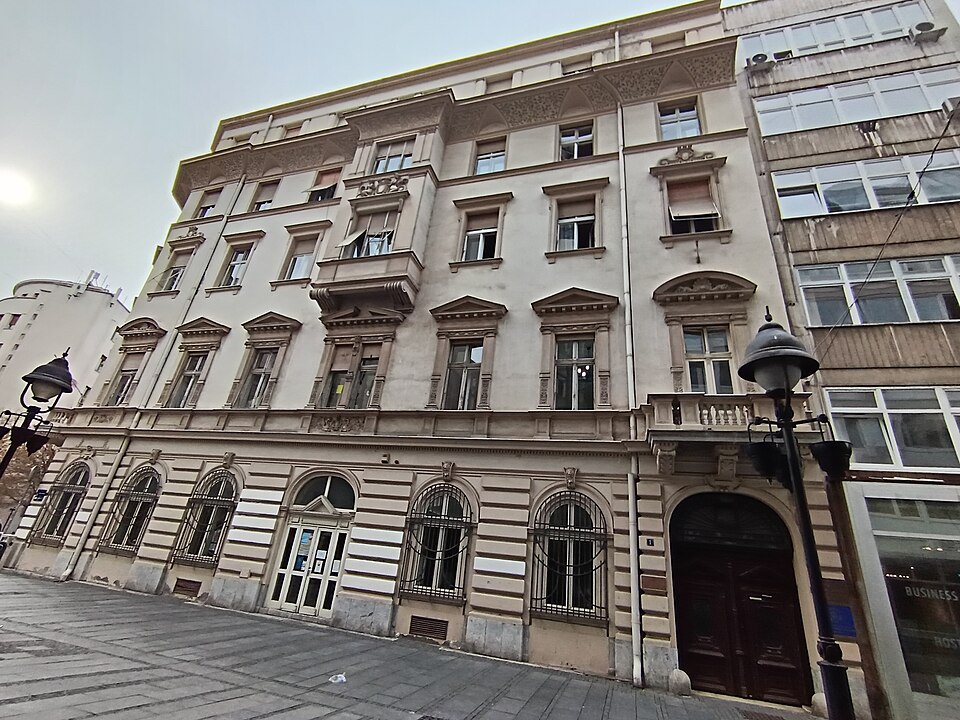
The Belgrade City Museum (Muzej grada Beograda) was founded in 1903, when the city assembly voted to build a collection documenting Belgrade itself rather than the wider Serbian state. Its main premises sit at Zmaj Jovina 1, on the corner of Belgrade's old town core, a short walk from Students' Square.
For most of the twentieth century the museum held its collection without a single permanent exhibition space of its own, showing pieces instead across a scatter of city-owned historic buildings that it administers to this day. The core collection spans Vinca-culture finds from the Neolithic settlement south of the city, Roman-era material from Singidunum, and objects from the medieval, Ottoman and Habsburg periods. Excavations connected to the museum have also uncovered material from the Roman legionary camp that preceded the modern city, giving the collection a depth that predates Belgrade's written history by several centuries, and the museum has continued to grow its holdings through donations from Belgrade families as well as its own archaeological digs across the wider city.
Checked 2026-08-24 · Source
Alongside its own galleries, the museum is the administrator of record for several of Belgrade's historic house-museums, including the Residence of Princess Ljubica and the Vuk and Dositej Museum, so a single ticket at the main building sometimes covers a combined visit and sometimes does not, depending on the current exhibition arrangement.
The permanent displays trace the city's growth from a prehistoric river settlement through its role as a Roman legionary camp, a medieval fortress town fought over by Hungary and the Ottoman Empire, and its nineteenth-century emergence as the capital of a modern Serbian state. Costumes, coins, weapons and everyday household objects sit alongside maps and photographs that trace how the street plan of the old town itself changed across those centuries, which gives a visitor a way to read the surrounding streets differently once they step back outside.
Checked 2026-08-24 · Source

Allow 90 minutes to two hours for the main building. A visitor who also takes in one of the affiliated house-museums the museum administers should budget a half-day for the two stops together, since they sit in different parts of the old town rather than next door to each other.
Checked 2026-08-24

Current opening days and hours are not recorded here; they change between exhibitions more often than most Belgrade museums, so the museum's own listing is the source to check before a visit rather than a fixed weekly pattern. Weekday mornings are generally the quietest slot at any of the old town's museums, since tour groups cluster around midday and the early afternoon. Winter visits avoid the summer crowds that fill the surrounding pedestrian streets around Students' Square.
Checked 2026-08-24
Admission price is not recorded here. Belgrade's municipal museums commonly waive entry on the first Sunday of the month; whether that applies to this building's current exhibition should be confirmed with the museum directly before a visit. Whether the ticket also covers one of the affiliated house-museums on the same day depends on the exhibition currently running, and is worth asking about at the desk rather than assuming either way.
Checked 2026-08-24

The museum sits in the pedestrian core of Stari Grad, close to Students' Square and a short walk from Republic Square. The nearest tram and trolleybus stops are on Kralja Petra and Vasina streets; the old town's narrow lanes make a car an inconvenient way to arrive.
Checked 2026-08-24

Because the museum's holdings are split across several buildings, confirm before arriving whether the exhibition a visitor wants is actually on show at Zmaj Jovina rather than at one of the affiliated houses. Labelling in the older galleries is not always duplicated in English. Flash photography is commonly restricted around fragile textiles and paper objects; ask staff at the entrance rather than assume. The building's own layout dates from an earlier era and does not offer level, step-free access throughout, which is worth checking ahead for a visitor with mobility needs.
Checked 2026-08-24

The building's corner facade on Zmaj Jovina, with its nineteenth-century stonework, photographs well from the small square opposite. Interior photography rules vary by exhibition; check at the ticket desk rather than assume a blanket policy. Early morning light along Zmaj Jovina, before the street fills with pedestrians, gives the cleanest shot of the corner entrance.
Checked 2026-08-24
In 1903, by a decision of the Belgrade city assembly to build a collection documenting the city rather than the wider Serbian state.
At Zmaj Jovina 1, in the old town core near Students' Square.
No. It also administers several of Belgrade's historic house-museums, including the Residence of Princess Ljubica, so the museum's holdings are spread across the old town.
About 90 minutes to two hours for the main building alone.
Not recorded for this exhibition; Belgrade's municipal museums commonly waive entry on the first Sunday of the month, but this should be confirmed with the museum before a visit.
Yes, it is a short walk through the pedestrian old town.
Loading the interactive map…
The interactive map could not be loaded.
Last updated:
Source: OpenStreetMap contributors, Wikidata ·