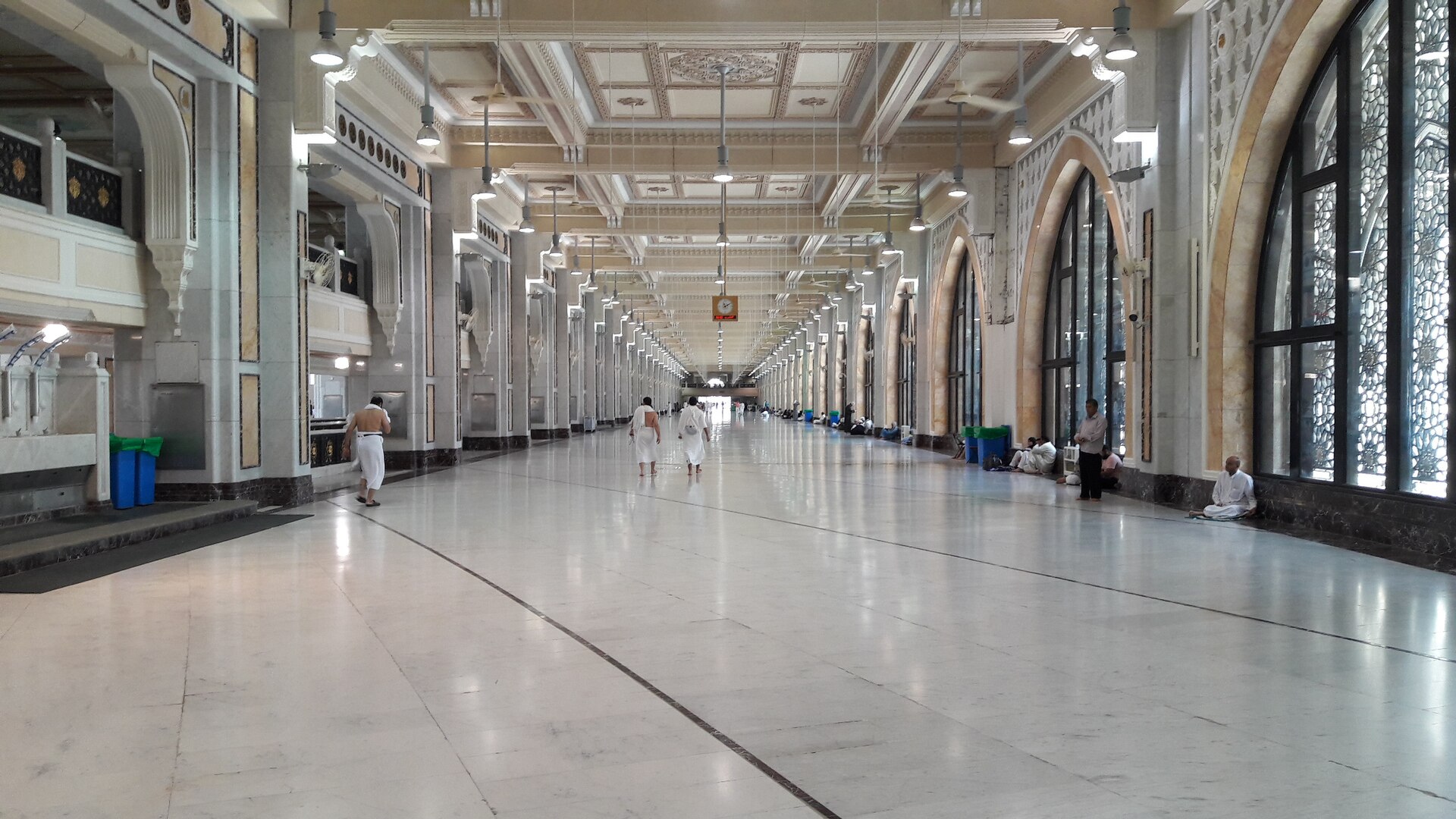
21 min walk
Safa and Marwah
- Must see
- Place of worship
Language · 11 published
Viewpoint · Mecca
جبل أبي قبيس
Jabal Abu Qubays, also written Jabal Abi Qubais, is a mountain in Mecca. It forms part of the sacred city’s surrounding topography and is connected with religious and historical traditions concerning early Islam. The mountain is best understood as a landmark within Mecca’s spiritual landscape, rather than a conventional commercial attraction with a programmed visitor experience. Jabal Abi Qubais is a mountain located in Mecca, Saudi Arabia. It holds religious and historical significance in Islamic tradition, reportedly associated with early events in the life of Prophet Muhammad. The mountain stands as one of the notable geographical landmarks within the holy city. Visitors to Mecca may encounter references to this site in religious literature and local heritage discussions. Its prominence derives from spiritual narratives rather than recreational or commercial development. The site represents part of the sacred topography that surrounds the central religious precinct of Mecca. No. Mecca is restricted to Muslims only. Non-Muslims cannot enter the city or approach this site.
Checked 2026-08-26 · Source
Jabal Abu Qubays is a natural mountain landform rather than an indoor attraction. Its value lies in its position within Mecca and its place in religious heritage. Plan to encounter a geographical landmark, not a museum interior, exhibition route, or interpretive centre. The mountain’s meaning comes from the landscape and traditions associated with it. Visitors should not expect signage, exhibitions, or maintained paths.
Checked 2026-08-26 · Source
A brief viewing can fit into travel through Mecca, while a longer pause suits travelers who want to contemplate the mountain’s religious associations. The site does not define a standard tour sequence, so shape the stop around your itinerary and physical condition. Keep enough time for city traffic and for returning to your main pilgrimage activities. No recommended visit duration for Jabal Abi Qubais is recorded. The mountain's undeveloped nature suggests that any visit would be self-directed and of variable length depending on individual interest and physical capability. Without established trails, viewpoints, or facilities, visitors would need to exercise independent judgment about appropriate time spent. Religious pilgrims with limited time in Mecca typically prioritize the Grand Mosque and its immediate rituals. Those seeking to observe Jabal Abi Qubais might incorporate brief viewing into broader movement through the city rather than dedicating a distinct excursion period.
Checked 2026-08-26 · Source
Choose cooler parts of the day for any outdoor viewing, particularly outside the milder winter period. Summer heat can make time outdoors strenuous. Hajj, Ramadan, and busy Umrah periods bring heavy crowds, traffic controls, and changing movement patterns across Mecca. A visit works best when it supports your religious itinerary and does not compete with essential rites. The site does not appear to operate as a managed attraction with formal opening or closing times. Access may be influenced by general security conditions in Mecca, prayer schedules, and seasonal variations in pilgrimage traffic. The Hajj and Ramadan periods bring extreme congestion to the entire city. Visitors should anticipate that any approach to the mountain may be complicated by crowd density and traffic restrictions during peak religious seasons. Personal planning must accommodate these unpredictable variables without reliable scheduling guidance.
Checked 2026-08-26 · Source
Jabal Abu Qubays is a mountain landmark, not a conventional ticketed attraction. The practical question is whether your route and religious itinerary allow you to view the site, rather than whether you need a sightseeing ticket. Mecca’s access rules remain decisive: entry to the city is restricted to Muslims, and local controls govern movement.
Checked 2026-08-26 · Source
The mountain is within Mecca’s urban area, so incorporate it through the roads and viewpoints that fit your wider route. Taxis, ride services, and private vehicles are common ways to move around the city, while pilgrimage-season controls can alter routes. Use the mapped position for navigation and leave extra time for congestion, construction, and security arrangements.
Checked 2026-08-26 · Source
Treat the mountain as rugged outdoor terrain. Wear secure footwear, protect yourself from strong sun, and carry water for the time spent outside. Mecca’s heat and dense religious-season crowds can add physical strain. Respect the sacred setting, avoid disturbing worshippers, and follow movement restrictions or directions issued by local authorities. Non-Muslims cannot enter Mecca.
Checked 2026-08-26 · Source
Photograph the mountain discreetly and keep people, prayer, and sensitive locations out of frame. Mecca is a deeply religious environment, so image-making should never interrupt worship or draw attention. Do not use a drone without the required authorization. If local officials or religious personnel restrict photography, put the camera away and continue without recording the view.
Checked 2026-08-26 · Source
The mountain is in Mecca, whose entry is restricted to Muslims.
It is a natural mountain landmark within Mecca’s sacred topography and religious heritage landscape.
No. It is a natural mountain landform rather than an indoor museum or exhibition centre.
Wear secure footwear, protect yourself from the sun, and carry water for time spent outdoors.
Hajj, Ramadan, and busy Umrah periods can bring heavy crowds, traffic controls, and slower movement across Mecca.
Photograph discreetly, avoid worshippers and sensitive locations, and follow any local restrictions on cameras or drones.
Loading the interactive map…
The interactive map could not be loaded.

Last updated:
Source: OpenStreetMap contributors ·