Smart Self-Managed Tours

Country guide

Philippines

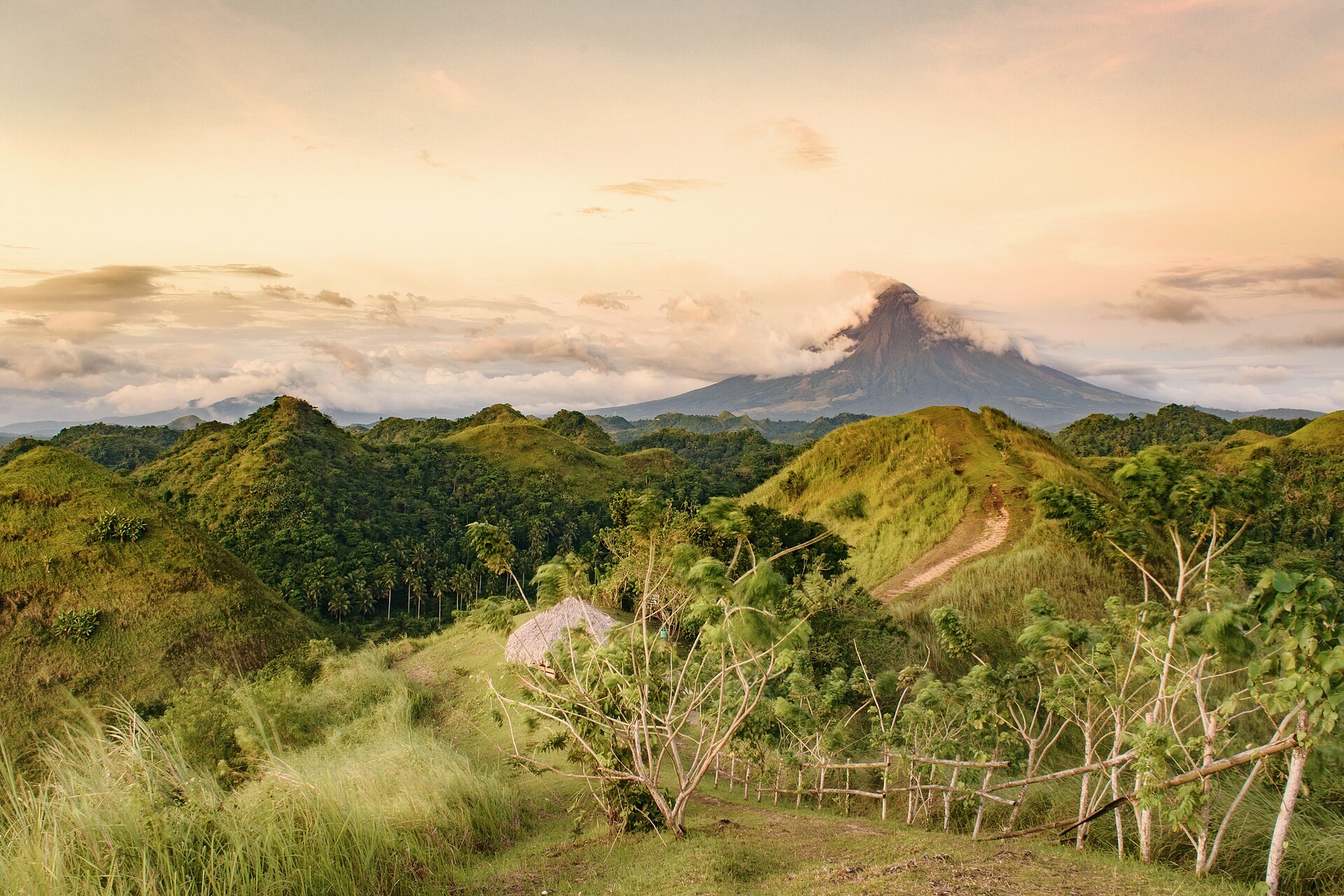
A photograph of Philippines
Photograph · Micluna · CC BY-SA 4.0

About 7,641 islands hold more than 114 million people, and the Philippines divides north to south into three parts — Luzon, the Visayas, Mindanao — which is the division a traveller ends up planning around. Luzon carries Manila and the national institutions; the Visayas are the middle scatter of smaller islands where most beach itineraries land; Mindanao in the south is the least visited of the three. Nothing here joins up by road for long. The land adds up to only about 300,000 square kilometres, but it is strung across a stretch of the western Pacific wide enough that a domestic flight is usually the honest answer.

Cities

Every city catalogued in this country so far, ranked by how much there is to see.

Practical information

Language spoken
Filipino and English
National practical orientation; regional and minority languages may also be used
Dialling code
+63
International calling code; local area and mobile prefixes still apply
Currency
Philippine peso (PHP)
Use the official local currency; card acceptance varies by place
Emergency number
911
Use only for an emergency; tourist assistance may use a separate number
Plug type
Type A, B and C · 220 V
Check that chargers support the recorded voltage before using an adapter
Tap water
Not recorded
No verified nationwide visitor drinking-water statement was recorded

Planning a visit

  1. January: no seasonality data recorded
  2. February: no seasonality data recorded
  3. March: no seasonality data recorded
  4. April: no seasonality data recorded
  5. May: no seasonality data recorded
  6. June: no seasonality data recorded
  7. July: no seasonality data recorded
  8. August: no seasonality data recorded — this month
  9. September: no seasonality data recorded
  10. October: no seasonality data recorded
  11. November: no seasonality data recorded
  12. December: no seasonality data recorded

Top things to see

Ranked by importance — sitelinks, pageviews and heritage status, not editor preference.

  1. Fort Santiago Fort Santiago
    02 45 min

    Fort Santiago

    Fort Santiago is a citadel within the walled district of Intramuros, Manila. Built by Spanish colonial forces, it served as a military headquarters and prison complex during successive colonial periods.

    • Must see
    • Historic monument
    • Manila
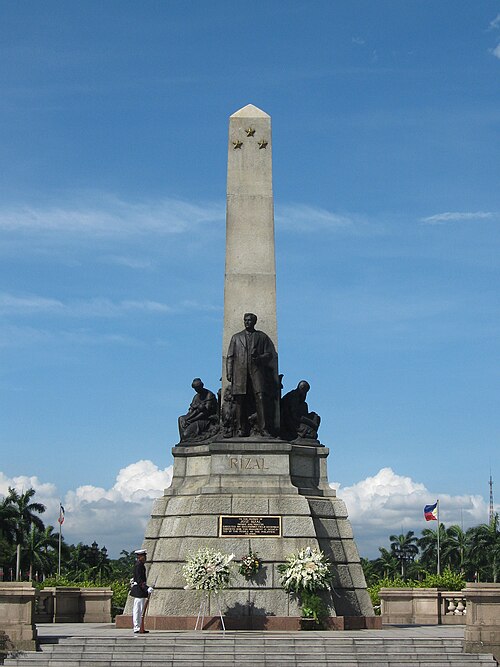
  2. Rizal Monument Rizal Monument
    03 45 min

    Rizal Monument

    The Rizal Monument stands in Rizal Park, Manila, as a memorial to Dr. José Rizal, the Philippine national hero executed by Spanish colonial authorities in 1896.

    • Must see
    • Historic monument
    • Manila
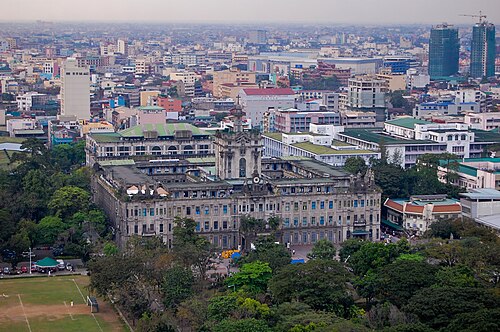
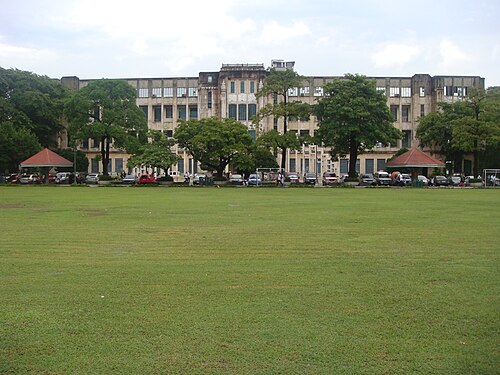
  3. University of Santo Tomas University of Santo Tomas
    04 30 min

    University of Santo Tomas

    The University of Santo Tomas is a private Catholic research university in Manila, Philippines. Founded in 1611, it is one of the oldest existing universities in Asia.

    • Must see
    • Place of worship
    • Manila
  4. Fort San Antonio Abad Fort San Antonio Abad
    05 45 min

    Fort San Antonio Abad

    Fort San Antonio Abad is a historic Spanish colonial fortification located in Malate, Manila. Constructed during the Spanish colonial period, it formed part of the defensive network protecting Manila Bay and the city of Manila.

    • Must see
    • Historic monument
    • Manila
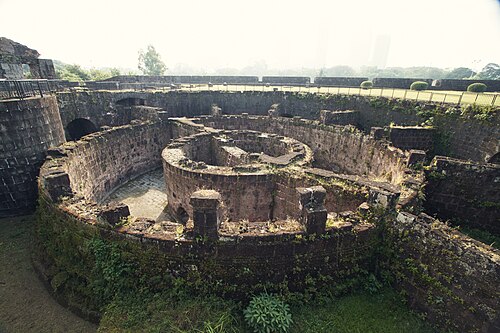
  5. Baluarte de San Diego Baluarte de San Diego
    06 45 min

    Baluarte de San Diego

    Baluarte de San Diego is a bastion structure forming part of the historic Spanish colonial fortifications in Manila. Built during the period of Spanish rule, it represents military architecture designed to protect the walled city of Intramuros.

    • Must see
    • Historic monument
    • Manila
  6. De La Salle University
    09 30 min

    De La Salle University

    De La Salle University Manila

    • Must see
    • Place of worship
    • Manila
  7. Mabini Shrine
    12 45 min

    Mabini Shrine

    Apolinario Mabini Shrine

    • Must see
    • Historic monument
    • Manila
  8. Santa Ana Church
    17 45 min

    Santa Ana Church

    Church of Santa Ana

    • Must see
    • Historic monument
    • Manila
  9. Boix House
    28 45 min

    Boix House

    • High
    • Historic monument
    • Manila
  10. Santa Lucia Barracks
    30 45 min

    Santa Lucia Barracks

    Santa Lucia Barracks Ruins

    • High
    • Historic monument
    • Manila
  11. Fort San Pedro Fort San Pedro
    31 45 min

    Fort San Pedro

    Fort San Pedro is a military defence structure in Cebu City, the Philippines. The National Museum of the Philippines operates the site as the National Museum of the Philippines Cebu, one of its regional museums.

    • High
    • Historic monument
    • Cebu City
  12. Tondo Church
    32 30 min

    Tondo Church

    Santo Niño de Tondo Parish Church

    • High
    • Place of worship
    • Manila
  13. Villa Peñafrancia
    36 45 min

    Villa Peñafrancia

    Jose P. Laurel Ancestral House

    • High
    • Historic monument
    • Manila
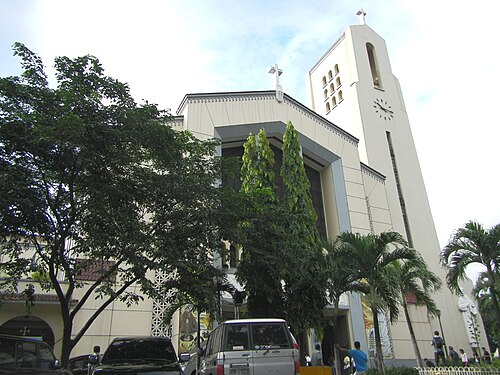
  14. Sampaloc Church
    47 30 min

    Sampaloc Church

    Archdiocesan Shrine of Our Lady of Loreto

    • High
    • Place of worship
    • Manila
  15. Ermita Church
    48 30 min

    Ermita Church

    Nuestra Señora De Guia Parish Church

    • High
    • Place of worship
    • Manila
  16. Charles IV Monument
    67 45 min

    Charles IV Monument

    King Charles IV Monument

    • High
    • Historic monument
    • Manila

Source: OpenStreetMap contributors, Wikidata ·

Common questions

How long should a first trip to Philippines be?

Ten to fourteen days should focus on one or two island groups, such as Manila with Palawan or Cebu with nearby Visayan islands. Each additional island adds a terminal transfer and weather exposure, so keep the final night close to the international departure airport.

What entry documents are needed for Philippines?

Use the official eTravel service for any required arrival registration and check Bureau of Immigration guidance for the passport and length of stay. Registration is not a substitute for a visa when one is required, and unofficial lookalike services should not be used.

What is the best way to travel around Philippines?

The Philippine Ports Authority documents passenger terminals and inter-island links, including Batangas services toward Mindoro, Palawan, Panay, Negros, Cebu and Mindanao. Confirm the exact port and terminal with the licensed carrier. Domestic-air routing and claims about Manila or Cebu as flight hubs are Not recorded by this source, so they are not inferred here.

When is a practical time to visit Philippines?

Dry-season expectations vary by island and typhoon exposure matters more than a single national calendar. Build the trip around the weather pattern of the selected island group, keep sea-transfer days flexible and monitor official storm notices before any ferry leg.

What money and payment basics apply in Philippines?

The Philippine peso is used nationwide. Cash is important on smaller islands and for local road transport, while city hotels and larger businesses more often accept cards; use bank-connected machines and check whether island services add separate terminal or environmental fees.

What practical safety details should I save for Philippines?

Call 911 for the recorded emergency service; power standards include Types A, B and C at 220 V. Tap-water safety is Not recorded in this dataset, so confirm supply locally, and retain carrier and terminal contacts whenever the itinerary includes sea travel.