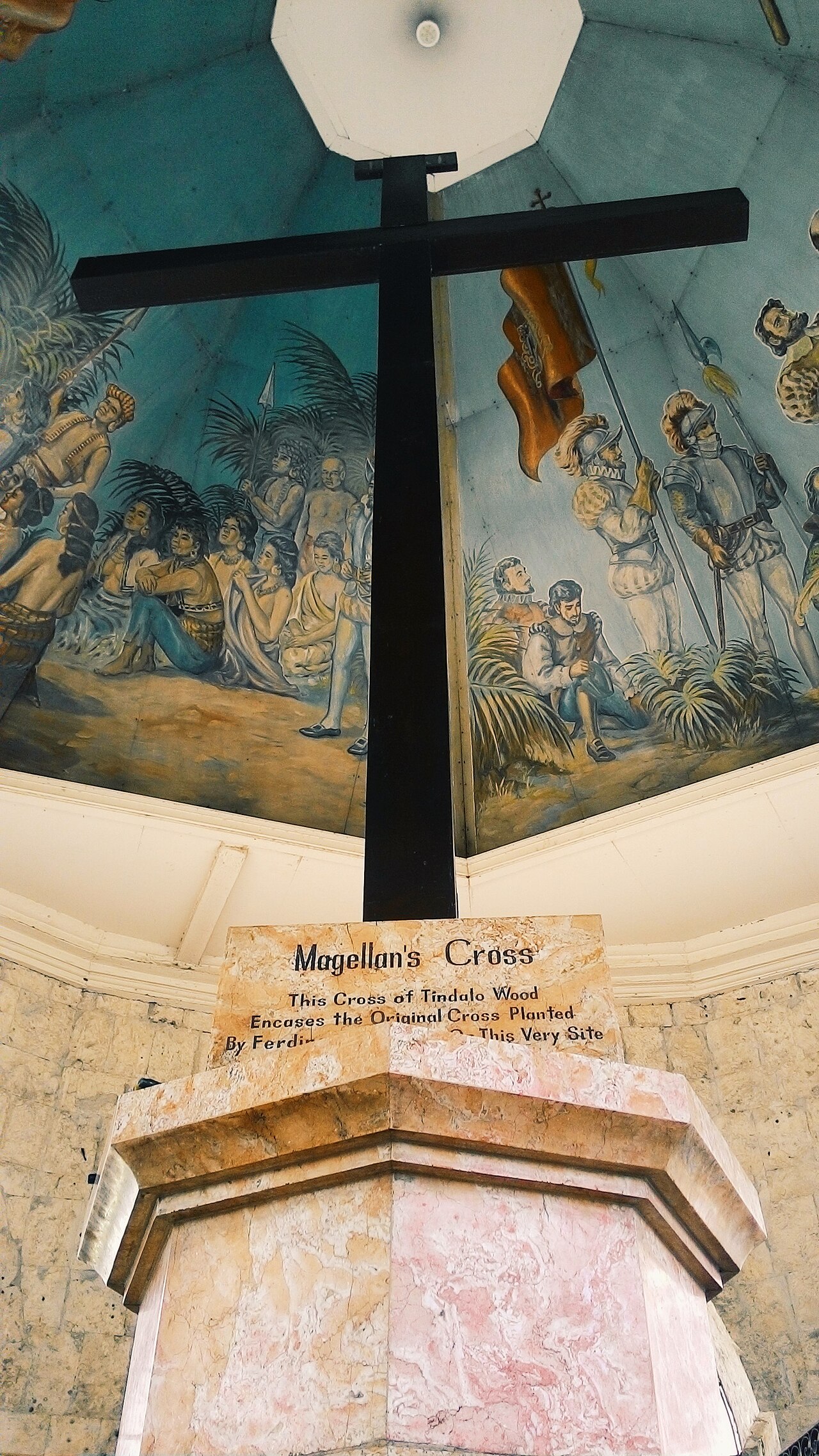
Magellan's Cross is a historical landmark in Cebu City housed within a small chapel near the Basilica Minore del Santo Niño. The site commemorates the arrival of Ferdinand Magellan in 1521 and the subsequent planting of a cross, symbolizing the introduction of Christianity to the Philippines. The current structure protects what is claimed to be remnants of the original cross. The National Museum of the Philippines Cebu oversees heritage interpretation in the broader area, situating this monument within a significant cultural district that attracts pilgrims and tourists alike.
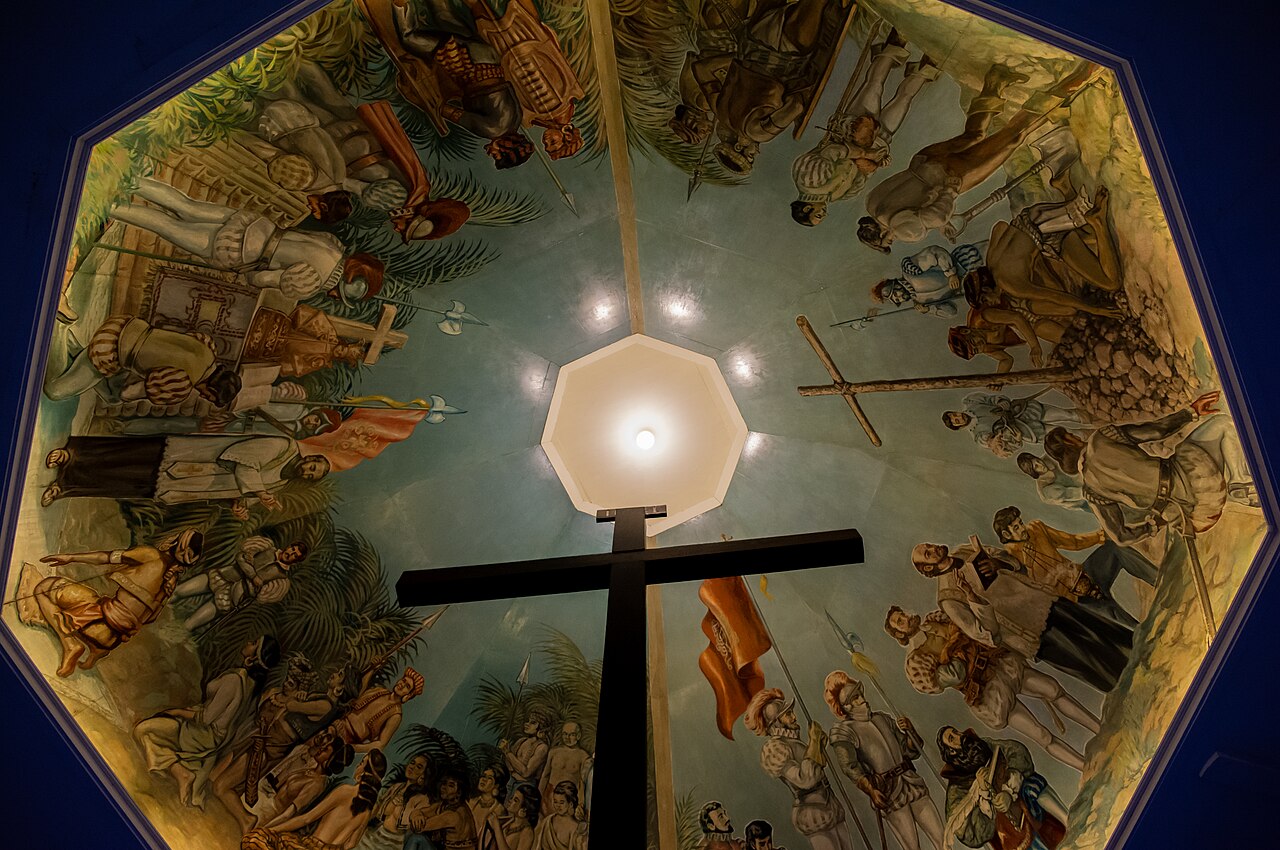
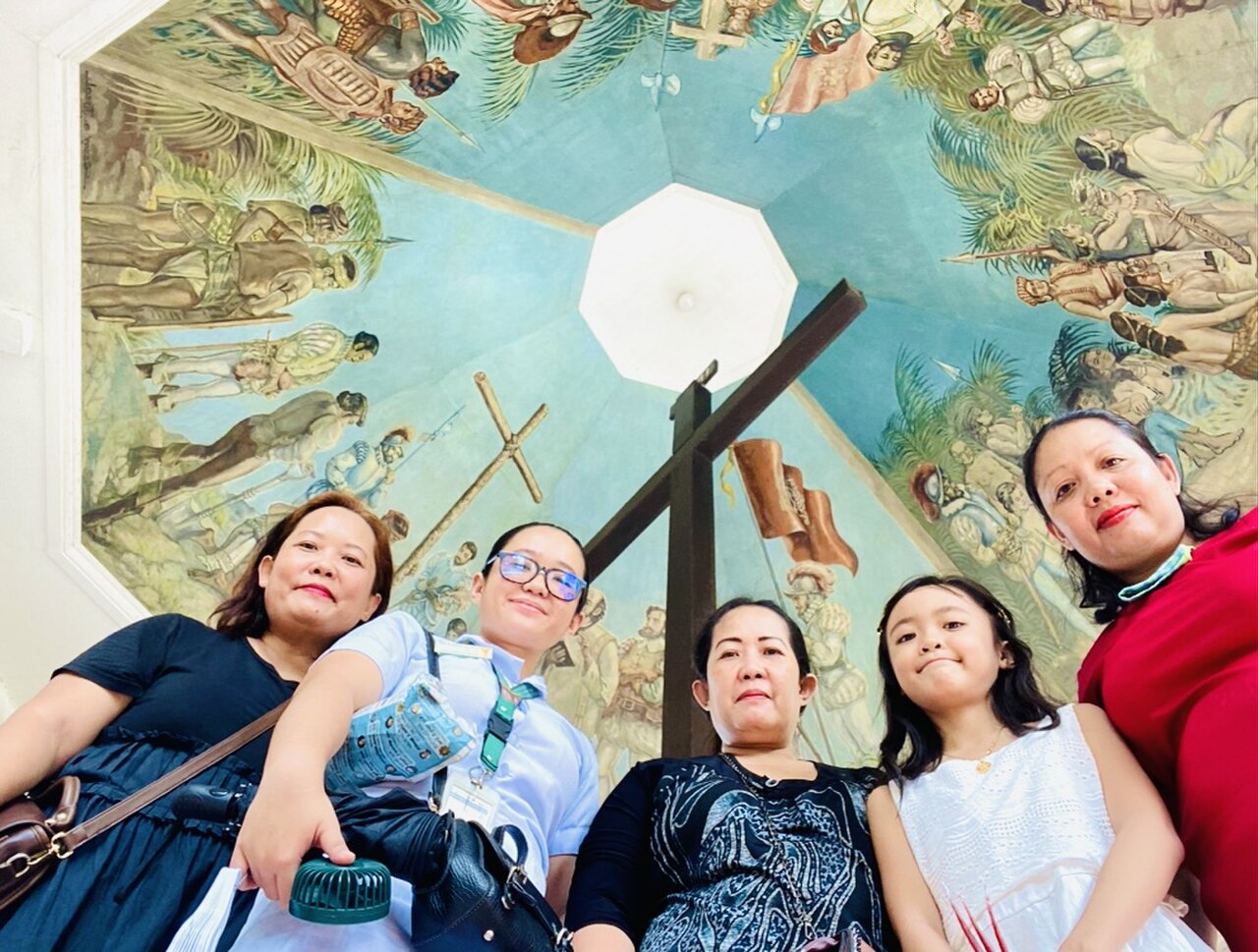
Visitors encounter a hexagonal pavilion with a painted ceiling depicting the baptism of Humabon, Cebu's ruler, and his queen. The central feature is the encased cross, visible through a grilled enclosure. The surrounding area includes devotional candles and religious items available from nearby vendors. The adjacent Basilica Minore del Santo Niño contains additional ecclesiastical artifacts and worship spaces. The National Museum of the Philippines Cebu, located in the vicinity, offers expanded historical context through its exhibitions, though this requires separate visitation and has distinct operational parameters from the cross pavilion itself.
Most visitors allocate fifteen to thirty minutes for the cross pavilion itself, given its compact dimensions and singular focal point. The experience typically extends when combined with adjacent religious sites, particularly the basilica. Devotional activities such as candle lighting may add time. Travel media consistently list this among essential Cebu stops, suggesting integration into broader itineraries rather than isolated destination status. Visitors seeking deeper historical engagement should plan additional hours for the National Museum of the Philippines Cebu, which provides institutional framing absent from the monument's minimal interpretive installation.
Operator-confirmed hours are Not recorded pending review. The pavilion's accessibility appears to align with general daylight patterns and religious service schedules at the adjacent basilica, though this inference carries uncertainty. Morning visits may offer reduced crowding before pilgrimage and tour groups arrive. Sunday masses and religious observances significantly increase foot traffic. Seasonal variations including Sinulog Festival in January create exceptional congestion. Wikipedia's Cebu City entry confirms the site's enduring prominence without specifying temporal parameters. Visitors should verify current conditions through direct inquiry or updated travel media before finalizing arrangements.
Operator-confirmed prices are Not recorded pending review. The site's religious character and public accessibility suggest no admission charge, consistent with comparable Philippine heritage chapels, though this remains unverified through authoritative sources. Candle purchases and devotional offerings involve voluntary contributions. No ticketing infrastructure is evident from available documentation. The National Museum of the Philippines Cebu maintains separate admission policies. Timeout's Cebu coverage emphasizes experiential value without mentioning fees. Visitors should carry modest cash for incidental offerings and nearby services, while treating cost-free access as provisional until institutional confirmation becomes available.
The monument occupies central Cebu City within the Santo Niño precinct, accessible from major thoroughfares including Osmeña Boulevard. Public utility vehicles including jeepneys serve surrounding routes with signage indicating basilica proximity. Taxis and ride-hailing applications provide direct access with minimal navigation complexity given the landmark's established recognition. Walking from downtown accommodations proves feasible for centrally lodged visitors. Airport connections require substantial transit time across metropolitan distance. The National Museum of the Philippines Cebu offers complementary destination programming within reachable radius, permitting efficient multi-site itineraries on foot or through short vehicle segments.
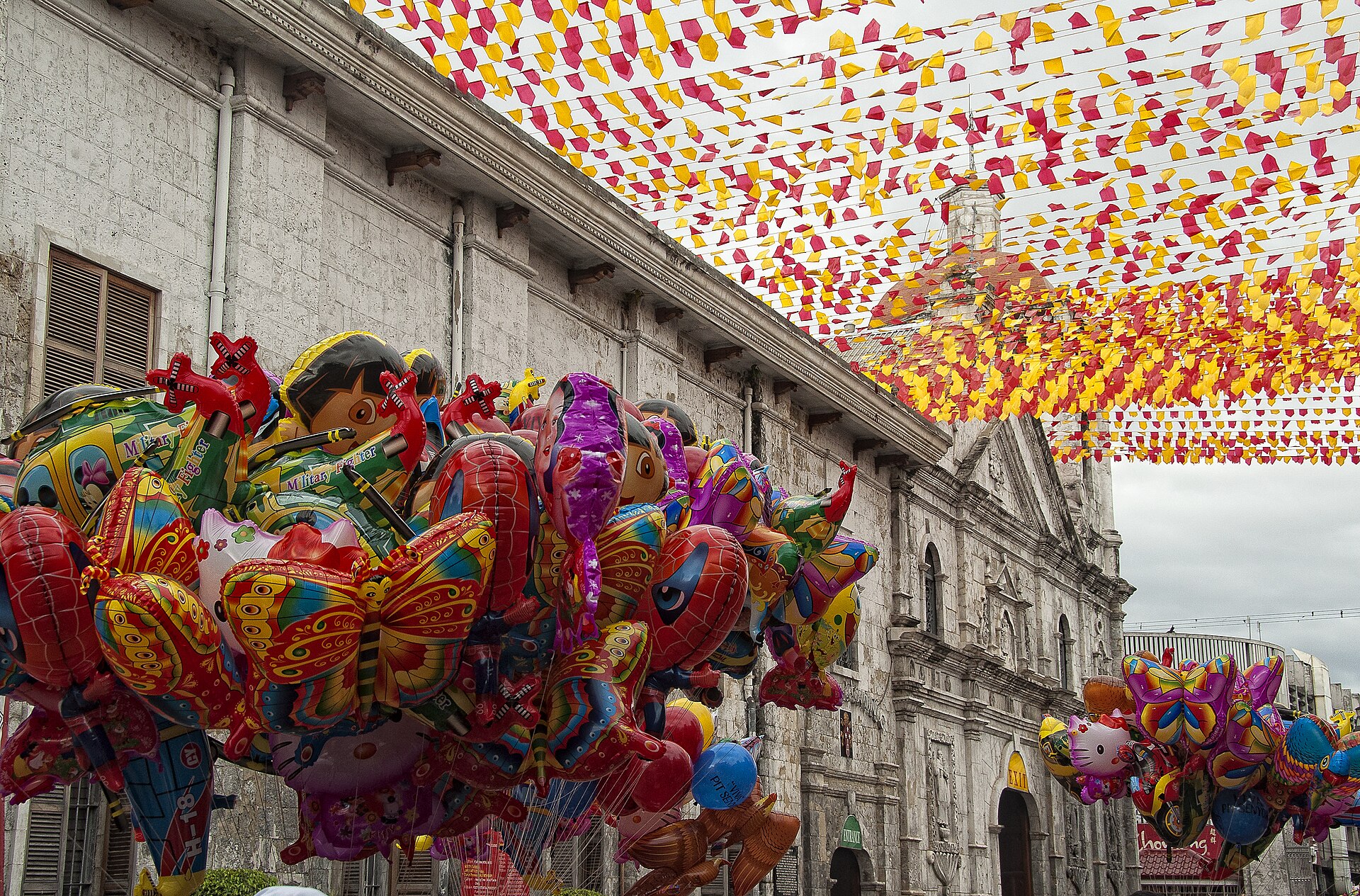
Persistent candle vendors and informal guides operate in immediate surroundings, requiring visitors to exercise discernment regarding unsolicited services and transactions. The compact pavilion generates congestion during peak pilgrimage periods, demanding patience and personal space awareness. Religious sensitivity remains essential given active worship context; photography restrictions may apply during services despite general permissiveness. Structural age and tropical climate contribute to humidity and ventilation limitations. Nearby pedestrian traffic includes vehicular intersections with inconsistent crossing infrastructure. Visitors should secure belongings against opportunistic attention in crowded conditions, applying standard urban precautions without excessive apprehension.
The cross enclosure permits visual documentation through protective grating, though angles remain restricted by architectural constraints. Ceiling frescoes reward upward camera orientation with adequate lighting conditions. Flash usage may disturb devotional visitors and should be employed judiciously. The surrounding plaza and basilica exterior provide alternative compositional opportunities with reduced spatial compression. Morning illumination enhances exterior photography before harsh midday tropical contrast develops. No institutional photography policies are documented in available sources; respectful practice suggests avoiding intrusive documentation of worshippers. Drone operation would require regulatory compliance and likely encounter practical obstacles from dense urban fabric and proximity to religious airspace.
Checked 2026-08-26
Common questions
Is the cross displayed the original planted by Magellan for Magellan's Cross in Cebu?
The authenticity of the original cross remains historically contested. The current structure encases what tradition claims are remnants, though scholarly opinion varies. The National Museum of the Philippines Cebu provides institutional context for such heritage claims without definitive resolution.
Can visitors enter the pavilion at any time for Magellan's Cross in Cebu?
Operator-confirmed hours are Not recorded pending review. The site appears accessible during daylight periods aligned with adjacent religious operations, though visitors should verify current conditions before travel rather than assuming unlimited access.
Is there an admission fee to see Magellan's Cross for Magellan's Cross in Cebu?
Operator-confirmed prices are Not recorded pending review. No ticketing infrastructure is documented, suggesting probable free access consistent with religious sites, though this remains unverified through authoritative channels.
How does this site connect to the National Museum of the Philippines Cebu for Magellan's Cross in Cebu?
Both institutions occupy Cebu's heritage district with complementary interpretive functions. The museum provides expanded institutional context while the cross offers specific monument focus. Separate visitation and distinct operational parameters apply to each location.
What religious activities occur at the site for Magellan's Cross in Cebu?
Devotional practices include candle lighting, prayer, and pilgrimage observance. The adjacent basilica hosts regular Catholic liturgy. Visitors should expect active worship context and conduct themselves with appropriate respect regardless of personal belief.
Is the site suitable for visitors with mobility limitations for Magellan's Cross in Cebu?
Specific accessibility accommodations are Not recorded. The ground-level pavilion and compact dimensions suggest feasible access, though surrounding plaza conditions including uneven surfaces and crowd density may present challenges requiring individual assessment.
Nothing non-essential is set before you choose, in regions where consent is required. If you decline, ads still appear but they are non-personalised, and analytics is switched off entirely.