
2 min walk
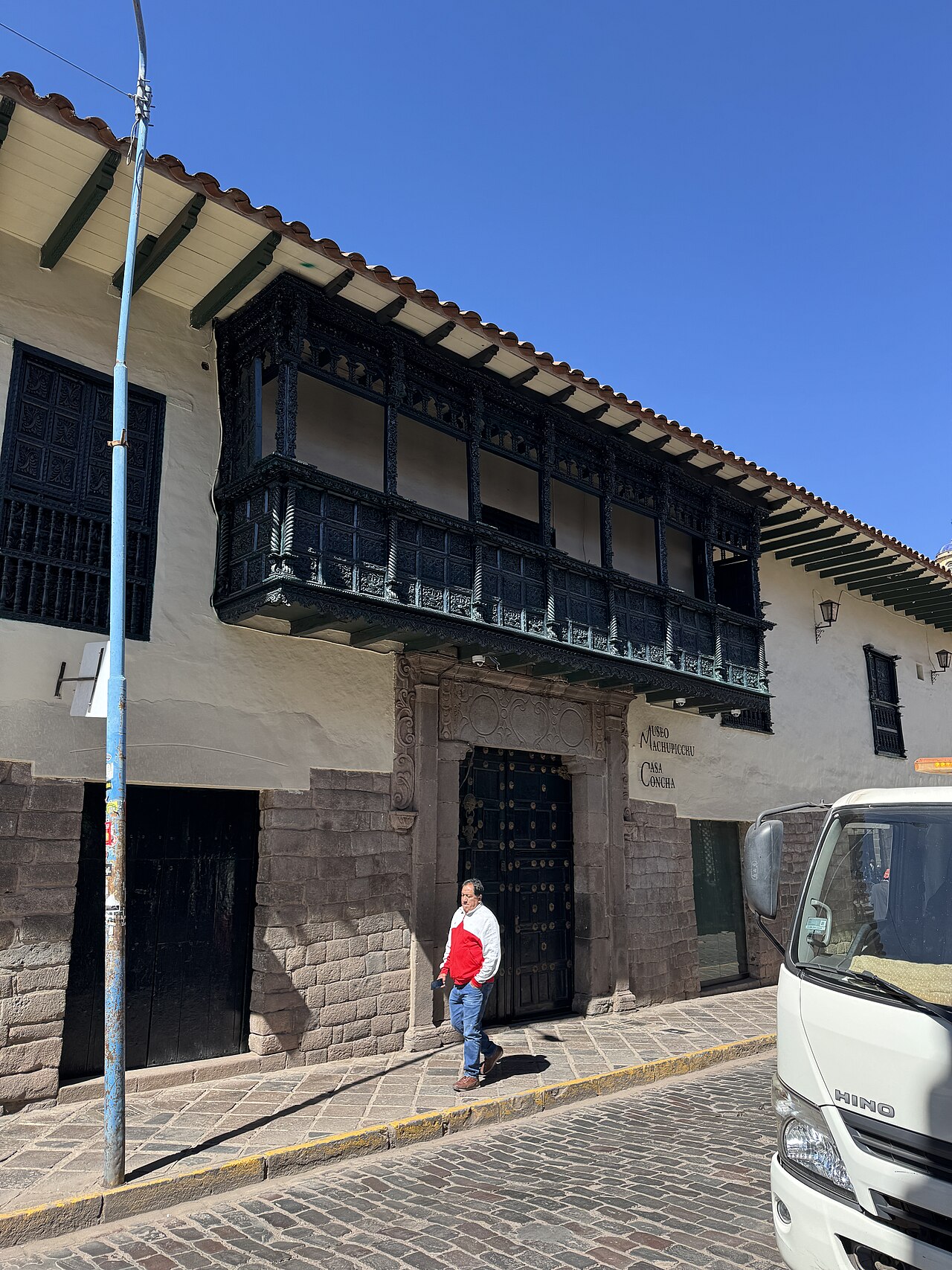
Museo Machu Picchu
- Must see
- Museum
Language · 11 published
Museum · Cusco
Museo de Arte Religioso

| Monday | 09:00 – 16:30 |
|---|---|
| Tuesday | 09:00 – 16:30 |
| Wednesday | 09:00 – 16:30 |
| Thursday | 09:00 – 16:30 |
| Friday | 09:00 – 16:30 |
| Saturday | 09:00 – 16:30 |
| Sunday | 09:00 – 16:30 |
Checked 2026-08-31 · Source
Read from the OpenStreetMap access tags; anything not listed has no tag recorded.
Set the group type to family in the planner and the day window contracts to about three quarters of a solo day.
The Museum of Religious Art occupies the former palace of Inca Roca, a significant noble residence in the Inca imperial capital. The building later passed to colonial religious authorities and was adapted for ecclesiastical use. It stands on Hatunrumiyoc, a street renowned for its finely fitted polygonal masonry. The site exemplifies Cusco's layered history, where Inca imperial architecture was preserved and repurposed under Spanish colonial rule. Monday–Sunday, 09:00–16:30. Open year-round; the responsible public-body inventory lists no weekly closure day. Admission is included in the Cusco Religious Circuit ticket: adults S/30; students S/15.
Checked 2026-08-31 · Source
The museum's collection comprises religious art, primarily paintings and decorative objects from the colonial period. These works reflect the artistic synthesis that occurred in Cusco during Spanish rule, when indigenous artisans adapted European devotional imagery to local materials and aesthetic sensibilities. The building itself retains an important surviving Inca wall, a notable example of the precision stonework characteristic of imperial Cusco construction. Visitors should anticipate a focus on colonial-era religious imagery rather than comprehensive archaeological displays. Open year-round; the responsible public-body inventory lists no weekly closure day. Admission is included in the Cusco Religious Circuit ticket: adults S/30; students S/15.
Checked 2026-08-31 · Source
Visitor duration depends on individual interest in colonial religious art and architectural history. Those with focused interest in Cusco School paintings or Inca masonry may spend considerable time examining details. Casual visitors typically complete a circuit more quickly. The compact nature of the historic centre allows this site to be combined with nearby attractions on Hatunrumiyoc and adjacent streets. No guided tour duration or recommended visit length is recorded. Admission is included in the Cusco Religious Circuit ticket: adults S/30; students S/15.
Checked 2026-08-31 · Source
Visitors should verify current opening times before planning their visit. The museum's interior spaces may offer some shelter from Cusco's intense midday sun or afternoon rain, though this is not confirmed. The dry season from May to September generally brings more predictable conditions for walking the historic centre's cobbled streets. Monday–Sunday, 09:00–16:30. Use Plaza de Armas del Cusco as the named arrival point, then walk approximately 250 metres along the paved route to the Archbishop's Palace on Calle Hatun Rumiyoc; the official estimate is four minutes. The documented approach from Plaza de Armas is a 250-metre paved pedestrian route.
Checked 2026-08-31 · Source
The museum may operate under distinct fee structures for domestic and international visitors, common at Peruvian cultural sites, though this is not verified. Some religious museums in Cusco have historically been administered by church authorities rather than state entities, potentially affecting ticketing protocols. Discount eligibility for students, seniors, or children is unverified. Admission is included in the Cusco Religious Circuit ticket: adults S/30; students S/15. The documented approach from Plaza de Armas is a 250-metre paved pedestrian route. The public inventory does not identify an internal step-free route, ramp, or lift serving all eight exhibition rooms.
Checked 2026-08-31 · Source
The museum lies within Cusco's compact historic centre, walkable from the Plaza de Armas and other central landmarks. Hatunrumiyoc is a well-known pedestrian street, identifiable by its prominent Inca stonework. Taxis can approach nearby though vehicle access in the historic core is restricted. Use Plaza de Armas del Cusco as the named arrival point, then walk approximately 250 metres along the paved route to the Archbishop's Palace on Calle Hatun Rumiyoc; the official estimate is four minutes. The public inventory does not identify an internal step-free route, ramp, or lift serving all eight exhibition rooms.
Checked 2026-08-31 · Source
The Inca wall's survival within a colonial-adapted structure is architecturally significant; visitors should observe any preservation restrictions. Interior lighting conditions for art viewing are not described. Cusco's altitude may cause fatigue or mild symptoms in unacclimatized visitors; hydration and moderate pacing are prudent. The historic centre's narrow sidewalks and cobblestones present trip hazards, particularly in wet conditions. The documented approach from Plaza de Armas is a 250-metre paved pedestrian route. It occupies the Archbishop's Palace on Calle Hatun Rumiyoc in Cusco's historic centre, about one block from Plaza de Armas.
Checked 2026-08-31 · Source
Many religious museums in Cusco restrict or prohibit interior photography to protect artworks and maintain devotional atmosphere. Flash photography is typically harmful to aged pigments and textiles and should be assumed prohibited where any photography is permitted. The exterior Inca wall on Hatunrumiyoc is publicly visible and generally photographed without restriction. Visitors should observe posted regulations or request clarification from staff. Tripod use is commonly restricted in museum interiors. The museum holds more than 200 works of sacred art and presents them across eight themed exhibition rooms. The collection includes works associated with prominent Cusco School painters Marcos Zapata and Diego Quispe Tito.
Checked 2026-08-31 · Source
It occupies the Archbishop's Palace on Calle Hatun Rumiyoc in Cusco's historic centre, about one block from Plaza de Armas.
The museum holds more than 200 works of sacred art and presents them across eight themed exhibition rooms.
The collection includes works associated with prominent Cusco School painters Marcos Zapata and Diego Quispe Tito.
The 16th-century colonial building was constructed over the palace of Inca Roca, Cusco's sixth Inca ruler.
Yes. It was declared a National Cultural Heritage Historic-Artistic Monument under Supreme Resolution No. 2900-72-ED on 28 December 1972.
The museum was inaugurated on 24 June 1969 through the initiative of Archbishop Ricardo Durand Flórez and José Orihuela Yábar, who donated his viceregal religious-art collection.
Loading the interactive map…
The interactive map could not be loaded.

Last updated:
Source: OpenStreetMap contributors, Wikidata ·