

1 min walk
Loreto Street
- Must see
- Activity
Language · 11 published
Historic monument · Cusco
Centro Histórico del Cusco
| Monday | 07:00 – 23:30 |
|---|---|
| Tuesday | 07:00 – 23:30 |
| Wednesday | 07:00 – 23:30 |
| Thursday | 07:00 – 23:30 |
| Friday | 07:00 – 23:30 |
| Saturday | 07:00 – 23:30 |
| Sunday | 07:00 – 23:30 |
Checked 2026-08-31 · Source
Read from the OpenStreetMap access tags; anything not listed has no tag recorded.
Set the group type to family in the planner and the day window contracts to about three quarters of a solo day.
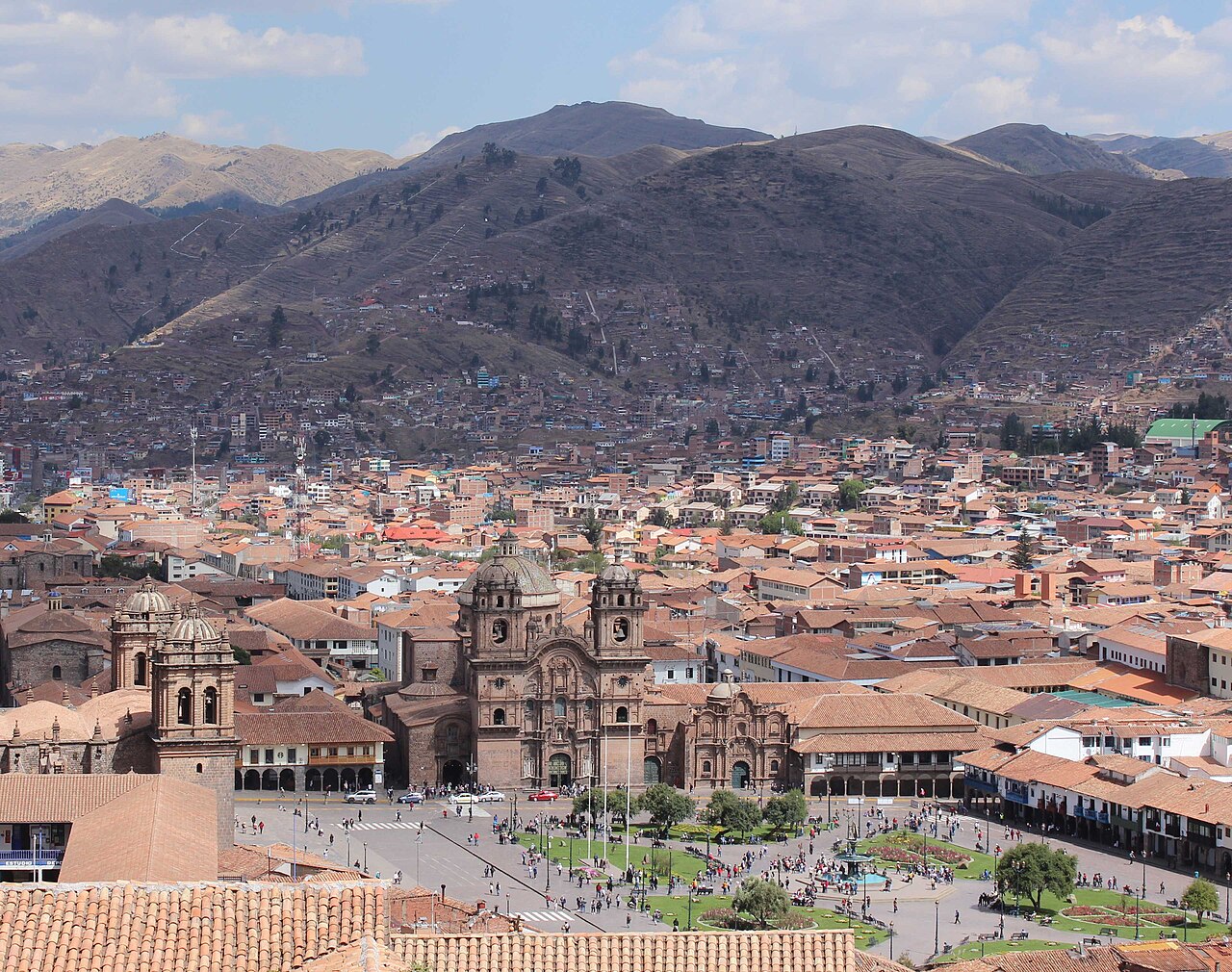
The Historic Centre of Cusco is the UNESCO World Heritage-listed core of Peru's former Inca capital. It encompasses the original Inca street grid, surviving stone walls, colonial-era churches, and public plazas built atop and around Inca foundations. The district reflects successive layers of indigenous and Spanish colonial urban development. The area remains the functional and symbolic heart of modern Cusco, with active religious, commercial, and civic uses throughout its pedestrian streets and open spaces. Daily 07:00–23:30; open throughout the year.
Checked 2026-08-31 · Source
The historic centre contains the Plaza de Armas with its cathedral and Company of Jesus church, the neighbourhood of San Blas with artisan workshops, and numerous streets displaying exposed Inca masonry. Coricancha, the Inca Temple of the Sun, lies within this zone beneath the Santo Domingo convent. Multiple smaller plazas, markets, museums, and colonial mansions with carved wooden balconies fill the area. The Sacsayhuamán fortress sits on hills immediately above the centre. The responsible regional tourism inventory lists no weekly or seasonal closure days. These are the published visiting hours for the historic-centre area; individual churches, museums, and other interiors have separate schedules.
Checked 2026-08-31 · Source
Visitors typically spend one to three days exploring the historic centre at varying depths. A single day permits walking the main plazas, entering the cathedral exterior, and observing Inca walls on Hatun Rumiyoc and nearby streets. Two days allow for museum visits, the Coricancha-Santo Domingo complex, and San Blas neighbourhood exploration. Three or more days enable repeated passes at different hours, market immersion, and unhurried architectural observation. The centre rewards return visits. Free general access to the historic centre's public streets and squares. Admission to separately operated interior attractions is not included.
Checked 2026-08-31 · Source
Cusco's dry season runs approximately May through September, bringing clearer skies and colder nights. The wet season, roughly November through March, brings afternoon rainfall. June features Inti Raymi and related festivities with heightened crowds. December and January also see elevated visitor numbers. Early mornings offer quieter streets before tour groups arrive. Daily 07:00–23:30; open throughout the year. The official tourism inventory records ramps for visitors with physical disabilities. Accessibility varies across the district: municipal documentation identifies steep, narrow streets, while much of the centre consists of historic streets and pedestrian routes.
Checked 2026-08-31 · Source
Individual sites within the historic centre may require separate admission fees. Some visitors purchase the Cusco Tourist Ticket, a multi-site pass covering multiple attractions in and around the city; specific inclusions and validity terms should be verified at official points of sale. Cash in Peruvian soles is widely required. Some churches request modest donations rather than fixed fees. Free general access to the historic centre's public streets and squares. Admission to separately operated interior attractions is not included. The official tourism inventory records ramps for visitors with physical disabilities.
Checked 2026-08-31 · Source
Alejandro Velasco Astete International Airport lies approximately five kilometres southeast of the historic centre. Taxis and private transfers serve this route. No train reaches Cusco city centre directly; Poroy station, for Machu Picchu-bound services, sits outside the city with connecting road transport. Use Plaza de Armas as the central arrival point. The official inventory gives a 6.4 km, approximately 25-minute taxi journey from Alejandro Velasco Astete International Airport and a 3.5 km, approximately 20-minute taxi journey from Cusco's Terminal Terrestre. Municipal rules permit authorized taxis within the historic-centre road classifications; urban public-transport stops inside the centre must be at least 300 metres apart, and route termini are prohibited in its urban spaces.
Checked 2026-08-31 · Source
Altitude affects visitors unpredictably; rest, hydration, and gradual activity increase are advisable. Cobblestone streets become slippery when wet and uneven underfoot. Some narrow sidewalks force pedestrians into vehicle paths. Street vendors and informal guides approach tourists aggressively in plaza areas. Bag-snatching and pickpocketing occur in crowded spaces. Unlicensed taxi services pose safety risks. Demonstrations occasionally disrupt central streets with little warning. The official tourism inventory records ramps for visitors with physical disabilities. Authorized taxis may access the road network when assisting people with motor disabilities, subject to pedestrian priority.
Checked 2026-08-31 · Source
The Plaza de Armas permits wide compositions of arcades, churches, and open sky, best in early morning sidelight. Hatun Rumiyoc offers the iconic twelve-angled stone within an Inca wall. San Blas streets provide intimate architectural details and craft shopfronts. Coricancha presents contrast between Inca stone precision and colonial construction. Rooftop bars and hotel terraces yield elevated perspectives of red-tiled roofs against surrounding hills. Interior photography in churches and museums may be restricted or require fees; observe posted regulations and staff direction. Yes. The responsible regional tourism inventory lists it as open throughout the year, with visiting hours of 07:00–23:30 and no weekly closure day.
Checked 2026-08-31 · Source
Yes. The responsible regional tourism inventory lists it as open throughout the year, with visiting hours of 07:00–23:30 and no weekly closure day.
No. General access to the historic centre's public streets and squares is free; separately operated museums, churches, and monuments may have their own admission arrangements.
Only partly. The official inventory records accessibility ramps, but the district also contains steep, narrow historic streets, so step-free movement is not continuous across the whole area.
The official inventory identifies Plaza de Armas as the destination: approximately 25 minutes by taxi from Alejandro Velasco Astete International Airport and approximately 20 minutes by taxi from Terminal Terrestre.
UNESCO inscribed the City of Cuzco in 1983 under criteria (iii) and (iv), recognizing its testimony to Inca civilization and the exceptional urban and architectural convergence of Inca and Hispanic cultures.
The centre stands at approximately 3,400 metres above sea level. UNESCO records a 142.48-hectare World Heritage property surrounded by a 284.93-hectare buffer zone.
Loading the interactive map…
The interactive map could not be loaded.


Last updated:
Source: OpenStreetMap contributors, Wikidata ·