Smart Self-Managed Tours

Country guide

Oman

A photograph of Oman
Photograph · Diego Delso · CC BY-SA 4.0

Oman is 315,331 km2 holding roughly 5.46 million people, which makes it the third-largest country on the Arabian Peninsula and one of the least crowded. Muscat, the capital and largest city, is strung out along the Gulf of Oman between mountains and water instead of spreading from a centre, so seeing it means driving one long coastal road end to end. The country's northern tip is not attached to the rest: Musandam is an exclave enclosed by the United Arab Emirates, with its own coast on the Strait of Hormuz. Between the capital and the far south lies Arabian Sea coastline and desert.

Cities

Every city catalogued in this country so far, ranked by how much there is to see.

Practical information

Language spoken
Arabic; English is widely used in visitor services
National practical orientation; regional and minority languages may also be used
Dialling code
+968
International calling code; local area and mobile prefixes still apply
Currency
Omani rial (OMR)
Use the official local currency; card acceptance varies by place
Emergency number
9999
Use only for an emergency; tourist assistance may use a separate number
Plug type
Type G · 240 V
Check that chargers support the recorded voltage before using an adapter
Tap water
Not recorded
No verified nationwide visitor drinking-water statement was recorded

Planning a visit

  1. January: no seasonality data recorded
  2. February: no seasonality data recorded
  3. March: no seasonality data recorded
  4. April: no seasonality data recorded
  5. May: no seasonality data recorded
  6. June: no seasonality data recorded
  7. July: no seasonality data recorded
  8. August: no seasonality data recorded — this month
  9. September: no seasonality data recorded
  10. October: no seasonality data recorded
  11. November: no seasonality data recorded
  12. December: no seasonality data recorded

Top things to see

Ranked by importance — sitelinks, pageviews and heritage status, not editor preference.

  1. Al Alam Palace Al Alam Palace
    02 45 min

    Al Alam Palace

    Al Alam Palace, locally known as Qaṣr al-ʿAlam, is the ceremonial palace of the Sultan of Oman. Completed in 1972, it stands as a landmark of contemporary Omani architecture in Old Muscat's government quarter.

    • Must see
    • Historic monument
    • Muscat
  2. Mutrah Fort Mutrah Fort
    03 45 min

    Mutrah Fort

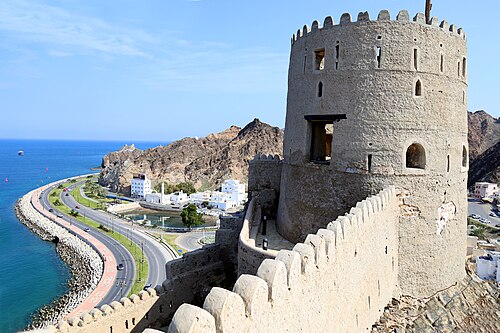
    Mutrah Fort, locally known as Qalʿat Maṭraḥ, is a historic defensive structure overlooking Mutrah Corniche and harbour in Muscat, Oman.

    • Must see
    • Historic monument
    • Muscat
  3. Fort Al-Mirani Fort Al-Mirani
    04 45 min

    Fort Al-Mirani

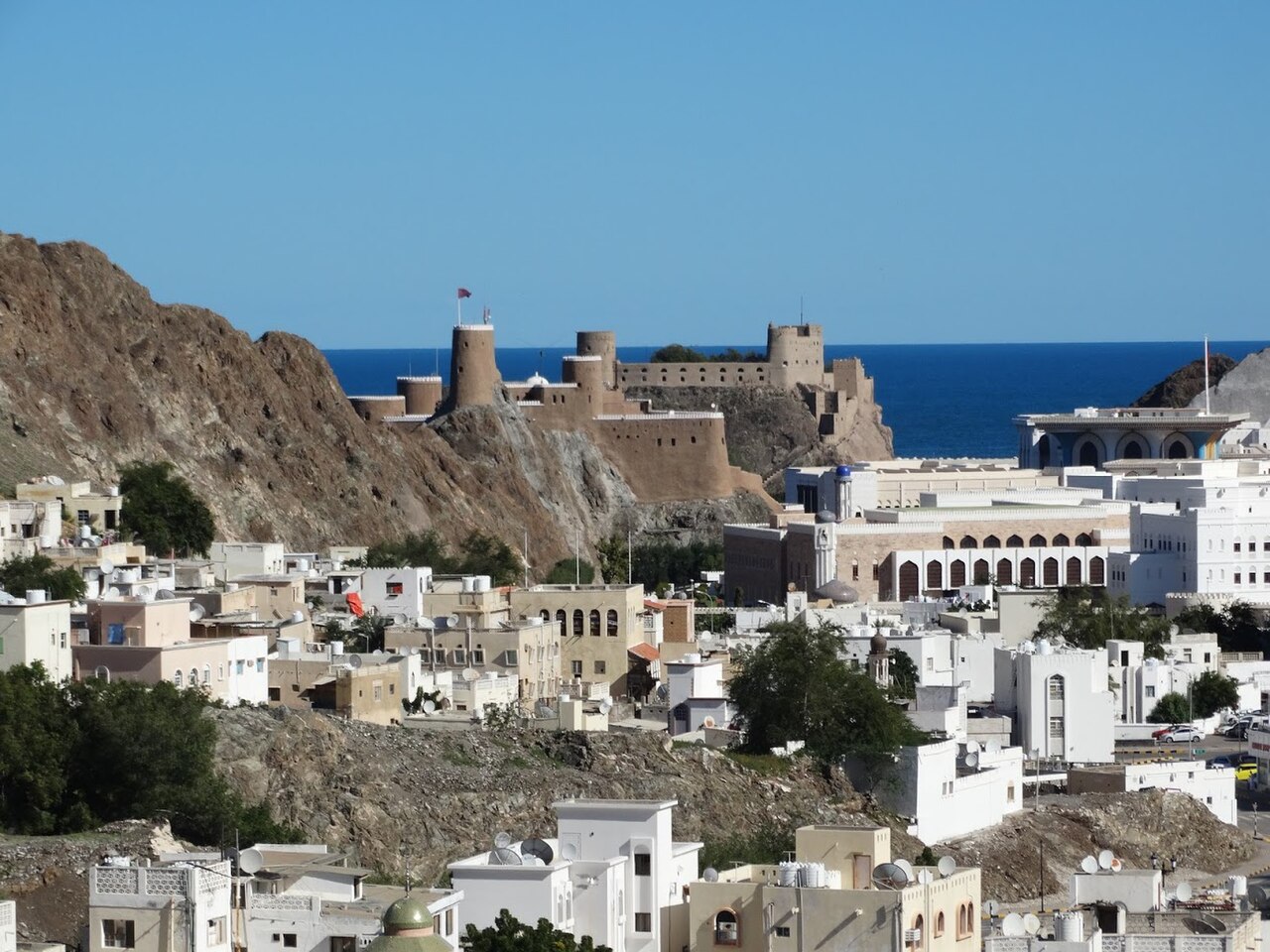
    Al Mirani Fort, known locally as Qalʿat al-Mīrānī, stands as a historic military fortification in Muscat, Oman. The fort forms part of the capital's defensive architecture overlooking the harbour area.

    • Must see
    • Historic monument
    • Muscat
  4. Al Jalali Fort Al Jalali Fort
    05 45 min

    Al Jalali Fort

    Al Jalali Fort, known locally as Qalʿat al-Jalālī, is a historic coastal fortification in Muscat, Oman. It stands on a rocky outcrop overlooking the harbour entrance near the Old Town.

    • Must see
    • Historic monument
    • Muscat
  5. Burj Al Sahwa Burj Al Sahwa
    06 45 min

    Burj Al Sahwa

    Burj Al Sahwa, known locally as Burj aṣ-Ṣaḥwa, is a prominent clock tower situated on the western approach to Muscat, Oman's capital.

    • Must see
    • Historic monument
    • Muscat
  6. Wadi Al Arbeieen Wadi Al Arbeieen
    07 45 min

    Wadi Al Arbeieen

    Wadi Al Arbeieen, known locally as Wādī al-Arbaʿīn, is a rugged wadi located within Muscat Governorate. It represents a substantial off-road nature excursion destination characterized by its natural terrain.

    • Must see
    • Historic monument
    • Muscat
  7. Bait Al-Maqham Bait Al-Maqham
    08 45 min

    Bait Al-Maqham

    Bait Al-Maqham is a documented historic house located within metropolitan Muscat, the capital of Oman. The property represents traditional Omani residential architecture and forms part of the cultural heritage landscape of the city.

    • Must see
    • Historic monument
    • Muscat
  8. adventurer
    10 45 min

    adventurer

    • High
    • Historic monument
    • Muscat
  9. Bait al Oud
    25 45 min

    Bait al Oud

    • High
    • Historic monument
    • Muscat
  10. Fun zone
    34 45 min

    Fun zone

    • High
    • Historic monument
    • Muscat
  11. Haym
    37 45 min

    Haym

    • High
    • Historic monument
    • Muscat
  12. Oasis Mall
    48 45 min

    Oasis Mall

    • High
    • Historic monument
    • Muscat
  13. studio studio
    54 45 min

    studio

    • High
    • Historic monument
    • Muscat
  14. Sunken boat
    55 45 min

    Sunken boat

    • High
    • Historic monument
    • Muscat
  15. The Village
    56 45 min

    The Village

    • High
    • Historic monument
    • Muscat
  16. Watch tower
    57 45 min

    Watch tower

    • High
    • Historic monument
    • Muscat
  17. بناية
    60 45 min

    بناية

    • High
    • Historic monument
    • Muscat
  18. حديقة
    65 45 min

    حديقة

    • High
    • Historic monument
    • Muscat
  19. منزل
    73 45 min

    منزل

    • High
    • Historic monument
    • Muscat
  20. ه
    76 45 min

    ه

    • High
    • Historic monument
    • Muscat

Source: OpenStreetMap contributors, Wikidata ·

Common questions

How long should a first trip to Oman be?

Allow seven to ten days for Muscat, Nizwa, the Hajar Mountains and one desert or coastal leg. Salalah is a separate southern journey rather than a quick add-on, so include it only when the schedule can absorb a domestic flight and another base.

What entry documents are needed for Oman?

Oman’s Royal Oman Police eVisa portal is the authoritative place to check eligibility, stay length and document requirements. Apply through that service when required and match the application to the passport and purpose of travel; a Gulf itinerary does not create a common visa across neighbouring states.

What is the best way to travel around Oman?

A car or licensed driver is useful beyond Muscat because forts, wadis, mountain villages and desert camps are dispersed. Intercity buses serve principal towns, but access roads vary; confirm whether four-wheel drive is required and never enter a wadi when official flood warnings are active.

When is a practical time to visit Oman?

October through March is the practical window for Muscat, the interior and desert camping. Salalah’s khareef is a different seasonal proposition, and mountain temperatures can be much lower than the coast, so an Oman-wide itinerary needs region-specific weather checks.

What money and payment basics apply in Oman?

The Omani rial is the official currency and is subdivided into one thousand baisa, which matters when reading prices. Carry cash for smaller inland stops while using banks or authorised exchange services; verify the currency and decimal placement before approving a payment.

What practical safety details should I save for Oman?

For police, fire or ambulance assistance, save 9999; Oman uses Type G sockets at 240 V. National tap-water guidance is Not recorded here, so confirm locally at each hotel or camp, where supply arrangements may differ from Muscat.