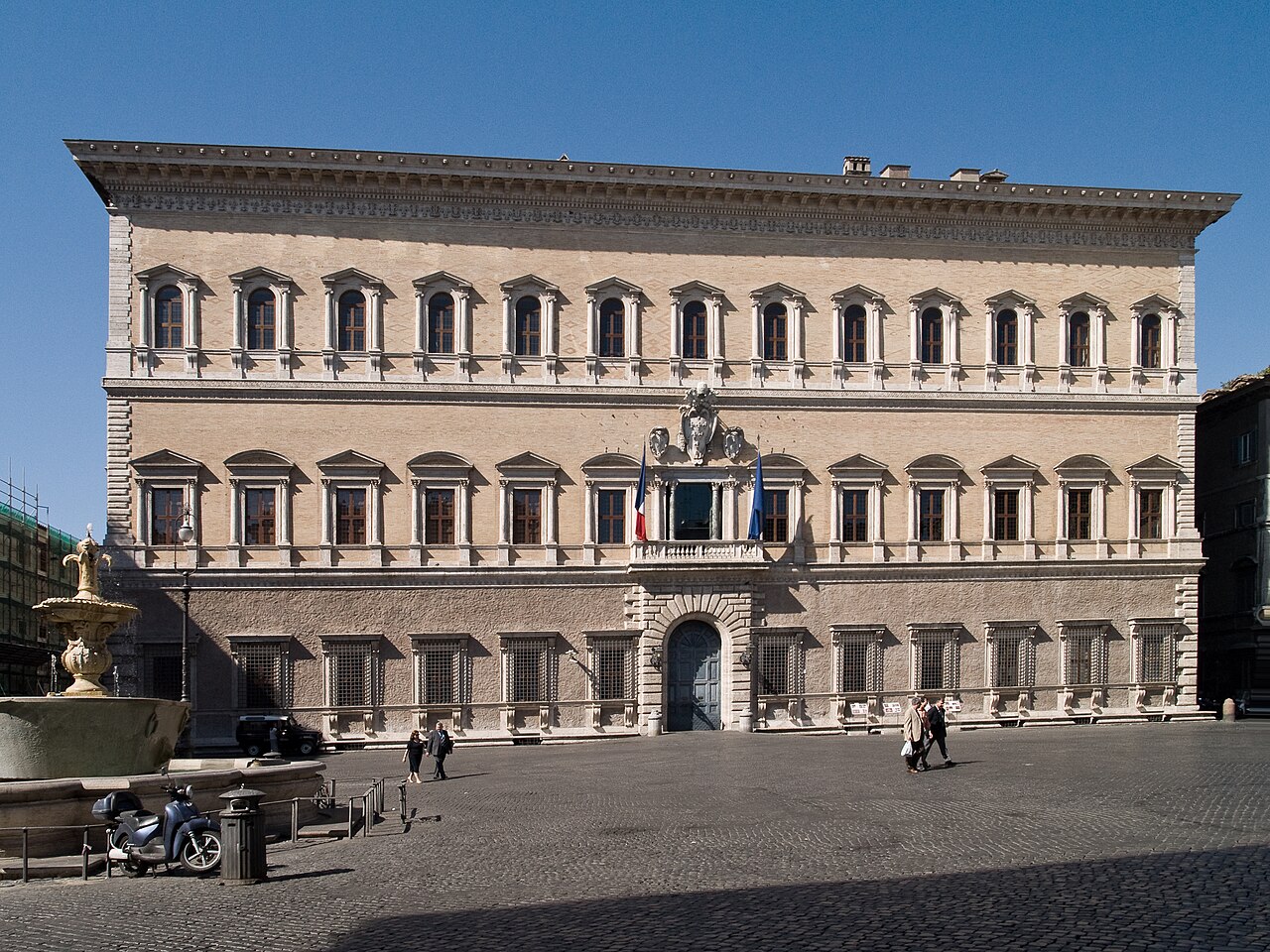
1 min walk
Palazzo Farnese
- Notable
- Historic monument
Language · 11 published
Activity · Rome
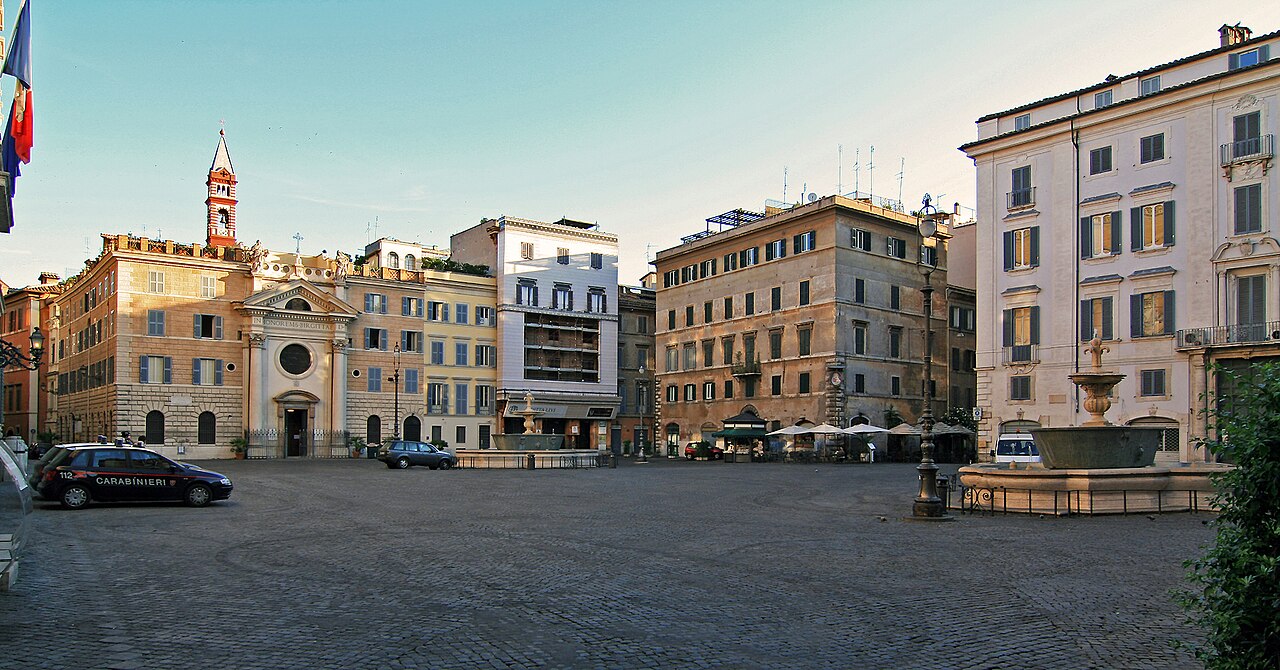
Piazza Farnese is a historic square in Rome's Regola district, taking its name from the imposing Palazzo Farnese that dominates its northern flank. The square developed during the Renaissance as an expression of papal power and architectural ambition. Its twin granite basins, repurposed ancient Roman bathtubs from the Baths of Caracalla, were added in the sixteenth century. The piazza functions as both a monumental forecourt to the palace and a public urban space where visitors encounter layered centuries of Roman history in a compact setting.
Checked 2026-08-26
The square's defining elements are the Palazzo Farnese, now the French Embassy, and the two matching granite fountain basins positioned symmetrically in the paved space. The palace facade, designed by Antonio da Sangallo the Younger and completed with Michelangelo's contributions, represents High Renaissance architecture at its most authoritative. The basins, fed by water from the Acqua Paola fountain, stand as rare surviving ancient Roman bathing vessels. The surrounding buildings maintain relatively uniform rooflines and warm travertine tones typical of central Roman construction.
Checked 2026-08-26
A thorough visit to Piazza Farnese requires approximately twenty to thirty minutes for exterior appreciation of the palace architecture and fountain basins. The square rewards slower observation of proportional relationships between palace and public space. Visitors typically combine this stop with adjacent Campo de' Fiori, the Pantheon district, or Trastevere crossings, making it one element in a broader walking itinerary. No interior access to Palazzo Farnese is available for casual tourists, so the experience remains fundamentally external and atmospheric rather than immersive.
Checked 2026-08-26
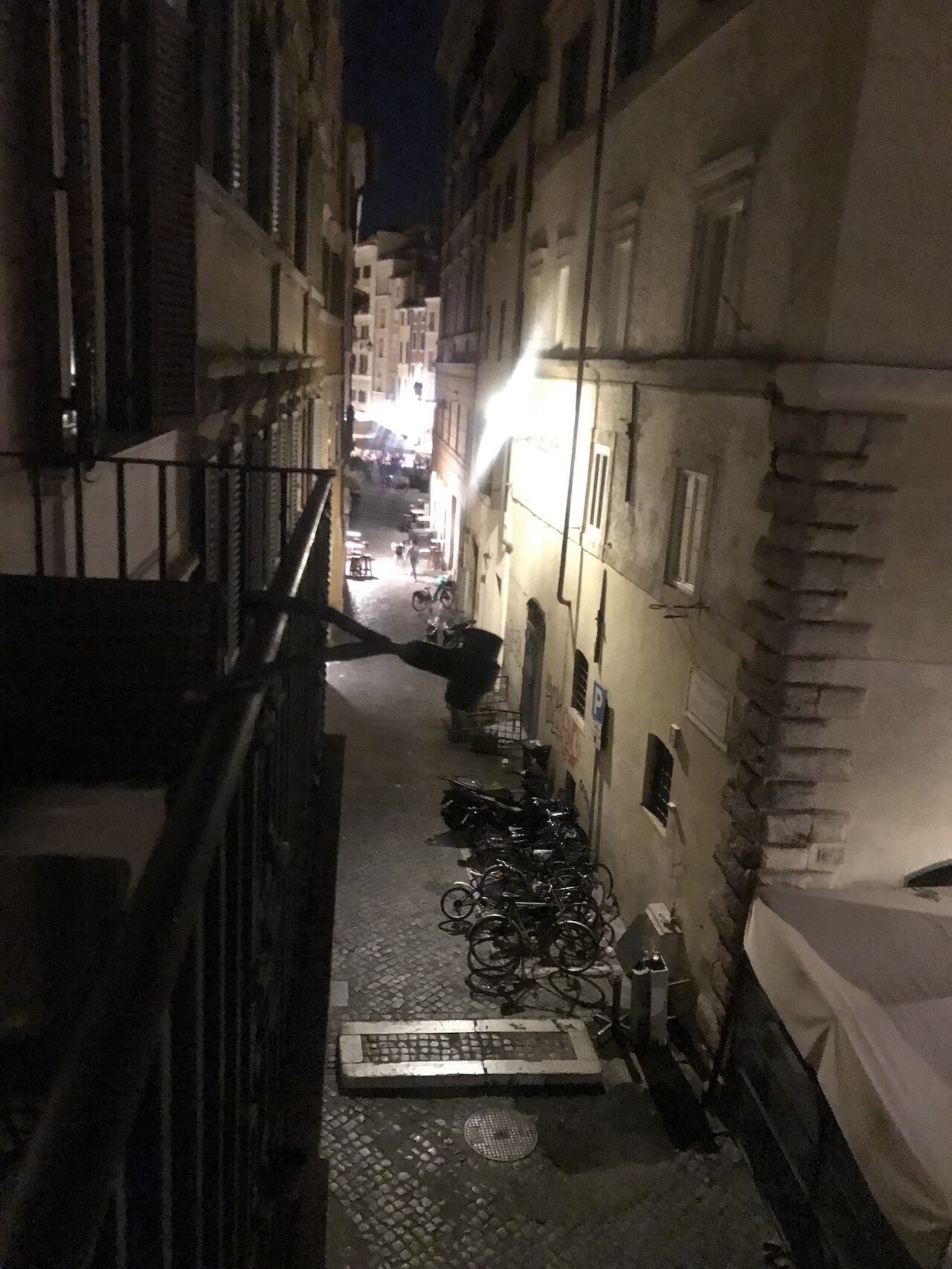
The square offers distinct qualities across daylight hours, with morning light illuminating the palace facade and evening bringing softer illumination to the travertine surfaces. The fountains operate continuously. Seasonal considerations follow general Roman patterns, with summer bringing intense midday heat that makes early morning or late afternoon more comfortable for standing observation. Evening hours attract fewer visitors and permit more contemplative appreciation of the architectural ensemble without competing foot traffic. Check the operator's own site for the travel date before relying on a schedule or fare.
Checked 2026-08-26
Piazza Farnese is a public square with no admission charge for entry or circulation. The French Embassy occasionally permits limited group visits to Palazzo Farnese interiors through advance reservation protocols, though these opportunities are restricted and require planning well beyond standard tourism timelines. Visitors should anticipate no special access and plan accordingly for an exterior-only experience without expenditure beyond any personal refreshments from nearby establishments. Piazza Farnese also earns time in a rome itinerary because WIKIDATA_EDITORIAL reconciliation for the ranked entry; identity and coordinates were verified without a nearby fallback. Its value becomes clearer when the stop is compared with the surrounding streets and the other ranked places nearby. Check the operator's own site for the travel date before relying on a schedule or fare.
Checked 2026-08-26
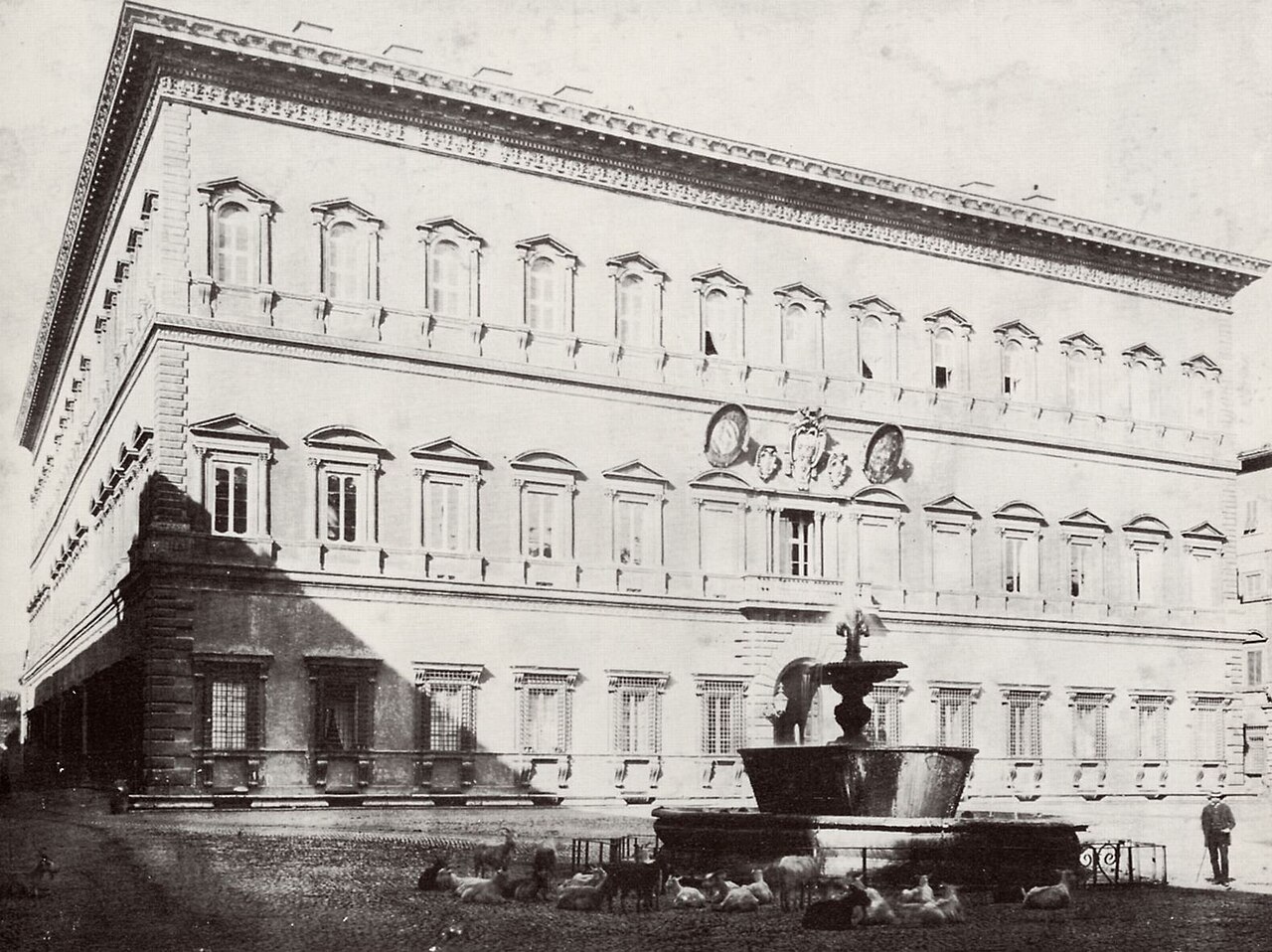
The square sits within central Rome's dense pedestrian network, accessible on foot from numerous landmarks. From Campo de' Fiori, proceed southwest through narrow streets. Bus routes serve Corso Vittorio Emanuele II, requiring brief walking through characteristic Roman lanes. The nearest metro stations are not immediate, with Circo Massimo or Colosseo on Line B demanding fifteen to twenty minutes of walking. Taxis can approach nearby but cannot enter the restricted traffic zone surrounding the square itself. Navigation applications may prove unreliable in this dense urban fabric.
Checked 2026-08-26
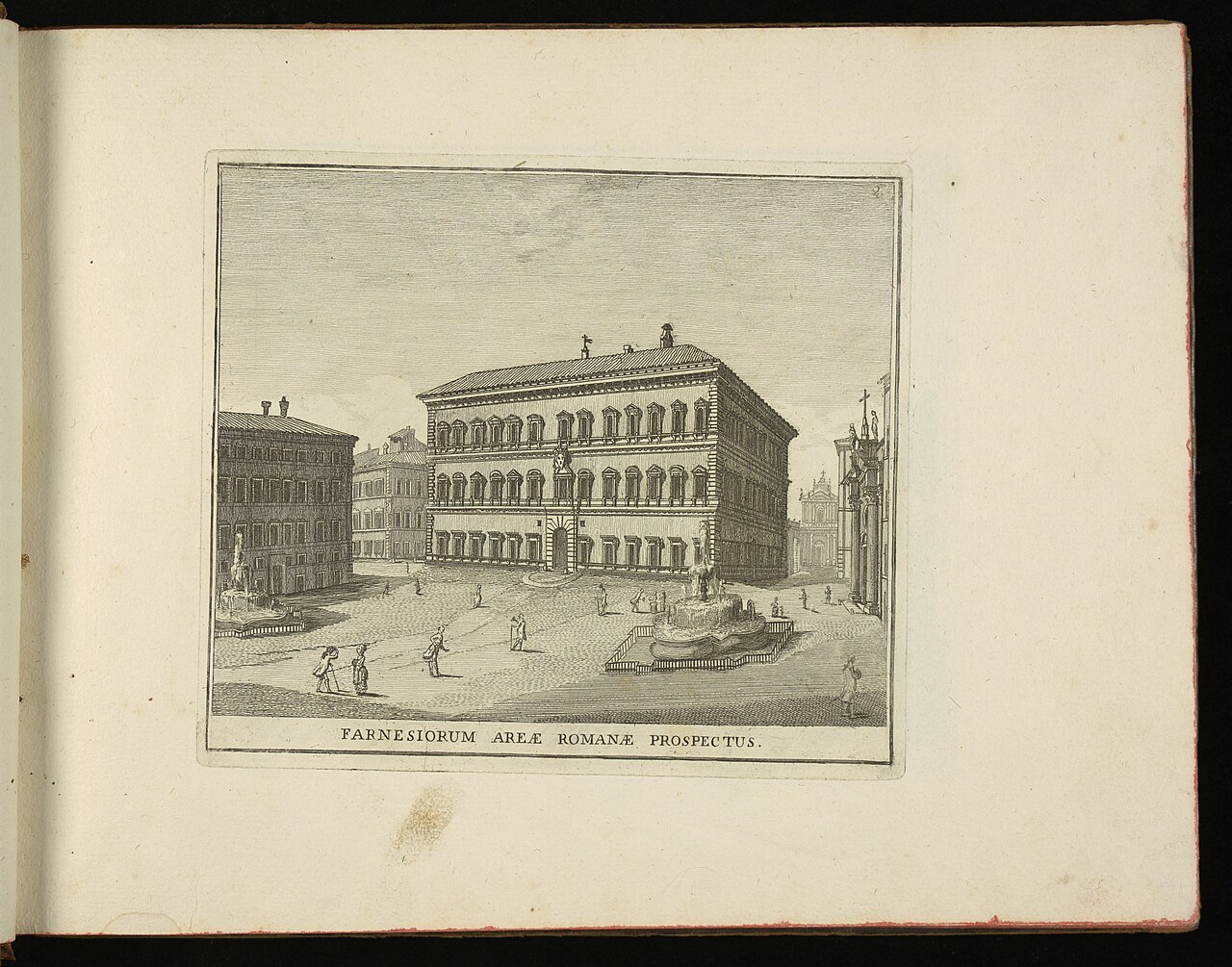
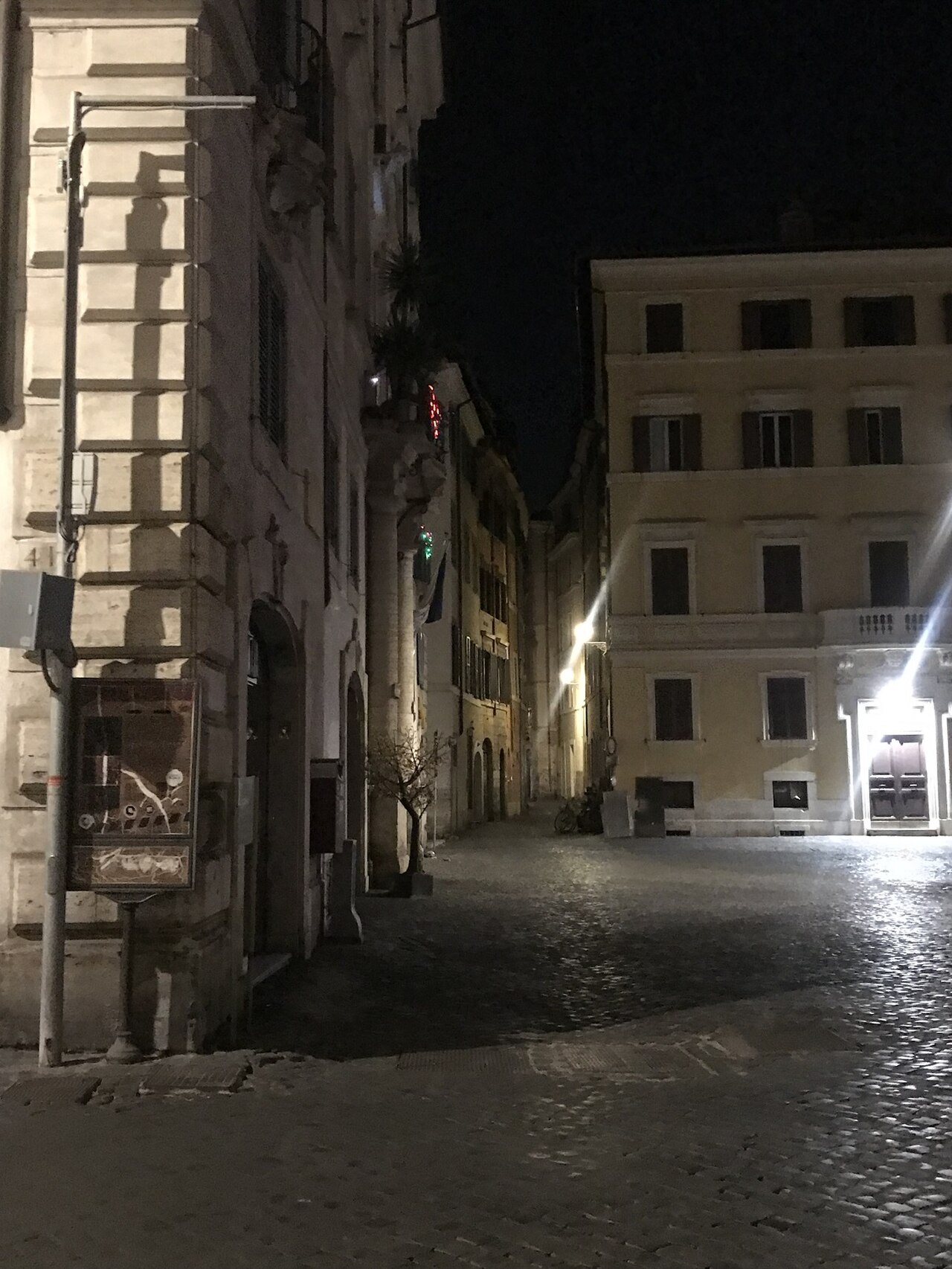
The square's cobblestone surface becomes uneven and potentially hazardous in wet conditions or darkness. Motor vehicle restrictions are imperfectly enforced; occasional delivery vehicles or authorized cars enter the space, requiring vigilance. The fountain basins have no protective barriers, presenting falling risks for inattentive visitors, particularly children. Pickpocketing awareness applies as in all central Roman tourist concentrations. The palace's diplomatic function means security presence is visible and should not be photographed intrusively. Seating is minimal; prolonged rest requires relocating to adjacent cafes or Campo de' Fiori.
Checked 2026-08-26

The symmetrical palace facade and twin fountains offer strong compositional possibilities, particularly from the square's center where both basins align with the architectural backdrop. Morning light favors the main elevation; overcast conditions reduce harsh shadows on intricate stonework. Tripod use may attract security attention given the embassy function. The surrounding building heights limit dramatic sky inclusion. Night photography benefits from subtle fountain illumination and street lighting, though higher ISO settings become necessary. The narrow surrounding streets constrain wide-angle approaches; the square itself permits adequate working distance for standard lenses.
Checked 2026-08-26
General public access to the interior is not available. The palace serves as the French Embassy, restricting entry to diplomatic functions and occasional pre-arranged group visits through specific reservation channels not accessible to typical tourists.
The ancient granite basins are fed continuously and appear to function without seasonal interruption, though maintenance periods may occur without advance public notification.
The historic cobblestone surface presents significant challenges for wheeled mobility. The irregular paving and subtle grade changes require caution and assistance for most wheelchair users.
Dedicated public facilities within the square itself are not present. Visitors must rely on establishments in surrounding streets or Campo de' Fiori, where patronage expectations typically apply.
Piazza Farnese maintains a primarily monumental and tranquil character. The adjacent Campo de' Fiori hosts the well-known morning market, but Farnese itself is not a programmed event space.
No explicit prohibitions are evident, though the space lacks benches or tables. Visitors consuming food should maintain cleanliness appropriate to a historic setting of diplomatic significance and refrain from fountain contact.
Loading the interactive map…
The interactive map could not be loaded.
Last updated:
Source: OpenStreetMap contributors, Wikidata ·


.jpg)
.jpg)
.jpg)
