Milan Cathedral
Milan's cathedral was begun in 1386, on ground already occupied by the basilicas of Santa Maria Maggiore and Santa Tecla, whose remains still lie under the square.
- Must see
- Historic monument
Language · 1 published
City guide · Italy
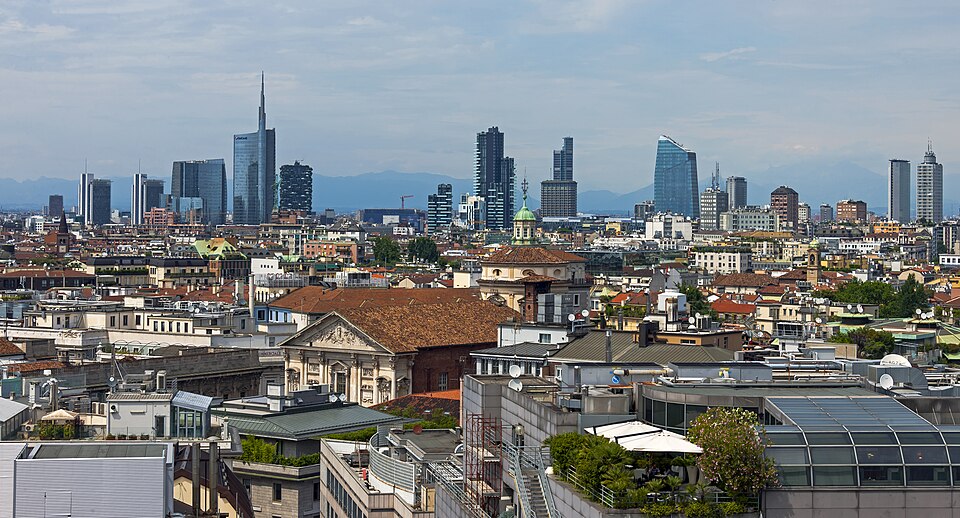
Milan is organised around a compact historic centre, with the Duomo, Galleria Vittorio Emanuele II and La Scala close enough to combine on foot. Brera lies immediately north, the Navigli canals sit to the southwest, and the modern Porta Nuova district rises around Garibaldi station. Longer journeys connect the centre with Santa Maria delle Grazie, San Siro and outer design districts.
Ranked by importance — sitelinks, pageviews and heritage status, not editor preference.
100 places match
Category
Typical visit duration
Interests
Milan's cathedral was begun in 1386, on ground already occupied by the basilicas of Santa Maria Maggiore and Santa Tecla, whose remains still lie under the square.
The Pinacoteca di Brera is Milan's principal public gallery of paintings, on the upper floor of Palazzo Brera in the streets north of the Duomo.
The Museo Nazionale della Scienza e della Tecnologia "Leonardo da Vinci" is Italy's largest science and technology museum. Housed in a former Olivetan monastery, the institution honors Leonardo da Vinci's legacy as both artist and inventor.
The Royal Palace of Milan, known locally as Palazzo Reale, stands as a major historic palace in the centre of Milan.
The Museo del Novecento occupies the Palazzo dell'Arengario at Piazza Duomo 8, the civic building on the south side of the cathedral square, and shows more than three hundred works selected from the four thousand-odd pieces of twentieth- and twenty-first-century…
The Pinacoteca Ambrosiana is a historic art gallery and library in central Milan, founded in the early seventeenth century by Cardinal Federico Borromeo. It houses the Biblioteca Ambrosiana, one of Italy's oldest public libraries, alongside its picture gallery.
Gallerie d'Italia is a museum complex in central Milan housed in historic palace buildings. It forms part of the Intesa Sanpaolo cultural project. The institution occupies the Palazzo Beltrami and adjacent structures facing Piazza della Scala.
MUDEC, the Museum of Cultures, is a contemporary museum in Milan dedicated to interdisciplinary study and display of world cultures.
Fondazione Prada is a contemporary art and cultural institution in Milan established by the Prada fashion house. It occupies a former industrial site that was transformed into an architectural complex.
Villa Necchi Campiglio is a historic house museum in Milan, Italy. Built between 1932 and 1935, it was designed by architect Piero Portaluppi for the Necchi Campiglio family, industrialists in the sewing machine sector.
The Civic Aquarium of Milan, known locally as Acquario Civico, stands as a historic zoological institution in northern Italy's largest metropolitan area. Established in the early twentieth century, this architectural landmark occupies a prominent position within Milan's urban fabric.
Museo Poldi Pezzoli is a historic house museum in central Milan. It originated as the private residence and collection of Gian Giacomo Poldi Pezzoli, a 19th-century Milanese nobleman who bequeathed his home and artworks to the public.
The Bagatti Valsecchi Museum is a historic house museum in central Milan.
The ADI Design Museum is a museum in Milan dedicated to Italian design excellence. It is operated by ADI, the Italian Association for Industrial Design, and showcases winners of the prestigious Compasso d'Oro award.
Galleria d'Arte Moderna di Milano is a municipal art museum in Milan, Italy. It occupies the Villa Belgiojoso Bonaparte, a neoclassical palace dating to the late eighteenth century.
Museo Civico di Storia Naturale di Milano is a natural history museum in Milan, locally known as Museo di Storia Naturale. It stands as one of Italy's most important institutions of its kind, with collections spanning multiple scientific disciplines.
Museo Teatrale alla Scala is a museum dedicated to the history of opera, ballet, and theatrical performance at Milan's world-renowned Teatro alla Scala.
Armani/Silos is a fashion museum in Milan dedicated to the work of Italian designer Giorgio Armani. Opened in 2015, it occupies a former industrial building in the Tortona district that was originally constructed in 1950 as a granary.
The Cimitero Monumentale is Milan's municipal cemetery north of the centre, and the city has treated it as a public monument since the day it opened.
Fondazione Achille Castiglioni is a studio-museum dedicated to the influential Italian industrial designer Achille Castiglioni, located in Milan.
The Archaeological Museum of Milan, locally named Civico museo archeologico di Milano, preserves and presents archaeological collections relevant to the city's ancient history. Housed within a historic monastic complex, the institution serves as a municipal museum under civic administration.
Porta Nuova is a business district on the northern rim of central Milan, and the name holds two places at once.
AEMuseum is a visitor-relevant point of interest located in Milan, Italy. The production identity node/12352410157 confirms this as an exact match to the city's established POI pool, with coordinates and local name copied without approximation.
The Antique Furniture & Wooden Sculpture Museum, locally known as Museo dei Mobili e delle Sculture Lignee, is a cultural institution in Milan dedicated to the preservation and display of historical furniture and wooden sculptural works.
The Diocesan Museum of Milan is an ecclesiastical museum operated by the Archdiocese of Milan. It occupies a historic site near the Basilica of Sant'Eustorgio in the Portinari Chapel area.
The Grande Museo del Duomo di Milano is the museum dedicated to Milan's iconic cathedral. It preserves and displays artifacts related to the Duomo's six-century construction history, including sculptures, paintings, stained glass, and architectural fragments.
The Egyptian Museum of Milan, known locally as Museo Egizio, is a visitor-relevant point of interest located within the city of Milan.
The Historical Fire Brigade Museum of Milan is a heritage institution dedicated to preserving and exhibiting the history of firefighting in Italy's second-largest city.
Leonardo3 Museum - Il Mondo di Leonardo is an interactive museum in Milan dedicated to Leonardo da Vinci's work as inventor, engineer, scientist and artist.
The Museum Fabrizio De André is a cultural institution in Milan dedicated to the celebrated Italian singer-songwriter Fabrizio De André.
The Museum of Musical Instruments, locally known as Museo degli Strumenti Musicali, is a cultural institution in Milan dedicated to the preservation and display of musical heritage.
The Museum of the Risorgimento in Milan documents Italy's unification movement from 1796 to 1870.
Museo San Fedele is a museum housed within the historic San Fedele complex in central Milan, associated with the adjacent church of the same name.
The Museo della Basilica di Sant'Ambrogio is a museum located within the historic Basilica di Sant'Ambrogio complex in Milan. The basilica itself is one of the city's most ancient and significant churches, founded by Saint Ambrose in the fourth century.
The Applied Arts Collection of Milan, known locally as the Museo delle Arti Decorative, is a museum dedicated to decorative and applied arts within the city.
The Brera Astronomical Observatory, known locally as Museo Astronomico di Brera, is a historic astronomical institution located in the Brera district of Milan.
Casa degli Artisti is a historic artists' house in Milan, serving as a cultural venue dedicated to creative production and artistic residence. The building carries significance within Milan's arts infrastructure, providing spaces where artists develop work across disciplines.
Casa-museo Boschi Di Stefano is a house museum in Milan preserving the former residence of collectors Antonio Boschi and Marieda Di Stefano. The couple amassed a significant collection of twentieth-century Italian art, which they donated to the city.
The Civica raccolta delle stampe Achille Bertarelli is a civic print collection in Milan, Italy. Named after its founder Achille Bertarelli, this institution preserves and displays historical prints, engravings, and related graphic works.
Fonderia Barigozzi, known locally as Fonderia Napoleonica Eugenia, is a historic foundry site in Milan. The production identity node/6060106486 marks this as a visitor-relevant point of interest within the city's cultural pool.
The Galleria d'Arte Sacra dei Contemporanei is a gallery in Milan dedicated to contemporary sacred art. It occupies a distinctive position within the city's cultural landscape, bridging religious tradition with modern artistic expression.
Casa Manzoni is the historic residence of Alessandro Manzoni, one of Italy's most celebrated 19th-century novelists and poets. Located in central Milan, this house museum preserves the domestic environment where the author of The Betrothed lived and worked.
The MAPP Museo d'Arte Paolo Pini is a museum located in Milan, Italy. It bears the local name Museo d'arte Paolo Pini. The institution is recognized as a visitor-relevant point of interest within the city's cultural landscape.
The Milan Antiquarium, locally named Antiquarium Alda Levi, is an archaeological museum in Milan. It preserves and displays ancient artifacts excavated from the city's long history.
The Studio Museo Francesco Messina is a museum in Milan dedicated to the work of Francesco Messina, an Italian sculptor active in the twentieth century.
The Museo della Macchina da Scrivere is a museum in Milan dedicated to typewriters and writing machines. Its local name translates as Museum of the Typewriter.
Museo Mangini Bonomi is a museum located in Milan. The institution preserves and displays collections according to its curatorial mission. Visitors encounter a cultural venue situated within the urban fabric of Italy's second-largest city.
Museo Mondo Milan is a museum dedicated to the history and culture of AC Milan, one of Italy's most storied football clubs.
Museo Zambon is a museum located in Milan, Italy. The institution carries the local name Zambon. It is identified in production systems as node/5204142503, indicating its precise placement within the city's visitor-relevant points of interest.
Museo d'Arte Antica is a museum in Milan dedicated to ancient and medieval art. It forms part of the Sforza Castle complex, one of the city's most significant historical monuments.
The Museo d'Arte e Scienza is a museum located in Milan, Italy. Its local name is Museo d'arte e scienza. The institution occupies a position within the city's cultural landscape as a point of interest for visitors.
The Museo delle pentole nella storia is a museum in Milan dedicated to pots and cookware throughout history. Its Italian name translates to Museum of Pots in History.
Museo di Sant'Eustorgio is a museum housed within the historic Basilica di Sant'Eustorgio in Milan. The basilica itself is a significant religious complex with medieval origins, traditionally associated with the Magi.
Padiglione d'Arte Contemporanea is a contemporary art exhibition space in Milan, Italy. Known locally by the same name, it serves as a venue for modern and contemporary artistic presentations.
Palazzo Citterio, also known locally as Palazzo Citterio - Grande Brera, is a historic palace in Milan situated within the Brera district. The building forms part of the cultural complex associated with the Pinacoteca di Brera area.
Palazzo Morando is a historic palace in Milan housing a costume and fashion museum.
Palazzo dell'Arte Bernocchi, locally known as Triennale Design Museum, stands as a significant cultural institution in Milan dedicated to Italian design excellence. Housed within a distinctive architectural setting, the museum occupies a prominent position in the city's cultural landscape.
Pinacoteca del Castello Sforzesco is the art gallery housed within Milan's historic Castello Sforzesco, a fifteenth-century fortress built by Francesco Sforza, Duke of Milan.
The Rondanini Pietà is a late unfinished marble sculpture by Michelangelo Buonarroti, housed in the Sforza Castle complex in Milan. The work depicts the Virgin Mary supporting the body of Christ after the Crucifixion.
The Society for Fine Arts and Permanent Exhibition, locally known as Museo della Permanente, is a cultural institution in Milan dedicated to the visual arts.
Source: OpenStreetMap contributors, Wikidata ·
Use the Duomo as the central reference point. The fashion quadrilateral and Brera are north of it, Castello Sforzesco and Parco Sempione are west, and the Navigli and Porta Ticinese districts are south and southwest. Milano Centrale is northeast of the old centre, while Porta Garibaldi serves the Porta Nuova business district. Grouping sights by these zones avoids repeated cross-city travel.
Checked 2026-08-26
Walk inside the historic centre and use ATM metro, tram and bus services for longer moves. Milan has five metro lines, while surface routes connect neighbourhoods beyond the rail corridors. Contactless bank cards and mobile devices can be used on ATM services, and the system calculates the applicable fare. Check the operator map before travelling to outer sites or changing fare zones.
Checked 2026-08-26
A fixed stay length is not recorded. Build the visit around the historic centre, Brera and the castle, then add Navigli, Porta Nuova or an outer attraction as time allows.
Yes. The Duomo, Galleria Vittorio Emanuele II, La Scala, Brera and Castello Sforzesco form a practical walking core, although the metro is useful for crossing between wider districts.
ATM operates the city's metro, tram, bus and trolleybus network. Use rail for cross-city movement and surface services where the metro does not directly reach the destination.
Yes. ATM accepts supported contactless cards and mobile devices on its services and calculates the applicable fare, provided the same payment method is used throughout the journey.
Treat Navigli, Porta Nuova, San Siro and other outer districts as separate clusters. They sit beyond the compact Duomo-Brera-castle core and usually require a dedicated transit leg.
Set your days, your pace and the hours you actually want to be out. The planner works around closing days and travel time, and leaves room to eat.