
2 min walk
Diocesan Museum of Milan
- Must see · Heritage site
- Museum
Language · 1 published
Museum · Milan
Museo della basilica di Sant'Eustorgio
| Monday | Closed |
|---|---|
| Tuesday | 10:00 – 18:00 |
| Wednesday | 10:00 – 18:00 |
| Thursday | 10:00 – 18:00 |
| Friday | 10:00 – 18:00 |
| Saturday | 10:00 – 18:00 |
| Sunday | 10:00 – 18:00 |
Parsed from OpenStreetMap opening hours on 2026-08-26.
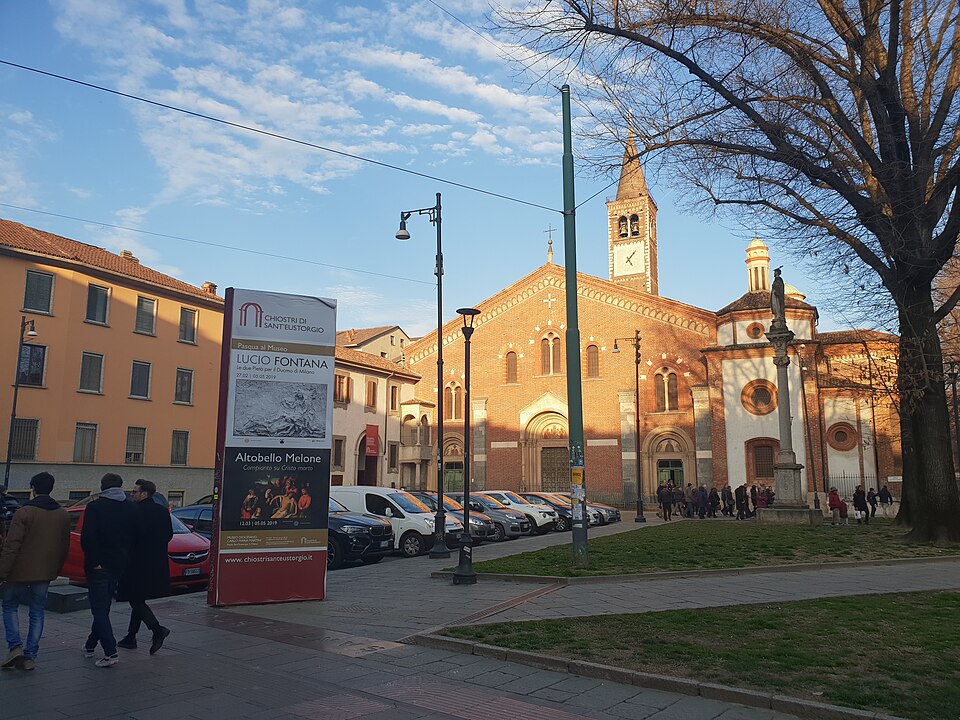
Museo di Sant'Eustorgio is a museum housed within the historic Basilica di Sant'Eustorgio in Milan. The basilica itself is a significant religious complex with medieval origins, traditionally associated with the Magi. The museum occupies spaces within this architectural ensemble, presenting sacred art and historical artifacts connected to the church's long devotional and cultural history. The site represents an important layer of Milan's ecclesiastical heritage, distinct from the city's more famous cathedral yet integral to understanding local religious tradition.
Checked 2026-08-26
The museum contains artworks and objects related to the basilica's history, including pieces connected to the cult of the Magi, whose relics were reputedly housed here. Visitors encounter religious paintings, sculptures, and decorative elements spanning multiple centuries. The Portinari Chapel, with its notable frescoes by Vincenzo Foppa, constitutes a major artistic highlight within the complex. Archaeological remains and architectural fragments may also be displayed, illustrating the building's evolution from early Christian foundations through Romanesque and later modifications. A flexible visit lets travellers connect Museo di Sant'Eustorgio with the rest of the day without treating one room, viewpoint or photograph as the whole experience. The useful pace depends on personal interest and conditions on arrival.
Checked 2026-08-26
A thorough visit to the museum and basilica complex typically requires between sixty and ninety minutes. This duration allows adequate time to examine the museum displays, contemplate the Portinari Chapel frescoes, and appreciate the architectural transitions visible throughout the building. Visitors with particular interest in Renaissance painting or medieval sacred art may wish to extend their stay. The compact nature of the museum spaces prevents overwhelming duration, making this suitable for inclusion within a broader Milan itinerary without consuming an entire day.
Checked 2026-08-26
Operator-confirmed hours are Not recorded pending review. Visitors should consult the official website or contact the basilica directly before planning their visit, as religious sites in Milan frequently maintain variable schedules affected by liturgical celebrations and seasonal adjustments. Morning visits generally offer quieter conditions for contemplative appreciation of the artworks. The interior spaces provide shelter from weather extremes, making this a viable option during hot summers or inclement periods, though climate control specifics are not documented. Museo di Sant'Eustorgio also earns time in a milan itinerary because A visitor-relevant POI matched exactly to the production city pool; stored identity, local name and coordinates were copied without approximation. Its value becomes clearer when the stop is compared with the surrounding streets and the other ranked places nearby.
Checked 2026-08-26
Operator-confirmed prices are Not recorded pending review. Admission policies for ecclesiastical museums in Milan vary considerably, with some implementing separate fees for church access versus special chapels or exhibitions. The Portinari Chapel may incur distinct ticketing from general museum entry. Visitors should verify current arrangements through official channels. Reduced rates for designated categories and combined tickets with other Milan religious sites are common practices in the city, though specific applicability to this location remains unconfirmed without direct enquiry.
Checked 2026-08-26
The basilica and museum occupy a location in central Milan accessible via the city's public transportation network. The nearest Metro station is Sant'Ambrogio on the green M2 line, requiring a brief walk through characteristic Milanese streets. Several tram and bus routes serve the surrounding Corso di Porta Ticinese area. The site lies within reasonable walking distance of other central attractions including the Basilica di Sant'Ambrogio and the Navigli district. Cycling infrastructure exists in the vicinity for those utilizing bike-sharing services.
Checked 2026-08-26
Visitors should observe appropriate dress and conduct befitting a functioning religious site, even when primarily visiting museum areas. Photography restrictions may apply in certain spaces, particularly around sacred objects or artworks. The building contains uneven flooring and level changes typical of historic structures, presenting accessibility considerations. Limited visitor amenities are anticipated within the museum itself. Advance verification of opening status is prudent, as unexpected closures for religious services or private events may occur without extensive public notification through standard tourism channels.
Checked 2026-08-26
Photography policies within the museum and basilica complex are not formally documented in available sources. Many Italian ecclesiastical museums permit non-flash photography in general areas while prohibiting it in chapels containing particularly sensitive artworks or relics. The Portinari Chapel frescoes, being significant Renaissance paintings, may be subject to specific restrictions. Visitors should observe posted signage and staff instructions. Tripods and professional equipment typically require special permission. Respect for worshippers in active prayer spaces should inform all image-capturing behaviour regardless of explicit rules.
Checked 2026-08-26
The museum is housed within the Basilica di Sant'Eustorgio complex but represents a distinct institutional component focused on curated displays rather than active worship spaces.
Access arrangements between the chapel and museum are not definitively documented; visitors should verify current policies directly with the site.
The historical tradition of Magi relics at this site is documented, though their current location and display status are not confirmed in available sources.
Whether advance reservations are necessary or available is not recorded; contacting the basilica directly before visiting is recommended.
The availability of guided tours in English or other languages is not documented in the supplied context.
Specific accessibility provisions are not recorded; the historic nature of the building suggests potential limitations that visitors with mobility requirements should verify in advance.
Loading the interactive map…
The interactive map could not be loaded.
Last updated:
Source: OpenStreetMap contributors, Wikidata ·