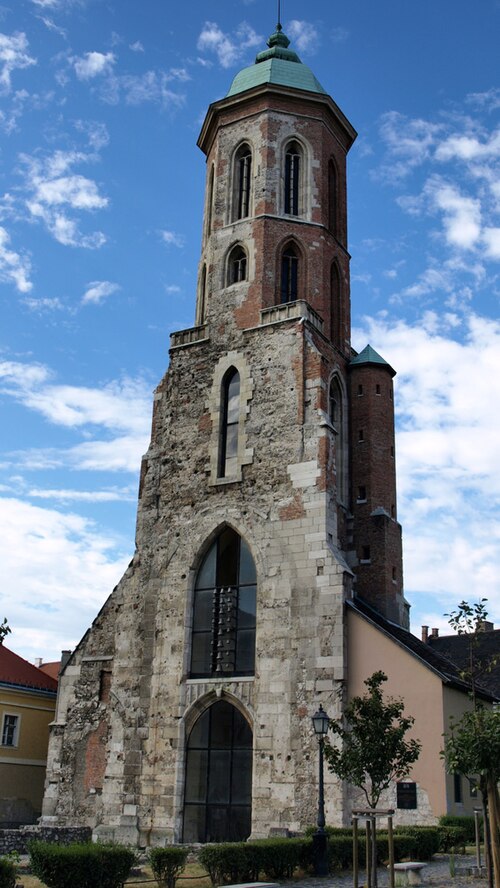
Hungarian Parliament Building
Országház
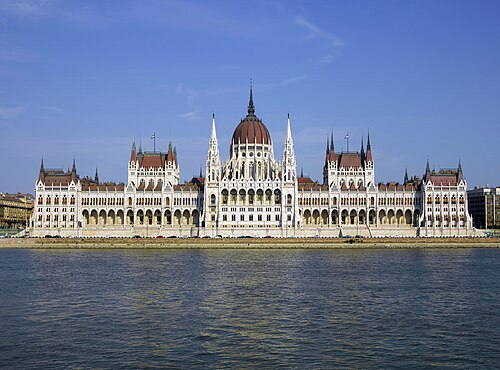
Országház — House of the Country — is the seat of the National Assembly of Hungary and the largest building in the country.
- Must see
- Historic monument
- Budapest
Language · 11 published
Country guide
Hungary is landlocked inside the Carpathian Basin, drains entirely into the Danube, and is dominated by wide lowland plains with seven neighbours around the rim. Just over 9.5 million people live here, and Budapest pulls hard enough that most itineraries amount to the capital plus one decision. The Danube cuts the city in two and carries on north through the bend towns; the plains run east toward Romania; Lake Balaton lies southwest and does the work a coast would do in a country that has none. Hungarian is one of the few languages in Europe outside the Indo-European family, which is the first thing a visitor notices on a road sign and the last thing they get used to.
Every city catalogued in this country so far, ranked by how much there is to see.
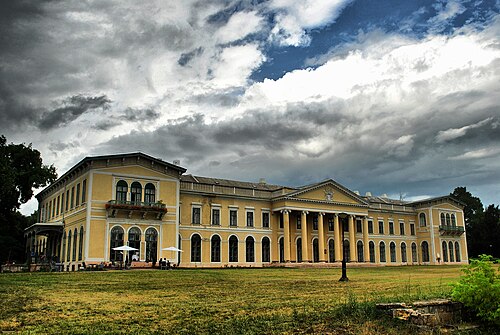
Photograph · Thomas Depenbusch (Depi) from Cologne, Germany · CC BY 2.0
Ranked by importance — sitelinks, pageviews and heritage status, not editor preference.
100 places match
Category
Typical visit duration
Országház
Országház — House of the Country — is the seat of the National Assembly of Hungary and the largest building in the country.
Budavári Palota
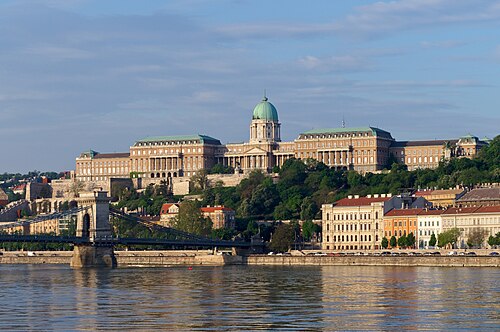
Budavári Palota occupies the southern tip of Castle Hill and is less one building than five centuries of demolition arguing with each other. A royal residence stood here by 1265, under Béla IV.
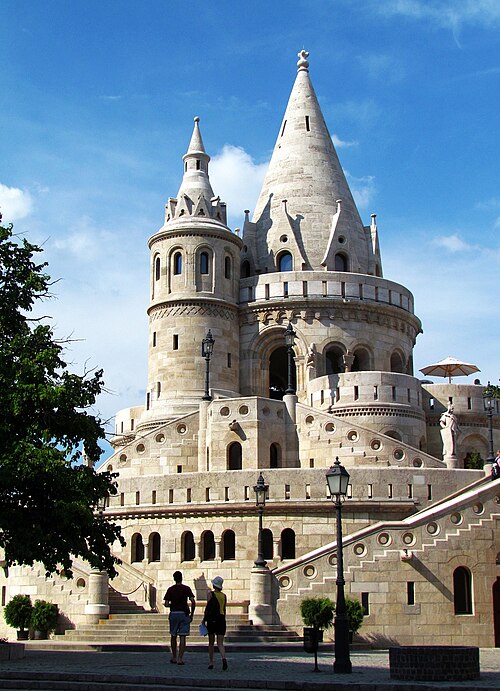
Halászbástya
Fisherman's Bastion is a viewing terrace on the crown of Buda Castle Hill, built between 1895 and 1902 to a design by Frigyes Schulek as part of the works marking a thousand years of the Hungarian state.
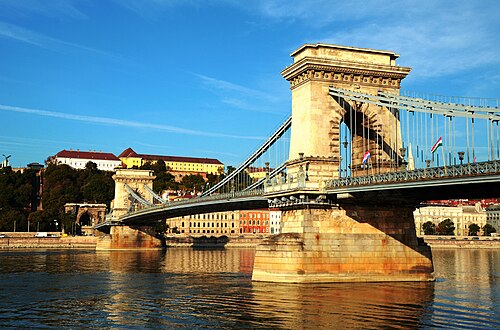
Széchenyi lánchíd
The Széchenyi Chain Bridge carries the central Danube crossing between Buda and Pest, and it was the first permanent bridge to link the two halves of the Hungarian capital.
Budavári Nagyboldogasszony-templom
The Church of Our Lady of Buda Castle, known to almost everyone as Matthias Church, stands on Szentháromság tér at the top of the castle hill in Buda.
Hősök tere
Hősök tere is a major square in Budapest, Hungary, recognised as part of the UNESCO World Heritage Site inscription for Andrássy Avenue and its surroundings.
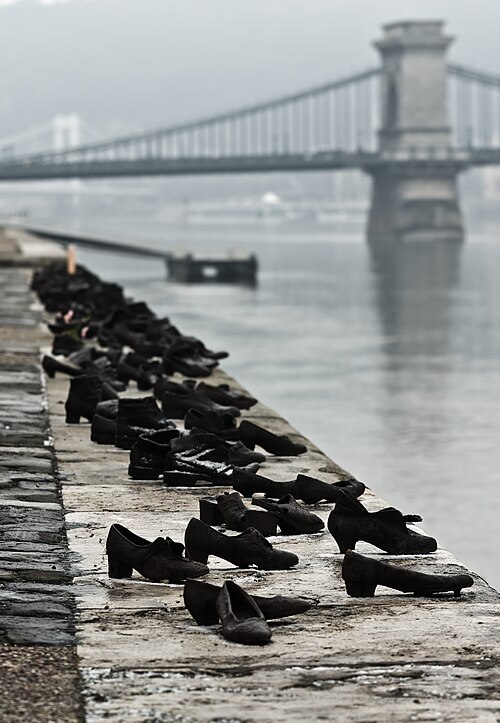
Cipők a Duna-parton
The Shoes on the Danube Bank is an outdoor memorial sculpture on the Pest riverbank of the Danube in Budapest, Hungary.
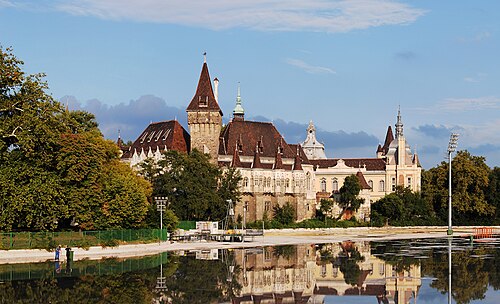
Vajdahunyad vára
Vajdahunyad Castle stands in Budapest's City Park as an architectural museum and romantic landmark. Built originally as a temporary wooden structure for the 1896 Millennium Exhibition, it was later reconstructed in stone and brick due to popular demand.
The Citadella is a historic fortress complex perched atop Gellért Hill in Budapest, commanding panoramic views over the Danube, Buda Castle, and the Pest skyline.
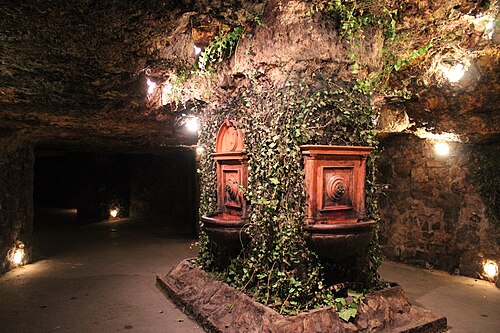
The Labyrinth of Buda Castle is a cave system beneath Budapest's Castle Hill, formed by natural thermal springs and later expanded by human activity.
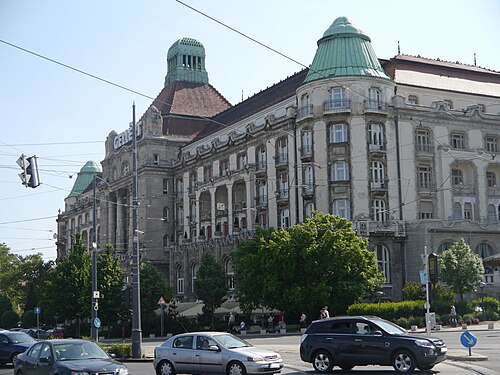
Szent Gellért Gyógyfürdő és Uszoda
Gellert Thermal Bath is a historic thermal bath complex in Budapest, Hungary, occupying an Art Nouveau building on the Buda side of the Danube near Gellert Hill.
Szent Anna-templom
The Church of Saint Anne is a Roman Catholic church in Budapest, Hungary. It stands as a notable religious building within the cityscape, serving the local Catholic community and welcoming visitors interested in ecclesiastical architecture and heritage.
Batthyany Square is a prominent public square on the Buda side of the Danube in Budapest, Hungary. Named after Count Lajos Batthyany, the first Prime Minister of Hungary, it functions as a significant transport interchange and riverside gathering point.
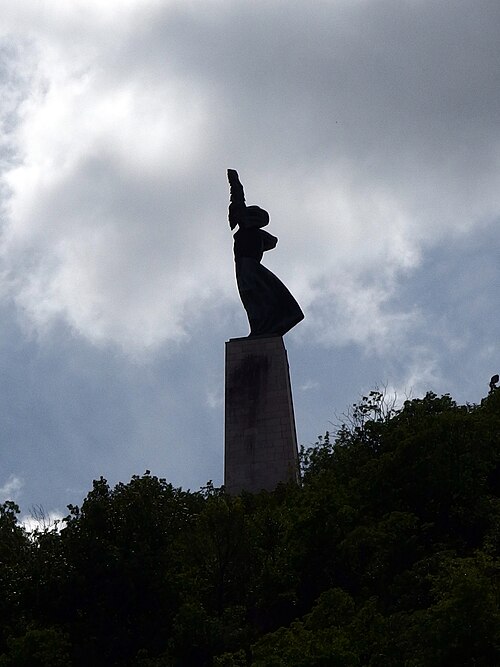
Szabadság-szobor
The Liberty Statue stands on Gellért Hill overlooking the Danube in Budapest. Erected in 1947, the monument originally commemorated Soviet liberation of Hungary from Nazi occupation.
Vorosmarty Square is a public square in Budapest, located in the Fifth District at the northern end of Vaci Street. It serves as a central pedestrian hub in the city centre.
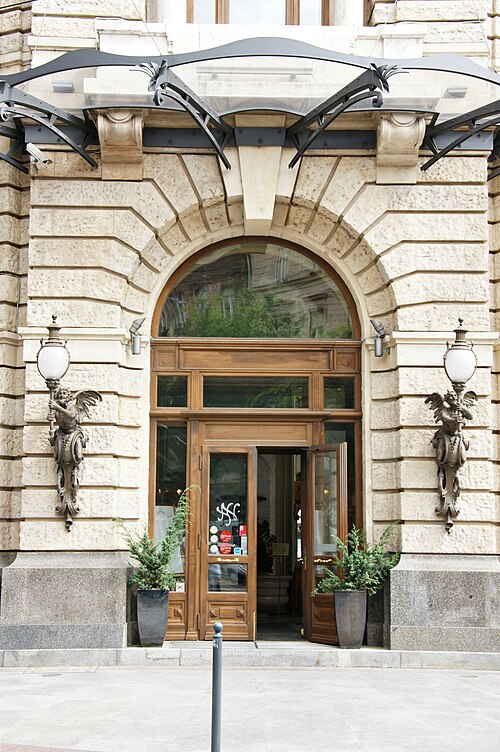
The New York Palace is a historic building in Budapest, Hungary.
The Palace of Arts is a major cultural venue in Budapest, Hungary. It serves as a prominent centre for performing arts and cultural events in the capital.
AQUINCUM CASTRUM
Aquincum is a Roman archaeological site in Budapest, Hungary. Its local name is AQUINCUM CASTRUM. The site preserves remains of the ancient Roman city of Aquincum, which was the capital of Pannonia Inferior province.
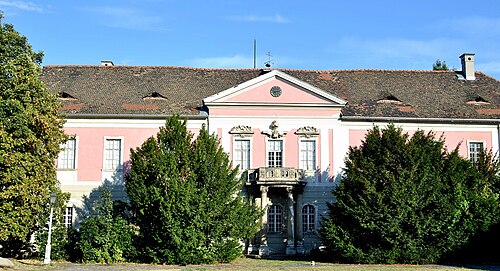
Zichy-kastély
Zichy Palace in Óbuda is a baroque mansion with historical significance in Budapest's third district. The building represents aristocratic residential architecture from the Hungarian noble era.
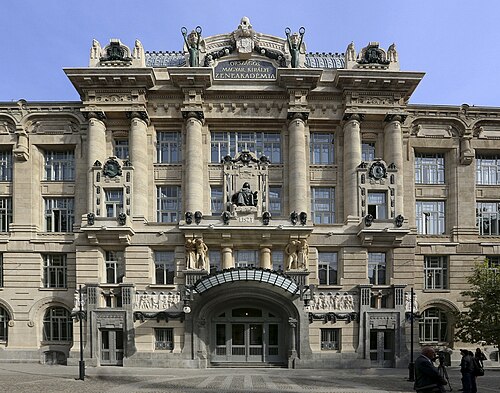
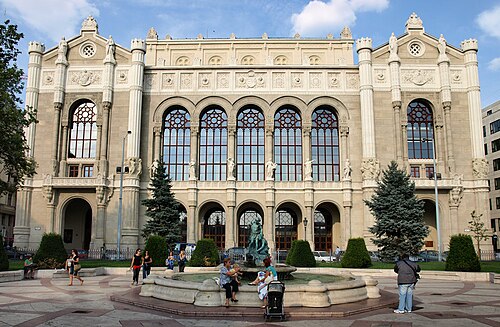
Liszt Ferenc Zeneművészeti Egyetem
The Franz Liszt Academy of Music is a prestigious concert hall and higher education institution in Budapest, Hungary. Founded by the composer Franz Liszt, it serves dual purposes as both a university-level conservatory and a major performance venue.
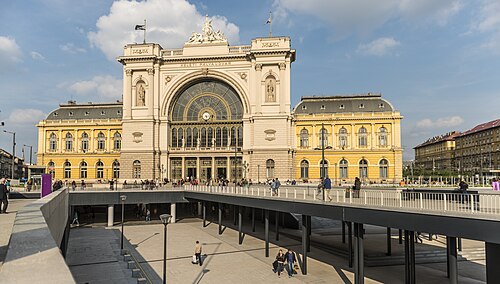
Keleti pályaudvar is Budapest's principal international railway terminus and a major passenger hub in eastern Pest. Opened in 1884, the station serves domestic and international routes across Europe.
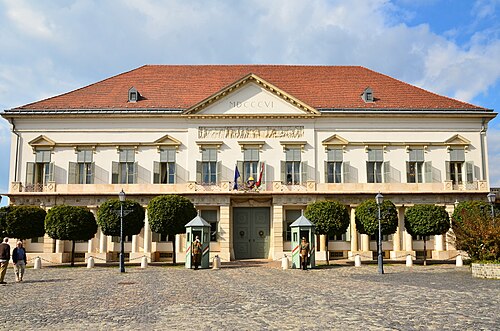
Sándor-palota
Sándor Palace is the official residence and office of the President of Hungary, located in Budapest's Castle District on Szent György Square.
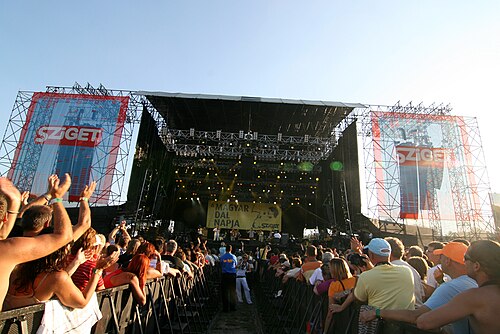
Sziget Fesztivál
Sziget Festival is a large-scale music and cultural festival held annually in Budapest, Hungary. Known locally as Sziget Fesztivál, it takes place on Óbuda Island in the Danube River.
Nyugati pályaudvar
Budapest-Nyugati railway station, known locally as Nyugati pályaudvar, is a major railway terminus in Budapest, Hungary. Opened in 1877, the station was designed by the Eiffel Company of Paris, reflecting nineteenth-century industrial architecture.
Normafa is a popular recreational area and viewpoint situated in the Buda Hills on the western side of Budapest, Hungary.
Pesti Vigadó
Pesti Vigadó is a historic concert hall located on the eastern bank of the Danube in Budapest, Hungary. The building stands as a prominent example of 19th-century Hungarian architecture and serves as a significant cultural venue in the capital.
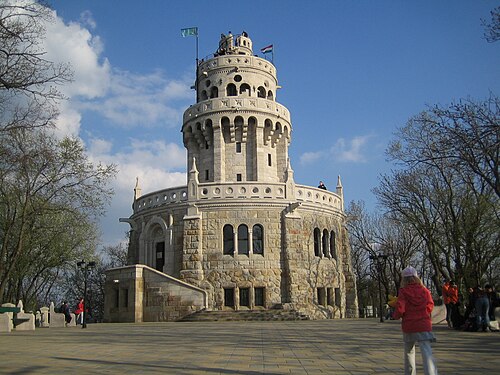
Erzsébet-kilátó
Elizabeth Lookout is a historic observation tower situated on János Hill, the highest point of Budapest. Named after Empress Elisabeth of Austria, the structure offers panoramic views across the Hungarian capital and surrounding countryside.
Gül Baba türbéje
The Tomb of Gül Baba is an Ottoman-era mausoleum located in Budapest, Hungary. It is the burial place of Gül Baba, a Bektashi dervish and poet who participated in the Ottoman conquest of Buda in 1541.
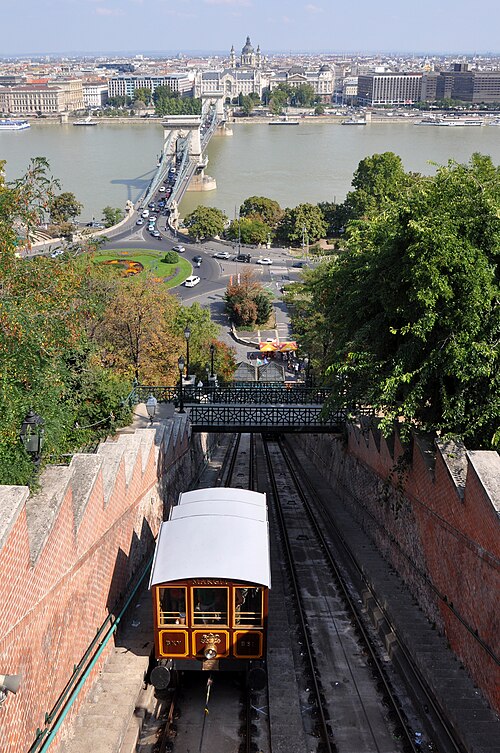
Budavári Sikló
The Budapest Castle Hill Funicular, known locally as Budavári Sikló, is a historic funicular railway in Budapest, Hungary. It connects the Danube riverbank at Clark Ádám Square with Castle Hill and Buda Castle above.
Szent László-templom
Saint Ladislaus Church in Kőbánya is a Roman Catholic parish church in Budapest's tenth district. The building serves the local community and stands as a notable religious structure in this historically industrial area of the Hungarian capital.
Rác-fürdő
The Rác Thermal Bath, known locally as Rác-fürdő, is a historic thermal bathing facility in Budapest, Hungary. It forms part of the city's celebrated spa culture, which draws upon natural thermal springs beneath the city.
Postatakarékpénztár
The Former building of Postal Savings Bank Budapest, known locally as Postatakarékpénztár, stands as a notable historic structure in Hungary's capital. This architectural landmark reflects the city's rich financial and postal heritage from the late 19th and early 20th centuries.
Vígszínház
The Comedy Theatre of Budapest, known locally as Vígszínház, is a prominent theatre building situated in the Hungarian capital. It operates as a significant cultural institution within Budapest's performing arts landscape.
Nagytétényi kastély
Nagytétény Castle, known locally as Nagytétényi kastély, is a historic castle situated in Budapest. The structure represents Hungarian architectural heritage and serves as a notable landmark within the city boundaries.
Szilágyi Dezső téri református templom
Szilágyi Dezső tér Reformed Church is a Protestant place of worship in Budapest, Hungary. The local name Szilágyi Dezső téri református templom identifies it as a Reformed church within the Hungarian Calvinist tradition.
Batthyány-mauzóleum
The Batthyány Mausoleum is a memorial structure in Budapest associated with the prominent Batthyány noble family, one of Hungary's most historically significant aristocratic houses. The mausoleum serves as a burial monument commemorating members of this lineage.
Károlyi-kastély
Károlyi Mansion in Fót is a 19th-century country residence built for the prominent Károlyi noble family, located approximately 17 kilometres northeast of central Budapest. The mansion sits within landscaped parkland and represents Hungarian aristocratic architecture of the period.
Vár
Buda Castle Quarter, locally known as Vár, is a historic district in Budapest, Hungary. Designated as OpenStreetMap relation 2786100 and documented on Wikidata Q463332, it occupies the elevated terrain of Castle Hill on the Buda bank of the Danube.
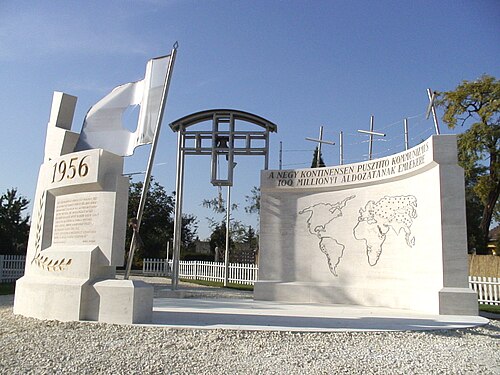
Gloria Victis 56-os emlékhely
The Gloria Victis Memorial, known locally as Gloria Victis 56-os emlékhely, is a commemorative monument in Budapest. It honors those who fell during the 1956 Hungarian Revolution against Soviet-imposed communist rule.
Budavári evangélikus templom
The Lutheran Church of Budavár, locally known as Budavári evangélikus templom, is a Protestant place of worship situated in Budapest's historic Castle District on the Buda side of the Danube.
A német megszállás áldozatainak emlékműve
The Memorial for the Victims of the German Occupation stands in Budapest as a contested public monument. Unveiled in 2014 at Szabadság tér, it commemorates Hungarian victims of Nazi Germany's 1944 occupation.
Mária Magdolna-templom
The Church of Saint Mary Magdalene, known locally as Mária Magdolna-templom, is a historic religious building in Budapest. It holds significance as part of the city's ecclesiastical heritage and architectural landscape.
Millenniumi emlékmű
Cserkesz utcai zsinagóga, Hitközségi székház és lakóház
Rózsafüzér királynéja templom
Belvárosi Szent Mihály-templom
Aquincumi polgárvárosi amfiteátrum
Belvárosi Ferences templom
Aquincumi katonai amfiteátrum
Sarlós Boldogasszony-templom
Lakihegyi adótorony
Igazságügyi palota
Bécsi kapu
Batthyány-örökmécses
Vörös Sün Ház
Óbudai királyi vár
Szépvölgyi úti körmeneti kápolna
Újpesti Kocsiszín
Gresham-palota
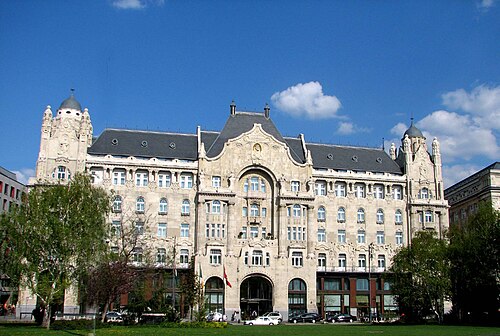
Gresham Palace is a historic building in Budapest, Hungary. It stands as a prominent example of Art Nouveau architecture in the city, located along the Danube riverfront.
CAMPONA castrum
Károlyi-palota
Párisi Nagy Áruház
Assisi Szent Ferenc-templom
Avilai Nagy Szent Teréz-templom
Nagyboldogasszony-kápolna
Magyar Tudományos Akadémia
The Hungarian Academy of Sciences is the premier learned society of Hungary, founded in 1825 by Count István Széchenyi. Its neoclassical headquarters stands prominently on the Danube embankment at Széchenyi István Square in central Budapest.
Budapest Óriáskereke
Festetics palota
Szent Gellért
Klotild-palota
Lánchíd Palota
Pálos kolostorrom
Podmaniczky–Vigyázó-kastély
Emanuel-emlékfa
Sacelláry-kastély
Törley-kastély
Ausztrálház
Solymári vár
Történelmi Városfal Bemutatóhely
Zwack Látogatóközpont
Margitszigeti Víztorony
Műjégpálya korcsolyacsarnok
Tabáni romok
Marcus Antonius Victorinus mithraeuma
MÁV telepi Kisboldogasszony plébániatemplom
Domonkos kolostor
Malonyai-kastély
A katinyi mártírok emlékműve
Nyéki Vadászkastély
Régi budai városháza
Péterffy-palota
Prímási palota
Source: OpenStreetMap contributors, Wikidata ·
Five to seven days gives Budapest four days and leaves room for Eger, Pécs, Lake Balaton or the Danube Bend. Choose one extension; repeated returns to the capital can consume the time an overnight would preserve.
Hungary’s consular information service carries the current entry and visa rules. Check the passport-specific requirement and the complete Schengen itinerary rather than assuming another member state’s answer applies unchanged.
Budapest Airport is the principal international gateway. Intercity trains and coaches radiate from the capital, while Budapest uses its own metro, tram, bus and suburban-rail fare system.
April through June and September through October are practical for Budapest and regional sightseeing. Lake Balaton’s summer season and winter operating patterns create different transport and opening considerations.
Hungarian forints (HUF) are the recorded currency even though some businesses may display other currencies. Fees and acceptance are Not recorded; verify the HUF total and avoid accepting an unclear conversion.
Call 112 in a Hungarian emergency. Electricity is 230 V through Type C and F sockets; national tap-water guidance is Not recorded in the cited material.