Smart Self-Managed Tours

Country guide

Hungary

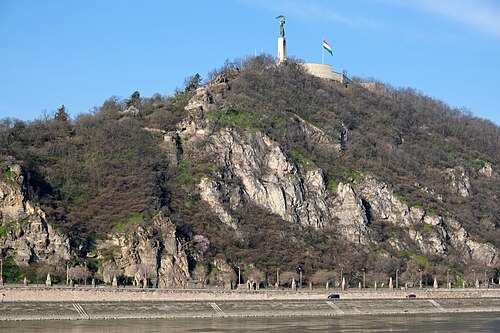
A photograph of Hungary
Photograph · Jakub Hałun · CC BY-SA 4.0

Hungary is landlocked inside the Carpathian Basin, drains entirely into the Danube, and is dominated by wide lowland plains with seven neighbours around the rim. Just over 9.5 million people live here, and Budapest pulls hard enough that most itineraries amount to the capital plus one decision. The Danube cuts the city in two and carries on north through the bend towns; the plains run east toward Romania; Lake Balaton lies southwest and does the work a coast would do in a country that has none. Hungarian is one of the few languages in Europe outside the Indo-European family, which is the first thing a visitor notices on a road sign and the last thing they get used to.

Cities

Every city catalogued in this country so far, ranked by how much there is to see.

Practical information

Language spoken
Hungarian
National practical orientation; regional and minority languages may also be used
Dialling code
+36
International calling code; local area and mobile prefixes still apply
Currency
Hungarian forint (HUF)
Use the official local currency; card acceptance varies by place
Emergency number
112
Use only for an emergency; tourist assistance may use a separate number
Plug type
Type C and F · 230 V
Check that chargers support the recorded voltage before using an adapter
Tap water
Not recorded
No verified nationwide visitor statement was recorded

Planning a visit

  1. January: seasonal closure recorded
  2. February: seasonal closure recorded
  3. March: seasonal closure recorded
  4. April: seasonal closure recorded
  5. May: seasonal closure recorded
  6. June: seasonal closure recorded
  7. July: seasonal closure recorded
  8. August: seasonal closure recorded — this month
  9. September: seasonal closure recorded
  10. October: seasonal closure recorded
  11. November: seasonal closure recorded
  12. December: seasonal closure recorded

Top things to see

Ranked by importance — sitelinks, pageviews and heritage status, not editor preference.

  1. János Hill János Hill
    02 20 min

    János Hill

    Janos Hill is the highest point of Budapest, situated in the Buda Hills on the western side of the Hungarian capital.

    • Must see
    • Viewpoint
    • Budapest
  2. Sas Hill
    04 20 min

    Sas Hill

    • High
    • Viewpoint
    • Budapest
  3. Rupp-hegy
    12 20 min

    Rupp-hegy

    • High
    • Viewpoint
    • Budapest
  4. Kő-hegy
    17 20 min

    Kő-hegy

    • High
    • Viewpoint
    • Budapest
  5. fej
    25 20 min

    fej

    • High
    • Viewpoint
    • Budapest
  6. Les-hegy
    38 20 min

    Les-hegy

    • High
    • Viewpoint
    • Budapest
  7. Vidadomb
    52 20 min

    Vidadomb

    • High
    • Viewpoint
    • Budapest
  8. SkyDeck
    55 20 min

    SkyDeck

    • High
    • Viewpoint
    • Budapest
  9. 225-360
    57 20 min

    225-360

    • Notable
    • Viewpoint
    • Budapest
  10. Aranyhegy
    62 20 min

    Aranyhegy

    • Notable
    • Viewpoint
    • Budapest
  11. Dobogó
    66 20 min

    Dobogó

    • Notable
    • Viewpoint
    • Budapest
  12. Frank-hegy
    71 20 min

    Frank-hegy

    • Notable
    • Viewpoint
    • Budapest
  13. Homok-hegy
    77 20 min

    Homok-hegy

    • Notable
    • Viewpoint
    • Budapest
  14. Kálvária
    84 20 min

    Kálvária

    • Notable
    • Viewpoint
    • Budapest
  15. Kilátás
    89 20 min

    Kilátás

    • Notable
    • Viewpoint
    • Budapest
  16. Kis-Kőfej
    98 20 min

    Kis-Kőfej

    • Notable
    • Viewpoint
    • Budapest

Source: OpenStreetMap contributors, Wikidata ·

Common questions

How long should a first trip to Hungary be?

Five to seven days gives Budapest four days and leaves room for Eger, Pécs, Lake Balaton or the Danube Bend. Choose one extension; repeated returns to the capital can consume the time an overnight would preserve.

What entry documents are needed for Hungary?

Hungary’s consular information service carries the current entry and visa rules. Check the passport-specific requirement and the complete Schengen itinerary rather than assuming another member state’s answer applies unchanged.

What is the best way to travel around Hungary?

Budapest Airport is the principal international gateway. Intercity trains and coaches radiate from the capital, while Budapest uses its own metro, tram, bus and suburban-rail fare system.

When is a practical time to visit Hungary?

April through June and September through October are practical for Budapest and regional sightseeing. Lake Balaton’s summer season and winter operating patterns create different transport and opening considerations.

What money and payment basics apply in Hungary?

Hungarian forints (HUF) are the recorded currency even though some businesses may display other currencies. Fees and acceptance are Not recorded; verify the HUF total and avoid accepting an unclear conversion.

What practical safety details should I save for Hungary?

Call 112 in a Hungarian emergency. Electricity is 230 V through Type C and F sockets; national tap-water guidance is Not recorded in the cited material.