The Museum national d'histoire naturelle is France's national natural history museum, founded in 1793 out of the royal Jardin du Roi, and it occupies several linked sites across the Jardin des Plantes in the 5th arrondissement.
It is both a research institution -- one of the oldest continuously operating scientific bodies in France -- and a public museum, with galleries spread across the garden rather than gathered in one building, plus the Menagerie, France's oldest zoo, opened on the same grounds in 1794.
The Grande Galerie de l'Evolution, reopened in 1994 after a long restoration of its 1889 iron-and-glass hall, is the main draw: a procession of taxidermied animals crossing the nave under a barrel-vault roof, staged to tell the story of evolution and species adaptation rather than displayed as a static cabinet.
The Galerie de Paleontologie et d'Anatomie comparee, a separate building from 1898, holds full mounted skeletons -- whales, an elephant, dinosaurs -- arranged in ranked rows down its length. The Grande Galerie de l'Evolution and the paleontology gallery sell separate tickets, and the Menagerie is ticketed separately again.
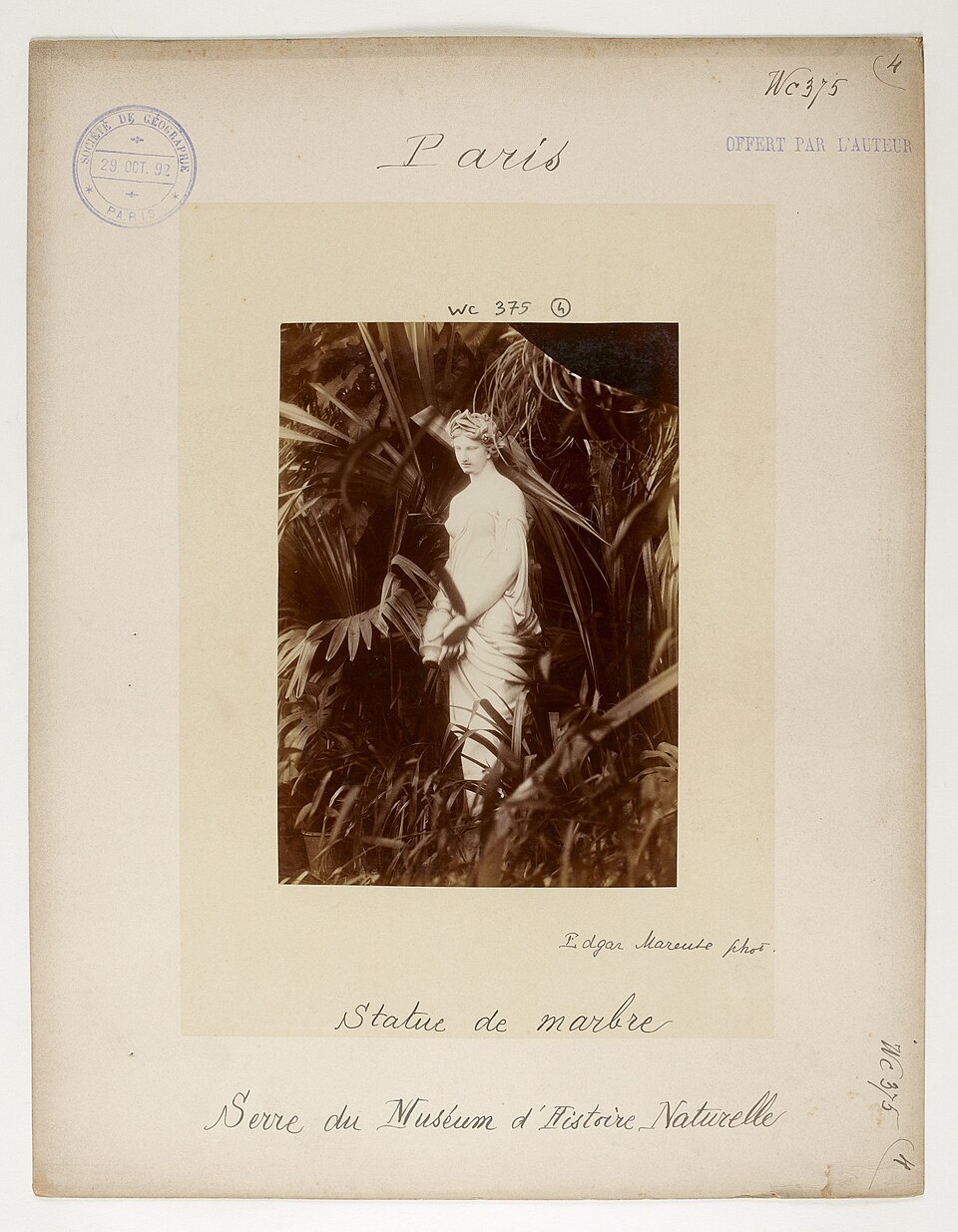
The site also includes a mineralogy and geology gallery, with large crystal specimens and gemstones drawn partly from the former royal mineral collection, and greenhouses (serres) built in the same iron-and-glass style as the Grande Galerie, housing tropical and desert plant collections that stay open through winter.
Two to three hours covers the Grande Galerie de l'Evolution at a normal pace; add an hour for the paleontology gallery and at least ninety minutes for the Menagerie if visiting all three in a day.
Families with children often spend a half day across the grounds, since the gardens between the galleries -- with their own botanical beds and the small Alpine garden -- are worth walking rather than crossing quickly between buildings.
The garden itself predates the museum's 1793 founding by more than a century and a half, laid out from 1635 as a royal medicinal-plant garden, so the layout of paths and beds carries a history distinct from the individual galleries built around it.
Weekday mornings are calmest; the site draws large school groups on weekday afternoons during term time.
The gardens themselves are at their fullest from May to September; the greenhouses (serres) stay warm year round and make a reasonable wet-weather stop. The complex closes on Tuesdays, a day worth checking before planning a visit.
Cherry blossom on the garden's ornamental trees in late March and April draws its own crowd of photographers and picnickers, separate from the gallery-going visitors, and is worth timing a visit around if the garden itself is the priority rather than the museum buildings.
Weekends across the school year draw families in numbers, particularly to the Grande Galerie de l'Evolution, so a weekday visit is the more comfortable choice for anyone who wants room to stand at the display cases.
Each gallery is ticketed on its own: the Grande Galerie de l'Evolution, the paleontology and anatomy gallery, the mineralogy gallery, the greenhouses and the Menagerie each sell a separate entry, though combined passes covering several sites are available.
Under-26 EU residents and under-18s generally enter free, in line with French national museum policy; the operator's own site carries the current rates.
Metro Gare d'Austerlitz (Lines 5 and 10) and Censier-Daubenton (Line 7) both sit within a short walk of the garden's entrances; the RER C stops at Gare d'Austerlitz as well.
The Jardin des Plantes has several gates along rue Cuvier, rue Geoffroy Saint-Hilaire and rue Buffon, and which one is closest depends on which gallery is the first stop.
Because the galleries sell separate tickets, a visitor expecting one entry to cover the whole site can be caught out at a second door; buying a combined ticket in advance avoids a second queue.
The Grande Galerie de l'Evolution simulates a thunderstorm with sound and light at intervals through the day, which startles small children unprepared for it. Flash photography is restricted throughout to protect the specimens and the historic taxidermy.
The Grande Galerie's central procession of large mammals, shot from the mezzanine level looking down the nave, is the gallery's signature image.
The paleontology gallery's rows of mounted skeletons, lit from above through the 1898 iron roof, photograph well in the gallery's naturally dim light; a wider shot from the far end of either hall shows the full scale of the vaulted iron structure itself.
Do the Grande Galerie de l'Evolution and the paleontology gallery share one ticket?
No, they are ticketed separately, though combined passes covering several galleries and the Menagerie are sold.
How old is the Museum national d'histoire naturelle?
It was founded in 1793, reorganising the royal Jardin du Roi that had existed on the same grounds since the 1600s.
Is the Menagerie the same ticket as the museum galleries?
No. The Menagerie, France's oldest zoo, opened in 1794 on the same grounds and sells its own separate entry.
What is inside the Galerie de Paleontologie et d'Anatomie comparee?
Full mounted skeletons -- whales, an elephant, dinosaurs and more -- in a purpose-built 1898 hall, arranged in ranked rows down the length of the building.
Which day does the museum close?
Tuesdays, across the main galleries; the gardens themselves keep separate opening hours worth checking on the operator's own site before a visit.
Is entry free for young visitors?
Under-18s and under-26 EU residents generally enter free, consistent with French national museum policy; the operator's site carries the current age rule.
Nothing non-essential is set before you choose, in regions where consent is required. If you decline, ads still appear but they are non-personalised, and analytics is switched off entirely.


.jpg)
.jpg)
.jpg)

