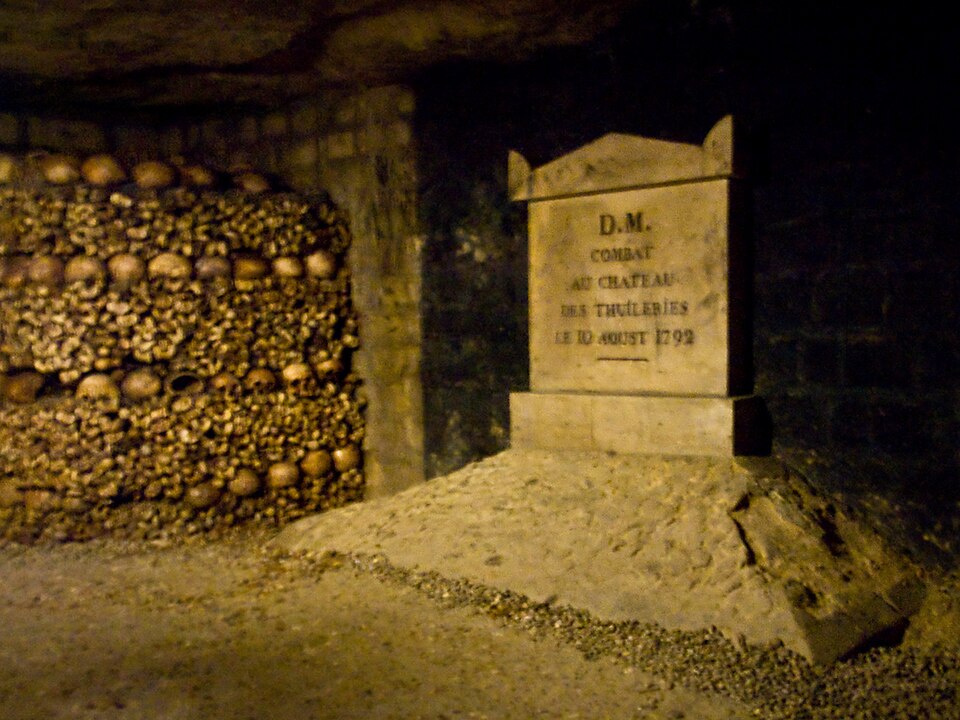
The Catacombs of Paris hold roughly six million people in a former limestone quarry, moved there because the city's cemeteries had run out of room.
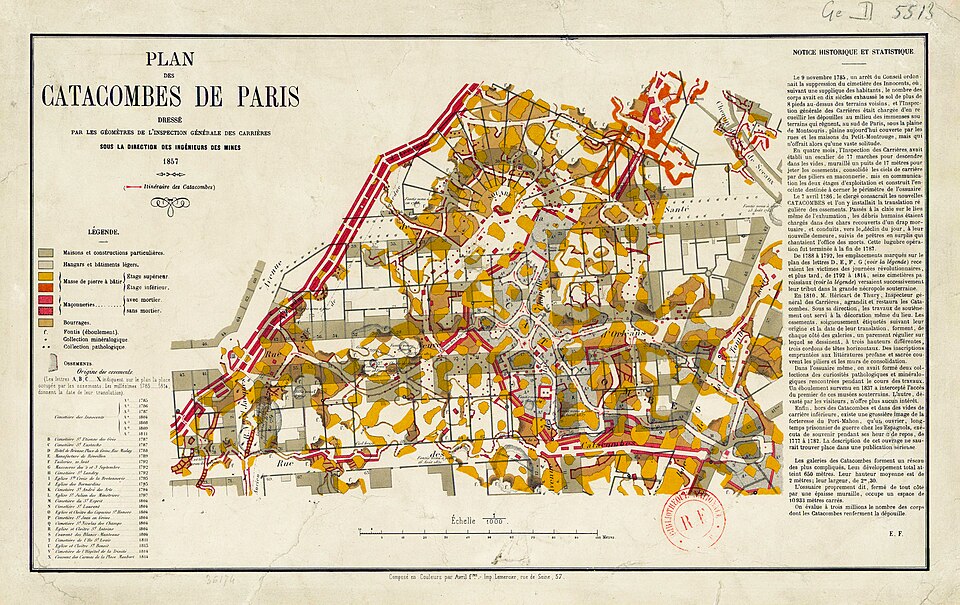
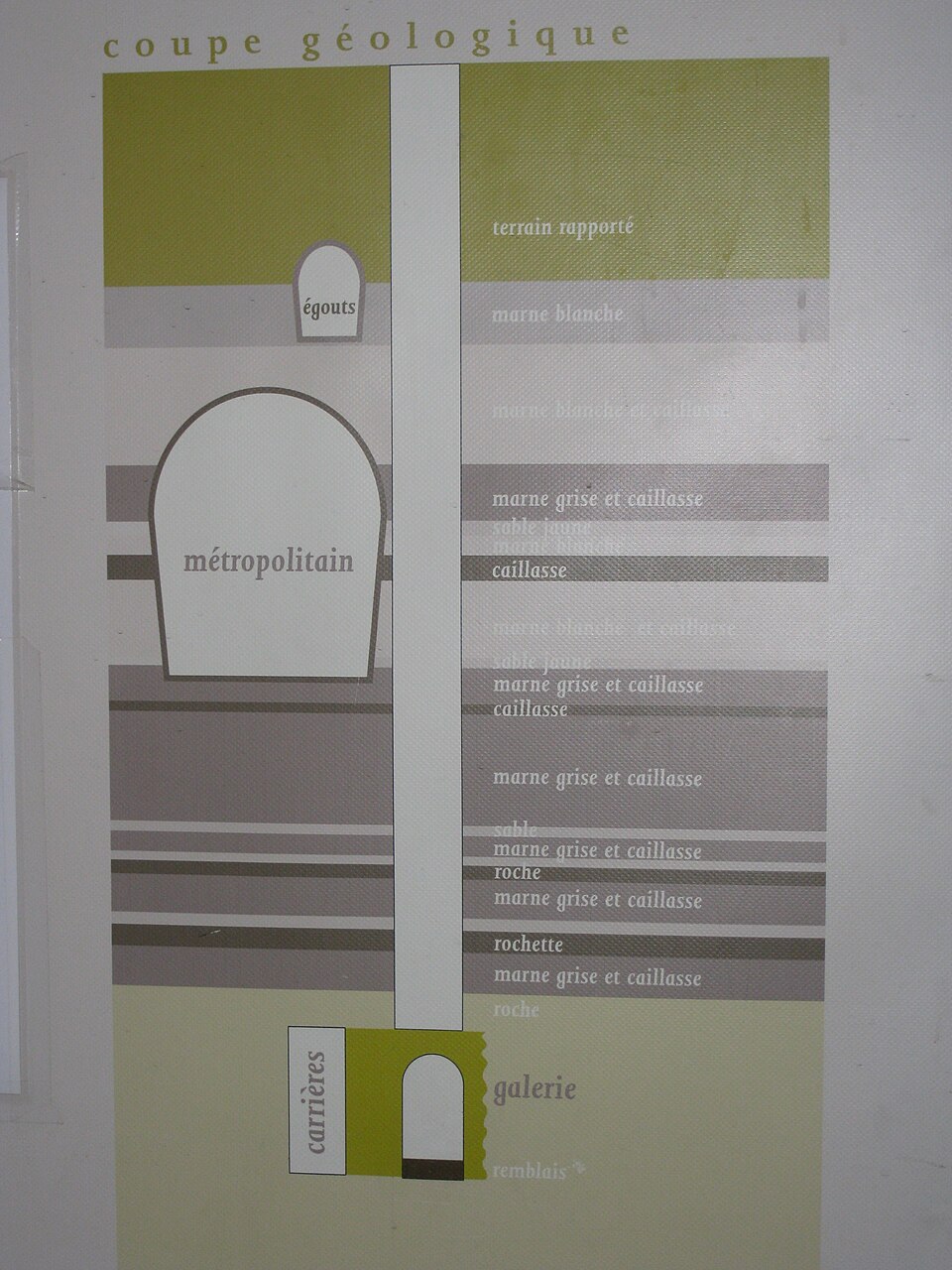
Paris had mined limestone from under the Left Bank since Roman times, and by the 1770s the tunnels were collapsing streets above them. In 1777 the king created an Inspection of Quarries to shore them up. At the same time the Cimetière des Innocents, packed for eight centuries, was overflowing into the cellars of the houses around it, and in 1786 the city began moving its bones into the emptied tunnels under the former Barrière d'Enfer, night by night, by torchlit procession.
The transfers ran on and off until 1814, folding in the bones of dozens of central Paris cemeteries. From 1810 the quarry inspector Louis-Étienne Héricart de Thury turned the ossuary from a dump into a monument, stacking femurs and skulls into walls and setting inscriptions — verses on death, warnings, quotations — between them, and it opened to visitors soon after.
A 1.5 km walking route through cut tunnels, with roughly 800 metres of it lined floor to ceiling in bone.
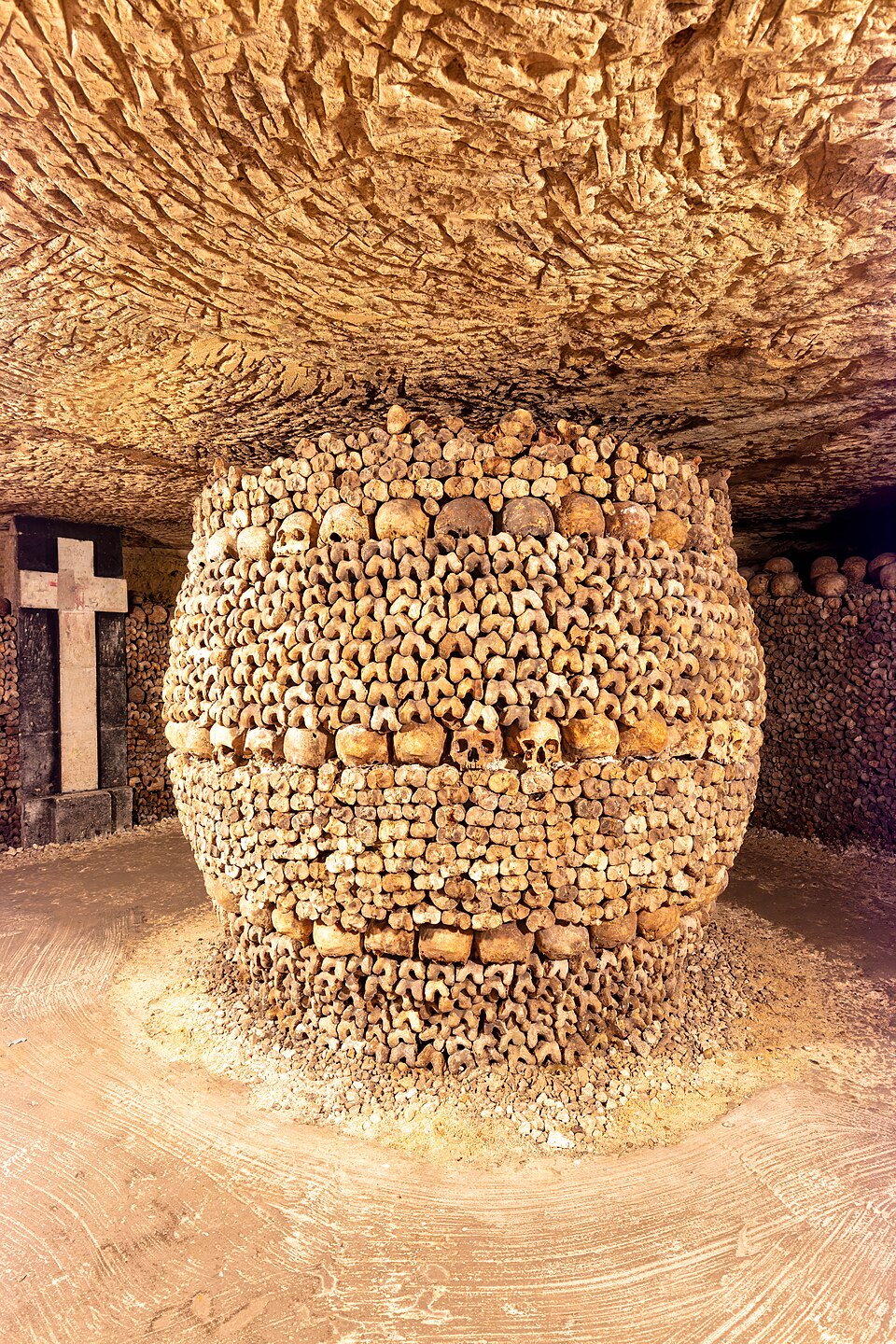
The route starts well before the ossuary itself: a long corridor of bare quarry walls, some marked with old street names carved by the quarrymen, brings you to the ossuary entrance, inscribed "Arrête, c'est ici l'empire de la mort" — stop, this is the empire of death. From there the walls are femurs and tibias stacked in rows with a border of skulls, arranged into crosses, hearts and other patterns among the plainer stacks, each section labelled with the cemetery and the year its bones arrived.
A handful of side chambers break the pattern: a relief carved by a quarryman-turned-soldier before the Revolution, a wishing well, a bath cut into the rock. The public route is a fraction of the roughly 200 km of tunnels under the Left Bank; the rest is closed and patrolled.
Forty-five minutes to an hour underground, plus whatever the queue adds above ground.
The route is one-way and does not loop back, so the pace is set by the group ahead rather than by choice. Reading the cemetery labels and the verses slows a visit; walking straight through does not take much longer than the distance itself.
The queue used to be the larger cost of a visit, sometimes exceeding the time spent inside. Timed online booking has cut that, but it has not eliminated it, and turning up without a slot can still mean a long wait or no entry that day.
The first slot of the day, before the tour groups catch up.
The site sits at a constant 14°C year-round, which makes it a natural retreat from a hot Paris afternoon and a cold one in winter, so summer heat does not change the calculus much. The narrow stairs and corridors mean the site has a capacity limit, and afternoons in the school-holiday months fill it fastest.
The descent is 131 spiral steps and the exit climb is 112, with no lift at either end, which rules the site out for a visitor who cannot manage stairs.
Entry is ticketed and an audio guide is sold as an add-on. The figure shown on this page is the one currently published.
Online booking assigns a time slot and is the way most visitors now get in; walk-up tickets exist but sell out on busy days. The Paris Museum Pass does not include the Catacombs.
Bags above a small size are not permitted inside and there is no left-luggage desk at the entrance, which is worth planning around before joining the queue.
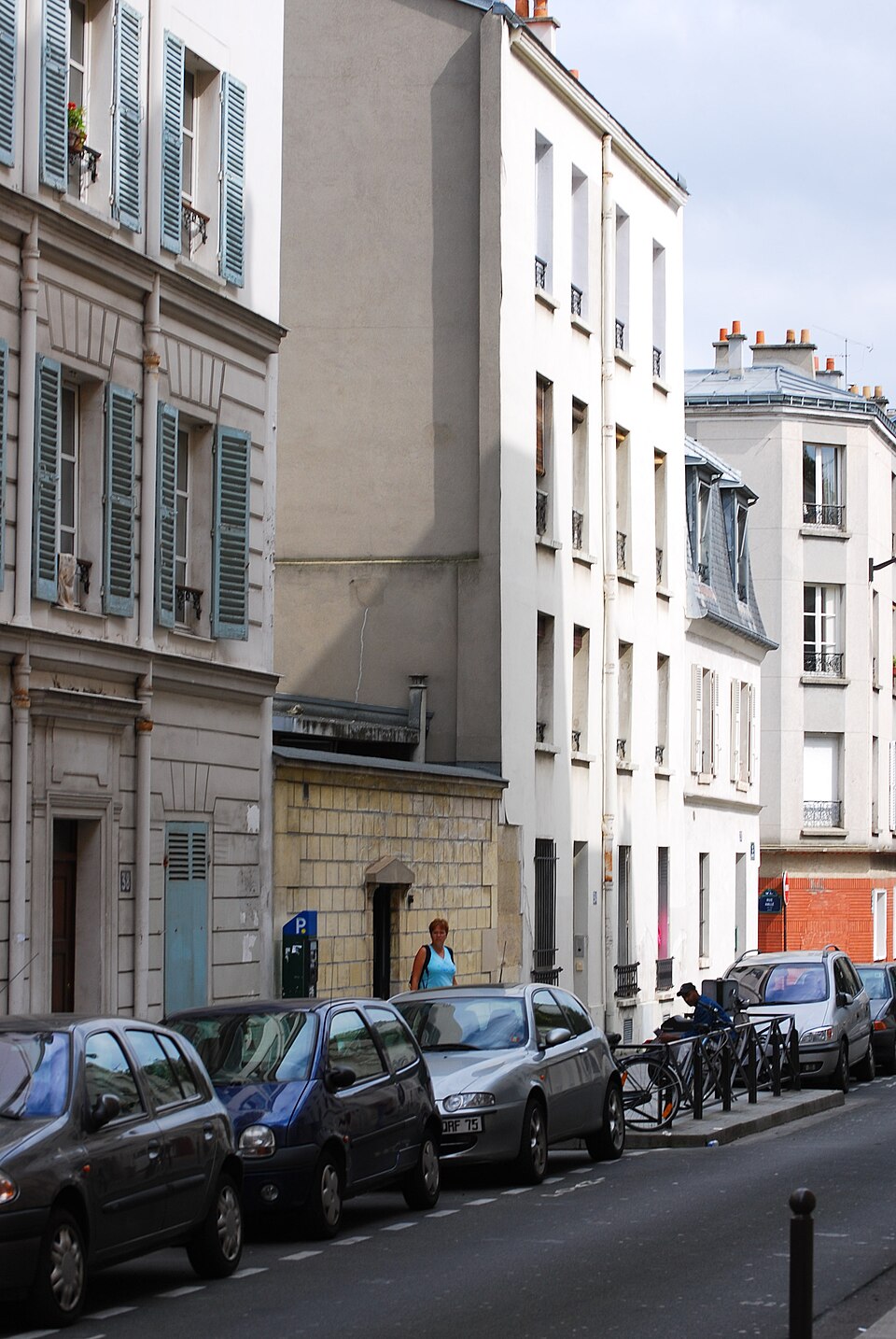
Place Denfert-Rochereau in the 14th arrondissement, on the Left Bank south of Montparnasse.
Denfert-Rochereau station sits directly on the square and is served by Métro line 4, line 6 and RER B, so most of the city reaches it on one train. The entrance pavilion is one of the old toll houses of the Wall of the Farmers-General, on the west side of the square.
The exit is a separate building on Rue Rémy Dumoncel, a short walk from the entrance, and bag checks run at both ends.
The stairs are tight spiral cases with no lift, so anyone unsteady on their feet or carrying a large bag should plan around them rather than discover them at the entrance.
The tunnels are cool, damp and low in places; a visitor who is claustrophobic or uneasy underground should weigh that before booking, since the route is one-way and does not offer a quick way back out.
Touching the bones is forbidden and enforced by staff walking the route. Large bags and suitcases are refused at the door with no storage offered, which has turned visitors away who arrived straight from a station.
The bone walls read best straight on, at the height of the stacked skulls, where the pattern of the border rows against the plain shafts behind them is clearest.
Light is dim and artificial throughout, and flash washes out the texture of the bone rather than helping it; a phone camera's low-light mode does better than a flash. Tripods are impractical in a route that keeps moving and does not allow visitors to stop for long.
The inscribed entrance arch and the labelled cemetery plaques are the other reliable shots, since they hold still and are lit for reading rather than for atmosphere.
Is it true the Catacombs hold about six million people?
Yes. The ossuary took in bones from dozens of central Paris cemeteries between 1786 and 1814, and the standard estimate for the total is around six million.
How many steps are there?
131 down at the entrance and 112 up at the exit, both tight spiral staircases with no lift at either end.
Can I book on the day, or does it need to be in advance?
Walk-up tickets exist but sell out on busy days. Booking a timed online slot in advance is the reliable way in and cuts the queue that used to define a visit.
Is the Paris Museum Pass accepted?
No. The Catacombs sell their own tickets and are not part of the Paris Museum Pass network.
How cold is it underground?
A constant 14°C year-round, cooler than a Paris summer day and warmer than a Paris winter one — bring a layer regardless of season.
Can I bring a backpack or suitcase?
Only a small bag. Large bags and suitcases are refused at the entrance and there is no storage on site, so leave them at the hotel before travelling over.
Nothing non-essential is set before you choose, in regions where consent is required. If you decline, ads still appear but they are non-personalised, and analytics is switched off entirely.