

.jpg)
.jpg)


2 min walk · Paris 5e Arrondissement
square Robert-Montagne
- High
- Nature site
Language · 1 published
Historic monument · Paris 5e Arrondissement, Paris
Grande Mosquée de Paris
| Monday | 09:00 – 18:00 |
|---|---|
| Tuesday | 09:00 – 18:00 |
| Wednesday | 09:00 – 18:00 |
| Thursday | 09:00 – 18:00 |
| Friday | Closed |
| Saturday | 09:00 – 18:00 |
| Sunday | 09:00 – 18:00 |
Checked 2026-08-24 · Source
Read from the OpenStreetMap access tags; anything not listed has no tag recorded.
Set the group type to family in the planner and the day window contracts to about three quarters of a solo day.
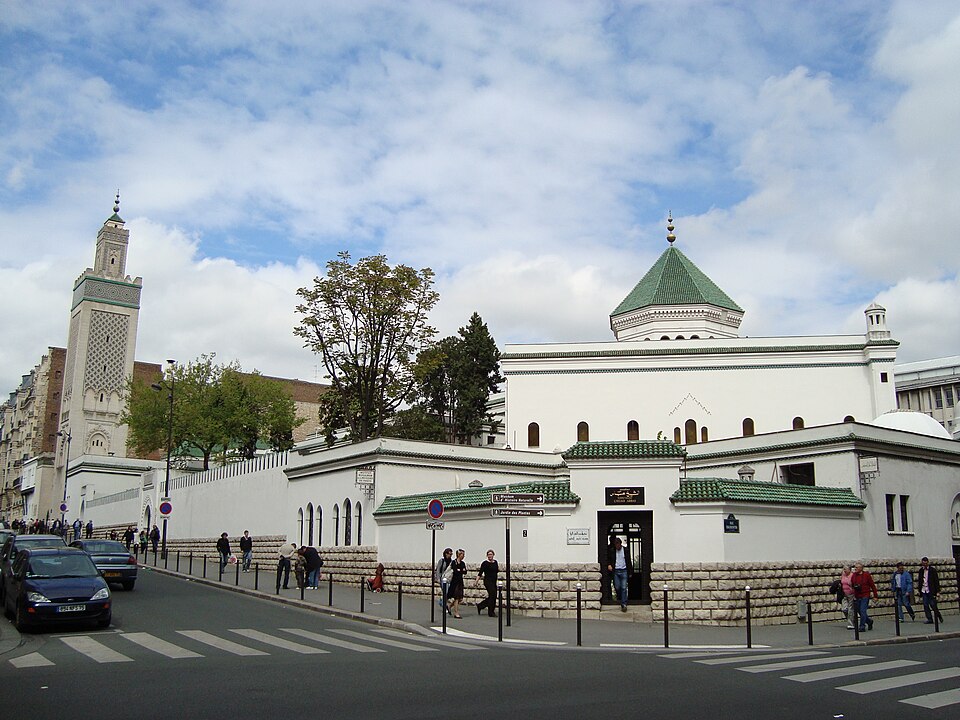
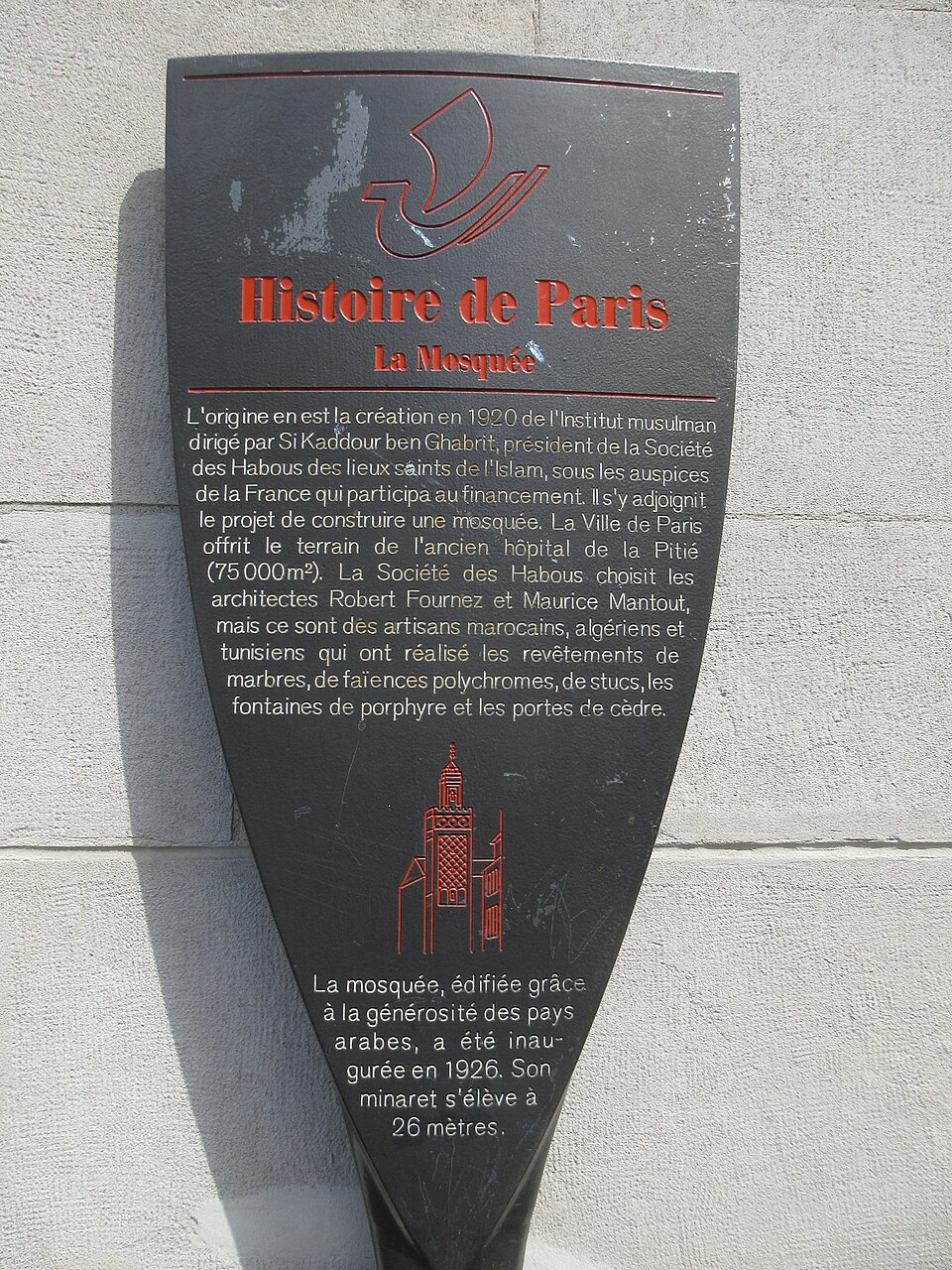
The Grand Mosque of Paris opened in 1926 as France's thanks to its Muslim soldiers, and it remains the city's central mosque a century later.
The French state funded the mosque after the First World War, in which around 100,000 Muslim soldiers from France's North and West African territories had died, and the building was conceived as a permanent, formal act of gratitude and as the seat of Islam in a country that then ruled over a large Muslim colonial population. It was inaugurated in 1926 by President Gaston Doumergue.
The design draws directly on Moorish architecture in Spain and North Africa, built around courtyards modelled on the Alhambra in Granada and finished with a 33 m minaret in the style of the Zitouna Mosque in Tunis. The complex has functioned as a working mosque continuously since opening, and during the Second World War its rector, Si Kaddour Benghabrit, is credited with sheltering Jews and resistance members inside it.
Checked 2026-08-24 · Source
A prayer hall, a series of Andalusian-style courtyards, a hammam, a tea room and a garden, arranged as a walled complex rather than a single building.
The main courtyard, patterned on the Court of the Lions at the Alhambra, is tiled in zellige mosaic and lined with horseshoe arches; the prayer hall opens off it and is closed to non-Muslim visitors during and around prayer times. The minaret rises above the complex and is the landmark visible from the street.
Outside the religious spaces, the hammam and the tea room with its adjoining restaurant are open to the public generally, run separately from the mosque itself and popular for mint tea and pastries regardless of whether a visitor has come for the mosque at all.
Checked 2026-08-24 · Source
Thirty to forty-five minutes for the courtyards and public areas; longer if the hammam or tea room is part of the plan.
The guided visit covers the courtyards, the garden and the exterior of the prayer hall, and moves at a fairly brisk pace since the areas open to non-Muslim visitors are limited. Add on time separately for the hammam, which runs on its own single-sex sessions and is a several-hour visit in its own right, or for tea and pastries in the courtyard restaurant.
The prayer hall itself is not part of the standard visitor route and access depends on prayer times and staff discretion.
Checked 2026-08-24 · Source

Outside the five daily prayer times, when the courtyards are open to visitors without the coming and going of worshippers.
The mosque is an active place of worship first, and visiting hours are structured around that rather than around visitor convenience — Fridays, the day of communal prayer, see the heaviest use by the congregation. The tea room and hammam run their own separate hours and are less affected by prayer scheduling.
Ramadan changes the site's rhythm considerably, with evening crowds for the breaking of the fast; visiting outside that period gives the more typical, quieter courtyards.
Checked 2026-08-24 · Source
The mosque courtyards charge a modest entry fee for non-Muslim visitors; the tea room and restaurant are separately priced as any café would be. The figure shown on this page is the one currently published for the courtyards.
The hammam sells its own single-sex sessions with a separate price list and is not included in the courtyard entry fee.
The mosque is not on the Paris Museum Pass, since it is a working religious site rather than a state monument.
Checked 2026-08-24 · Source

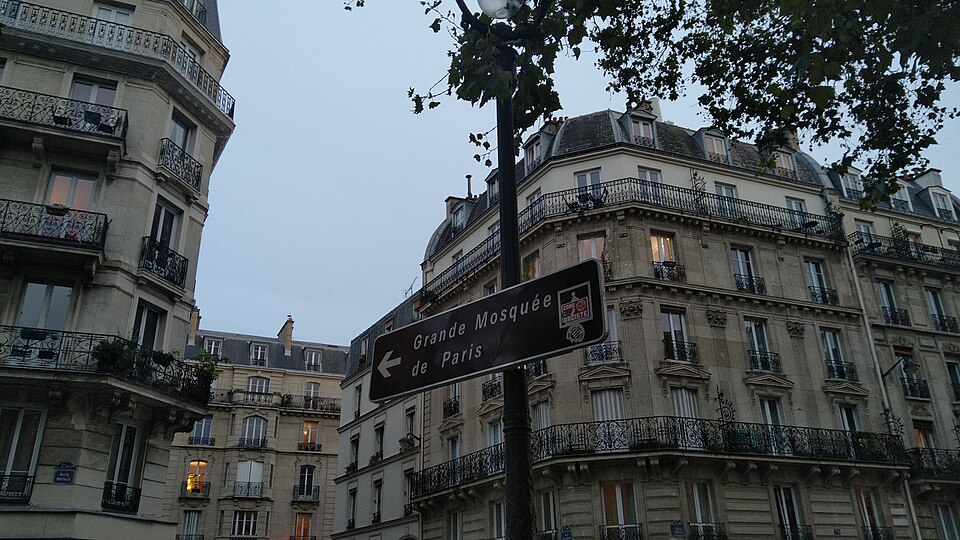
Place du Puits de l'Ermite, in the 5th arrondissement, next to the Jardin des Plantes.
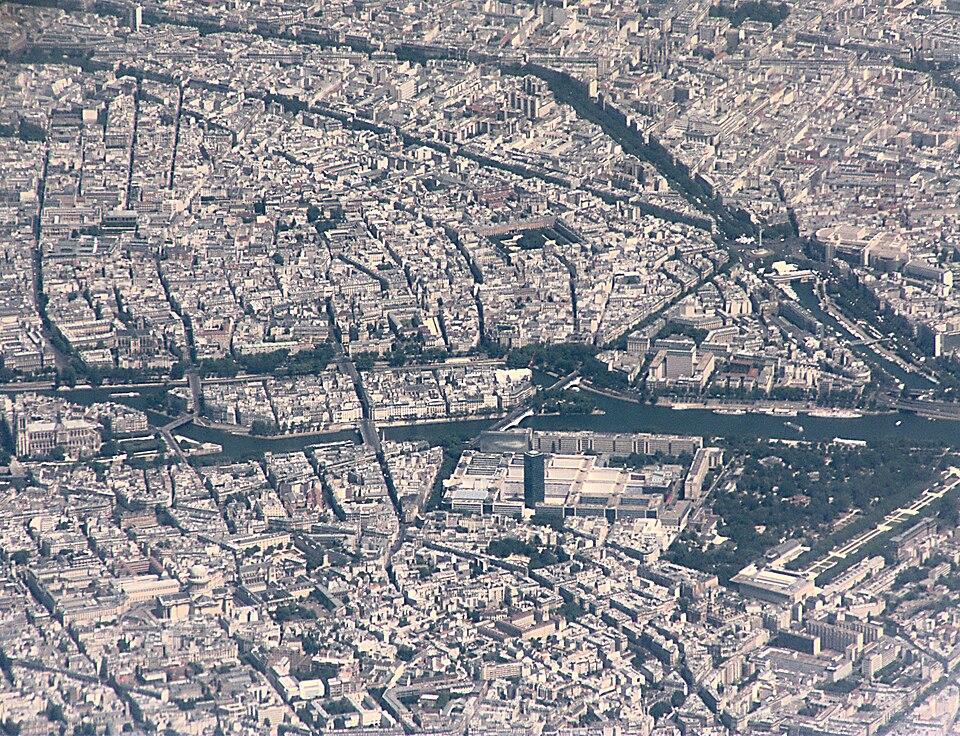
Censier-Daubenton and Place Monge, both on Métro line 7, are the closest stations, each a short walk away, and the mosque sits directly across from the Jardin des Plantes and the Muséum national d'Histoire naturelle, making it an easy addition to a day spent in that part of the Left Bank.
The Grande Galerie de l'Évolution and the rest of the natural history museum's galleries are a few minutes' walk across the garden.
Checked 2026-08-24 · Source
Access to the prayer hall and parts of the courtyard is restricted around the five daily prayer times and closed to non-Muslim visitors during them; a visit timed against the prayer schedule avoids being turned away partway through.
Modest dress is expected throughout the complex, as at any working mosque, and this is enforced more strictly than at a purely secular monument.
The hammam runs single-sex sessions on a fixed schedule, and turning up without checking which session is running that day is a common reason for being unable to use it.
Checked 2026-08-24 · Source
The main courtyard, patterned on the Alhambra's Court of the Lions with its tiled arcades and central fountain, is the complex's signature shot and the one most visitors come for.
The minaret, seen from Place du Puits de l'Ermite or across the Jardin des Plantes, gives the cleanest exterior view of the building's silhouette against the sky.
Photography inside the prayer hall is generally not permitted, and modest, respectful photography of worshippers is expected throughout — this is an active place of worship rather than a museum set built to be photographed.
Checked 2026-08-24 · Source
The French state funded it after the First World War as thanks to the roughly 100,000 Muslim soldiers from its colonial territories who died in the war; it opened in 1926.
Yes, the courtyards and public areas admit visitors for a fee, though the prayer hall is closed to non-Muslim visitors during and around prayer times.
Moorish architecture in Spain and North Africa — the main courtyard is modelled on the Alhambra's Court of the Lions and the minaret follows the Zitouna Mosque in Tunis.
Yes, on separate single-sex sessions with its own schedule and pricing, run independently from the mosque's religious spaces.
Si Kaddour Benghabrit is credited with sheltering Jews and resistance members inside the complex during the Nazi occupation of Paris.
Yes — it sits directly across from the Jardin des Plantes and the Muséum national d'Histoire naturelle in the 5th arrondissement.
Loading the interactive map…
The interactive map could not be loaded.
Last updated:
Source: OpenStreetMap contributors, Wikidata ·