

_-_2026-05-30_-_1.jpg)
_-_2026-05-30_-_2.jpg)
_-_2026-05-30_-_4.jpg)
.jpg)
2 min walk · Paris 4e Arrondissement
Les Deux Palais
- Notable
- Restaurant or café
Language · 1 published
Museum · Paris 1er Arrondissement, Paris
| Monday | 09:30 – 18:00 |
|---|---|
| Tuesday | 09:30 – 18:00 |
| Wednesday | 09:30 – 18:00 |
| Thursday | 09:30 – 18:00 |
| Friday | 09:30 – 18:00 |
| Saturday | 09:30 – 18:00 |
| Sunday | 09:30 – 18:00 |
Checked 2026-08-24 · Source
The Conciergerie was a royal palace before it was a prison, and the prison is what everyone remembers.
It began as part of the Palais de la Cité, the royal residence founded by Hugh Capet around the year 1000 on the site of a Roman fortress. By the fourteenth century the kings had moved out and the building had become a courthouse and a gaol.
During the Terror of 1793–94 it held the prisoners of the Revolutionary Tribunal — around 600 at its fullest. Between 1793 and 1795 the tribunal sentenced and executed 2,780 people.
The prison closed in 1934. It is now a national monument and a museum.
Checked 2026-08-23 · Source
The largest non-religious Gothic hall in Europe, and a cell.
The Salle des Gens d'Armes, the hall of the men-at-arms, is about 68 m long and 28 m wide, built in the early 1300s under Philip IV. It is a vaulted stone hall on four rows of columns and it is the single most impressive medieval interior in Paris that is not a church.
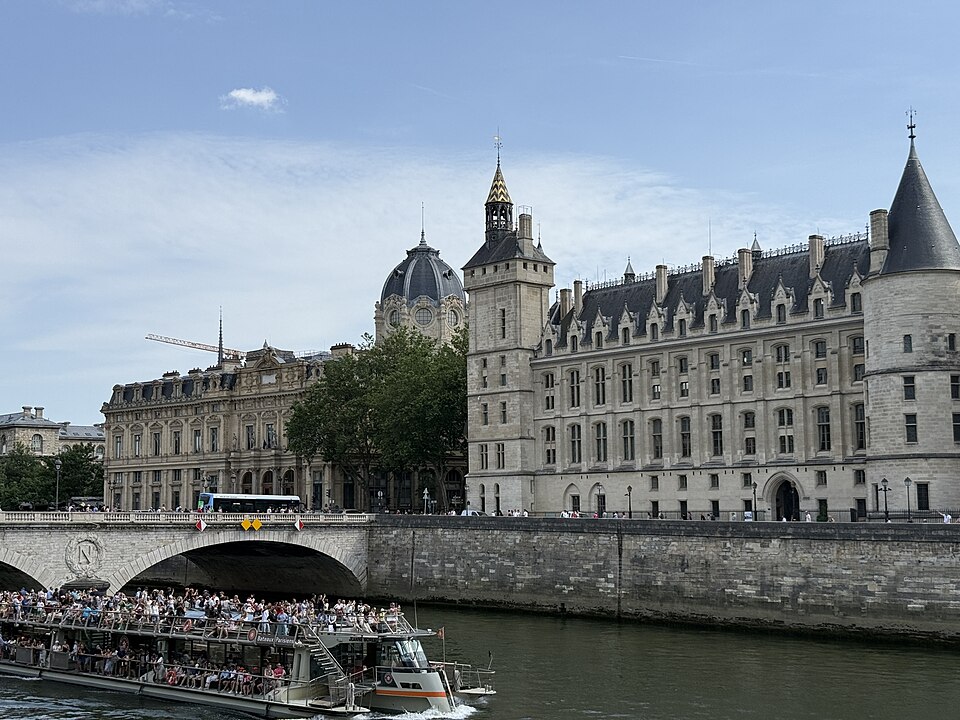
The clock tower was finished around 1350 and carried the first public clock in Paris, made by Henri de Vic.
Marie Antoinette was held here after her arrest and tried in October 1793 before being taken by cart to the guillotine on the Place de la Révolution. Her ground-floor cell is reconstructed, with the expiatory chapel built on the site.
Checked 2026-08-23 · Source

An hour, and it pairs with Sainte-Chapelle.
The two are parts of the same medieval palace, a hundred metres apart, and a joint ticket is sold. Doing one without the other is a missed hour rather than a saved one.
The Salle des Gens d'Armes takes twenty minutes and the Revolutionary rooms and the cell another thirty.
The building uses tablet-based augmented reality to show the vanished palace over the present rooms, which is either the best or the worst thing about it depending on the visitor.
Checked 2026-08-23 · Source
Any time; this is one of the few central monuments that is rarely crowded.
The Conciergerie sits beside Sainte-Chapelle and Notre-Dame, both of which absorb the queues, and most visitors walk past it.
The interior is unheated medieval stone and is cold in every season, noticeably so in winter.
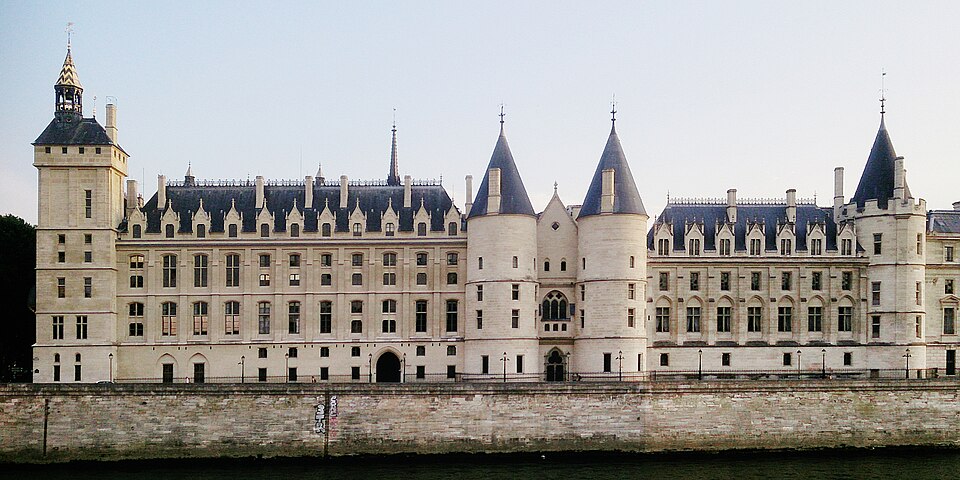
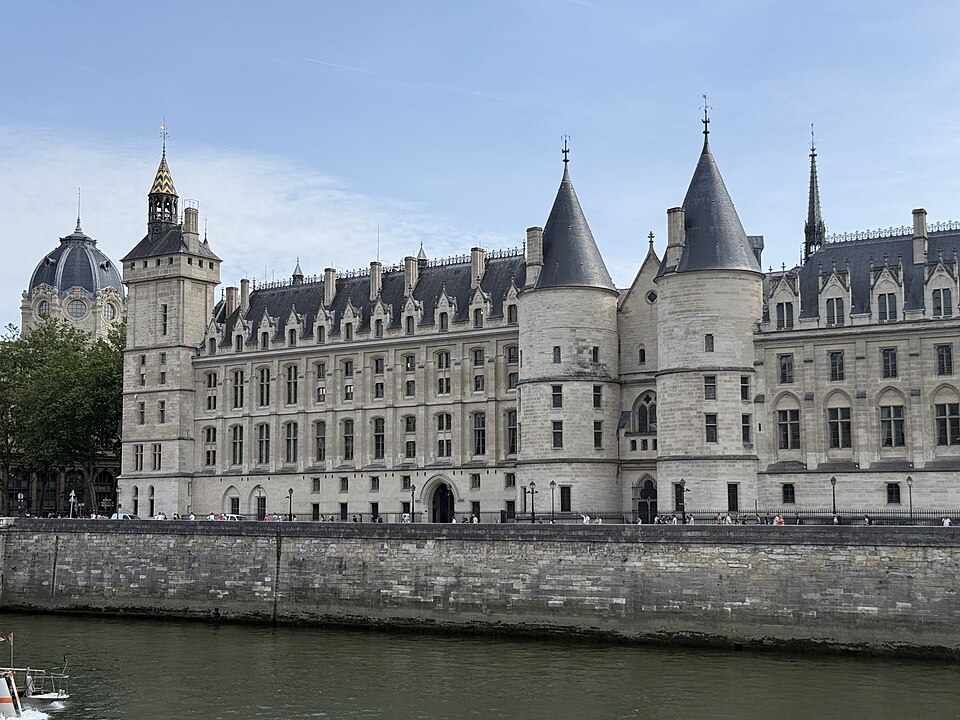
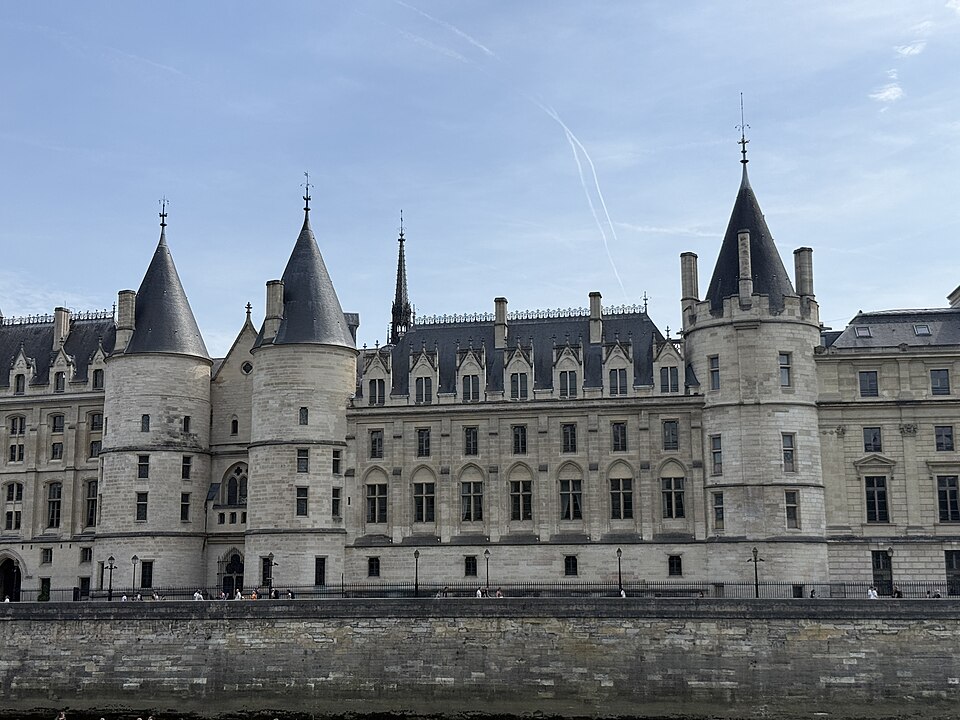
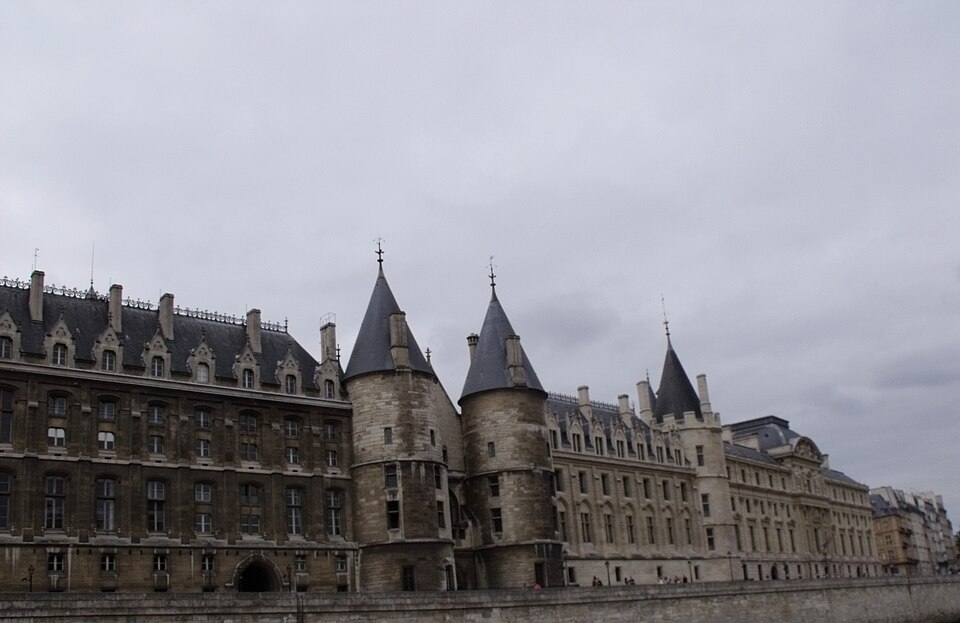
The riverfront façade with its four towers is best in morning light from the Right Bank quay.
Checked 2026-08-23
The Conciergerie is ticketed and a joint ticket with Sainte-Chapelle is sold. The figure shown on this page is the one currently published.
It is a national monument under the Centre des monuments nationaux and is covered by the Paris Museum Pass.
The entrance is on the Boulevard du Palais, separate from the Sainte-Chapelle entrance, and has its own — much shorter — security screening.
Checked 2026-08-23 · Source
The Île de la Cité, 1st arrondissement, on the north side of the island facing the Right Bank.
Cité on Métro line 4 is two minutes away. Châtelet, which serves lines 1, 4, 7, 11 and 14, is across the Pont au Change.
The Métro runs 16 lines across 321 stations, with stations 548 m apart on average — a two-stop journey is usually faster walked.
Checked 2026-08-23 · Source
The building is part of the working Palais de Justice complex and there is airport-style screening at the door.
Marie Antoinette's cell is a reconstruction, not the surviving room, and the chapel stands where the original was. The site says so; the tour operators outside often do not.
The medieval halls are cold, dim and echoing, and voices carry a long way.
Floors are uneven stone and there are steps between levels.
Photography without flash is permitted.
Checked 2026-08-23 · Source
The Salle des Gens d'Armes is the photograph: 68 m of vaulting on four rows of columns, shot along the length from a corner so the columns line up. It is dim, so a support or a fast lens matters more than a wide one.
From outside, the four towers along the Quai de l'Horloge are best from the Right Bank in the morning, and best of all from the Pont au Change.
The clock on the Tour de l'Horloge, restored and gilded, is a close subject that most people walk under without seeing.
The cell and the chapel are small, dark and behind glass, and rarely photograph as anything.
Checked 2026-08-23
Part of the Palais de la Cité, the royal residence founded by Hugh Capet around 1000. By the fourteenth century it was a courthouse and prison; the prison closed in 1934.
Yes. She was imprisoned here after her arrest, tried in October 1793, and taken by cart to the guillotine on the Place de la Révolution. Her cell is reconstructed.
The Revolutionary Tribunal sentenced and executed 2,780 prisoners between 1793 and 1795. The prison held around 600 at its fullest.
The Salle des Gens d'Armes, about 68 m by 28 m, built in the early 1300s under Philip IV. It is the largest non-religious Gothic hall in Europe.
Yes, and it is worth doing — a joint ticket is sold and the two are parts of the same medieval palace, a hundred metres apart.
On the Tour de l'Horloge here, completed around 1350 and made by Henri de Vic.
Loading the interactive map…
The interactive map could not be loaded.
Last updated:
Source: OpenStreetMap contributors, Wikidata ·