
01
1 hour
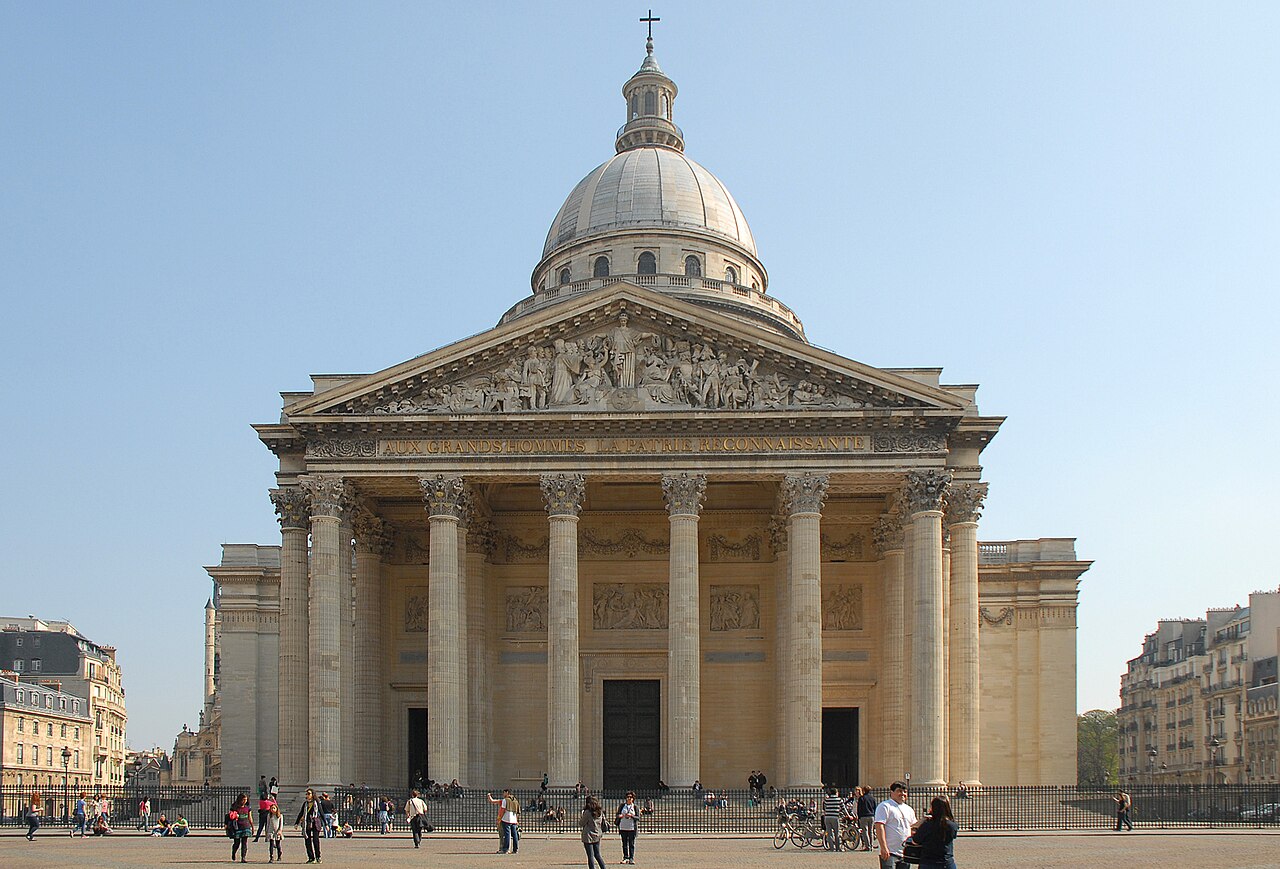
Panthéon
The Panthéon was built as a church and finished just in time to stop being one.
- Must see
- Historic monument
Language · 1 published
District guide · Paris
629 places catalogued in Paris 5e Arrondissement so far.
Ranked by importance — sitelinks, pageviews and heritage status, not editor preference.
10 places match
Category
Typical visit duration
The Panthéon was built as a church and finished just in time to stop being one.
The Grand Mosque of Paris opened in 1926 as France's thanks to its Muslim soldiers, and it remains the city's central mosque a century later.
Behind the gate at Place de la Sorbonne sits a university with a name older than most nations: Robert de Sorbon founded a theology college here in 1257 under the patronage of Louis IX, and the word "Sorbonne" has meant…
Shakespeare and Company is an independent English-language bookshop at 37 rue de la Bûcherie on the Left Bank, facing Notre-Dame across the Seine.
The Jardin des plantes is Paris's main botanical garden and the founding site of the Museum national d'Histoire naturelle, on the Left Bank in the 5th arrondissement, between the Seine and the Austerlitz rail yards.
Arenes de Lutece is the surviving Roman amphitheatre of Lutetia, built in the 1st century AD on the slope of what is now the 5th arrondissement, and it once seated an estimated 15,000 people for gladiator contests and theatre.
Musee de Cluny — formally the Musee national du Moyen Age — occupies the Hotel de Cluny, a late-15th-century mansion built around 1485-1500 for the Abbots of Cluny as their Paris residence, in the Latin Quarter.
The Museum national d'histoire naturelle is France's national natural history museum, founded in 1793 out of the royal Jardin du Roi, and it occupies several linked sites across the Jardin des Plantes in the 5th arrondissement.
Source: OpenStreetMap contributors, Wikidata ·