


1 min walk · Paris 9e Arrondissement
Bibliothèque-musée de l'Opéra
- Must see
- Museum
Language · 1 published
Historic monument · Paris 9e Arrondissement, Paris
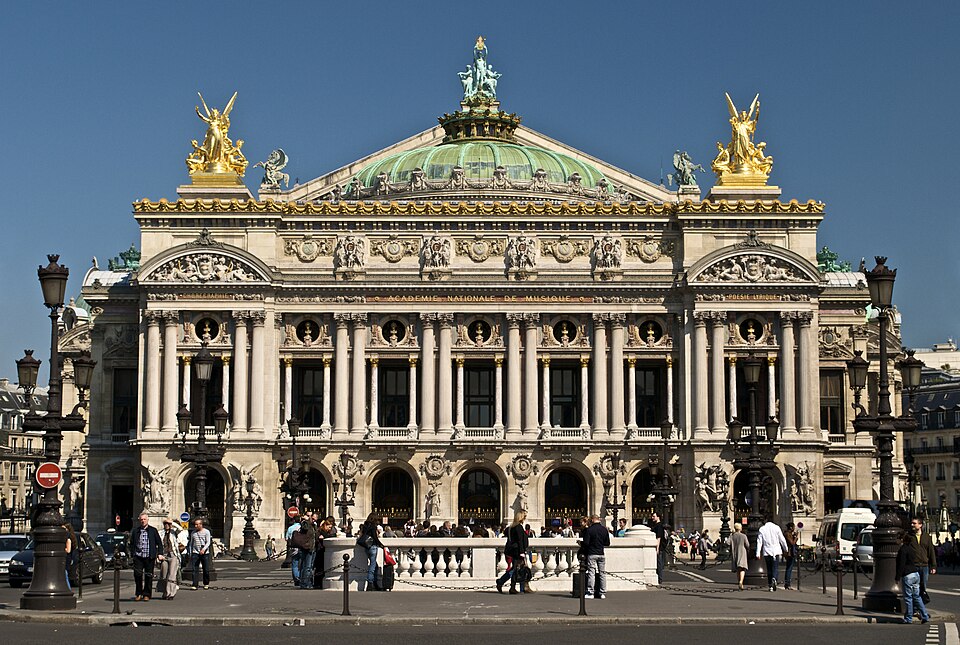
Opéra Garnier
| Monday | 10:00 – 17:00 |
|---|---|
| Tuesday | 10:00 – 17:00 |
| Wednesday | 10:00 – 17:00 |
| Thursday | 10:00 – 17:00 |
| Friday | 10:00 – 17:00 |
| Saturday | 10:00 – 17:00 |
| Sunday | 10:00 – 17:00 |
Checked 2026-08-24 · Source
Read from the OpenStreetMap access tags; anything not listed has no tag recorded.
Set the group type to family in the planner and the day window contracts to about three quarters of a solo day.
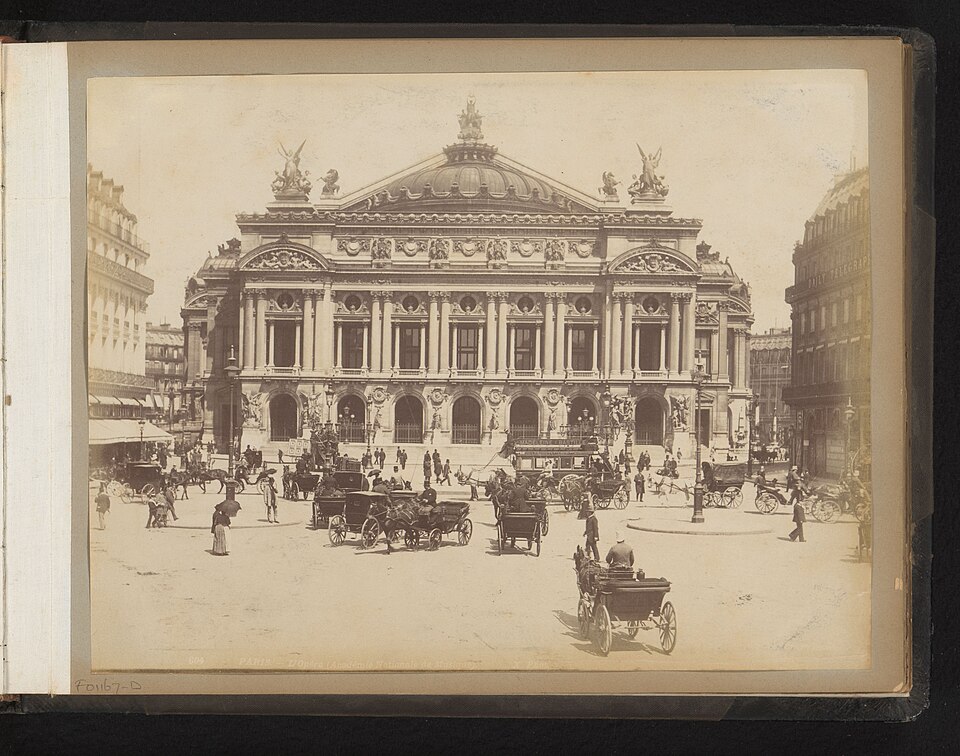
The Palais Garnier is what Napoleon III's Paris looked like when it stopped pretending to be restrained. He commissioned it in 1861, Charles Garnier won the competition, and it was built from 1861 to 1875, opening on 5 January 1875.
It rises 56 m from the ground to the top of the stage flytower. The auditorium seats 1,979 in the Italian horseshoe arrangement and the stage is the largest in Europe, able to hold 450 performers.
Since the Opéra Bastille opened in 1989 the Garnier has been principally the home of the Paris Opera Ballet.
Checked 2026-08-23 · Source
A staircase that is more famous than most of the operas performed above it.
The grand ceremonial staircase is white marble with red and green marble balustrades, splitting into two diverging flights up to the Grand Foyer. It was designed to be walked up while being looked at, and it still functions that way.
The auditorium ceiling is Marc Chagall's, painted in 1964 over Jules-Eugène Lenepveu's original. Beneath it hangs Garnier's bronze and crystal chandelier, which weighs seven tonnes.
On 20 May 1896 one of that chandelier's counterweights broke loose, came through the ceiling into the auditorium and killed a concierge. Gaston Leroux built The Phantom of the Opera on it in 1910.
Checked 2026-08-23 · Source
Ninety minutes on a self-guided visit; an evening if you take a ballet.
The daytime visit covers the staircase, the Grand Foyer, the library-museum and, when no rehearsal is running, a box overlooking the auditorium. That last is the part that gets closed at short notice, and it is the part with the Chagall.
The Grand Foyer alone holds people for twenty minutes; it is a gilded hall the length of the façade with a mirrored end.
A performance is the honest way to see the room lit and full.
Checked 2026-08-23 · Source

Late morning on a day with no matinée, which is when the auditorium is most likely to be open.
Rehearsals close the auditorium without warning and the ticket is not refunded for it. There is no schedule published far enough ahead to plan around, so this is a matter of luck.
The building is at its best in winter afternoons, when the low sun comes through the west windows into the Grand Foyer and the gilding does what it was designed to do.
Checked 2026-08-23 · Source
The daytime visit is ticketed, and performance tickets are separate and sold by the Paris Opera. The figure shown on this page is the one currently published for the daytime visit.
The Palais Garnier hosts the Paris Opera Ballet rather than the main opera programme, which has been at the Opéra Bastille since 1989. Booking the Garnier expecting opera is a common mistake.
Cheap seats in the upper boxes have restricted views of the stage but a complete view of the ceiling and the chandelier.
Checked 2026-08-23 · Source
The 9th arrondissement, at the top of the Avenue de l'Opéra.
Opéra station serves Métro lines 3, 7 and 8 and comes up at the front steps; Auber on RER A is underneath the building. Chaussée d'Antin–La Fayette on lines 7 and 9 is a two-minute walk behind it.
The Métro runs 16 lines across 321 stations, with stations 548 m apart on average — a two-stop journey is usually faster walked.
Checked 2026-08-23 · Source
The auditorium closes for rehearsals with no notice and no refund. If the Chagall ceiling is the reason for the visit, ask at the desk before buying.
The daytime visit does not include the stage or backstage; the largest stage in Europe is not part of what is shown.
Photography is permitted in the public rooms but not during performances.
There is no cloakroom for large bags on the daytime visit and they are not admitted.
The area in front on the Place de l'Opéra is a heavy pickpocket environment, particularly around the station exits.
Checked 2026-08-23 · Source
The grand staircase is the photograph and everyone takes it from the bottom looking up. From the first landing looking back down, with the two flights diverging below, is the better composition and the emptier spot.
The Grand Foyer needs a wide lens and a steady hand; it is gilt on gilt and meters badly, so expose for the highlights and let the shadows go.
The Chagall ceiling can only be photographed from a box, which is only open when no rehearsal is running.
Photography during performances is prohibited.
Checked 2026-08-23 · Source
Charles Garnier, who won the competition after Napoleon III commissioned the building in 1861. It was built from 1861 to 1875 and opened on 5 January 1875.
1,979, in an Italian horseshoe auditorium. The stage behind is the largest in Europe and holds up to 450 performers.
Marc Chagall, in 1964, over Jules-Eugène Lenepveu's original. The seven-tonne bronze and crystal chandelier hangs beneath it.
The accident behind it is. On 20 May 1896 a chandelier counterweight broke free, came through the ceiling and killed a concierge. Gaston Leroux published the novel in 1910.
Mainly ballet. The Palais Garnier has been the home of the Paris Opera Ballet since the Opéra Bastille opened in 1989.
Only if no rehearsal is running. The auditorium closes at short notice on the daytime visit, without a refund.
Loading the interactive map…
The interactive map could not be loaded.
Last updated:
Source: OpenStreetMap contributors, Wikidata ·