Smart Self-Managed Tours

Country guide

Chile

A photograph of Chile
Photograph · Diego Delso · CC BY-SA 3.0

Chile is a narrow strip between the Andes and the Pacific, the southernmost country in the world and the closest to Antarctica. Its 756,102 km² are arranged almost entirely along one north–south line, with Peru and Bolivia at the top and the Drake Passage at the bottom, so nearly every journey here is a journey up or down. The 2024 census counted 18.5 million people. Santiago is the capital and largest city. Chile also administers Pacific islands far offshore, among them Juan Fernández and Easter Island, which means two places under the same flag can sit an ocean apart.

Cities

Every city catalogued in this country so far, ranked by how much there is to see.

Practical information

Language spoken
Spanish
National practical orientation; regional and minority languages may also be used
Dialling code
+56
International calling code; local area and mobile prefixes still apply
Currency
Chilean peso (CLP)
Use the official local currency; card acceptance varies by place
Emergency number
133 police · 131 ambulance · 132 fire
Use only for an emergency; tourist assistance may use a separate number
Plug type
Type C and L · 220 V
Check that chargers support the recorded voltage before using an adapter
Tap water
Not recorded
No single verified statement covers all regions and remote areas

Planning a visit

  1. January: seasonal closure recorded
  2. February: seasonal closure recorded
  3. March: seasonal closure recorded
  4. April: no seasonality data recorded
  5. May: no seasonality data recorded
  6. June: no seasonality data recorded
  7. July: no seasonality data recorded
  8. August: no seasonality data recorded — this month
  9. September: seasonal closure recorded
  10. October: seasonal closure recorded
  11. November: seasonal closure recorded
  12. December: seasonal closure recorded

Top things to see

Ranked by importance — sitelinks, pageviews and heritage status, not editor preference.

  1. Sky Costanera Sky Costanera
    02 20 min

    Sky Costanera

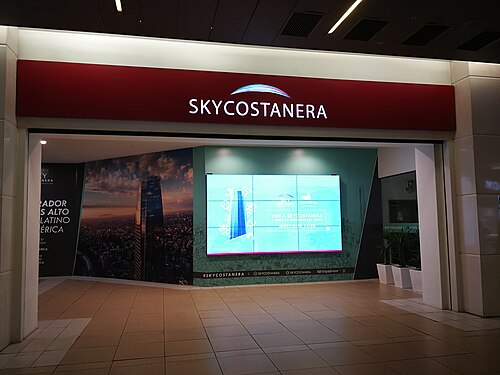
    Sky Costanera is an observation deck situated at the summit of Gran Torre Santiago, the tallest completed building in South America. Located in the Providencia district of Santiago, Chile, it offers the highest public panoramic viewpoint in the city.

    • Must see
    • Viewpoint
    • Santiago
  2. Santa Lucia Hill Santa Lucia Hill
    03 20 min

    Santa Lucia Hill

    Cerro Santa Lucía

    Santa Lucia Hill, known locally as Cerro Santa Lucía, is a landscaped historic hill situated at the edge of Santiago's city centre. The site combines military fortifications, garden terraces, and a compact viewpoint overlooking the urban area.

    • Must see
    • Viewpoint
    • Santiago
  3. El Plomo
    04 20 min

    El Plomo

    Cerro El Plomo

    • Must see
    • Viewpoint
    • Santiago
  4. Marmolejo
    08 20 min

    Marmolejo

    Cerro Marmolejo

    • Must see
    • Viewpoint
    • Santiago
  5. Tupungatito
    09 20 min

    Tupungatito

    Volcán Tupungatito

    • Must see
    • Viewpoint
    • Santiago
  6. San José
    10 20 min

    San José

    Volcán San José

    • High
    • Viewpoint
    • Santiago
  7. Alto San Juan
    15 20 min

    Alto San Juan

    Cerro San Juan

    • High
    • Viewpoint
    • Santiago
  8. Nevado Piquenes
    33 20 min

    Nevado Piquenes

    Nevado de los Piuquenes

    • High
    • Viewpoint
    • Santiago
  9. Cerro Talamí
    52 20 min

    Cerro Talamí

    Cerro Talami

    • High
    • Viewpoint
    • Santiago
  10. 1260
    55 20 min

    1260

    • Notable
    • Viewpoint
    • Santiago

Source: OpenStreetMap contributors, Wikidata ·

Common questions

How long should a first trip to Chile be?

A 10–16 day visit should pair Santiago with one major region, such as the Atacama, the Lake District or a Patagonian gateway. Chile’s length makes combining north and far south in a short itinerary transfer-heavy.

What entry documents are needed for Chile?

Chile’s consular service publishes the visa rules used for entry. Nationality, travel purpose and length of stay determine the requirement, and any application should be made through the official consular channel.

What is the best way to travel around Chile?

Santiago is the central international and domestic hub. Flights connect the desert, lake and Patagonian gateways, while long-distance buses cover mainland corridors and remote parks require a confirmed final transfer.

When is a practical time to visit Chile?

October through April is the broad operating window for many central and southern journeys. Atacama conditions, central-valley heat and Patagonian wind are distinct, so the least flexible regional leg should set the calendar.

What money and payment basics apply in Chile?

Chile uses the Chilean peso (CLP). Current withdrawal costs and merchant acceptance are Not recorded; review the amount in pesos and any conversion offered before completing payment.

What practical safety details should I save for Chile?

Chile uses 133 for police, 131 for ambulance and 132 for fire. Power is 220 V with Type C and L plugs, while nationwide tap-water guidance remains Not recorded.