
.jpg)
01
45 min
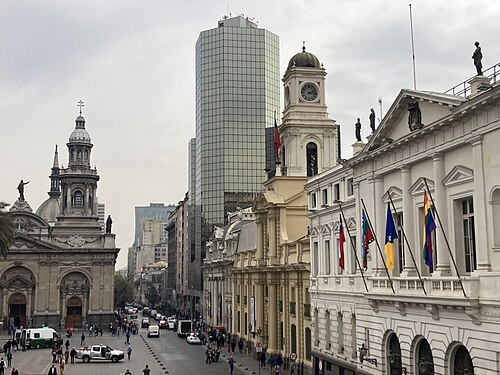
Plaza de Armas
Plaza de Armas is Santiago's principal historic square and the city's Kilometre Zero.
- Must see
- Historic monument
- Santiago
Language · 11 published
Country guide

Chile is a narrow strip between the Andes and the Pacific, the southernmost country in the world and the closest to Antarctica. Its 756,102 km² are arranged almost entirely along one north–south line, with Peru and Bolivia at the top and the Drake Passage at the bottom, so nearly every journey here is a journey up or down. The 2024 census counted 18.5 million people. Santiago is the capital and largest city. Chile also administers Pacific islands far offshore, among them Juan Fernández and Easter Island, which means two places under the same flag can sit an ocean apart.
Every city catalogued in this country so far, ranked by how much there is to see.

Photograph · Omnespsx (D•ES) · CC BY-SA 4.0
Ranked by importance — sitelinks, pageviews and heritage status, not editor preference.
100 places match
Category
Typical visit duration
Interests
Plaza de Armas is Santiago's principal historic square and the city's Kilometre Zero.
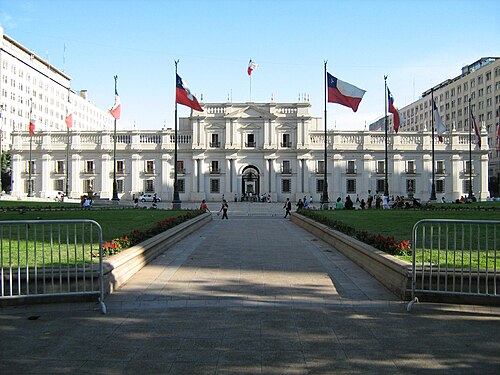
La Moneda Palace, known locally as Palacio de La Moneda, serves as Chile's presidential palace and stands as Santiago's foremost national civic landmark. The neoclassical building occupies a central position in the city's civic district.
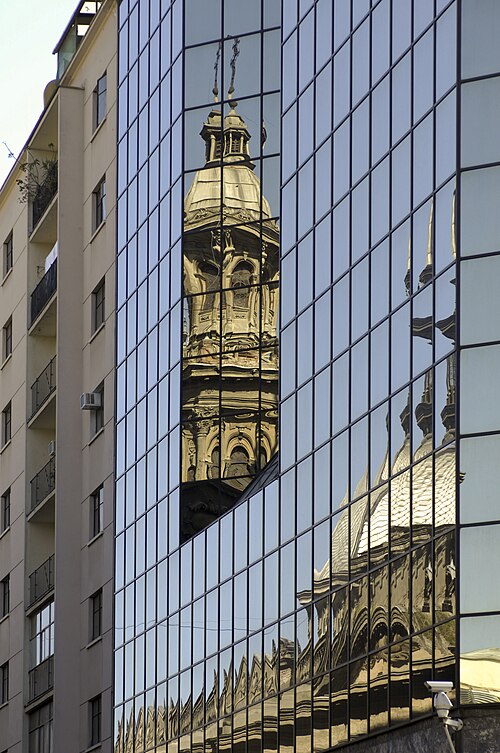
The Santiago Metropolitan Cathedral, known locally as Catedral Metropolitana de Santiago, stands as the principal Catholic cathedral of Chile's national capital. It occupies a commanding position on the west side of Plaza de Armas, the historic heart of Santiago.
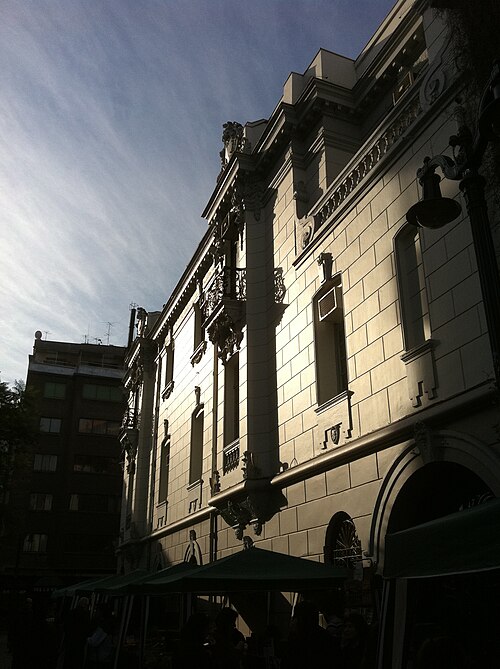
Barrio Lastarria is a compact neighbourhood in central Santiago known for its concentration of cultural venues, dining, and pedestrian-friendly streets.

Barrio Yungay is a community-protected heritage district in Santiago, Chile. It is recognized for its distinctive low-rise architectural character, network of passages, and prominent large-scale street murals.

The Municipal Theatre of Santiago, known locally as Teatro Municipal de Santiago, stands as Chile's premier venue for opera, ballet, and classical music. This nineteenth-century architectural landmark occupies a central position in the capital.

The Former National Congress Building, known locally as Ex Congreso Nacional de Chile, stands as a historic legislative palace in central Santiago.

Palacio Cousiño is a nineteenth-century mansion in Santiago, Chile, built during the country's mining boom era. The palace was constructed for the Cousiño-Goyenechea family, whose wealth derived from silver, coal, and other mineral extraction.

Palacio Pereira is a restored mansion dating from 1874, now serving as a national heritage centre. It stands as a significant architectural landmark on Santiago's historic-centre visitor route, recognized for its cultural and historical importance to Chile.

The Palacio de los Tribunales de Justicia de Santiago serves as the seat of Chile's Supreme Court. This monumental neoclassical structure anchors a significant civic block in the Chilean capital, positioned beside the pre-Columbian museum.

Patio Bellavista is a commercial and entertainment complex situated at the entrance to the Bellavista neighborhood in Santiago, Chile. It serves as a gateway point between the city and Cerro San Cristóbal, one of the capital's prominent hills.

Sewell is a UNESCO World Heritage mining town in the Andes mountains of central Chile. Established as a company town for copper extraction, it represents an exceptional example of early 20th century industrial urbanism at high altitude.

The Chilean National Museum of Fine Arts, locally known as Palacio Museo de Bellas Artes, stands as a principal cultural institution in Santiago. Located within the city's urban fabric, this landmark occupies a significant position in Chile's museum landscape.
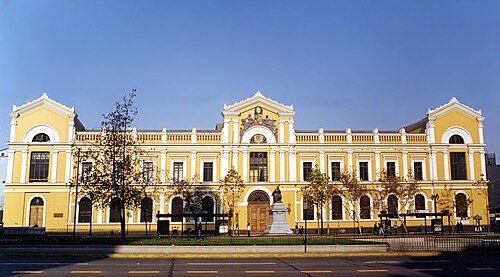
The Casa Central de la Universidad de Chile is the historic headquarters of Chile's oldest state university, founded in 1842. Located on the Alameda, Santiago's principal avenue, this institutional landmark anchors one of the country's most significant educational traditions.

Centro Cultural Estación Mapocho is a monumental former railway terminus in Santiago, Chile, now reused as one of the city's principal exhibition and event spaces.

Cajón del Maipo is a canyon and mountainous valley region southeast of Santiago, Chile, formed by the Maipo River as it descends from the Andes.
Source: OpenStreetMap contributors, Wikidata ·
A 10–16 day visit should pair Santiago with one major region, such as the Atacama, the Lake District or a Patagonian gateway. Chile’s length makes combining north and far south in a short itinerary transfer-heavy.
Chile’s consular service publishes the visa rules used for entry. Nationality, travel purpose and length of stay determine the requirement, and any application should be made through the official consular channel.
Santiago is the central international and domestic hub. Flights connect the desert, lake and Patagonian gateways, while long-distance buses cover mainland corridors and remote parks require a confirmed final transfer.
October through April is the broad operating window for many central and southern journeys. Atacama conditions, central-valley heat and Patagonian wind are distinct, so the least flexible regional leg should set the calendar.
Chile uses the Chilean peso (CLP). Current withdrawal costs and merchant acceptance are Not recorded; review the amount in pesos and any conversion offered before completing payment.
Chile uses 133 for police, 131 for ambulance and 132 for fire. Power is 220 V with Type C and L plugs, while nationwide tap-water guidance remains Not recorded.