
.jpg)
.jpg)


1 min walk
Museo de Artes Visuales
- Must see
- Art and culture venue
Language · 11 published
Historic monument · Santiago
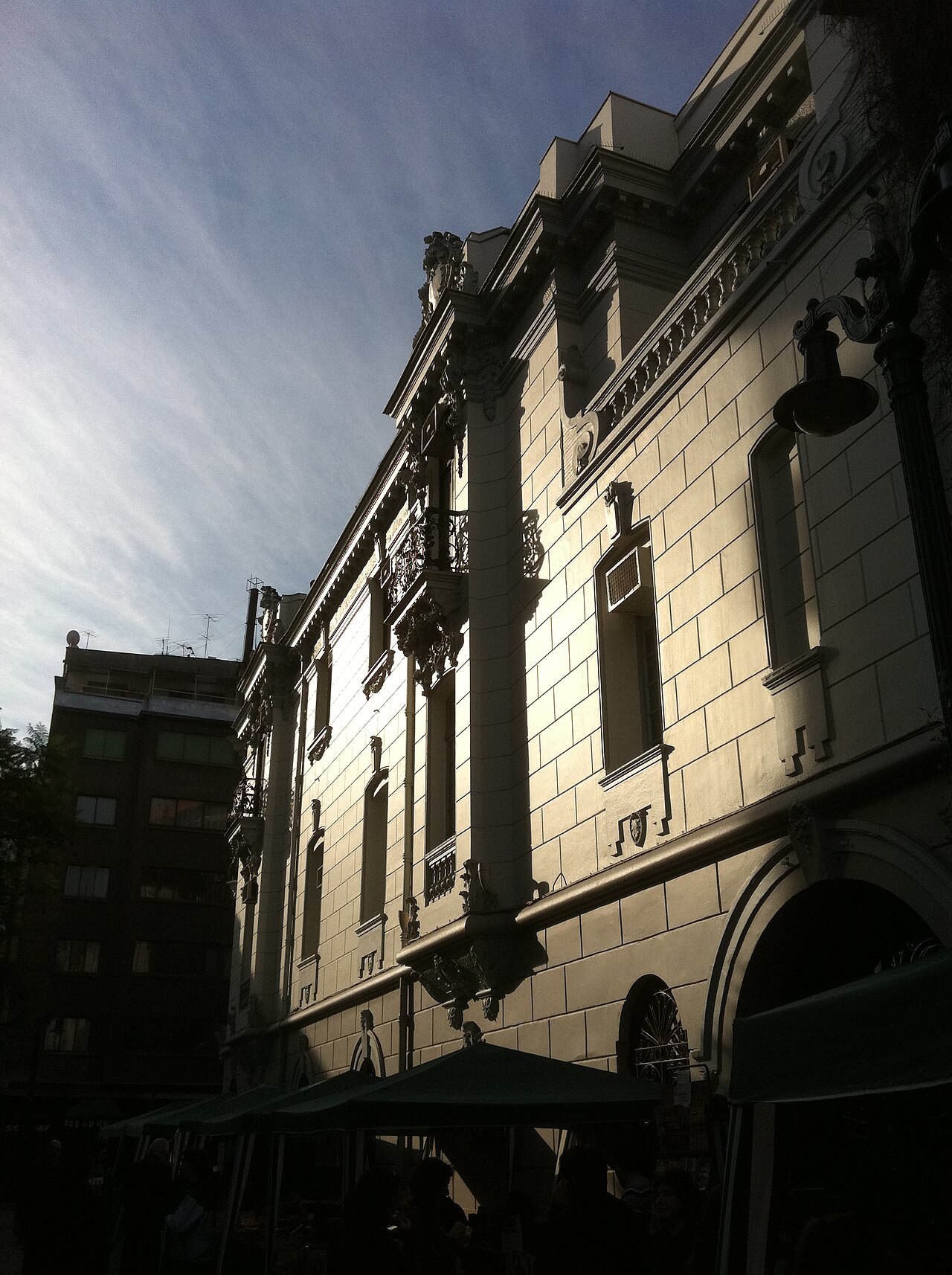
Barrio Lastarria is a compact neighbourhood in central Santiago known for its concentration of cultural venues, dining, and pedestrian-friendly streets. The district functions as the city's most walkable visitor area, combining arts spaces, cinemas, museums, and cafes within a small geographic footprint. It serves as a destination for both daytime exploration and evening activity, with no single dominant point of interest but rather a distributed collection of experiences. The area has established itself as a standard inclusion in Santiago itineraries.
Checked 2026-08-26
The quarter contains multiple museums, art galleries, independent cinemas, and established cafe culture. Notable institutional presences include the Museum of Fine Arts and the adjacent Contemporary Art Museum, both located near the neighbourhood's edge. Street-level commerce includes bookshops, restaurants, and bars. The Paseo Bulnes and surrounding streets host regular foot traffic. Architectural character mixes restored historic structures with later construction. The neighbourhood's density of cultural infrastructure exceeds other Santiago districts, supporting its reputation as a concentrated arts zone. Lastarria Quarter also earns time in a santiago itinerary because The compact arts, cafe, cinema, and museum district is Santiago's strongest visitor neighbourhood for walking; no single production district POI exists. Its value becomes clearer when the stop is compared with the surrounding streets and the other ranked places nearby.
Checked 2026-08-26
Visitors typically allocate a half-day to full day for Barrio Lastarria, depending on museum engagement and dining preferences. The compact layout permits efficient coverage on foot, though individual museum visits extend total time substantially. Evening visits focus on restaurant and cinema activity rather than institutional touring. Those prioritising only exterior walking and casual observation may complete a circuit in under two hours. The neighbourhood rewards repeated short visits over a single exhaustive session, given the distributed nature of its attractions.
Checked 2026-08-26

The neighbourhood functions as a public street network without consolidated opening or closing times. Museum schedules vary independently. Evening dining and cinema activity extends into night hours typical of Santiago's urban core. Weather considerations favour the city's drier months, though the quarter's primary activities are substantially sheltered. Weekend foot traffic increases, particularly for cafe and cinema visitation. Specific seasonal events or programming are not documented in available sources. Check the operator's own site for the travel date before relying on a schedule or fare.
Checked 2026-08-26
No consolidated admission mechanism covers the neighbourhood as a whole. Each institution operates independent ticketing. Street-level walking and public space access incur no charge. Dining and retail transactions occur at point of service. Visitors should verify current admission costs directly with intended destinations. Budget planning requires separate inquiry for each museum or cinema visit, with no pass or combined ticket structure known to exist. Check the operator's own site for the travel date before relying on a schedule or fare.
Checked 2026-08-26

Barrio Lastarria occupies a central Santiago location accessible via the metro system, with Universidad Católica and Bellas Artes stations serving adjacent areas. Multiple bus routes traverse nearby Avenida Libertador Bernardo O'Higgins. The neighbourhood's walkability reduces internal transport needs once arrived. Taxis and ride services operate throughout the district. Proximity to the historic centre and other visitor zones permits integration into broader Santiago itineraries on foot. No parking guidance is documented; street conditions suggest public transport as the practical arrival method for most visitors.
Checked 2026-08-26
Standard urban precautions apply in this centrally located district. Evening activity concentrates around dining and cinema zones; peripheral streets warrant normal awareness. The neighbourhood's popularity generates consistent foot traffic, though density varies by time and specific block. Construction or street maintenance may affect pedestrian routes without advance notice. Museum and cinema schedules operate independently; visitors should not assume uniform opening patterns. Weather in Santiago can shift; layered clothing accommodates variable conditions during extended walking. No specific hazards are documented beyond those typical of a major Latin American capital.
Checked 2026-08-26

The quarter presents architectural subjects, street scenes, and institutional exteriors. The Museum of Fine Arts building offers formal photographic interest. Street-level cafe culture and pedestrian activity suit documentary approaches. Interior photography requires compliance with individual venue policies, which vary and are not documented here. Evening lighting transforms the district's commercial streets. No designated viewpoints or panoramic vantages are recorded; the flat terrain limits elevated perspectives. Tripod use in public space may attract attention and should follow local practice. Respect for private property boundaries applies throughout the neighbourhood.
Checked 2026-08-26
No single production district POI exists. The neighbourhood's character derives from distributed museums, cinemas, cafes, and galleries rather than one dominant site.
Yes. The compact layout makes Barrio Lastarria Santiago's strongest visitor neighbourhood for walking, with cultural venues clustered within a small area.
No. Each venue operates independently. Visitors must check individual institutions for current hours and programming.
Standard urban precautions apply. Evening activity concentrates around dining and cinema areas with consistent foot traffic, though peripheral streets warrant normal awareness.
No. Street-level walking and public space access are free. Individual museums, cinemas, and dining establishments charge separately.
Metro stations Universidad Católica and Bellas Artes serve adjacent areas. Multiple bus routes and taxis provide additional access. The central location permits walking from nearby districts.
Loading the interactive map…
The interactive map could not be loaded.

Last updated:
Source: OpenStreetMap contributors ·