.jpg)

8 min walk
La Chascona
- Must see · Heritage site
- Museum
Language · 11 published
Place of worship · Santiago
Santuario de la Inmaculada Concepción del Cerro San Cristóbal
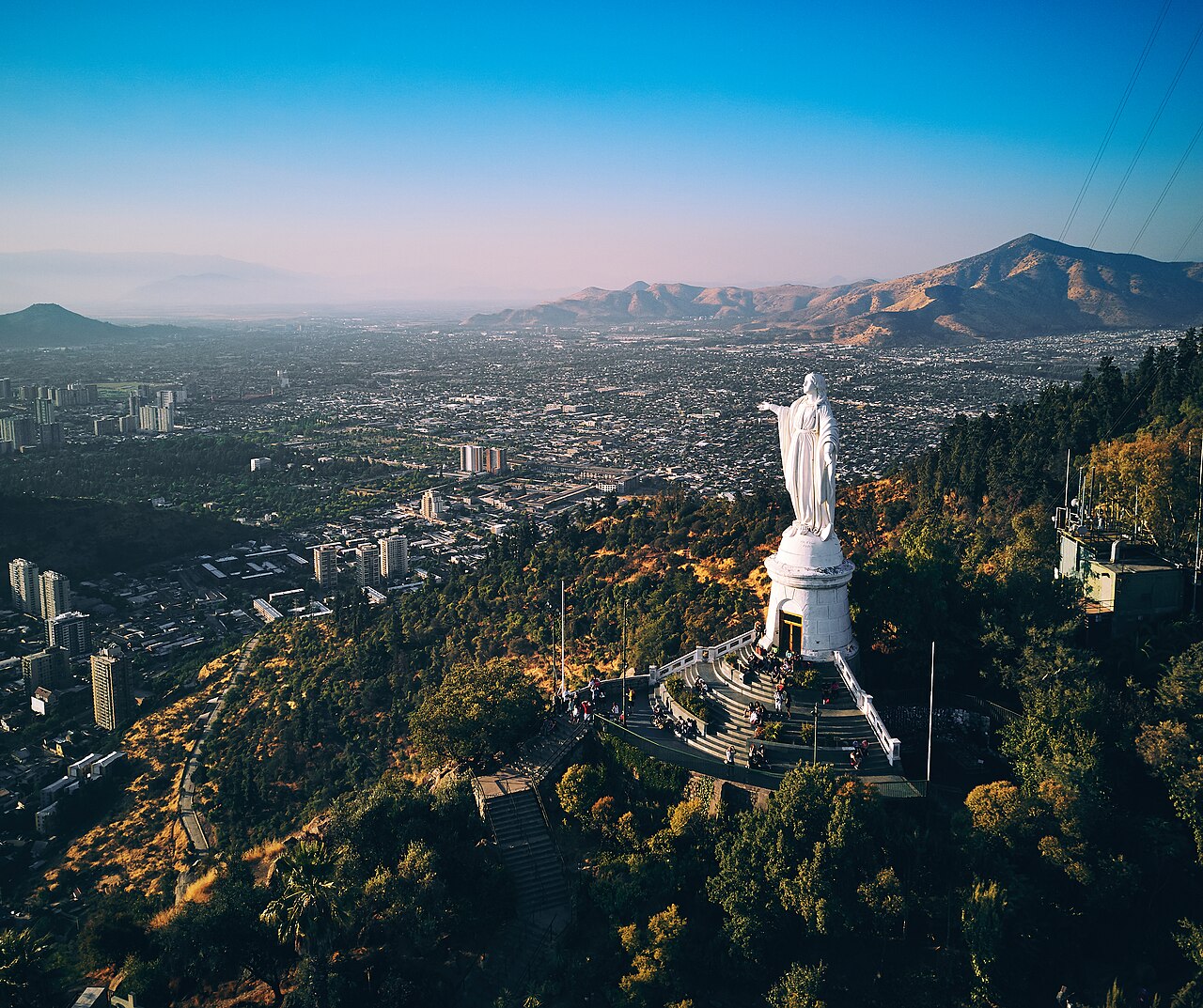
Immaculate Conception Sanctuary, or Santuario de la Inmaculada Concepción del Cerro San Cristóbal, stands at the summit of Cerro San Cristóbal in Santiago. The sanctuary and its monumental Virgin statue create the hill’s defining destination. It is both a religious landmark and a viewpoint above the capital, where visitors can connect a spiritual stop with broad urban and mountain scenery. The setting within Metropolitan Park makes it especially rewarding as part of a longer hill visit. The Immaculate Conception Sanctuary, known locally as Santuario de la Inmaculada Concepción del Cerro San Cristóbal, crowns the summit of Cerro San Cristóbal in Santiago. The sanctuary and its monumental Virgin statue constitute the visual and spiritual climax of the hill, which stands as one of the Chilean capital's most significant landmarks. The site draws pilgrims and visitors seeking panoramic views of Santiago against the backdrop of the Andes mountains. The sanctuary and monumental Virgin statue form an integrated religious complex at the summit, with the statue serving as the visual focal point.
Checked 2026-08-26 · Source
The main visual focus is the monumental statue of the Immaculate Conception, which rises above the summit and can be seen from many parts of Santiago. Around it, the sanctuary serves as a place of worship, prayer, pilgrimage, and quiet reflection. The summit also opens onto views across the city toward the surrounding mountain ranges. Treat the religious setting as an active place of devotion rather than only as a scenic overlook. The sanctuary complex centers on the monumental statue of the Immaculate Conception, a prominent religious monument visible across much of the city. The summit area provides commanding views of Santiago's urban sprawl and the surrounding mountain ranges.
Checked 2026-08-26 · Source
Allow at least thirty to sixty minutes at the summit for the sanctuary, the Virgin statue, contemplation, and photography. The complete experience takes longer when you include the ascent and descent. Walking the hill requires more time and energy than using the funicular or teleférico. Visitors combining the summit with other Metropolitan Park sights can comfortably turn the stop into a half-day excursion, especially when pauses for views and rest are included.
Checked 2026-08-26 · Source
Clear weather gives the best chance of seeing Santiago and the Andes from the summit. Morning can offer fresher air and softer light before haze becomes more noticeable, while late afternoon brings warmer photographic tones. Spring and autumn are comfortable seasons for combining outdoor walking with the sanctuary. Summer is brighter and hotter; winter is cooler and wetter. Religious observances can make the atmosphere busier, so plan extra time when visiting on weekends or holidays.
Checked 2026-08-26 · Source
The sanctuary is part of the Cerro San Cristóbal summit experience, while the funicular and teleférico are separate ascent services. Walking trails provide a pedestrian alternative to those rides. Plan your visit around the access method you prefer: a ticketed mechanical ascent is convenient, while walking adds exercise and time. Keep the sanctuary visit distinct from transport arrangements, because reaching the summit and entering the religious site are separate parts of the outing.
Checked 2026-08-26 · Source
Reach Cerro San Cristóbal through Metropolitan Park, then continue uphill to the summit where the sanctuary stands. The funicular and teleférico offer mechanical ascent options, while walking trails provide a slower route through the hill. Santiago’s metro and bus network serves the wider access area, after which visitors continue on foot or by the hill transport. Wear comfortable shoes if you plan to walk, and allow time for the final ascent to the summit.
Checked 2026-08-26 · Source
The hill has steep sections, so the walking approach can be demanding, particularly in strong sun. Santiago’s air quality changes and haze can reduce the mountain views that make the summit memorable. Carry water, protect yourself from ultraviolet exposure, and secure personal belongings in crowded areas. Inside or near the sanctuary, keep voices low and leave worshippers space. Visitors with limited mobility should choose their ascent method carefully because walking routes and mechanical transport do not offer the same experience.
Checked 2026-08-26 · Source
Photograph the Virgin statue against Santiago’s city grid or the Andes for the clearest sense of place. Wide views work well from the exposed summit, while a person in the frame can show the monument’s scale. Morning light often gives cleaner detail; late afternoon adds warmer colour. Keep photography discreet around worship and avoid interrupting prayer. The contrast between the white religious monument, the dense capital, and the mountain horizon is the site’s strongest visual theme.
Checked 2026-08-26 · Source
The monumental Virgin statue of the Immaculate Conception is the sanctuary’s principal landmark and the visual focus of Cerro San Cristóbal’s summit.
Yes. Walking trails climb Cerro San Cristóbal and provide an alternative to the funicular and teleférico.
It is a religious sanctuary and pilgrimage destination at the summit of Cerro San Cristóbal, alongside the monumental Virgin statue.
The summit provides wide views over Santiago and toward the surrounding mountain ranges, including the Andes when visibility is good.
Haze and smog can reduce visibility across Santiago and obscure the mountain scenery from the summit.
The strongest subjects are the monumental Virgin statue, Santiago’s urban panorama, and the Andes beyond it when atmospheric conditions are clear.
Loading the interactive map…
The interactive map could not be loaded.


Last updated:
Source: OpenStreetMap contributors, Wikidata ·