

2 min walk
Quinta Normal Park
- Must see · Heritage site
- Nature site
Language · 11 published
Museum · Santiago
Reviewed by Elena Voss · SSMTour Travel Editor
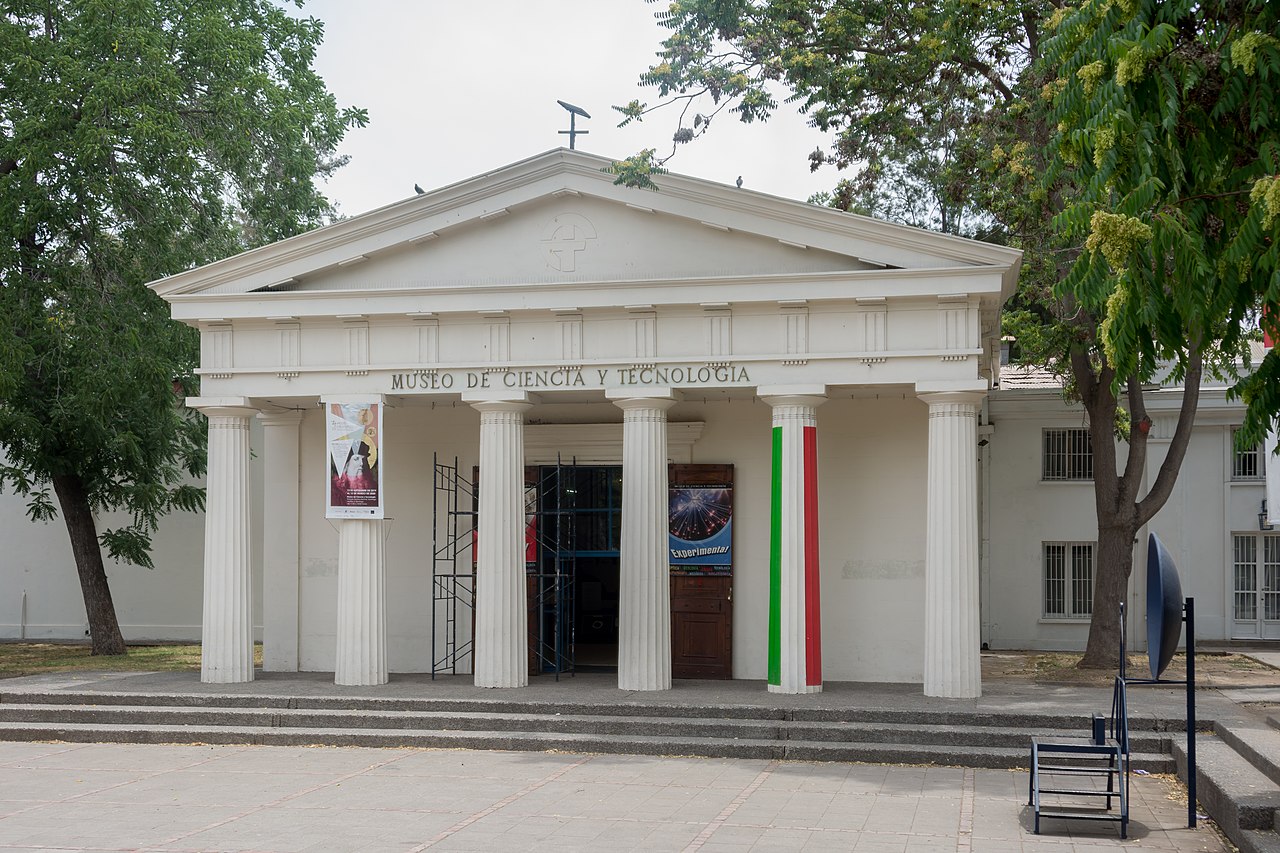
Museum of Science and Technology, locally Museo de Ciencia y Tecnología, is a hands-on science museum in Santiago. It forms part of Quinta Normal's family-oriented museum cluster and focuses on scientific and technological education through direct participation. The museum suits travellers who enjoy learning by doing, especially families and curious visitors who want a more active cultural experience than a traditional display-only institution. The Museum of Science and Technology, locally Museo de Ciencia y Tecnología, is a hands-on science museum in Santiago, Chile. It forms part of Quinta Normal's broad family museum cluster in the capital city. The institution focuses on interactive scientific and technological education. Visitors should expect an engaging, participatory environment designed for learning through direct experience with exhibits. The museum contributes to Santiago's cultural and educational landscape alongside neighbouring institutions in the Quinta Normal area.
Checked 2026-08-26 · Source
The museum's defining feature is its hands-on approach: visitors engage directly with interactive exhibits that make scientific and technological ideas tangible. Expect an environment built around participation, experimentation, and discovery rather than quiet observation alone. Quinta Normal's wider museum setting gives the visit a family-friendly cultural context. Leave room for children to repeat activities and for adults to explore the ideas behind each interactive experience. The museum probably features displays covering various fields of science, engineering, and innovation. Visitors should anticipate educational installations suitable for families and children. The interactive nature suggests opportunities for experimentation and discovery. Precise information about current exhibitions, special displays, or featured technologies requires direct inquiry with the museum.
Checked 2026-08-26 · Source
Plan approximately two to three hours for a satisfying visit, especially when travelling with children who want to spend time at interactive exhibits. Enthusiastic visitors may stay longer, while a faster overview can fit into a shorter cultural route. The museum's position within Quinta Normal also supports a full day of family sightseeing if you want to combine it with neighbouring museums. Build in pauses so the experience remains enjoyable. Visit duration depends on individual interest in interactive exhibits and participation level. Typical hands-on science museums require approximately two to three hours for meaningful engagement, though enthusiasts may spend longer. Families with children often benefit from extended visits to accommodate varied attention spans and repeated interactions with popular displays.
Checked 2026-08-26 · Source
Weekday mornings can provide a calmer setting for exploring interactive exhibits, while weekends and holidays suit families who are already planning a Quinta Normal outing. Santiago's summers are warm and dry, and its winters cooler and wetter, but the museum gives you an indoor activity in either season. Set aside enough time for participation rather than squeezing the visit between several tightly scheduled stops.
Checked 2026-08-26 · Source
The main value of the Museum of Science and Technology is its participatory educational experience. Plan your day around the time needed to use the exhibits, particularly if children are travelling with you. Quinta Normal's museum cluster makes the attraction suitable for a broader family itinerary, but keep the schedule open enough for repeated demonstrations and discovery. A rushed visit would miss much of what makes a hands-on museum rewarding.
Checked 2026-08-26 · Source
The museum is in Santiago's Quinta Normal area, a district served by the city's public transport network. Metro and buses connect the area with other parts of the capital, while taxis and ride services provide direct alternatives. Once in Quinta Normal, combine the museum with nearby cultural institutions to make the journey worthwhile. Families should allow extra time for walking between stops and managing a longer museum day.
Checked 2026-08-26 · Source
Hands-on exhibits work best when children are supervised and visitors handle moving or electrical components with care. Busy periods can make popular displays feel crowded, so give younger visitors room and time to participate. Keep personal belongings secure while moving through the museum. The experience is participatory, which means touching, testing, and repeating activities are part of the visit; respectful use helps everyone enjoy the exhibits.
Checked 2026-08-26 · Source
Photographs are most useful when they show the museum's interactive character: a child experimenting, a group engaging with an exhibit, or a close detail of a scientific installation. Give other visitors space and avoid interrupting activities while composing images. Follow signs concerning flash, video, and specific displays. Since the museum is designed for participation, enjoy the exhibit first and take photographs that preserve the sense of discovery rather than only recording objects.
Checked 2026-08-26 · Source
Yes. Its hands-on format is designed around interactive participation and makes it a natural family attraction in Quinta Normal.
It is a hands-on science and technology museum focused on learning through direct interaction with exhibits.
Allow around two to three hours, with extra time if children want to repeat popular interactive activities.
The museum is in Quinta Normal, an area of Santiago known for a cluster of family-oriented museums.
Yes. Its place within Quinta Normal's museum cluster makes it suitable for combining with neighbouring cultural institutions.
Take an active approach: participate, repeat activities when useful, and allow enough time for children and adults to explore at their own pace.
Loading the interactive map…
The interactive map could not be loaded.


Last updated:
Source: OpenStreetMap contributors, Wikidata ·