São Paulo Museum of Art
Museu de Arte de São Paulo
The Museu de Arte de São Paulo Assis Chateaubriand, universally known as MASP, stands as São Paulo's defining art institution and an architectural landmark designed by Lina Bo Bardi.
- Must see
- Museum
Language · 11 published
City guide · Brazil
São Paulo is a vast inland metropolis whose visitor sights are spread among the historic centre, Avenida Paulista, Liberdade, Ibirapuera and specialised neighbourhoods. The city guide groups attractions by district and marks nearby Metro access because distance and major roads shape every itinerary. Use central clusters for architecture and markets, Paulista for museums, and Ibirapuera as its own park-and-museum block rather than crossing the city between isolated stops.
Reviewed by Elena Voss · SSMTour Travel Editor
Set your days, your pace and the hours you actually want to be out. The planner works around closing days and travel time, and leaves room to eat.
Ranked by importance — sitelinks, pageviews and heritage status, not editor preference.
Museu de Arte de São Paulo
The Museu de Arte de São Paulo Assis Chateaubriand, universally known as MASP, stands as São Paulo's defining art institution and an architectural landmark designed by Lina Bo Bardi.
Pinacoteca do Estado de São Paulo
The Pinacoteca de São Paulo stands as the city's oldest major art museum, housed within the restored Luz building. This institution holds nationally important significance for Brazilian art, serving as a cornerstone of São Paulo's cultural landscape.
Museu Paulista
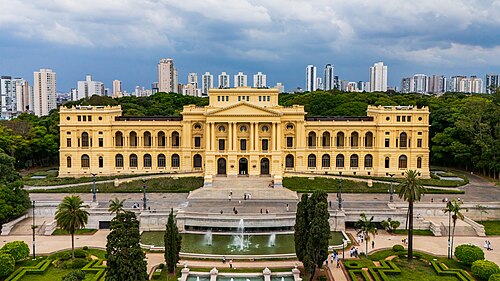
The Museu do Ipiranga is a Brazilian history museum located in São Paulo. It stands as the anchor institution of Independence Park, a monumental green space in the city.
Museu da Língua Portuguesa
The Museum of the Portuguese Language is an interactive museum dedicated to the Portuguese language, located inside the historic Luz Station in São Paulo. Its Portuguese name is Museu da Língua Portuguesa.
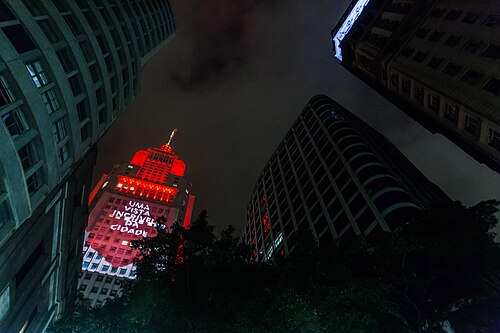
Farol Santander occupies the historic Edifício Altino Arantes, a landmark skyscraper in São Paulo's central Sé district.
Centro Cultural Banco do Brasil São Paulo
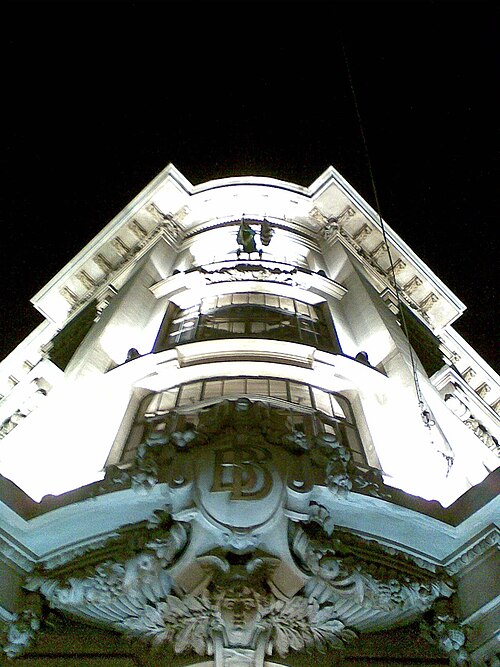
The Centro Cultural Banco do Brasil São Paulo (CCBB SP) is a major cultural institution operated by Banco do Brasil, one of Brazil's largest public banks.
Memorial da América Latina
The Latin America Memorial is a civic-cultural complex in São Paulo designed by architect Oscar Niemeyer. It was conceived as a space dedicated to Latin American culture, integration, and identity.
Museu do Futebol
The Football Museum, locally known as Museu do Futebol, is an interactive museum located beneath the historic Pacaembu Stadium in São Paulo. It examines football's profound significance within Brazilian society and culture.
Museu Afro-Brasil
The Afro Brazil Emanoel Araujo Museum is a separately entered institution located within Ibirapuera Park in Sao Paulo. The museum is dedicated to preserving and showcasing Afro-Brazilian culture, history, and artistic production.
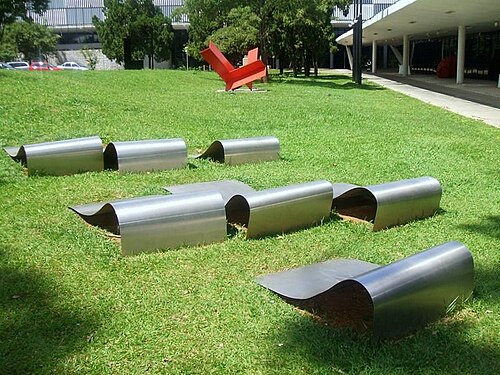
Museu de Arte Moderna de São Paulo
The São Paulo Museum of Modern Art, known locally as Museu de Arte Moderna de São Paulo (MAM), is a leading institution dedicated to modern and contemporary art.
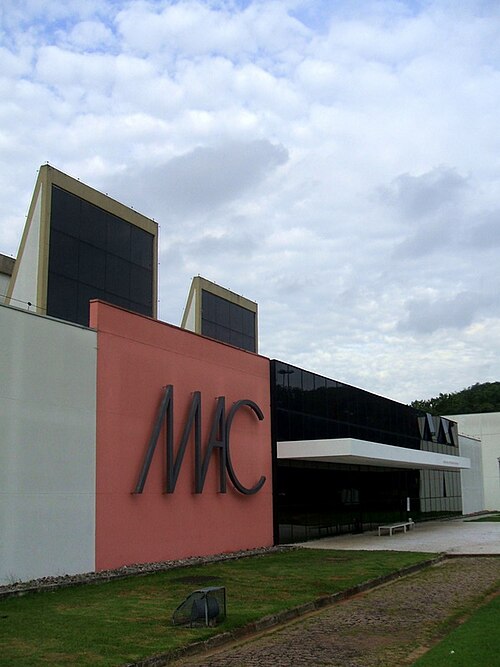
Museu de Arte Contemporânea da Universidade de São Paulo
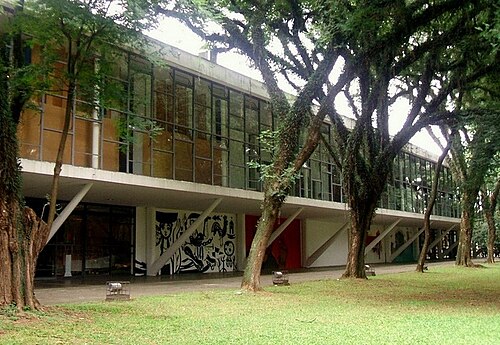
The Museum of Contemporary Art, University of São Paulo (MAC USP) is a public art museum operated by the University of São Paulo. Its most visible presence is the iconic building in Ibirapuera Park, designed by architect Oscar Niemeyer.
Museu da Imigração do Estado de São Paulo
The Museum of Immigration of the State of São Paulo occupies the former immigrant hostel in Mooca, where newcomers stayed after arriving in Brazil. The site connects São Paulo’s modern multicultural identity with the personal experience of migration.
Catavento Cultural e Educacional
Catavento Museum, locally known as Museu Catavento, is a hands-on science museum housed in the historic Palácio das Indústrias in São Paulo.
Casa das Rosas is a preserved mansion on Avenida Paulista in São Paulo, now used as a cultural centre devoted to poetry and literature. The building brings historic architecture into one of the city’s busiest commercial and cultural corridors.
Museu de Zoologia da USP
The Museum of Zoology of the University of São Paulo is a natural-history museum beside Independence Park. The University of São Paulo operates the institution as a place where zoological research, scientific collections, and public education meet.
Museu de Arte Sacra de São Paulo
The Museum of Sacred Art of São Paulo occupies the historic Luz monastery complex in central São Paulo. The former religious setting gives the museum a strong architectural identity alongside its collection of Brazilian sacred art.
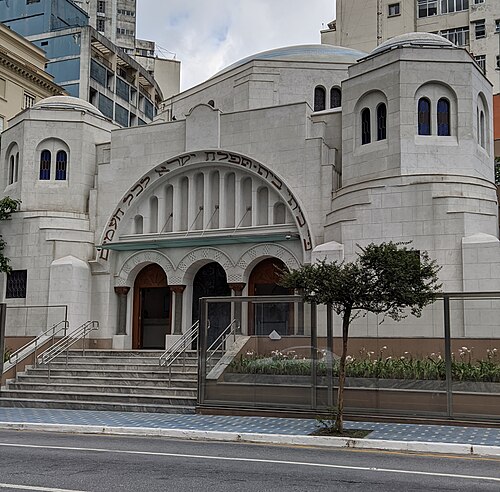
Museu Judaico de São Paulo
The Jewish Museum of São Paulo is a cultural museum devoted to Jewish life, migration, and heritage in Brazil. The institution occupies the restored Beth-El synagogue, giving the visit an architectural setting closely connected with the community history presented inside.
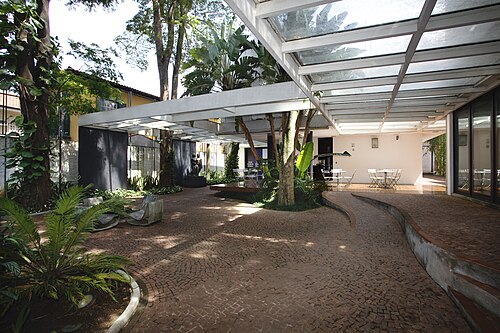
Museu Lasar Segall
Lasar Segall Museum, or Museu Lasar Segall, is a house-museum and cultural centre in Vila Mariana, São Paulo. The museum occupies the former residence and studio of Lasar Segall, a Lithuanian-born Brazilian painter and engraver.
Solar da Marquesa de Santos
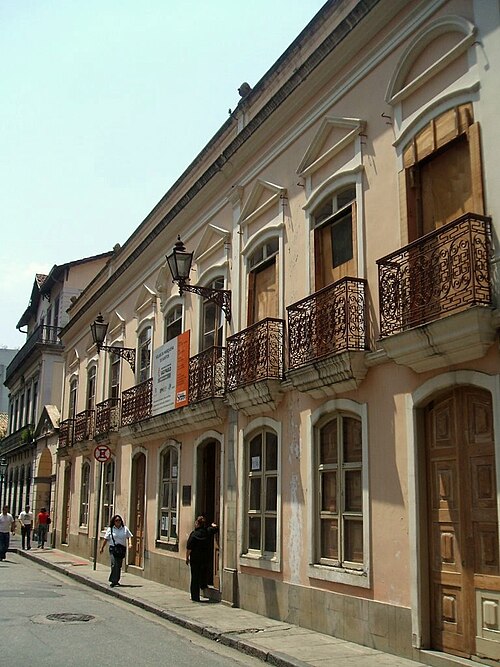
Solar da Marquesa de Santos is a rare surviving eighteenth-century urban residence in São Paulo. It serves as a core site of the City Museum, preserving historical architecture from the colonial period.
Museu dos Transportes Públicos Gaetano Ferolla
São Paulo Railway Museum, also known as Museu dos Transportes Públicos Gaetano Ferolla, preserves vehicles and infrastructure connected with the history of public transport in São Paulo.
Source: OpenStreetMap contributors, Wikidata ·
The historic centre clusters around Sé, Pátio do Colégio, the Municipal Theatre and the markets. Avenida Paulista and nearby Jardins form a separate museum, architecture and dining corridor. Liberdade lies south of the centre, while Ibirapuera Park sits farther southwest. Pinheiros and Vila Madalena add galleries and evening activity. Attractions described as São Paulo destinations can still be far apart, so district names are essential planning information.
Checked 2026-08-26
Metro and metropolitan rail are the practical backbone for long cross-city journeys, with buses covering gaps between stations. The official city guide identifies attractions within roughly 1.5 kilometres of a Metro station, but that can still be a substantial walk. Build each day around one or two connected districts, check the current transit map, and use a bus or taxi when large avenues or distance make walking inefficient.
Checked 2026-08-26
the historic centre, Paulista, Ibirapuera, Liberdade and western districts are separate clusters
No fixed stay length is recorded; the useful measure is how many districts you want to explore.
Use rail for cross-city journeys and buses or taxis for the final connection.
Avenida Paulista and Ibirapuera can share a selective day, but they are distinct clusters.
No official best-month range is recorded; check current conditions and events before travel.