
29 min walk
Prainha
- Must see
- Nature site
Language · 1 published
Nature site · Rio de Janeiro
Praia de Grumari
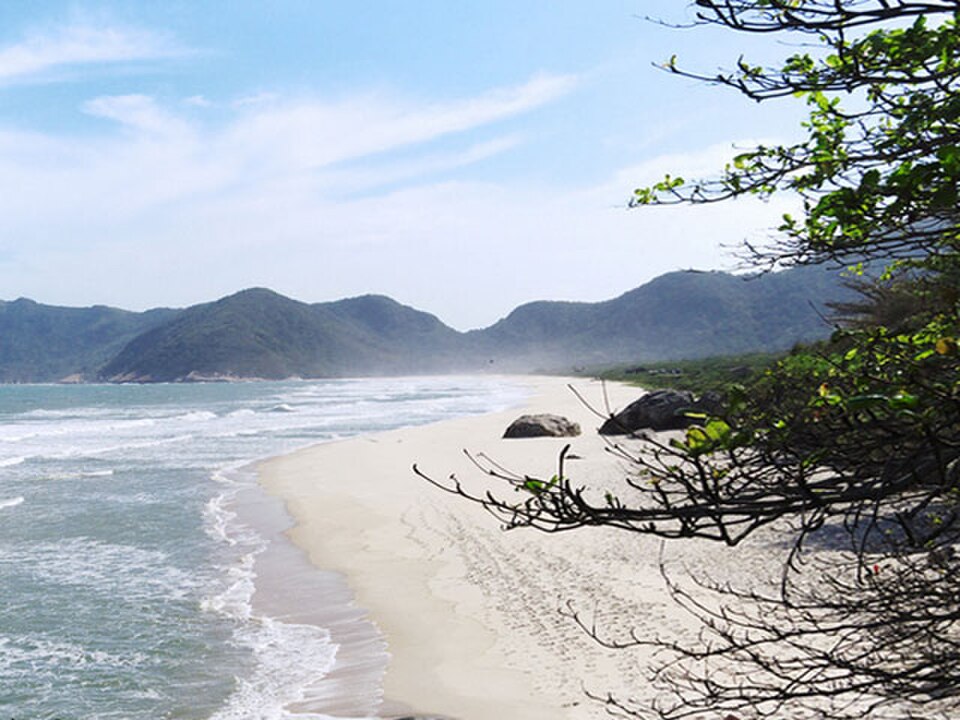
Praia de Grumari is a long, less-developed beach located in Rio de Janeiro's West Zone. It sits within protected Atlantic forest landscapes, offering a more natural setting compared to the city's more urbanized beaches. The beach forms part of an environmentally significant coastal area where native vegetation remains largely intact. Visitors encounter a stretch of sand backed by hills covered in dense forest rather than high-rise development. The location appeals to those seeking relative seclusion and contact with Brazil's characteristic coastal ecosystems. Its protected status helps maintain ecological integrity while permitting controlled public access.
Checked 2026-08-26
The beach features Atlantic forest landscapes surrounding the sandy shore. Natural vegetation dominates the backdrop rather than commercial infrastructure. Visitors find limited built amenities consistent with the area's protected status. The long stretch of sand provides space for typical beach activities. The surrounding protected lands contain native flora and fauna characteristic of Brazil's Atlantic Forest biome, one of the world's most threatened biodiversity hotspots. The relative lack of development distinguishes Grumari from beaches closer to central Rio. Basic facilities may be present but the emphasis remains on natural coastal scenery rather than constructed attractions or entertainment venues.
Checked 2026-08-26
Visitors typically spend several hours to a full day at Grumari Beach depending on their interests. The beach's length allows for extended walks along the shoreline. Those combining beach time with nature observation in the surrounding Atlantic forest may allocate additional hours. The journey from central Rio de Janeiro requires substantial travel time, making short visits less practical. Most visitors plan for at least half a day including transportation. The undeveloped character encourages slower pacing rather than rushed itineraries. Swimming, sun exposure, and simple relaxation constitute primary time uses without commercial entertainment to extend visits artificially.
Checked 2026-08-26
Rio de Janeiro's coastal climate permits beach visits year-round, though preferences vary by individual tolerance for temperature and crowding. Summer months December through March bring warmer water and air temperatures alongside more visitors. Winter offers milder conditions with fewer people. Rainfall occurs throughout the year with somewhat wetter periods possible. Operator-confirmed hours are Not recorded pending review. Visitors should consult current local conditions before traveling. The protected area status may impose access restrictions regardless of weather. Early arrival generally improves parking availability and reduces crowding during peak seasons. Weekdays typically offer quieter experiences than weekends.
Checked 2026-08-26
Access to Grumari Beach as a public coastal area does not typically require admission tickets. However, operator-confirmed prices are Not recorded pending review. The protected area status may involve specific regulations or nominal fees subject to change. Visitors should verify current requirements through official channels before visiting. Parking, if available, may involve separate charges. Any commercial services present operate independently of beach access. The Rio de Janeiro tourism authority website provides general information though specific fee structures require direct confirmation. Budgeting for transportation costs remains essential given the distance from central Rio and limited public transit options serving this western coastal location.
Checked 2026-08-26
Grumari Beach lies in Rio de Janeiro's West Zone, distant from the city center and main tourist concentrations. Private vehicle represents the most reliable access method given limited public transportation infrastructure in this direction. The route passes through or near other beach areas including Barra da Tijuca before continuing westward. Public bus services may reach nearby areas with varying frequency and convenience. Visitors without vehicles should research current transit options carefully, as service to less-developed beaches tends to be infrequent. Travel time from central Rio typically exceeds one hour depending on traffic conditions. Road signs and local knowledge assist navigation.
Checked 2026-08-26
The undeveloped nature of Grumari requires self-sufficient preparation. Limited commercial services mean visitors should carry adequate water, food, and sun protection. Atlantic forest areas harbor wildlife including insects; appropriate precautions apply. Ocean conditions vary; swimmers should assess currents and heed any posted warnings. The remote location complicates emergency access compared to central beaches. Mobile phone coverage may be inconsistent. Visitors should inform others of their plans and expected return. Litter removal is essential given the ecological sensitivity. Personal belongings require attention due to limited security infrastructure. The return journey timing deserves consideration given distance and potential traffic.
Checked 2026-08-26
Grumari Beach offers strong photographic subjects combining coastal scenery with Atlantic forest backdrops. The long beach perspective enables classic shoreline compositions. Natural vegetation framing views distinguishes images from more urbanized Rio beaches. Early and late light accentuates the undeveloped landscape character. Wildlife photography possibilities exist in surrounding forest areas with appropriate equipment and patience. Minimal artificial structures reduce visual clutter in frames. Drone operation, if considered, requires awareness of protected area regulations and privacy considerations. Weather conditions affect sea color and atmospheric clarity. The relative quiet permits unhurried composition without competing visitors in many shots.
Checked 2026-08-26
The undeveloped character requires additional preparation for families. Limited facilities and services mean carrying supplies. Calm conditions may suit children but ocean assessment remains essential.
Commercial infrastructure is limited due to protected area status. Visitors should bring provisions rather than depending on purchasing food on-site.
Overnight camping regulations are not confirmed in available sources. Visitors should verify current rules with environmental management authorities before planning.
Natural terrain and limited developed infrastructure may present challenges. Specific accessibility features are not documented in available information.
Lifeguard presence is not confirmed in available sources. Visitors should exercise independent judgment regarding ocean entry and swimming safety.
Grumari offers fundamentally different experience: undeveloped, remote, natural setting versus urban, serviced, high-density central beaches. Preferences depend on visitor priorities.
Loading the interactive map…
The interactive map could not be loaded.
Last updated:
Source: OpenStreetMap contributors, Wikidata ·