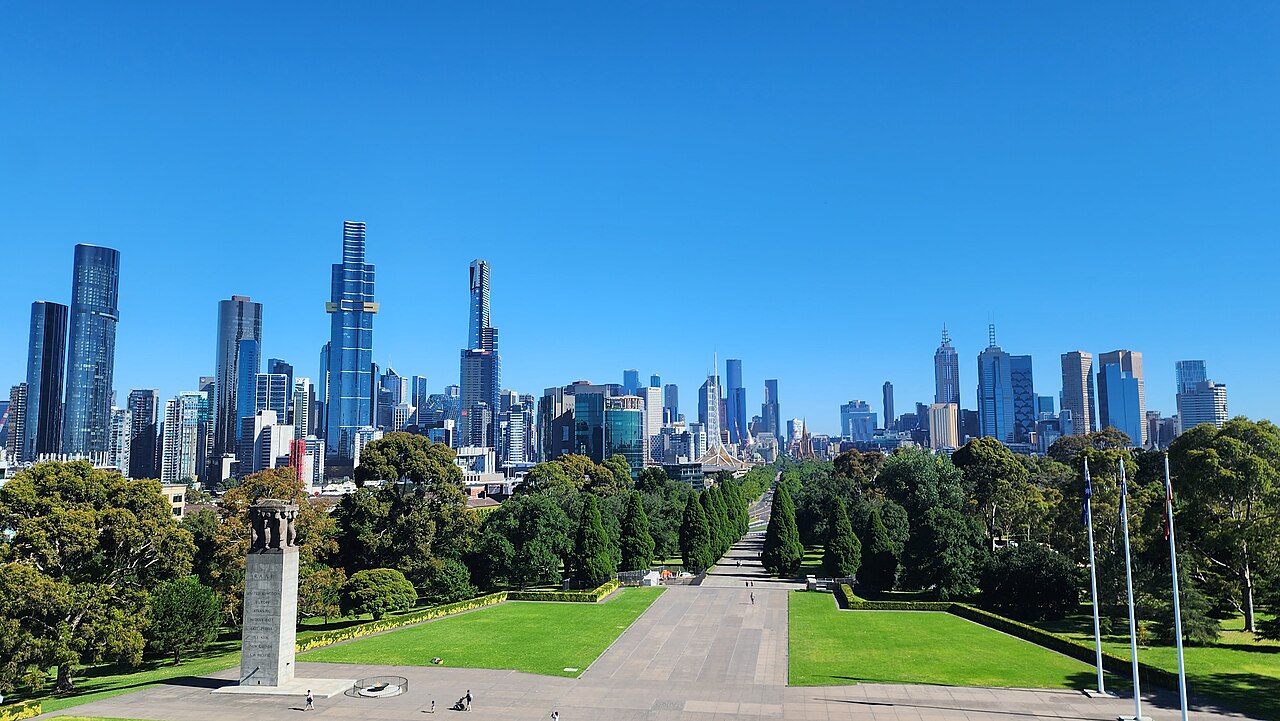
Royal Botanic Gardens Victoria
Royal Botanic Gardens Victoria is a large botanical garden and one of Melbourne's highest-priority visitor stops in the current curated list.
- Must see
- Nature site
Language · 1 published
City guide · Australia
Melbourne's central grid meets the Yarra at Federation Square, giving the main galleries, arcades, markets and riverfront a clear urban base. Carlton and Fitzroy extend north beyond that grid, while St Kilda is a separate bayside destination. Regional Victoria begins beyond the metropolitan sightseeing pattern and should be planned as an excursion rather than attached to a crowded central day.
Ranked by importance — sitelinks, pageviews and heritage status, not editor preference.
50 places match
Category
Typical visit duration
Royal Botanic Gardens Victoria is a large botanical garden and one of Melbourne's highest-priority visitor stops in the current curated list.
Carlton Gardens is a heritage-listed public garden located in the inner-city suburb of Carlton, adjacent to the Melbourne central business district.
Birrarung Marr is a public park in Melbourne situated along the Yarra River. Its name derives from Woiwurrung language, with Birrarung meaning river of mists and Marr referring to the side of the river.
Treasury Gardens is a public park in Melbourne, Victoria. It sits adjacent to the Treasury Building on Spring Street, near the eastern edge of the central business district.
Fitzroy Gardens is a historic public garden in Melbourne, Victoria, situated on the city's eastern fringe near the central business district.
Melbourne Park is a major sports and entertainment precinct located in Melbourne, Victoria. It serves as the primary venue for the Australian Open tennis tournament, one of the four Grand Slam events in professional tennis.
Albert Park Lake is a large artificial lake situated within Albert Park, approximately three kilometres south of Melbourne's central business district. The lake forms the centrepiece of a broader parkland area that serves multiple recreational and sporting functions.
St Kilda Beach is a sandy beach located in the inner-southern suburb of St Kilda, approximately six kilometres from Melbourne's central business district.
Catani Gardens is a public garden space located in the St Kilda area of Melbourne, Victoria.
Elwood Beach is a sandy coastal area located within the broader Melbourne metropolitan region. Positioned on Port Phillip Bay, it forms part of the continuous shoreline that serves both recreational and residential functions for the city.
Port Melbourne Beach is a coastal area located in the suburb of Port Melbourne, southwest of Melbourne's central business district. It forms part of the Port Phillip Bay shoreline and serves as a recreational space for residents and visitors.
Williamstown Botanic Gardens is a historic public garden located in the suburb of Williamstown, within the greater Melbourne metropolitan area. Established in the nineteenth century, the gardens represent an important example of Victorian-era landscape design and horticultural planning.
Newport Lakes Reserve is a public park and nature reserve in the inner-western Melbourne suburb of Newport. The site occupies a former bluestone quarry that operated from the mid-1800s until 1978.
Williamstown Beach is a sandy coastal area located in the suburb of Williamstown, southwest of Melbourne's central business district. It sits on the northern shore of Port Phillip Bay, offering views across the water to the city skyline.
Jawbone Marine Sanctuary is a protected marine area located in Melbourne's vicinity. The sanctuary preserves coastal waters and marine ecosystems, offering visitors a chance to observe natural underwater environments.
Yarra Bend Park is a significant parkland area within Melbourne's documented city scope. The park sits along the Yarra River and represents one of the meaningful visitor destinations retained in the city's attraction framework.
Edinburgh Gardens is a public park in the inner-northern Melbourne suburb of Fitzroy North. The gardens occupy a significant parcel of land and serve as a recreational space for residents and visitors.
Rippon Lea Estate is a historic property in Melbourne, recognised as a significant heritage destination within the city's documented visitor scope. The estate represents an important example of Australian domestic architecture and garden design from the nineteenth century.
Como House and Garden is a heritage property in Melbourne, recognized as a notable visitor destination within the documented city scope. The site represents a significant historical estate preserved for public interest.
The Victoria State Rose Garden is a dedicated horticultural attraction in the Melbourne area, established as a significant visitor destination within the documented city scope.
Point Cook Coastal Park is a coastal park located in the south-western suburbs of Melbourne, Victoria. The park encompasses significant areas of remnant native grassland, wetland habitats, and coastline along Port Phillip Bay.
Organ Pipes National Park is a protected area in Melbourne's north-west, established around a striking geological formation of basalt columns. These hexagonal rock formations, created by ancient volcanic activity, resemble organ pipes and give the park its name.
Dandenong Ranges National Park is a protected natural area located east of Melbourne. The park encompasses cool temperate rainforest, towering mountain ash forests, and dense fern gullies.
William Ricketts Sanctuary is a cultural and spiritual attraction in the Dandenong Ranges near Melbourne. It preserves the sculptural work of William Ricketts, an Australian potter and sculptor who created clay figures integrated into the natural forest environment.
Westgate Park is a public park located in Melbourne, Victoria. Situated near the West Gate Bridge, the park occupies a position within the industrial and port precinct of the city's western reaches.
Source: OpenStreetMap contributors, Wikidata ·
Start with a lane-and-gallery circuit in the central grid and cross the Yarra only for the Southbank institutions selected that day. Pair Carlton with the northern edge of the centre, and treat Fitzroy as another neighbourhood walk. St Kilda belongs in a bayside block. Airport transfers and regional Victoria use different corridors, so neither should be folded into an already full city itinerary.
Checked 2026-08-26
Melbourne's tram network is the practical link between central streets and nearby precincts, with trains and buses serving journeys that do not follow a tram corridor. Walking is effective inside the central grid, Carlton, Fitzroy or St Kilda, but not as a substitute for the trip between them. Public Transport Victoria should be checked for disruptions, replacement services and the correct connection before each longer leg.
Checked 2026-08-26
No official stay duration is recorded for Melbourne. Cover the central grid and Yarra institutions first, then give Carlton, Fitzroy and St Kilda their own neighbourhood periods. Regional Victoria requires additional time outside the city schedule.
Arrange the centre around Federation Square, the lanes and the river, then move north for Carlton or Fitzroy. Keep St Kilda for a bayside half-day or evening rather than interrupting a central museum route.
Use trams for many central and inner-city links, trains for rail corridors and buses where neither reaches. Public Transport Victoria publishes the current network information and disruption notices needed to choose the route.
Walking suits the central grid, Yarra banks and a single inner neighbourhood. The distance between those areas and St Kilda makes public transport the practical choice for a wider Melbourne itinerary.
Treat St Kilda, the airport and destinations in regional Victoria as distinct transport plans. Check the operating route and return service before leaving the central network, especially when works trigger replacement buses.
Set your days, your pace and the hours you actually want to be out. The planner works around closing days and travel time, and leaves room to eat.