.JPG)

2 min walk
Park dedicated to 2800th Anniversary of Yerevan
- High
- Nature site
Language · 11 published
Historic monument · Yerevan
Ալեքսանդր Մյասնիկյանի արձան
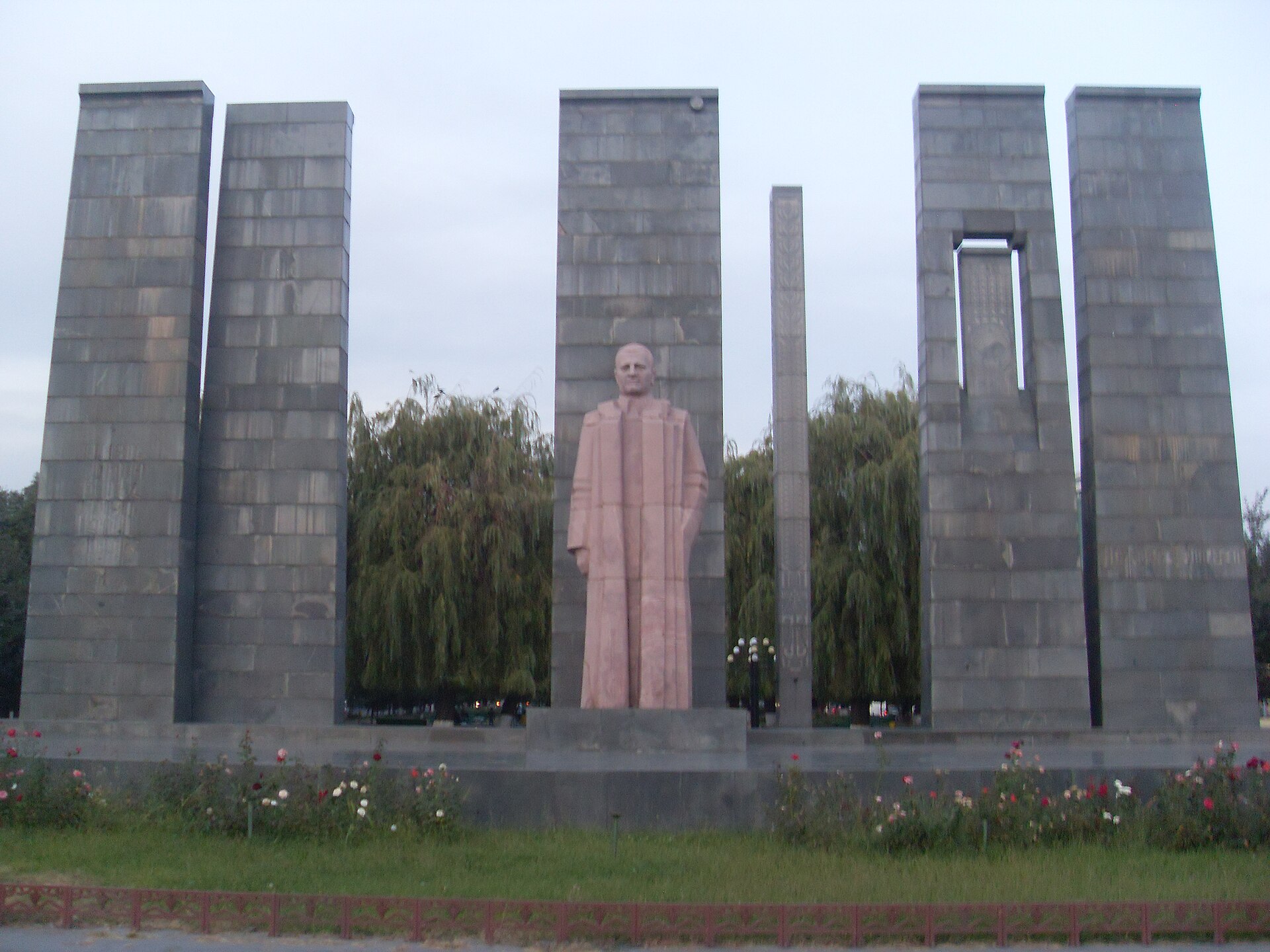
The Monument to Alexander Myasnikyan is an outdoor memorial in central Yerevan, centred on a sculpture of the Armenian Soviet statesman Alexander Myasnikyan. Its identity is direct and civic: one named historical figure, represented in a public urban setting rather than inside a museum. The monument offers a concise way to encounter Yerevan’s twentieth-century political memory and monumental art. It is best understood as a focused stop within the city, especially for travellers interested in public sculpture, Armenian history and the layers of civic space around central Yerevan. Its compact, freestanding character also makes it easy to compare with other memorials encountered during a city walk, without committing time to a large attraction.
Checked 2026-09-02 · Source
Nothing is enclosed inside the memorial. The visit is entirely about the exterior sculpture, its pedestal or plinth, and the way the monument occupies the surrounding city space. There are no galleries, exhibition rooms, multimedia displays or visitor centre attached to it. Look at the figure from more than one side, note its scale against the streetscape, and inspect any inscription that is visible in person. The setting is part of the experience: this is a public monument to observe, not a building to explore. Its meaning is carried by the visible subject, form and civic placement rather than by rooms or a curated interior sequence.
Checked 2026-09-02 · Source
Allow roughly ten to twenty minutes for a straightforward visit. That is enough time to approach the memorial, recognise Myasnikyan’s likeness, view the sculpture from several angles and take photographs. Travellers following Yerevan’s public-monument route may stay longer to consider the figure’s formal details, pedestal and relationship with the surrounding streets. Because there is no exhibition sequence or timed programme, the stop is easy to fit between larger sights. Add time when combining it with a longer central walk or waiting for a clear view. A brief visit can therefore work between scheduled attractions, while a slower stop rewards visitors who want to observe composition and context carefully.
Checked 2026-09-02 · Source
Daylight is the dependable choice for seeing the sculpture clearly and understanding its place in Yerevan’s civic landscape. Spring and autumn are comfortable seasons for pairing the memorial with a longer walk; summer can feel hot in exposed streets, while winter makes an outdoor stop colder. The memorial is an outdoor public structure, so the experience is shaped by ordinary weather and city conditions. An evening visit may offer a different atmosphere, but lighting conditions are uncertain. Choose a time that keeps the approach comfortable for your group. Daytime also gives photographers the clearest opportunity to separate the figure, pedestal and surrounding streetscape in one view.
Checked 2026-09-02 · Source
The monument is approached as an outdoor public memorial, with no ticket office, gate, reservation system or enclosed admission area. No admission price is recorded. Plan for an open urban stop rather than a museum-style entry procedure. This means the visit can be fitted flexibly into a walking itinerary, subject to the normal conditions of the surrounding public space. There is no timed entry or visitor-capacity process to organise around, and the monument’s value lies in its public presence rather than a paid indoor programme.
Checked 2026-09-02 · Source
The Monument to Alexander Myasnikyan is in central Yerevan and works well as a stop on an urban sightseeing route. Walking from central landmarks such as Republic Square or the Cascade area is feasible for visitors comfortable with city streets. The exact street address and nearest metro stop are not included here, so use current city navigation for the final approach. Allow for crossings, pavement conditions and changing traffic when turning a central walk into a short monument visit. Treat the final approach as an ordinary central-city walk, keeping the map open for the last turns rather than relying on a landmark entrance or staffed reception point.
Checked 2026-09-02 · Source
The monument is an unstaffed urban memorial, so the main practical concerns are those of any city walk. Take care at crossings, keep belongings secure in busy public areas and avoid obstructing the pavement while looking or taking photographs. Summer heat and winter cold can affect comfort. Visitors may find the experience easiest when they treat it as a short civic-space stop, leaving room for pedestrians and checking the ground before moving close to the sculpture.
Checked 2026-09-02 · Source
Photography suits this outdoor memorial because the sculpture is the entire focus of the visit. Begin with a wider frame that shows the monument in its central Yerevan setting, then make closer studies of the figure, pedestal and any identifying inscription visible on site. Daylight will make the form and surface easier to read; morning or late-afternoon light may give the sculpture gentler modelling than harsh midday sun. Keep the pavement clear and respect people moving through the public space. Several viewpoints can convey both scale and civic context. A portrait-oriented frame can emphasise the figure, while a wider horizontal composition records how the memorial sits within the city’s public landscape.
Checked 2026-09-02 · Source
No. It is an outdoor public memorial, with no enclosed museum or exhibition space attached.
Visitors encounter the memorial independently in Yerevan’s public urban space; no guided-tour programme is associated with the outdoor monument.
The memorial stands outdoors in public space. Daylight is the dependable choice because nighttime lighting conditions are uncertain.
No admission price is recorded. The monument is an outdoor public memorial with no ticketing process or verified fee.
Plan for about ten to twenty minutes to approach the monument, view the sculpture and take photographs. Add time if you combine it with a longer walk.
Step-free access is limited. A fully level route or suitable platform is not established, so assess the approach locally.
Loading the interactive map…
The interactive map could not be loaded.
Last updated:
Source: OpenStreetMap contributors, Wikidata ·