

3 min walk
Yerevan Cascade
- Must see
- Historic monument
Language · 11 published
Museum · Yerevan
Արամ Խաչատրյանի տուն թանգարան
| Monday | 11:00 – 17:00 |
|---|---|
| Tuesday | 11:00 – 17:00 |
| Wednesday | 11:00 – 17:00 |
| Thursday | 11:00 – 17:00 |
| Friday | 11:00 – 17:00 |
| Saturday | 11:00 – 16:30 |
| Sunday | Closed |
Checked 2026-08-31 · Source
Read from the OpenStreetMap access tags; anything not listed has no tag recorded.
Set the group type to family in the planner and the day window contracts to about three quarters of a solo day.
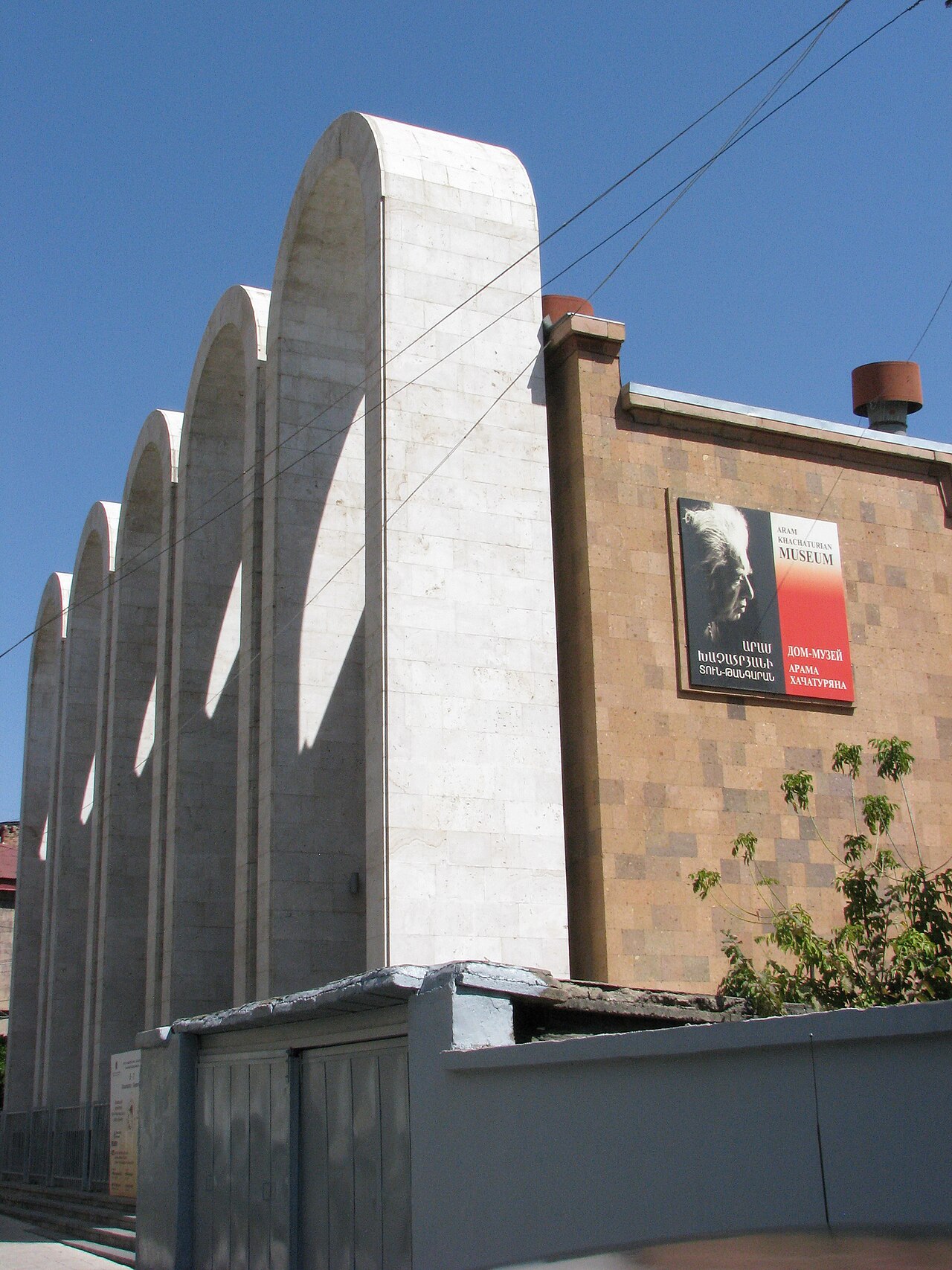
The Aram Khachaturian Museum is a house-museum in Yerevan devoted to the Armenian composer Aram Khachaturian. It occupies the residence where he lived and worked, giving the visit an intimate character that differs from a large national museum. The collection connects his personal life with his musical career and places his work within the cultural world of twentieth-century Armenia and the Soviet period. It is a rewarding stop for listeners familiar with his compositions and for travelers seeking a more personal introduction to Armenian cultural history. The Armenian name is Արամ Խաչատրյանի տուն-թանգարան.
Checked 2026-08-26 · Source
Inside, the museum presents the domestic setting associated with Khachaturian alongside objects from his personal and professional life. Furniture, photographs, documents, manuscripts and other musical materials help show the relationship between the composer’s everyday surroundings and his creative work. The displays also give context to internationally recognized compositions such as Gayane and Spartacus. Rather than moving through a broad national history, visitors follow one person’s life through preserved rooms and personal evidence. Take time to look at the photographs and written materials, since they add biographical detail to the musical story and make the house feel connected to a lived career.
Checked 2026-08-26 · Source
Allow roughly an hour for a balanced visit. That gives enough time to move through the house-museum, study the photographs and documents, and consider the connection between the preserved domestic environment and Khachaturian’s compositions. Visitors with a strong interest in classical music, Armenian cultural life or Soviet-era artistic history may want to stay longer with the manuscripts and personal objects. The museum works well as a focused cultural stop rather than an all-day attraction. If you are visiting several Yerevan museums, place it between nearby city walks so the experience remains unhurried.
Checked 2026-08-26 · Source
The house-museum suits a quieter part of a Yerevan day, especially when you want a concentrated cultural experience away from large public spaces. A morning visit can leave the rest of the day open for central Yerevan museums, cafés and walking routes. The interior is the main focus, so the visit is less dependent on daylight than an outdoor monument. Build some flexibility into your itinerary because the museum is a personal collection in a residential setting, not a large institution designed for continuous crowds. The best moment is one when you can read and look closely without rushing through the rooms.
Checked 2026-08-26 · Source
The museum is a focused cultural visit centred on Khachaturian’s home, personal belongings and musical legacy. Plan your stop around the collection itself rather than around commercial visitor facilities or a large ticketed complex. The experience is most valuable to travelers who want to understand the composer through his surroundings, papers and photographs. If you are building a museum day in Yerevan, pair this house-museum with another cultural venue or a city walk, leaving enough time to absorb the intimate displays. The collection’s scale makes careful looking more rewarding than trying to move quickly from room to room.
Checked 2026-08-26 · Source
The museum is in Yerevan and can be included in a city route that combines cultural sights with neighborhood walking. Use the mapped OSM location for navigation, particularly because a house-museum may be less visually prominent than a monumental public building. Yerevan’s central districts are served by walking routes, buses, marshrutka minibuses, taxis and ride-hailing services. If you are traveling from another museum or from the city center, check the route before setting out and allow time for the final residential-street approach. Search using the museum’s full name as well as its Armenian name if map results are unclear.
Checked 2026-08-26 · Source
This is a preserved home and cultural collection, so the atmosphere is more intimate than that of a purpose-built gallery. Move carefully around furniture, documents and other personal objects, and keep voices low while other visitors are viewing the rooms. The domestic setting is part of the museum’s meaning: the rooms help explain Khachaturian’s life as much as the displayed musical materials do. Travelers with limited mobility should be prepared for the possibility that a historic residence may not have the circulation space of a modern museum. A compact visit is usually easier to enjoy than trying to treat every display as a major gallery.
Checked 2026-08-26 · Source
The strongest photographic subjects are the house-museum’s rooms, personal objects, photographs and documents, but these displays should be treated as a quiet cultural interior rather than a casual photo set. Look for the relationship between furniture, manuscript material and the domestic environment that shaped the visit’s character. Avoid disturbing other visitors while framing small details, and give priority to the objects themselves over posed images. Exterior views can introduce the museum as a residential cultural site within Yerevan. A thoughtful photograph of the rooms or instruments can preserve the atmosphere of the visit better than a fast sequence of images.
Checked 2026-08-26 · Source
Aram Khachaturian was a renowned Soviet Armenian composer, internationally recognized for works including Gayane and Spartacus.
It is a house-museum dedicated to Khachaturian’s life and work, occupying the residence where he lived and worked.
The collection includes personal belongings, furniture, photographs, documents, manuscripts and musical materials connected with Khachaturian.
Allow roughly an hour, with extra time if you want to study the musical documents and personal objects closely.
It preserves a personal cultural setting connected with one of Armenia’s internationally recognized composers and links his daily life with his musical legacy.
The museum guide connects his legacy with compositions including Gayane and Spartacus, works that brought him international recognition.
Loading the interactive map…
The interactive map could not be loaded.
Last updated:
Source: OpenStreetMap contributors, Wikidata ·