
5 min walk
Dong Khoi Street
- Must see
- Activity
Language · 11 published
Museum · Ho Chi Minh City
Bảo tàng Thành phố Hồ Chí Minh
Reviewed by Elena Voss · SSMTour Travel Editor
| Monday | 08:00 – 17:00 |
|---|---|
| Tuesday | 08:00 – 17:00 |
| Wednesday | 08:00 – 17:00 |
| Thursday | 08:00 – 17:00 |
| Friday | 08:00 – 17:00 |
| Saturday | 08:00 – 17:00 |
| Sunday | 08:00 – 17:00 |
Checked 2026-08-31 · Source
Read from the OpenStreetMap access tags; anything not listed has no tag recorded.
Set the group type to family in the planner and the day window contracts to about three quarters of a solo day.
This place is a Museum.
The Ho Chi Minh City Museum occupies a prominent French colonial-era palace in central Ho Chi Minh City. Built in the late 19th century, the structure served as the residence of the Governor of Cochinchina before becoming a museum. The building exemplifies colonial architectural grandeur with its neoclassical facade and ornate interior details. Its commanding position and historical significance make it a landmark structure for understanding the city's layered civic identity under successive political eras. Monday–Sunday 08:00–17:00, including public holidays and Tết.
Checked 2026-08-31 · Source
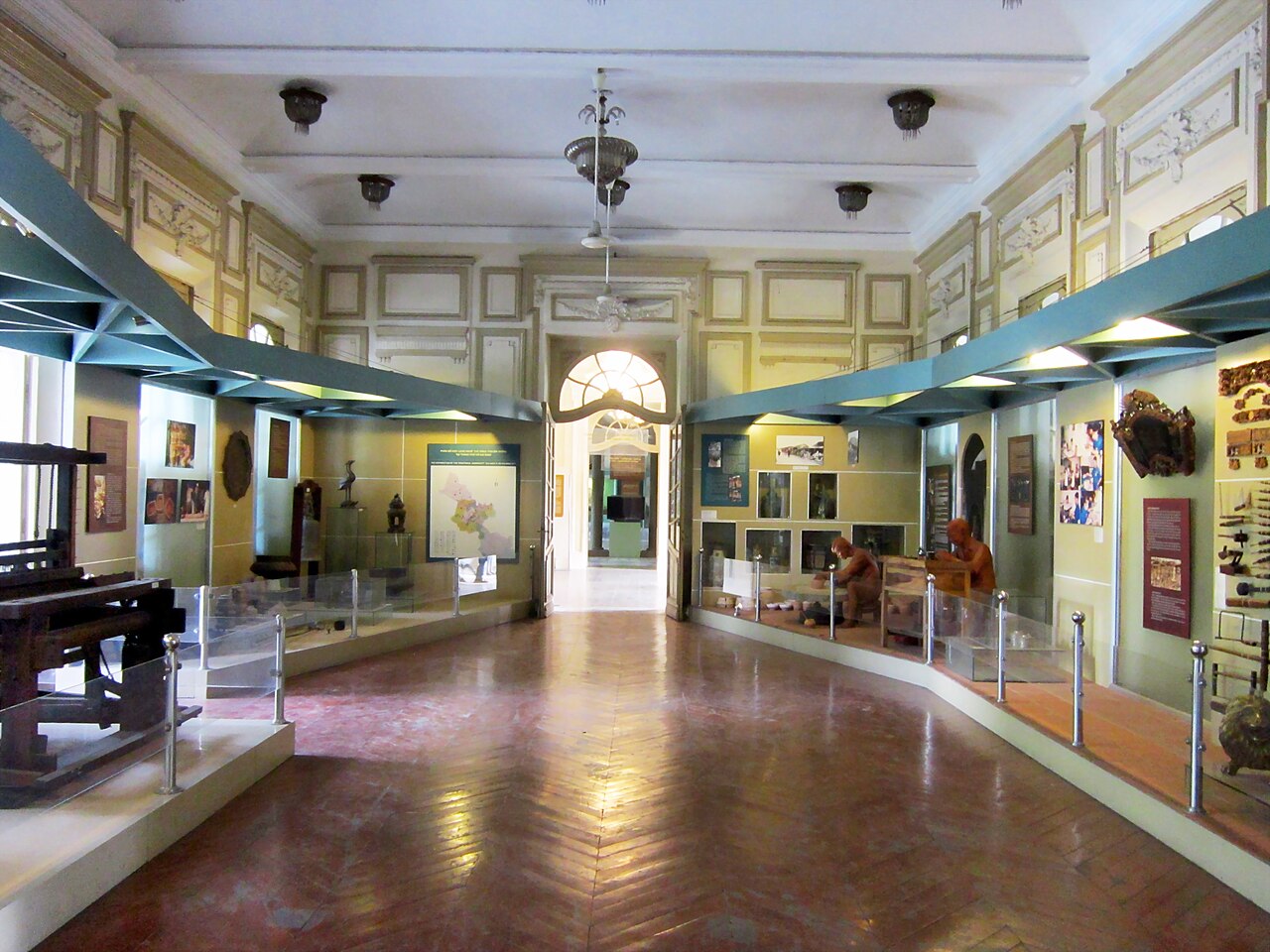
The museum presents collections tracing Saigon's development from early settlement through French colonial period to modern metropolis. Exhibits include archaeological finds, photographs, documents, and artifacts illustrating commercial, cultural, and political evolution. The palace interior retains original decorative elements including tiled floors, staircases, and ceremonial rooms. Displays address resistance movements and national reunification. The strongest holdings concern municipal history rather than fine art, positioning this as the essential institution for comprehending Ho Chi Minh City's civic trajectory. There is no routine weekly closure day. The Gia Long Palace tunnel and the Port–Trade–Services and Industry–Handicrafts galleries are temporarily closed for refurbishment; the museum's other galleries remain open.
Checked 2026-08-31 · Source
Visitors typically allocate one to two hours for a meaningful survey of the permanent collections. The building spans multiple floors with chronological and thematic arrangements requiring sustained attention. Those with particular interest in colonial architecture or Vietnamese twentieth-century history may extend their stay. The palace structure itself warrants examination beyond exhibit content. Self-guided pacing allows flexibility, though the density of historical material rewards unhurried engagement. Combine with nearby colonial-era landmarks for a concentrated district visit of half a day. General admission is 30,000 VND per person per visit.
Checked 2026-08-31 · Source
Visitors should consult the official website at https://hcmc-museum.edu.vn/ or contact the museum directly before planning arrival. Climate considerations suggest morning visits during hot season months when interior spaces offer relative coolness. Weekday attendance typically runs lighter than weekends. Holiday periods may affect accessibility or generate domestic visitor surges. Monday–Sunday 08:00–17:00, including public holidays and Tết. The entrance is at 65 Lý Tự Trọng, at the corner with Nam Kỳ Khởi Nghĩa. From Metro Line 1, use Opera House Station and continue west through the central civic district. City bus routes 03, 19, 36 and 45 stop near the museum.
Checked 2026-08-31 · Source
The official website at https://hcmc-museum.edu.vn/ should be consulted for current admission fees, applicable concessions, and any combined ticketing arrangements with affiliated institutions. International visitors should confirm whether pricing structures differ from domestic rates. Payment methods accepted at entry remain unverified. Budgeting should incorporate potential variable costs. General admission is 30,000 VND per person per visit. A side ramp provides step-free entry to the ground floor. Ground-floor galleries and the courtyard can be visited without using stairs. Upper-floor galleries require stairs; there is no passenger lift serving the historic palace. The underground Gia Long Palace tunnel is temporarily closed and is not part of the step-free route.
Checked 2026-08-31 · Source
The museum occupies a central District 1 location accessible by multiple transport modes. Taxis and ride-hailing services recognize the prominent colonial building. Walking reaches the site from numerous surrounding hotels and attractions. Public bus routes serve the broader area though specific stop proximity requires local verification. The entrance is at 65 Lý Tự Trọng, at the corner with Nam Kỳ Khởi Nghĩa. From Metro Line 1, use Opera House Station and continue west through the central civic district. City bus routes 03, 19, 36 and 45 stop near the museum.
Checked 2026-08-31 · Source
The historic building presents accessibility constraints inherent to colonial-era construction. Staircases between floors may prove challenging for mobility-impaired visitors. Original flooring surfaces can be uneven or slippery when wet. Interior climate control varies by season and section. Crowding concentrates around popular photographic points and narrow corridors. Personal belongings require attention in busy periods. Photography permissions fluctuate by zone. A side ramp provides step-free entry to the ground floor. Upper-floor galleries require stairs; there is no passenger lift serving the historic palace. The underground Gia Long Palace tunnel is temporarily closed and is not part of the step-free route.
Checked 2026-08-31 · Source
Visitors should observe posted signage at entry and within individual galleries. Flash photography typically damages sensitive artifacts and is commonly restricted in museum environments. Tripod and professional equipment use usually requires advance administrative permission. The distinctive colonial architecture of the palace exterior presents unrestricted photographic opportunities from surrounding public spaces. Drone operation over the site would require regulatory compliance with Vietnamese aviation authorities. The underground Gia Long Palace tunnel is temporarily closed and is not part of the step-free route.
Checked 2026-08-31 · Source
The museum is at 65 Lý Tự Trọng, Sài Gòn Ward, Ho Chi Minh City.
The former Gia Long Palace was built from 1885 to 1890 to a design by French architect Alfred Foulhoux.
The city established the Revolutionary Museum in the building on 12 August 1978 and upgraded and renamed it Ho Chi Minh City Museum in 1999.
The galleries cover the city's geography and administration, nature and archaeology, culture, revolutionary history, wartime objects and Vietnamese money.
No. The museum temporarily closed the tunnel on 26 December 2025 for refurbishment.
The outdoor display includes an A-37 aircraft, an F-5 aircraft, a UH-1 helicopter and artillery pieces.
Loading the interactive map…
The interactive map could not be loaded.
Last updated:
Source: OpenStreetMap contributors ·