
.jpg)
3 min walk
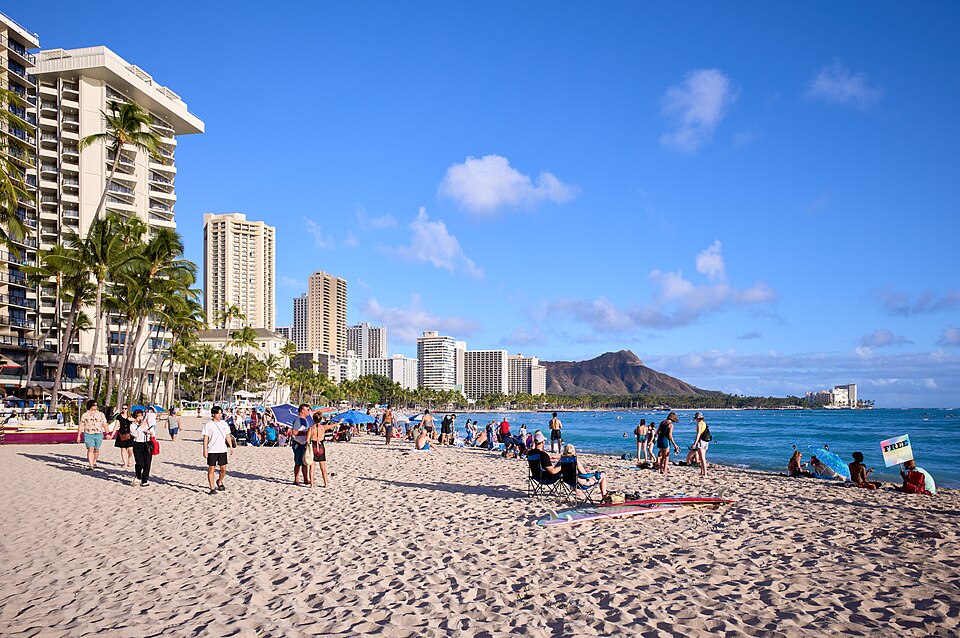
Waikiki Beach
- Must see
- Nature site
Language · 11 published
Historic monument · Honolulu
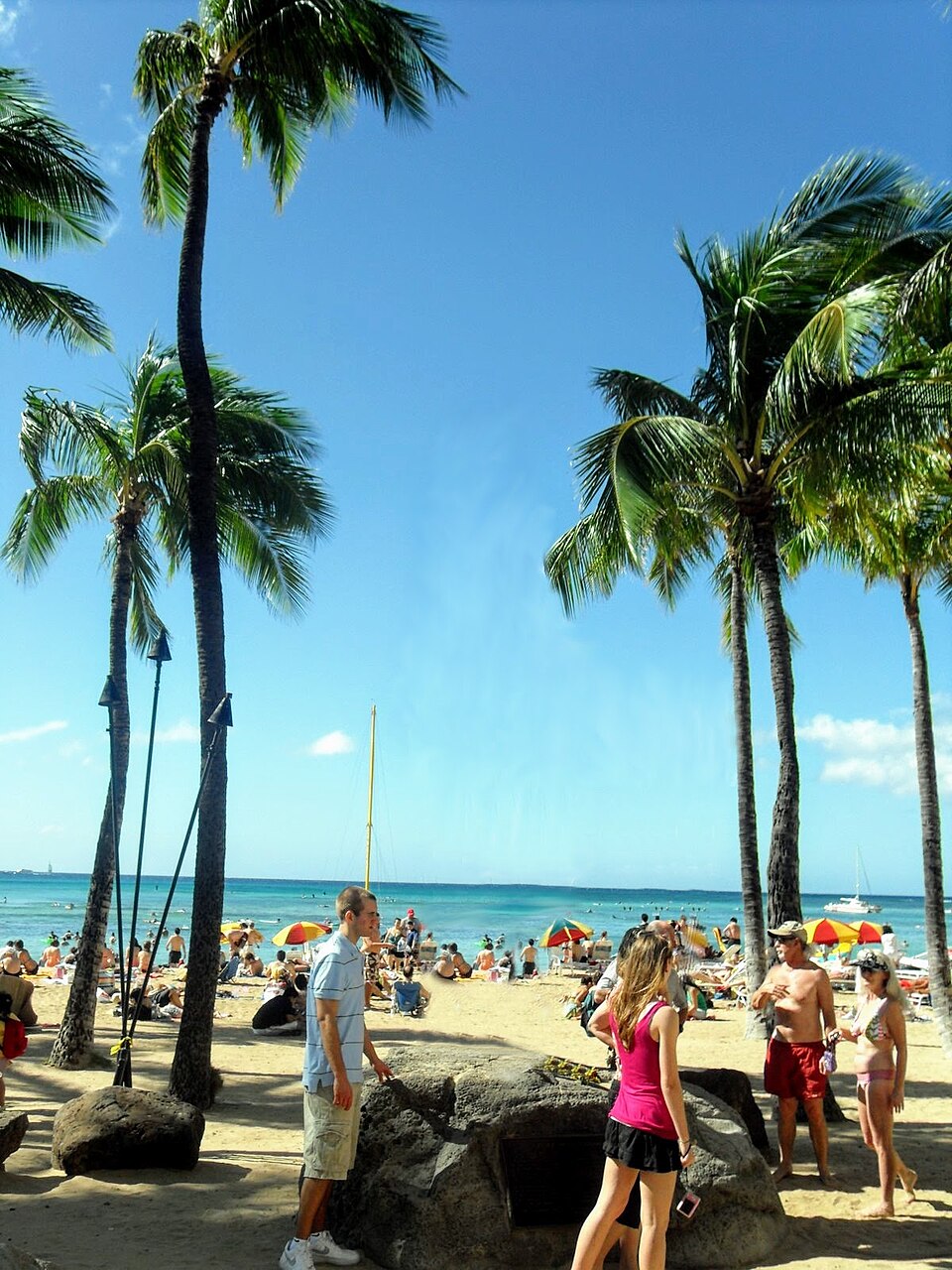
The Duke Kahanamoku Statue stands on Waikīkī Beach as a bronze monument honoring Duke Paoa Kahanamoku, the Hawaiian Olympic swimmer and surfer who popularized surfing globally. Erected to commemorate his legacy, the statue depicts him with arms outstretched, welcoming visitors to the waters he championed. It serves as both a memorial and a gathering point for beachgoers, surfers, and tourists. The monument recognizes his five Olympic swimming medals and his role as an ambassador of aloha, bridging Hawaiian culture with international athletic achievement. Fresh flower leis frequently adorn the statue, placed by visitors and locals as traditional offerings of respect.
Checked 2026-08-26
The statue itself is an outdoor bronze sculpture with no enclosed interior. Visitors approach the figure directly on the sandy beach promenade. The monument rests on a stone pedestal base, with surrounding paved areas for viewing and photography. No museum, visitor center, or exhibition space accompanies the statue. The immediate vicinity includes beach access, the shoreline, and nearby commercial establishments along Kalākaua Avenue. The statue's material and construction details are not recorded in available sources. Public restrooms, showers, and other beach facilities exist in the broader Waikīkī Beach area but are separate from this specific monument site.
Checked 2026-08-26
A visit to the Duke Kahanamoku Statue typically requires brief time, as it is an outdoor monument without guided tours, queues, or structured programming. Most visitors spend approximately five to fifteen minutes viewing the statue, reading any available plaque information, and taking photographs. Those incorporating the stop into a broader Waikīkī Beach walk may allocate longer. Sunrise and sunset attract additional visitors seeking atmospheric conditions. No time limits or scheduled sessions apply. The duration depends entirely on individual interest in photography, historical reflection, or participation in informal cultural practices like lei placement.
Checked 2026-08-26
The statue is accessible at all hours as an outdoor public monument on Waikīkī Beach. Operator-confirmed hours are Not recorded pending review. Early morning offers fewer crowds and softer light for photography. Midday brings peak beach activity and increased foot traffic. Evening hours provide sunset viewing opportunities. The monument holds particular significance during surfing competitions, Duke's OceanFest events, and cultural commemorations, though specific annual dates are not recorded. Weather conditions follow typical Honolulu patterns with occasional rain. Visitors should exercise standard beach precautions regarding sun exposure and surf conditions regardless of visit timing.
Checked 2026-08-26
No admission fee applies to viewing the Duke Kahanamoku Statue. Operator-confirmed prices are Not recorded pending review. The monument stands in a public beach area without ticketing infrastructure, gates, or entry controls. No donation requirements or suggested contributions are documented. Commercial photography permits for professional purposes are not addressed in available sources. Visitors incur no direct costs specific to this attraction, though associated expenses such as parking, beach equipment rental, or nearby dining apply separately. Any future changes to access arrangements are not recorded. The statue remains freely accessible as a public cultural monument.
Checked 2026-08-26

The statue occupies Waikīkī Beach fronting Kalākaua Avenue in Honolulu. Public bus routes serve the corridor with stops within walking distance. Walking access is straightforward from surrounding Waikīkī hotels and accommodations. Bicycle parking exists in the general beach area. Vehicle parking presents challenges typical of dense tourist districts; paid parking structures and limited street parking operate nearby. Rideshare and taxi drop-off occurs along adjacent roadways. The monument's exact position relative to specific landmarks is not precisely recorded in sources. Visitors should consult current local transit resources for route schedules and any service modifications.
Checked 2026-08-26
Crowd density fluctuates significantly, with highest concentrations during midday, weekends, and seasonal tourism peaks. The statue's popularity creates persistent congestion for unobstructed photography. Beach environment hazards include strong sun exposure without shade at the monument itself, occasional surf spray, and slippery surfaces near water. Sand accumulation around the base may affect stability for those approaching closely. Fresh flower leis placed as offerings deserve respectful treatment; removal or disturbance by visitors is inappropriate. Nighttime visibility depends on ambient beach lighting. Personal belongings require standard beach-area vigilance. No specific accessibility accommodations are documented for the sandy immediate surroundings.
Checked 2026-08-26
The statue permits unrestricted photography as an outdoor public monument. Optimal lighting occurs during early morning and late afternoon golden hours, when direct sun minimizes harsh shadows on the bronze surface. Midday photography faces challenging overhead illumination. Crowd-free images require patience or off-peak timing. The beach and ocean provide natural backdrops; positioning varies with tide and surf conditions. No flash restrictions or tripod regulations are recorded. Drone operation would fall under general Honolulu and FAA jurisdiction, with no specific monument exemptions documented. Commercial or staged photography may encounter practical constraints from pedestrian traffic without formal permit requirements noted.
Checked 2026-08-26
Yes. Duke Kahanamoku Beach exists in Waikīkī, and both honor the same individual, the Olympic swimmer and surfer.
Standard respectful conduct for public monuments applies; specific regulations are not recorded.
No dedicated tours are documented; visitors typically experience it independently or as part of broader Waikīkī walks.
No official operator contact is recorded in available sources.
Early morning visits, particularly around sunrise, typically offer reduced pedestrian presence.
Beach facilities exist in the broader Waikīkī area; exact proximity to this specific monument is not recorded.
Loading the interactive map…
The interactive map could not be loaded.

Last updated:
Source: OpenStreetMap contributors ·