Manchester Cathedral
Manchester Cathedral is the city’s medieval parish church elevated through collegiate and cathedral status, and it remains an active Church of England place of worship.
- Must see
- Place of worship
Language · 1 published
City guide · United Kingdom
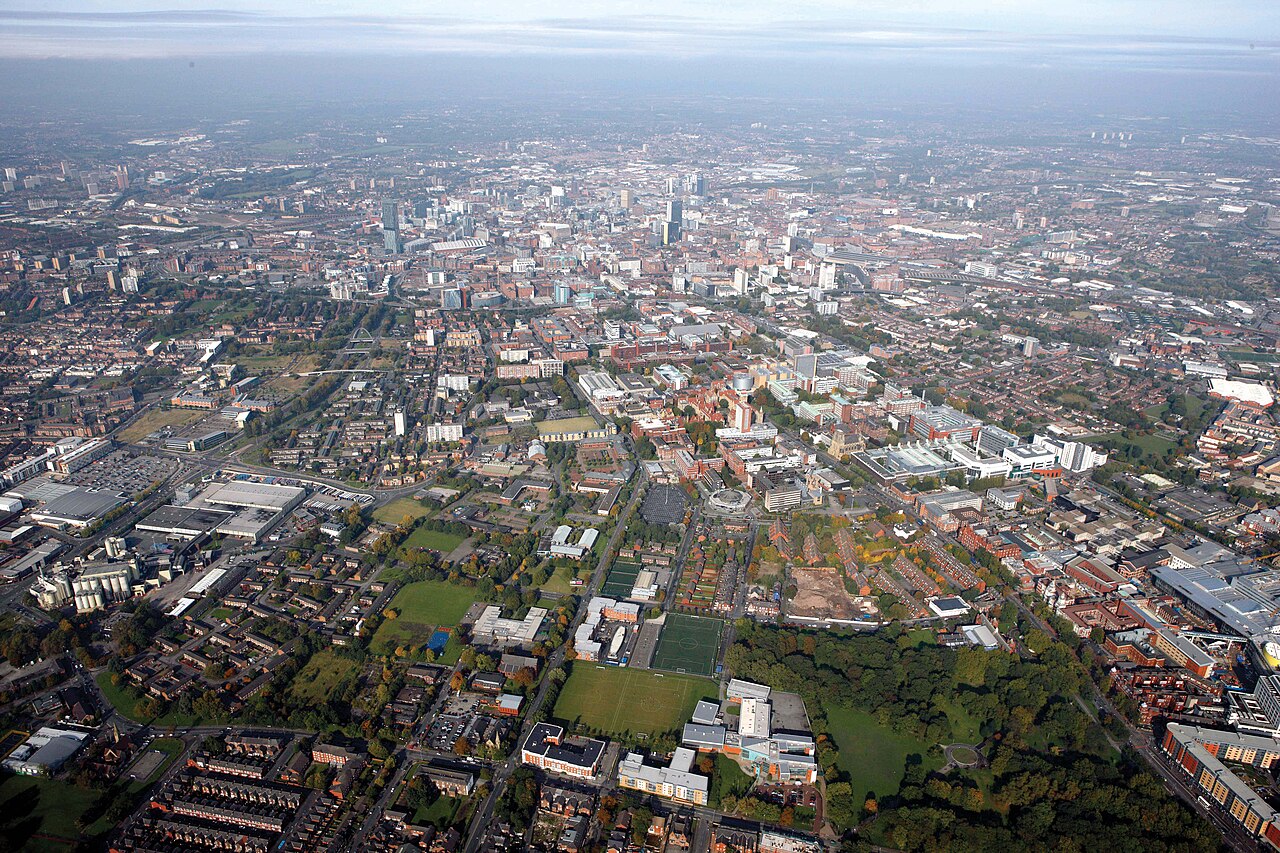
Manchester has a compact city centre surrounded by distinct Greater Manchester towns and cultural districts. The civic core, Northern Quarter, Ancoats, Castlefield and university corridor are linked by walkable streets, while Salford Quays and major football grounds require public transport. The Bee Network combines buses, trams and journey planning across the region. Keep the centre on foot and use tram or bus for each outer cluster.
Ranked by importance — sitelinks, pageviews and heritage status, not editor preference.
50 places match
Category
Typical visit duration
Manchester Cathedral is the city’s medieval parish church elevated through collegiate and cathedral status, and it remains an active Church of England place of worship.
The Lowry is a prominent cultural venue and visitor destination in Salford Quays, Greater Manchester. Named after the artist L.S. Lowry, it houses a substantial collection of his work alongside two theatres and studio spaces.
The Manchester Opera House is a prominent touring theatre in Manchester, England. Located on Quay Street, it forms part of the city's major theatrical circuit alongside the Palace Theatre.
The Palace Theatre is a major theatrical venue in Manchester, England. It forms part of the city's prominent theatre district and serves as a significant cultural landmark for performing arts in the region.
Mamucium, also known as the Roman fort of Manchester, was a fort established in the Roman province of Britannia. The name Mamucium is thought to derive from a Celtic meaning breast-shaped hill.
Victoria Baths is a heritage swimming pool and Turkish bath complex in Manchester, England. Built in the Edwardian era, it served as a public bathhouse for many decades before closure.
Ordsall Hall is a historic Tudor manor house located in Salford, Greater Manchester, near the city centre. The building dates back to the 15th century with later additions, making it one of the oldest surviving structures in the area.
Quarry Bank Mill is a historic cotton mill in Styal, Cheshire, on the outskirts of Manchester. It was founded in 1784 by Samuel Greg and became one of the most important early industrial sites in Britain.
Heaton Park is a large municipal park located in the northern part of Manchester, England. It is one of the largest parks in Greater Manchester and serves as a significant green space for the city.
Bramall Hall is a Tudor manor house situated in Bramhall, within the Metropolitan Borough of Stockport, Greater Manchester. The building represents one of the most architecturally significant timber-framed structures in northwest England.
The Royal Exchange Theatre is a major producing theatre located in Manchester city centre. It occupies the historic Royal Exchange building, a former cotton exchange that was once the largest trading room in the world.
Castlefield Bowl is an outdoor amphitheatre and concert venue situated in the Castlefield urban heritage park area of Manchester.
Manchester Arena, currently known as AO Arena, is a major indoor arena in Manchester, England. It is one of the United Kingdom's largest indoor arenas with a capacity for concerts and sporting events.
The Corn Exchange is a historic building in Manchester city centre. Originally constructed as a corn and produce exchange, it has been repurposed over time into a retail and dining destination.
Afflecks is an indoor market hall in Manchester's Northern Quarter, occupying a multi-storey building that hosts independent traders. It has operated as a retail destination since the 1980s, developing a reputation for alternative and creative commerce.
Piccadilly Gardens is a public green space in Manchester city centre, serving as a major transport interchange and gathering point. The area functions as a pedestrian hub connecting Manchester Piccadilly railway station with the retail core.
The Alan Turing Memorial, locally known as the Alan Turing Statue, is a commemorative sculpture in Manchester honouring the pioneering mathematician and computer scientist. Turing made fundamental contributions to theoretical computer science and cryptanalysis.
The Peterloo Memorial commemorates the Peterloo Massacre of 16 August 1819, when cavalry charged into a crowd of 60,000 peaceful protesters demanding parliamentary reform at St Peter's Field in Manchester.
Manchester Cenotaph is a war memorial located in St Peter's Square, central Manchester. The structure commemorates those who lost their lives in military conflicts. It stands as a significant civic monument within the city's public realm.
Staircase House is a historic building located in Manchester, England. This timber-framed structure represents significant architectural heritage within the city. The building derives its name from its distinctive staircase, which constitutes a notable feature of its construction.
Wythenshawe Hall is a historic timber-framed manor house situated in Wythenshawe Park, south Manchester. The building dates to the sixteenth century with later additions, representing a significant example of Lancashire domestic architecture.
Heaton Hall is a neoclassical country house situated in Heaton Park, north Manchester. The building dates to the late eighteenth century and was designed by architect James Wyatt for the Egerton family.
Castlefield Gallery is a contemporary art gallery located in Manchester's Castlefield area, a district historically significant as the terminus of the Bridgewater Canal.
Contact is a theatre in Manchester known for its focus on young people and contemporary performance. Operating under the local name Contact, it has established itself as a significant cultural venue within the city's arts landscape.
The Dancehouse is a theatre venue in Manchester dedicated to dance and performance arts. Located in the city centre, it occupies a prominent building that serves as a cultural hub for contemporary and classical dance productions.
The Plaza is a historic cinema located in Stockport, Greater Manchester. Operating under the local name The Plaza, this venue represents a significant cultural landmark within the Manchester metropolitan area.
The University of Salford Art Collection is an institutional art collection maintained by the University of Salford in Greater Manchester, England. It holds works acquired for educational, research, and public engagement purposes.
The Old Wellington Inn is a historic public house located in Manchester city centre, England. It stands as one of the city's notable timber-framed buildings, representing architectural heritage in a modern urban setting.
Cathedral Gardens is an open public green space in Manchester city centre, adjacent to Manchester Cathedral. The gardens form part of the broader Cathedral Quarter area.
Fletcher Moss Botanical Garden is a public botanical garden and park located in Didsbury, a southern suburb of Manchester, England. The garden occupies a riverside site along the River Mersey and features landscaped grounds, rock gardens, and wooded areas.
Mayfield Park is a public green space in Manchester, England. It occupies a former industrial site that has undergone significant regeneration to become accessible parkland for residents and visitors.
Platt Fields Park is a public park in Manchester, England. It occupies a significant green space within the urban environment and serves as a recreational area for residents and visitors.
Peel Park is a public park in Salford, Greater Manchester, part of the metropolitan county. It lies near the University of Salford campus and the River Irwell.
St Michael's Flags and Angel Meadow Park is a public green space in Manchester, locally known as Angel Meadow.
Whitworth Gardens, known locally as Sackville Gardens, is a public green space in Manchester city centre. The park lies within the urban core and serves as a visitor point of interest identified through the production identity way/155767483.
Alexandra Park is a public park in Manchester, England. Established in the Victorian era, it represents one of the city's historic green spaces designed for public recreation.
Buile Hill Park is a public park in Salford, Greater Manchester, part of the conurbation centred on Manchester. The park occupies a historic estate landscape with connections to the local area's development during the industrial era.
Debdale Park is a public park located in Gorton, Manchester, England. It occupies a significant green space within the city's eastern area and serves as a recreational resource for local residents and visitors.
Philips Park is a public park in Manchester, England. It was established as one of the first municipal parks in the city, created to provide green space for the growing urban population during the industrial era.
Walkden Gardens is a public garden space located in Manchester, England. The site is recorded on OpenStreetMap with the production identity way/411811865 and is associated with Wikidata entry Q18394360.
Highfield Country Park is a public green space in Manchester, England. It occupies a position within the city's network of parks and recreational areas, serving local residents and visitors seeking outdoor environments.
Ordsall Park is a public green space located in the Ordsall area of Salford, Greater Manchester, near the boundary with Manchester city proper. The park serves as a recreational area for local residents and visitors to the area.
Crumpsall Park is a public park in Manchester, England. It serves as a green space for the Crumpsall area, providing recreational facilities for local residents and visitors.
Drinkwater Park is a public park located in Manchester, England. It forms part of the green space network in the Irwell Valley area of the city.
Broadhurst Park is a public park located in Manchester, England. The green space serves as a recreational area for local residents and visitors seeking outdoor leisure in an urban setting.
The Glade of Light is a memorial garden in Manchester, England, commemorating the victims of the Manchester Arena bombing on 22 May 2017.
Source: OpenStreetMap contributors, Wikidata ·
Piccadilly and Victoria stations mark the eastern and northern edges of the central visitor area. Between them sit the Northern Quarter, civic centre, Chinatown and the retail core; Ancoats continues east, while Castlefield and Deansgate extend southwest. The Oxford Road corridor leads south through universities and cultural venues. Salford Quays lies west as a separate waterfront district, and the football stadiums occupy different sides of the wider city-region. Do not plan those outer locations as short central walks.
Checked 2026-08-26
Walk within the central districts, then use Bee Network buses and Metrolink trams for Salford Quays, stadiums and Greater Manchester towns. Transport for Greater Manchester provides an integrated journey planner, and contactless tap-and-go is available on buses and trams under the current network rules. Free city-centre buses connect major rail stations and central areas. Train services remain useful for some outer towns, so compare rail and tram before setting out.
Checked 2026-08-26
Two to three days suit a first visit. Use one day for the central districts, another for a chosen outer cluster, and add a third for football, Salford Quays or a wider Greater Manchester trip.
May through September offers longer daylight for canals and neighbourhood walks. Rain remains possible throughout the year, so keep indoor museums and galleries available as flexible blocks.
Yes. Piccadilly, the Northern Quarter, the civic core, Castlefield and Oxford Road form a compact central area. Use transit for Salford Quays, the stadiums and outer Greater Manchester towns.
Bee Network buses and Metrolink trams support contactless travel under the operator’s current rules. On trams, follow the official tap-in and tap-out instructions and use the same card or device.
No. Old Trafford and the Etihad Stadium sit in different parts of the city-region and use different transport corridors. Plan each as a separate destination rather than combining them as a central walking route.
Set your days, your pace and the hours you actually want to be out. The planner works around closing days and travel time, and leaves room to eat.