.jpg)
3 min walk
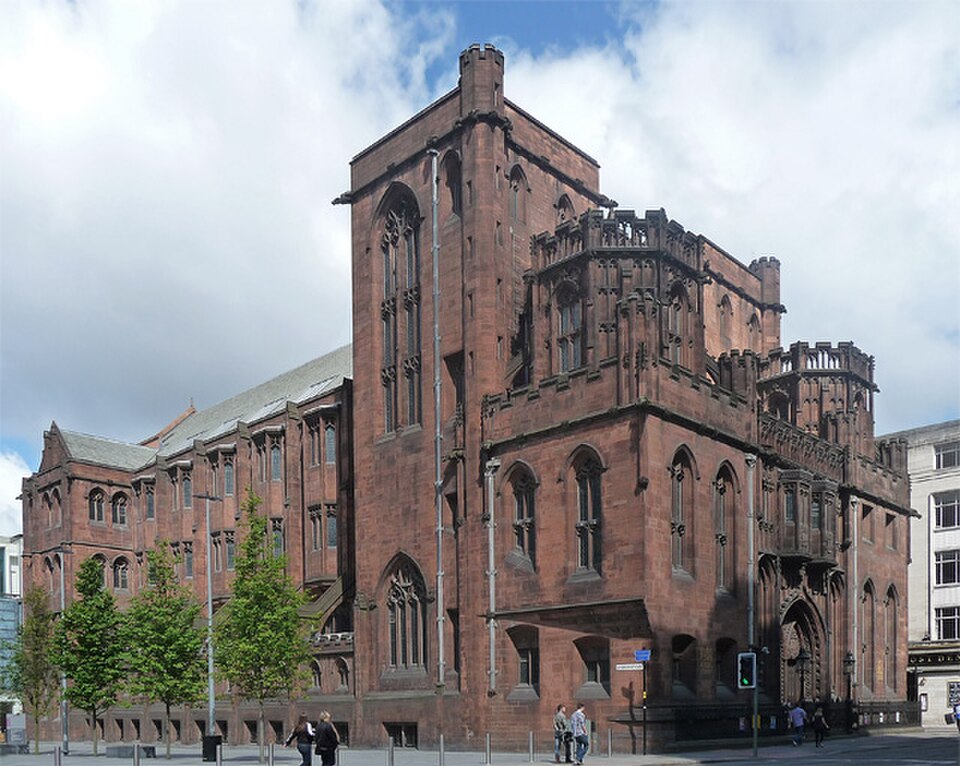
John Rylands Library
- Must see · Heritage site
- Historic monument
Language · 11 published
Art and culture venue · Manchester
Read from the OpenStreetMap access tags; anything not listed has no tag recorded.
Set the group type to family in the planner and the day window contracts to about three quarters of a solo day.
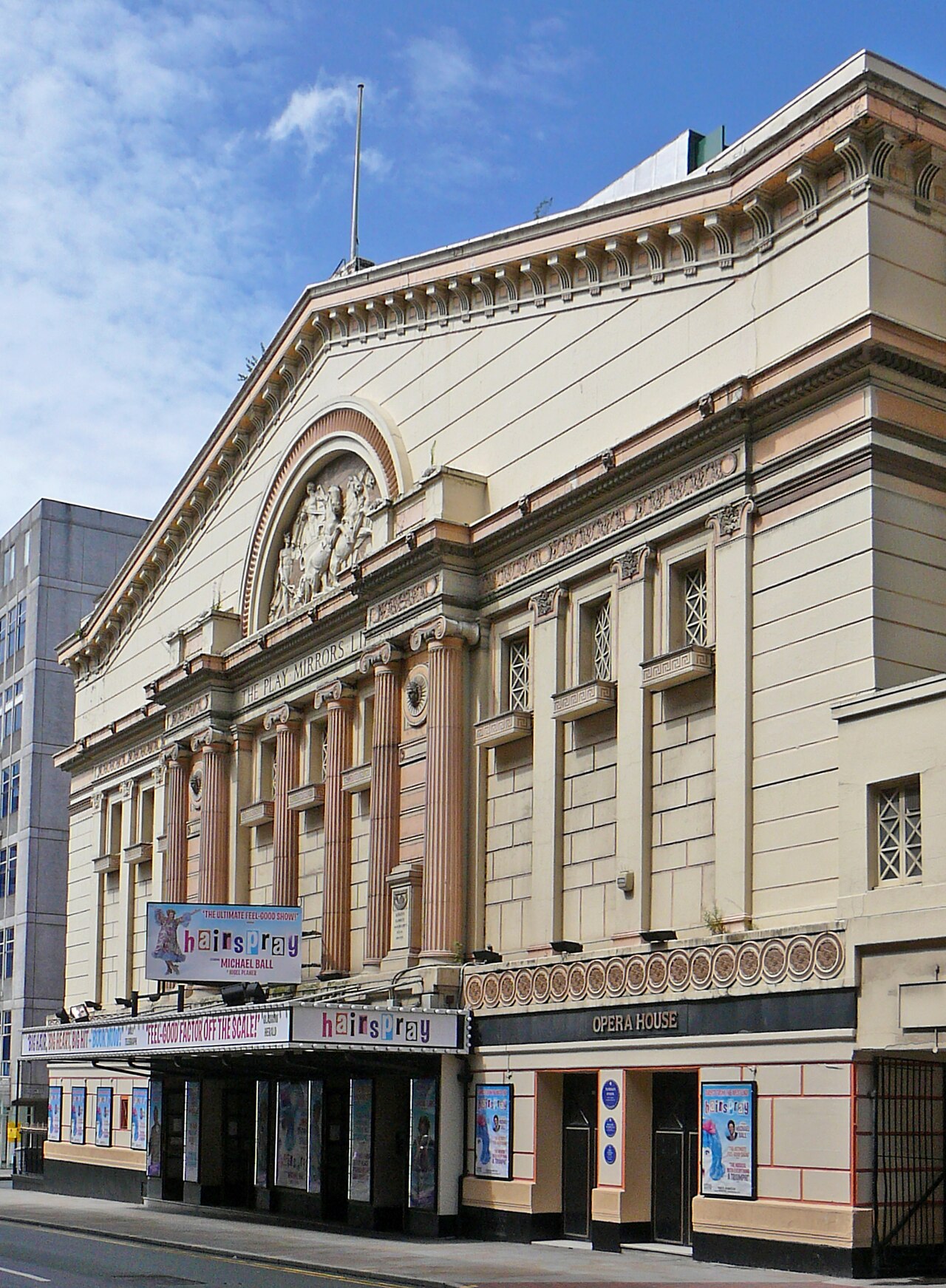
Manchester Opera House is a large touring theatre on Quay Street in Manchester city centre. It operates as a receiving house for major touring productions rather than as a theatre with a permanent resident company. Musicals, plays and entertainment shows use its substantial stage and auditorium. For travellers, the venue is primarily an evening or matinee destination: choose a production, arrange the journey and build the rest of the day around its curtain time. The Manchester Opera House is a prominent touring theatre in Manchester, England. Located on Quay Street, it forms part of the city's major theatrical circuit alongside the Palace Theatre. The venue hosts large-scale touring productions of musicals, plays, and entertainment shows. Its substantial auditorium and stage facilities accommodate West End and Broadway touring productions. The building holds significance within Manchester's cultural infrastructure as a receiving house for commercial theatre rather than a producing venue with a permanent company. No. The Manchester Opera House is a commercial touring theatre. It has no connection to the Royal Opera House in Covent Garden, London, which is a producing opera and ballet company with a permanent ensemble.
Checked 2026-08-26 · Source
The theatre has a sizeable auditorium arranged across stalls, circle and upper-tier seating. Its stage facilities support technically demanding touring shows, while front-of-house areas include bars and refreshment spaces. The decorative interior reflects the character of an Edwardian-era theatre, with backstage areas serving visiting companies. Seating level and position affect the view, so the building is best understood as a traditional performance auditorium rather than a gallery that visitors explore casually throughout the day. The Opera House contains a sizeable auditorium with multiple seating levels typical of Edwardian-era theatres. Stalls, circle, and upper tier seating provide varied viewing perspectives. Stage facilities support complex touring productions with substantial technical requirements.
Checked 2026-08-26 · Source
Your time at Manchester Opera House is determined by the production on stage. Evening performances and matinees have different start times, while running length and interval arrangements vary between shows. Arrive with enough time to find the correct entrance, pass into the auditorium and settle before the curtain. Add time for a drink or meal before the performance and for your onward journey afterwards. A theatre booking works best when the surrounding itinerary remains flexible.
Checked 2026-08-26 · Source
Theatre-going here follows the touring calendar rather than fixed sightseeing hours. Evening performances are common from Tuesday to Saturday, with matinees on selected weekdays or weekends depending on the production. Christmas pantomimes and summer touring schedules create seasonal changes in the programme. Popular productions reward early planning because the most convenient dates and seats can be taken first. Select the performance before arranging dinner, transport and other Manchester activities around it.
Checked 2026-08-26 · Source
Ticket prices depend on the production, performance date and seat location. Stalls, circle and upper-tier positions provide different viewing angles, with pricing reflecting the chosen area and demand. Concession and group arrangements may be available for particular performances. Use authorised sales channels, especially for high-demand touring shows, and include booking fees in the total cost. Choose seats with the theatre’s traditional multi-level layout in mind, particularly if stairs or sightlines matter to your group.
Checked 2026-08-26 · Source
Manchester Opera House stands on Quay Street in the city centre. Deansgate railway station is within walking distance, and Manchester Piccadilly is roughly fifteen minutes away on foot. Metrolink stops and bus routes serve the surrounding central area. The venue’s position makes it practical to reach from central accommodation and nearby restaurants. Driving is less convenient immediately outside the theatre because city-centre parking and restrictions require extra planning; walking or public transport keeps the arrival simpler.
Checked 2026-08-26 · Source
Traditional theatre architecture means stairs connect some seating levels, and seat dimensions or legroom can differ by area. Choose your seats with the building’s layout and your group’s mobility needs in mind. Late arrivals may wait for a suitable break before entering the auditorium. Keep phones switched off during the performance, and expect security rules around bags. The busy city-centre setting also rewards an early arrival, especially before a popular evening show.
Checked 2026-08-26 · Source
Photography, filming and audio recording are not part of the audience experience during performances. Production teams may set their own restrictions, and staff instructions apply throughout the show. Flash photography is unsuitable because it distracts performers and other audience members. The auditorium’s historic decorative character is best appreciated before the curtain, while the surrounding Quay Street and city-centre streets provide exterior images. Keep phones away once the performance begins so the room remains dark and undisturbed.
Checked 2026-08-26 · Source
No. Manchester Opera House is a commercial touring theatre on Quay Street, while the Royal Opera House is the London-based opera and ballet institution in Covent Garden.
It functions as a receiving house, hosting touring productions from external producers rather than maintaining a permanent company that creates the theatre’s regular programme.
The venue hosts touring musicals, plays and entertainment shows, including large-scale productions that use its substantial stage and auditorium facilities.
Deansgate station is within walking distance, Manchester Piccadilly is about fifteen minutes away on foot, and nearby Metrolink stops and bus routes serve the city-centre area.
The auditorium includes stalls, circle and upper-tier seating. These areas offer different viewing positions, and stairs connect the levels in the traditional theatre layout.
Arrive early enough to find your entrance, locate your seat and use the front-of-house bar or refreshment areas. Quay Street’s central location also places restaurants and city-centre streets nearby.
Loading the interactive map…
The interactive map could not be loaded.

Last updated:
Source: OpenStreetMap contributors, Wikidata ·